[:sk]Blízke veci / DENISA LEHOCKÁ[:en]Close Things / DENISA LEHOCKÁ[:]
[:sk]Takto to malo byť[:en]This is how it was meant to be[:]
[:sk]bjekt, ktorý vybrala Denisa Lehocká, tvorí konštelácia troch elementov. Na našom stretnutí ich vybrala z tašky a poukladala na lavičku v parku, jeden na druhý:
niečo ako vázu
zvláštny podlhovastý prírodný objekt farby kosti
hrubú tmavohnedú tyčinku
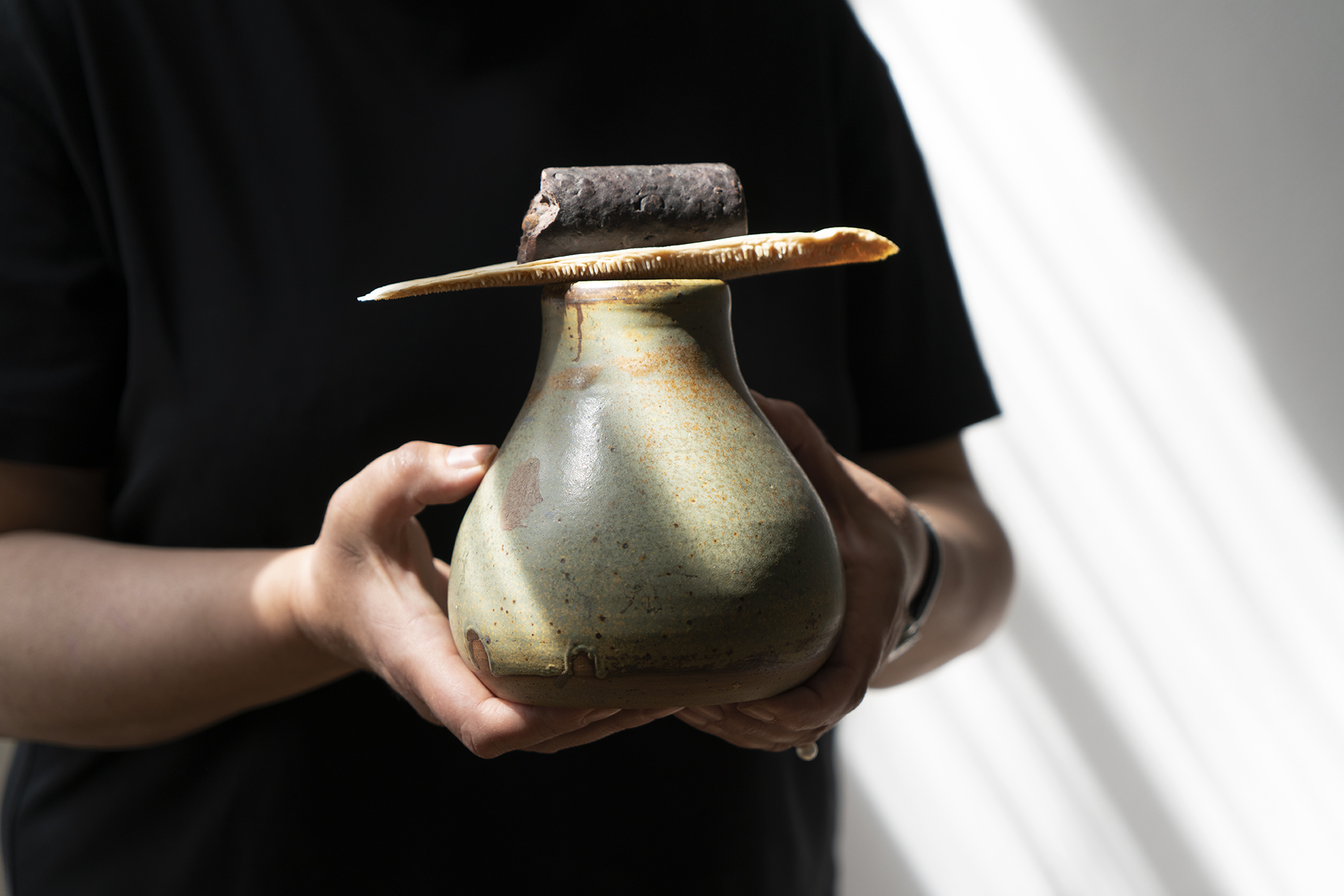
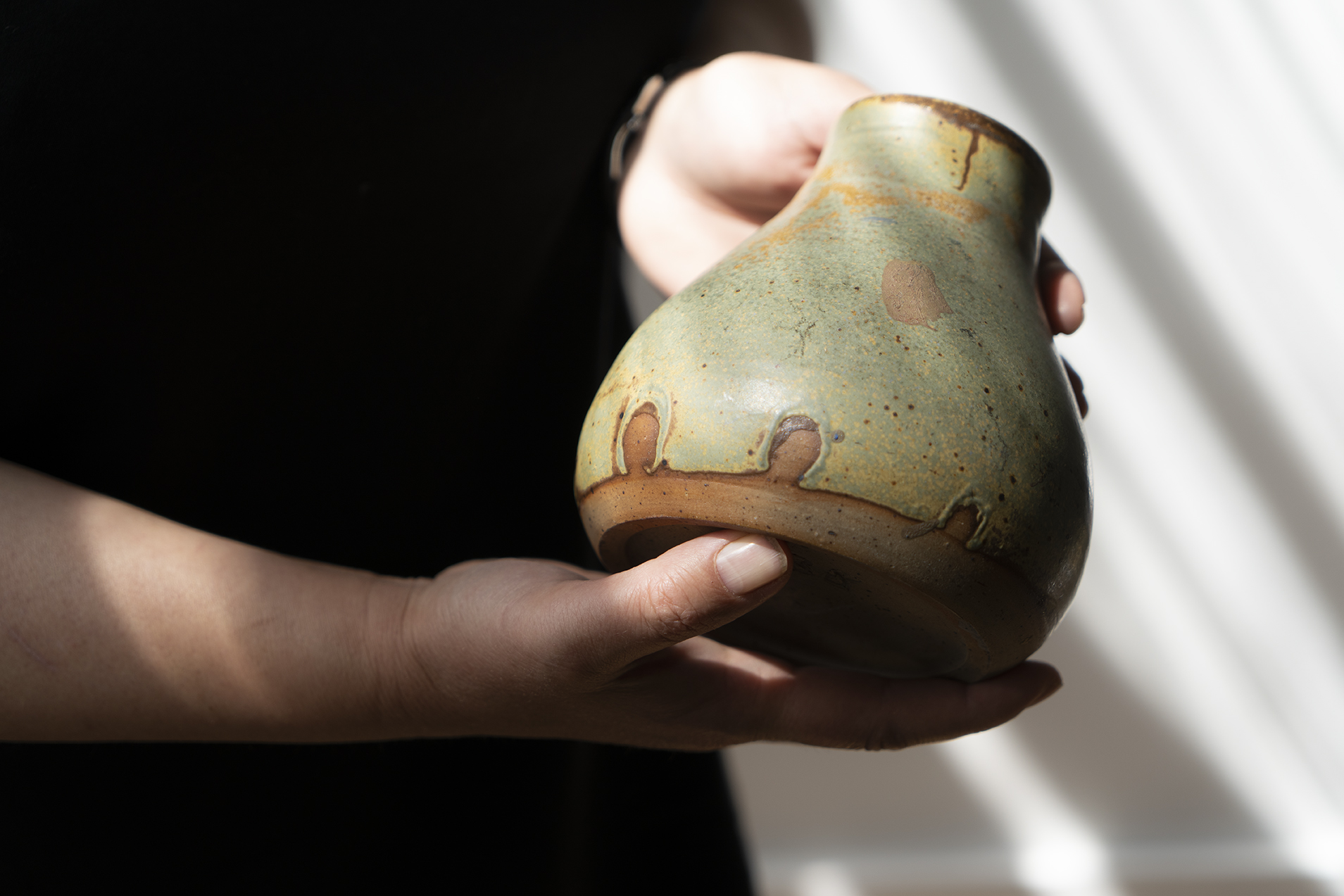
Keramický objekt jej daroval kamarát Juraj Johanides. Vznikol na Slovensku, nevie sa kedy, ani kto ho vyrobil, ale aj tak je autorka či autor navždy prítomný dotykom: na spodnom okraji vázy sú stopy po prstoch ruky, ktorá ju v nejakom momente namočila do glazúry.
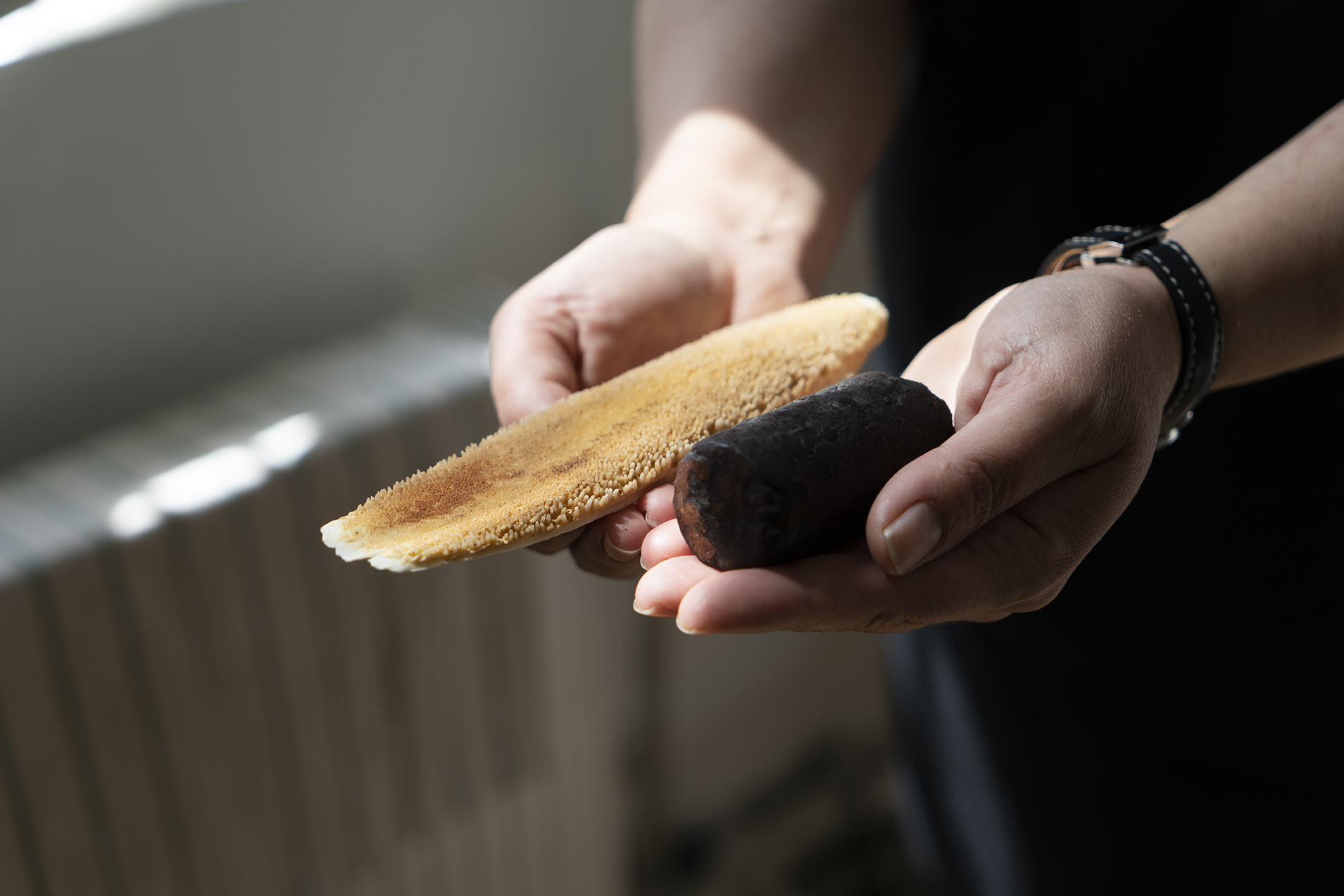
Ďalšie dva predmety priniesol Boris Ondreička, Denisin manžel, od dánskej umeleckej skupiny Superflex. Patria k sebe: jazyk amazónskej ryby Pirarucu, ktorý je celý pokrytý drobnými zubami, používajú domáci na strúhanie rôznych semien na múku alebo prášok. Napríklad semien guarany, zakonzervovaných dymom do tvrdej hmoty, ako je táto.
“Takto to doma máme už zopár rokov. Objekty som položila na seba a tak ostali. Inak si to už neviem predstaviť.”
Toto Denisine “haiku” je poézia materiálu, tvaru, a ešte niečoho, čo sa vyhýba slovám.
Možno je to priestor medzi kultúrami a tradíciami, ktoré v objektoch sídlia, neviditeľné, ale silne prítomné, vyžarujúce. A tiež krása nepravdepodobnosti, že sa tieto tri veci raz ocitnú na jednom mieste, a budú vyzerať, akoby k sebe vždy patrili.
Denisa LEHOCKÁ (1971, Trenčín, Československo)
Žije a pracuje v Bratislave, Slovensko. Študovala Strednú umelecko-priemyselnú školu a následne Vysokú školu výtvarných umení obe v Bratislave. Mimo mnohých svoje práce vystavovala na Benátskom a Pražskom i Kyjevskom bienále, či Manifesta-3 v Ljubljane, SI, October Salon, Belehrad, SRB, v Badischer Kunstverein, Karlsruhe, DE, Kunstverein Ulm, DE, Frankfurter Kunstverein, DE, Württembergische Kunstverein, Stuttgart, DE, na Transmediale v Import a HKW, Berlin, DE, BAK Basis voor Actuele Kunst, Utrecht, NL, New Museum, NYC, USA, Austrian Cultural Forum, NYC, USA, DUMBO Art Cener, NYC, USA, White Columns, NYC, USA, v SNG, Bratislava, tranzit.sk, Bratislava, Národní galerie v Prahe, CZ, Futura, Praha, CZ a Fajt Brno, CZ, Museum of Modern Art, St Etienne, F, Sammlung Friedrichshof, Vienna, AT, MUMOK—Stiftung Ludwig Vienna AT, Kunsthaus Graz Landesmuseum Joanneum, Graz, AT, Palazzo delle arti Napoli, Naples, IT, Kunsthalle Basel, Basle, CH, Kunsthaus Bern, CH. Je zastúpená v mnohých medzinárodných zbierkach.
[:en]The object chosen by Denisa Lehocká is a constellation of three elements. At our meeting, she took them out of her bag and placed them on a park bench, one on top of the other:
sort of a vase
a strange oblong natural object the colour of bone
a thick dark brown stick
The ceramic object was given to her by her friend Juraj Johanides. It was made in Slovakia, it is not known when, nor who made it, but the author is forever present by touch: on the lower edge of the vase there are traces of the fingers of the hand that at some point dipped it in the glaze.
The other two objects were brought by Boris Ondreička, Denisa’s husband, from the Danish art group Superflex. They belong together: the tongue of the Amazonian fish Pirarucu, which is all covered with tiny teeth, is used by the locals to grind various seeds into flour or powder. For example, guarana seeds, preserved by smoke into a hard mass like this.
“We’ve had it like this at home for a few years now. I put the objects on top of each other and they stay that way. I can’t imagine it any other way.”
This “haiku” of Denisa’s is a poetry of material, form, and something else that eludes words.
Perhaps it is the space between cultures and traditions that reside in objects, invisible but powerfully present, radiating. And also the beauty of the improbability that these three things will one day find themselves in the same place, and look as if they have always belonged together.
Denisa LEHOCKÁ (1971, Trenčín, Czechoslovakia)
She lives and works in Bratislava, Slovakia. She studied at the Secondary School of Art and Industry and then at the Academy of Fine Arts both in Bratislava. Among many exhibited her works at the Venice and Prague and Kiev Biennials, or Manifesta-3 in Ljubljana, SI, October Salon, Belgrade, SRB, Badischer Kunstverein, Karlsruhe, DE, Kunstverein Ulm, DE, Frankfurter Kunstverein, DE, Württembergische Kunstverein, Stuttgart, DE, at Transmediale in Import and HKW, Berlin, DE, BAK Basis voor Actuele Kunst, Utrecht, NL, New Museum, NYC, USA, Austrian Cultural Forum, NYC, USA, DUMBO Art Cener, NYC, USA, White Columns, NYC, USA, at SNG, Bratislava, transit. sk, Bratislava, National Gallery in Prague, CZ, Futura, Prague, CZ and Fajt Brno, CZ, Museum of Modern Art, St Etienne, F, Sammlung Friedrichshof, Vienna, AT, MUMOK-Stiftung Ludwig Vienna AT, Kunsthaus Graz Landesmuseum Joanneum, Graz, AT, Palazzo delle arti Napoli, Naples, IT, Kunsthalle Basel, Basle, CH, Kunsthaus Bern, CH. She is represented in many international collections.
[:]