[:sk]Skryté mestá / A OBLOHA SA NAPLNILA TRBLIETAJÚCIM SA SKLOM : 9/11 alebo jeden deň v živote mesta[:en]Hidden cities / WHEN BEAUTY MEETS TRAUMA : 9/11 or one day in the life of the City[:]
[:sk]Verzia toho, čo sa považuje za starý (dobrý) New York, sa mení v závislosti od toho, s kým sa o ňom rozprávate. Pre niekoho sú to drsné, ale hlavne živé a tvorivé 70-te roky, keď sa mesto ocitlo na dne ekonomickej krízy a vrchole kriminality. Pre niekoho je to New York pred rokom 1995, teda pred nástupom starostu Rudolpha Giulianiho, ktorý ho metaforicky aj doslova vyčistil a tým aj obral o mnohé jeho príbehy, komunity, atmosféru a autentickosť. Existujú aj ďalšie príbehy nostalgie za starým, dobrým New Yorkom. A tie sú, tak ako všade inde, viazané na prvotnú skúsenosť tohto miesta, ktorá býva veľmi intenzívna a neprenosná.
Aj o tom je rozhovor s mojim známym, newyorčanom Ramanom z minulého leta. Rozprávali sme sa o najvýraznejších zážitkoch z mesta, v ktorom strávil svojich posledných 20 rokov. Pokúsili sme sa zachytiť pocit z New Yorku v určitom momente v čase: štvrť Lower East Side koncom 90-tych rokov, učenie sa „jazyka“ gentrifikácie, a tiež výsostne osobnej, intímnej skúsenosti 9/11 a stopy tohto septembrového dňa v pamäti mesta a jeho obyvateľa.
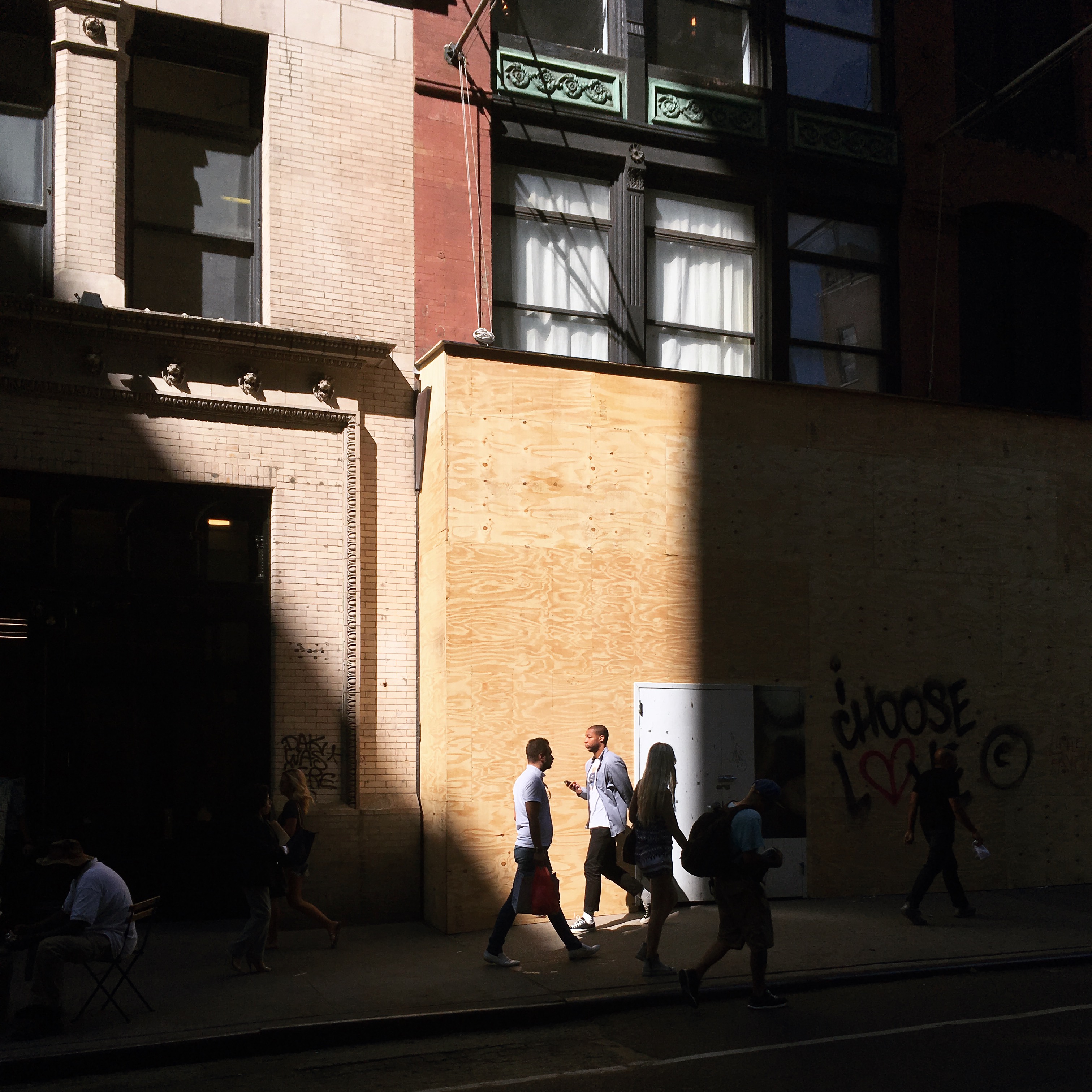
Štvrť SoHO na Manhattane, jún 2018, foto: archív autorky.
KP: Do New Yorku si prišiel v roku 1998. Aký bol tvoj pocit z vtedajšieho mesta? Mám tým na mysli NYC pred 9/11, keďže, ako si mi sám povedal, toto je tvoj ultimátny bod v kontexte celkovej zmeny.
R: Môj pocit viem opísať celkom presne – mesto bolo vtedy ako bublina, ktorá praskla spolu s 9/11. Tie roky medzi 1998, kedy som sa prisťahoval do mesta, a 2001, sú moje najobľúbenejšie. New York tých čias som miloval. Umelecká scéna bola veľmi zaujímavá a živá a mesto malo vtedy pre mňa určitý fantazijný element. Prišiel som sem z Bostonu, kde sa toho až tak veľa nedialo, a táto nová kreativita ma fascinovala. Obzvlášť na Lower East Side, kde som sa vtedy zdržiaval. Ľudia žili v obchodoch, kde súčasne predávali svoje dizajnérske produkty, uliciam dodávali charakter nepretržite otvorené umelecké priestory, ktoré boli tiež obývané, podchvíľou sa diali nejaké vernisáže. Fungovalo tam veľa squatov.
V tom čase na Lower East Side (ďalej ako „LES“) ešte fungovala živá manufaktúrna výroba, z ktorej umelci ťažili – či už z jej estetiky, alebo ako zdroja materiálu. Bola to taká zmes industriálnych elementov a umeleckej komunity, ktoré sa prelínali. Taký naozajstný mix medzi Chinatown (susediaca štvrť, pozn. autorky) a „hipstermi“. Nejakú gentrifikáciu som si vtedy však vôbec neuvedomoval. Jediné, čo som vnímal, bola táto energia – človek mal vtedy pocit, že tu môže všetko.
Myslíš si, že ľudia si vtedy mohli dovoliť byť vo svojom umeleckom živote dobrodružnejší a nemyslieť až tak na to, že treba každý mesiac zaplatiť nájom? Zdalo sa ti, že ešte koncom 90-tych rokov bolo cítiť nejaký pozostatok čias mladej Patti Smith, kedy si mohol prísť do New Yorku s prázdnymi vreckami a nadšením pre umenie, dúfajúc, že sa to nejako vyvŕbi?
Myslím, že tam išlo o dve veci naraz, ale v tej dobe som videl iba jednu stranu mince. Keď som hovoril o Chinatown, LES a prelínaní industriálnej a umeleckej scény – až takto spätne dokážem identifikovať, čo sa tam naozaj dialo. Vtedy som pre túto transformáciu nemal „jazyk“, alebo syntetizmus, cez ktorý by som videl veci v širších súvislostiach a vnímal nielen, čo sa deje, ale aj to, čo musí nevyhnutne nasledovať. A tým bola invázia mladých ľudí s trochu viac peniazmi, ktorí prichádzali do štvrte a brali priestor malým rodinným podnikom. Boli to pre mňa tvoriví ľudia, ktorí robili naozaj “cool” veci.
Takže je jasné, že celá idea gentrifikácie nebola v tej dobe súčasťou môjho jazyka. Sústredil som sa len na tú utopistickú, svetlú stránku veci, ktorá mi nedovolila vidieť tieto dystopické spodné prúdy.
Ale to, čo si opísal, je predsa jasný príklad toho, čo vystihuje prvý stupeň gentrifikácie. Dialo sa to v SoHO v 80-tych rokoch, nasledovali ďalšie štvrte: Williamsburg, Chelsea. Teraz to bol Bushwick, a tak ďalej. V slede udalostí to má opakujúci sa vzor, ktorý je dnes ľahké rozoznať.
Áno, je to tak, ale ako som už povedal, rozoznať to v tej dobe bolo trochu ťažšie ako teraz, retrospektívne. Umelci vždy gravitovali ku štvrtiam s nízkym ekonomickým statusom. Som si však tiež vedomý toho, že tí naozaj miestni – ako napríklad ten chlapík, bývalý pankáč a squater, ktorého sme stretli v Museum of Reclaimed Urban Space – toto nebezpečenstvo rozoznali skôr ako ja. Ľudia, pre ktorých bol „starý New York” ten v 70-tych a 80-tych rokoch…
Moja perspektíva bola pohľadom nováčika, ktorý bol fascinovaný všetkým, čo sa vtedy dialo na “downtown” umeleckej scéne: ľudia, žijúci doslova vo výkladoch svojich obchodov, umelci hosťujúci vlastné vernisáže. Videl som a cítil túto energiu a myslel som si, že k tomu môžem tiež prispieť, že dokážem podobne preniknúť mestom a spraviť niečo, čo bude mať efekt. Bol to svet, ktorý sa mi zdal dostupný.
Po 9/11 sa väčšina týchto priestorov zatvorila a na chvíľu to tam dole vyzeralo ako mesto duchov. To, čo sa stalo, zabilo miestnu ekonomiku a všetko vymazalo. A potom sa tam začali sťahovať bary. Bary a iné podniky, ktoré mali peniaze.
Asi nerozumiem úplne tomu, ako septembrové útoky súviseli s vymieraním umeleckej scény na LES. Mohol by si mi trochu objasniť tieto súvislosti?
Áno, je to úplne jednoduché – bezprostredne po 9/11 bolo všetko pod úrovňou 14-tej ulice na nejaké obdobie uzavreté. Pokiaľ si nemala naozajstný dôvod ísť do dolnej časti Manhattanu, tak si tam nešla. A za týchto okolností začala prirodzene hynúť ekonomika – napríklad veľká časť Wall Street sa v tom čase presťahovala do New Jersey.
Ach tak. Predstavujem si opustené ulice bez ľudí, čo samozrejme znamená: žiadni zákazníci dizajnérskych obchodov, žiadni návštevníci galérií.
Presne tak. Vymazalo to z mapy takmer každý jeden priestor. Predtým tam bol určitý, dá sa povedať nízkoprahový potenciál, kedy som cítil, že tento svet je dostupný aj pre mňa. Po 9/11 sa štvrť začala zapĺňať priestormi, ktoré generovali peniaze. Prišli noví ľudia. A títo ľudia si prisvojili nielen priestor, ale aj tú pôvodnú, surovú estetiku.
Keď hovoríš o tej estetike…zrazu mi to celé dáva zmysel. Keď si vezmeme jazyk gentrifikácie, toto by sme mohli nazvať jeho gramatikou. Tá pôvodná, surová estetika vychádzala z miestnych zdrojov (industriálne prostredie) alebo ich nedostatku (v zmysle absencie financií, a teda nútenej improvizácie), a vyvíjala sa prirodzene a postupom času. Čo znamená, že estetika umelcov nepostrádala obsah. V druhom stupni gentrifikácie však bola privlastnená a naleštená pre vyššiu strednú vrstvu, hladnú po určitej autenticite, ktorej nevadilo, že bola bezobsažná, že to bol „fake“. Surovosť sa vyprázdnila, ostal iba obal. Takzvaný „artist loft“ v SoHo, obývaný manažérom z Wall Street, je jedným z príkladov.
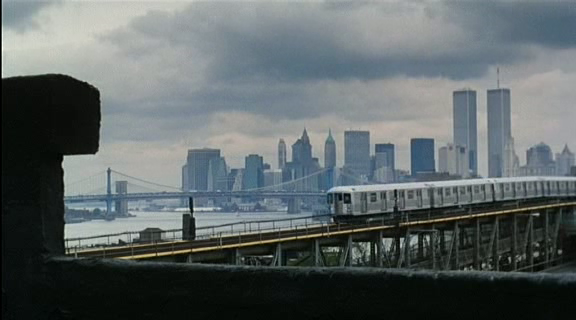
Pohľad na Manhattan Bridge, v pozadí ešte stoja Twin Towers, (záber z filmu Smoke, 1995, režiséri Paul Auster an Wayne Wang).
Rada by som sa teraz zamerala na 9/11, a ako si prežíval tento konkrétny deň ty osobne. Mimochodom – vždy ma fascinovalo, že ak by sa nás niekto spýtal, čo sme robil deň pred alebo po tejto udalosti, s veľkou pravdepodobnosťou by sme nevedeli odpovedať. Ale skoro všetci presne vieme, kde sme sa nachádzali 11. septembra 2001, čo sme robili, keď sme sa dozvedeli túto správu, pamätáme si takmer všetky detaily. To znamená, že by sme mohli tento deň zrekonštruovať v životoch mnohých ľudí po celom svete, zistiť, ako vyzeral ich život v tomto časovom bode. Je to vlastne určitý druh kolektívnej pamäte.
Povieš mi, aké to bolo pre teba? Ako sa začal a vyvíjal tvoj deň? Jednoducho si sa zobudil a išiel si do práce?
Áno, presne to som spravil. Cestou na metro som sa, ako každé iné ráno, zastavil v mojom Deli po sendvič s vajíčkom a syrom. A kávu. Vkročil som do obchodu, objednal som si, a z rádia som periférne začul niečo o nejakých lietadlách a rútiacich sa budovách. Ale vnímal som to len na pol ucha – myslel som, že to je nejaká relácia. Asi to neznelo dosť dramaticky na to, aby som to zobral vážne.
Kedy a kde si si uvedomil, čo sa naozaj deje?
Bol som v Q linke metra…ale možno to v tých časoch bolo D? Keď som v Brooklyne nastúpil, zaregistroval som, že ľudia o niečom diskutujú, ale nič z toho som nevnímal. Keď sme prechádzali cez Manhattan Bridge, veľa ľudí sa zrazu zhromaždilo okolo okien. Sedel som chrbtom k oknu, takže som nevidel, čo sa deje – myslel som si, že sú to turisti a pozerajú sa na Sochu slobody. Vlak sa hýbal podozrivo pomaly, ale ja som všetko okolo seba dlho ignoroval. Až kým som sa v nejakom momente pozrel, kam sa to všetci dívajú, a povedal som si…DOPRDELE!
To už bola jedna veža dole a valil sa z nej dym. Druhá veža ešte stála a dymila. A boli rovno tam, pred nami.
Vystúpil som na Canal Street a videl som množstvo ľudí, niektorí vyzerali otupene, iní kráčali, pokrytí prachom. Niektorí boli vydesení, plakali, boli ohromení.
Išiel som do práce, ktorú som mal vtedy na Broome Street a zapol som NPR (National Public Radio), aby som sa dostal k nejakej perspektíve tejto udalosti. Vtom prišla moja kolegyňa a povedala, poďme na strechu. O chvíľu stojíme hore a pozeráme sa spolu na dolnú časť Manhattanu. A v jednom momente vidíme, ako sa druhá veža rúti dole. Proste implodovala. To, čo pred sebou vidíme, je neuveriteľné. Obloha sa zaplní trblietajúcim sa sklom. Môj ústredný pocit je zmätok, netuším, čo sa deje. V rádiu zaznejú slová ako terorizmus, vojna, nehoda. Moja myseľ sa snaží uchopiť katastrofu, ale mám pocit, že zo správ sa nič nedozvedám. Som tam hore na streche a premýšľam. Myslím na to, že možno nikdy neuvidím svoju rodinu. Pozerám sa na svet predo mnou, na kolabujúce budovy a súčasne cítim, že chcem pozastaviť tento moment, mám pocit, že celý môj život sa môže v tomto bode zmeniť a ja to chcem precítiť. No čím viac som sa tejto chvíle držal, tým efemérnejšia sa zdala. A zatiaľ, čo toto všetko prežívam vo svojej mysli, počujem, ako moja kolegyňa hovorí: nech to vykonal ktokoľvek, bude tvrdo platiť. V jej slovách bol hnev, latentné násilie. Naše reakcie boli úplne rozdielne.
Ako som to všetko postupne absorboval, bolo na tom aj niečo krásne: tá iskriaca obloha, dym, ktorý všetko zaplavil. Bol to moment krásy a samozrejme hrôzy, traumy. Pamätám si, ako mi kolegyňa hovorí, že práve videla ľudí, skáčúcich z okien, čo som si ja vôbec nevšimol – dívali sme sa na ten istý obraz a každý sme vnímali niečo iné.
Bolo jasné, že v ten deň nebudeme pracovať. Rozhodol som sa ísť do jednej malej francúzskej pekárne na Spring Street. Išiel som tam a kúpil som si vrecko croissantov. Bolo ich presne šesť. A dve alebo tri kávy. A potom som si sadol na roh ulice a pozoroval, čo sa dialo naokolo. Sedel som na slnku a len som to všetko sledoval, absorboval, proste som len bol.
Musím povedať, že to znie trochu perverzne, užívať si tento moment s croissantmi uprostred katastrofy, ale priznávam, že ti vlastne rozumiem.
Tak to som rád. Obyčajne, keď sa rozprávam o 9/11 s ľuďmi, musím túto situáciu dosť zaobaliť. Bolo to dosť divné – len tak tam sedieť a pozorovať, čo sa deje. Skúšal som sa tiež dovolať svojej sestre, ktorá bola vo štvrti Tribeca, veľmi blízko budov dvojičiek. Ale nedarilo sa mi spojiť sa s ňou, celý telefonický systém skolaboval. Takže som mal pocit, že svet sa asi končí a ja si musím užiť tých posledných pár minút.
A čo presne si videl, keď si sedel na rohu ulice?
Videl som ľudí, ktorí bežali v ústrety tragédii – pravdepodobne novinárov, a ľudí kráčajúcich od katastrofy. Niekedy popoludní som si povedal, že by som sa mal presunúť. Croissanty a káva boli fuč. Išiel som na Manhattan Bridge, sadol som si na vrchnú úroveň, nohy mi viseli dole. Opäť som pozoroval, tentokrát doslova milióny ľudí, ktorí prechádzali cez most z Manhattanu do Brooklynu. More ľudí. Takéto momenty sú pre mňa vždy chvíľami reflexie života a smrti. V tej chvíli som cítil, že toto je historický okamih a ja som jeho súčasťou. A možno je to začiatok vojny. Takže som zažíval dve protichodné veci: užíval som si pokojne tento moment a ten krásny, slnečný deň, a zároveň som cítil drámu. No nebola v tom len trauma, ale aj úžasná energia, pocit blízkosti, zdieľania. Ľudia si navzájom pomáhali. Išiel z toho takmer pocit komunity, spoločenstva.
Jednoducho v tom bolo množstvo protichodných emócií. Krása verzus koniec.
Keď sa začalo stmievať, vybral som sa domov. Rozhodol som sa ísť pešo. Ani neviem, ako dlho som kráčal. Muselo to trvať zopár hodín. Keď som dorazil domov, našiel som si odkaz, že mám prísť ku kamarátovi. No a tam som to všetko uvidel v televízii. V detailoch. Ľudí, skáčúcich z okien. To bol moment, kedy som začal plakať a nemohol som prestať.
Bolo to naozaj zaujímavé, všetky tieto vrstvy emócií, celý ten proces ignorovania, videnia, absorbovania, uvedomenia si. A všetky si ich pamätám, aj po sedemnástich rokoch.
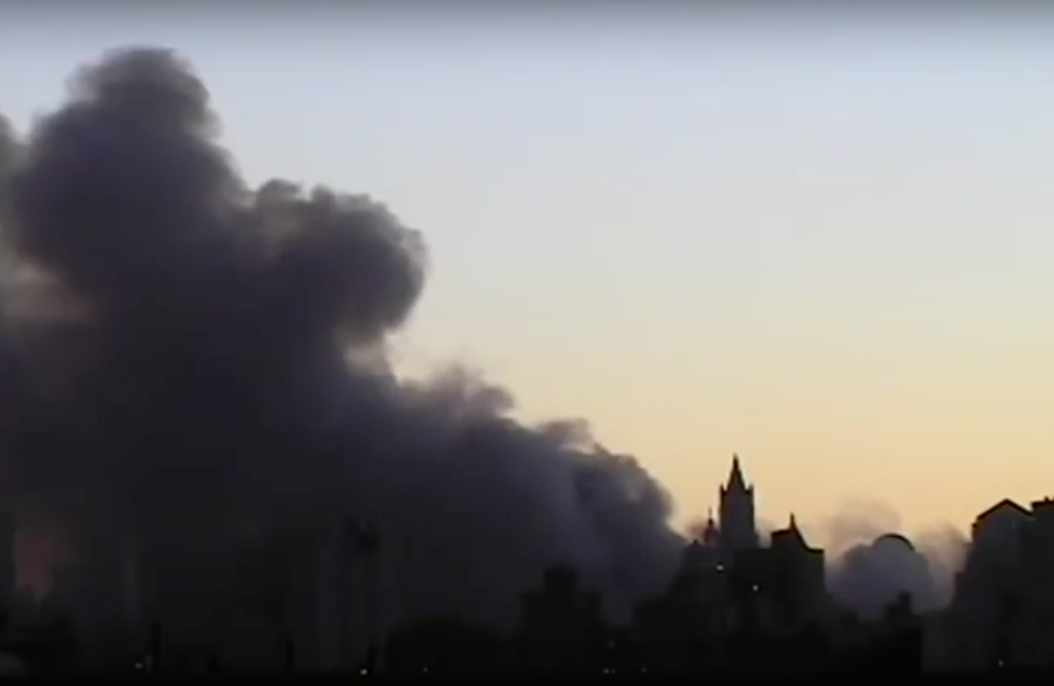
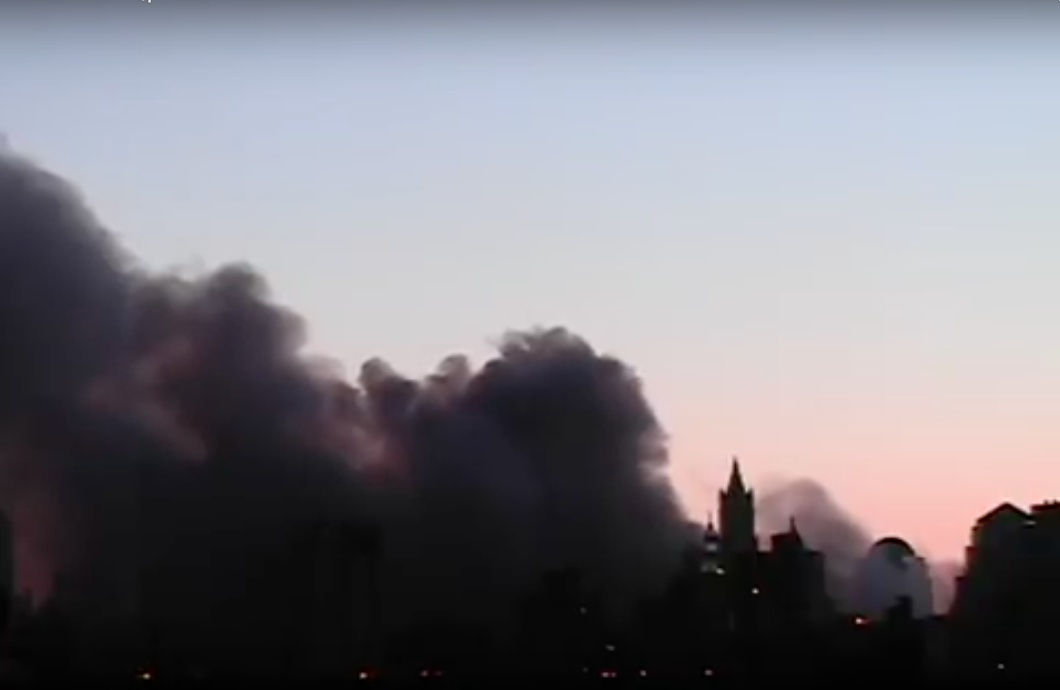
William Basinski, The Disintegration Loops, 2001, zábery z videa.
Tvoja prechádzka a táto atmosféra mi niečo pripomenula. Poznáš skladateľa Williama Basinskeho?
Nie, nepoznám.
Spravil jednu úžasnú vec, volá sa to The Disintegration Loops. Je to také requiem za 9/11. Hudbu tu sprevádza rovnako silné video, ktoré Basinski natočil zo svojej strechy v Brooklyne v ten septembrový večer. Vidieť na ňom siluetu Manhattanu a dym, pomaly sa valiaci oblohou, dym oznamujúci to, čo sa v ten deň stalo. To všetko na pozadí večernej oblohy a jej oranžového gradientu, posledného, miznúceho svetla.
Zaujímavé, až teraz si spomínam na ten dym. Takmer som naň zabudol.
Na jeho videu sa obraz postupne zapĺňa dymom a súmrakom. No signifikantná je tu predovšetkým hudba. V roku 2001 sa totiž Basinski rozhodol zdigitalizovať nejaké svoje nahrávky na magnetofónových páskach zo začiatku 80-tych rokov. Digitálny rekordér nechal bežať v slučke, a keď sa k nemu neskôr vrátil, zistil, že jeho staré pásky sa začali počas nahrávania deštruovať. Tá magnetická vrstva, ktorá obsahuje zvuk, sa postupne odlupovala a rozpadala, materiál degradoval viac a viac každým prehratím. Hudba sa menila na prach. Basinski sa proces rozhodol zopakovať s každou jednou zo svojich pások. To, čo z toho vyšlo, je veľmi pomalá, hlboká, hypnotická a absolútne melancholická hudba, ktorej rytmus je postavený na neustálom, až mantrickom opakovaní mikro motívov a trhlín. Zvuk sa vznáša a akumuluje, podobne ako ten dym nad mestom, plný prachu.
Basinski spravil tieto “post-nahrávky” len chvíľu pred septembrovými útokmi. No a v ten večer 11. septembra 2001 natočil zo strechy video, v ktorom zachytil poslednú hodinu svetla. Nasledujúci deň si ho prehral súčasne so spomínanými nahrávkami. Vtedy si uvedomil, ako dokonale sa tu dopĺňa obraz a zvuk. Nahrávky pôvodne vydal samostatne v štyroch častiach, ktoré sa od seba jemne líšia – rytmom, melódiou. Vizuál bol najskôr použitý len na obaly CD albumov, až neskôr bolo celé video vydané ako hodinový track so zvukom na DVD. The Disintegration Loops bol obrovský úspech.
Pre mňa je tá hudba silným monumentom toho dňa. Jej krása vychádza z rozkladu materiálu a v konečnom dôsledku reflektuje rozklad a smrť na úrovni septembrovej udalosti. Podobne ako oficiálny monument, The 9/11 Memorial and Museum dole na Manhattane, ktorý zaberá impozantný fyzický priestor (a ide doslova do hĺbky), Basinskeho hudba ponúka hlboký mentálny priestor pre meditáciu a reflexiu pokory, pominuteľosti.
Aj tvoja dlhá prechádzka mestom bola určitou poctou tomu dňu.
Áno. A je skvelé, že sme nahrali tento rozhovor. Je možné, že veľa vecí v najbližších rokoch zabudnem, lebo moja pamäť je presne ako tie jeho pásky.
Poznámky autorky:
Lower East Side
Je v kontexte New York City najvýznamnejšou štvrťou v rámci histórie imigrantov. Po nemcoch a talianoch sa tu začiatkom 20-teho storočia usadili predovšetkým prisťahovalci z východnej Európy židovského pôvodu (gréci, poliaci, rumuni, slováci, rusi, ukrajinci). Priniesli so sebou remeslá a tradície, ktoré ich postupne začali živiť. Až donedávna tu sídlilo množstvo malých podnikov s dlhoročnou tradíciou, z ktorých zostalo iba zopár – ako napríklad legendárny obchod s rybacími delikatesami Russ & Daughters na Houston Street. Zaujímavý je príbeh firmy Moscot, ktorá patrí medzi najstaršie biznisy v meste. História tohto (teraz už svetoznámeho) výrobcu okuliarov sa začala v roku 1915, kedy firmu založil bieloruský imigrant židovského pôvodu Hyman Mushcot. Rodinnej firme sa v roku 2003 podarilo rebrandovať a expandovať za hranice štvrte a neskôr aj USA. Aj vďaka tomu Moscot, ako jedna z mála lokálnych firiem, nielen prežila silnejúcu gentrifikáciu na Lower East Side, ale ju vlastne využiť vo svoj prospech. Ich flagship store sa nachádza na 108 Orchard Street.
Pri potulkách Lower East Side môžete naraziť na rôzne osobnosti kultúrnej scény, napríklad na Jima Jarmuscha, jedného z dlhodobých obyvateľov štvrte, občas postávajúceho v papučiach pod svojim domom.
[:en]There are many versions of what “the good old New York” used to be – it depends on whom you’re talking to. For some it’s the NYC of the Seventies, the rough but also lively and creative times, when the City hit the economical crisis and criminality rose critically. For some, it is the New York before 1995, which means before mayor Giuliani, who literally cleaned it up and inevitably ripped it off of many stories, its communities, atmosphere and authenticity. There are as well other parallel histories of old NYC, each of them individual and bound to the fresh experience of a newcomer; intense and impossible to rewrite.
This is what this interview with a friend and newyorker Ramana is about. In the summer of 2018 we sat down to talk about his most significant experience of the city where he spent his last 20 years. We tried to capture the feeling of New York at a specific moment in time: the inevitable change of Lower East Side neighbourhood in the late 90’s, the learning of “language of gentrification” and about the individual, intimate experience of 9/11, that particular September day and its imprint in one’s memory and the memory of the city.
SoHo, a neighborhood in Lower Manhattan, June 2018, photo: author.
KP: So, it’s been 20 years since you moved to NYC. How did the old New York feel? I’m talking about the city before 9/11, because as you said, for you this was the ultimate point of change.
R: I tell you exactly how it felt. It was like a bubble. To me, 9/11 is really what destroyed NYC, in my mind. Those three years between 1998, when I moved into the City, and 2001, are my favorite. I loved NYC at that time. The art scene was really cool. New York had this sort of a phantasy element to me, coming from Boston and seeing all this creativity. There were stores I walked into in Lower East Side, where clearly the people lived, had heir garments in the front, there were art spaces that would open up and where people lived, too. There were squats. Every once in a while there was an opening and I thought wow, this is really cool. At this time, there was a lot of facturing going on on the Lower East Side (hereinafter referred to as “LES”). And the artists drew from that, it was a source for both materials and aesthetic. There was this scramble of industrial elements and art crowd mixing in, a real mix between Chinatown and “hipsters”, but I wasn’t really aware of gentrification at that point. I just saw all this energy – you thought you could do anything.
So you think that people back then could afford to be more adventurous in their artistic lives, not having to worry so much about paying the rent? Do you believe there was still something left from the times of young Patti Smith, when one could land in NYC with empty pockets and just make art and see what happens?
I think there were two things going on, but to me, just one side was visible at the time. When I was talking about Chinatown mixing with LES and seeing the industrial and the art scene overlap – I can only see in retrospect what was really happening. I did not have the language for this transformation, I did not have the synthetism at the time to deconstruct that and see what was going on and what inevitably followed – the invasion of young people with a little bit more money coming in and taking spaces from, what were probably “mom and pop” kind of situations. So the whole idea of gentrification was not part of my language. I did not see yet the dystopian undercurrents within that. All I saw was the utopian side, the bright side. Creative people coming in, and doing really cool stuff.
But this was clearly what one identifies as the first stage of gentrification. It was happening in SoHO back in the 80’s, Williamsburg followed, then Chelsea, now it’s been Bushwick and so on. It has this repeating pattern, which seems to be so easy to discern these days.
It was definitely that, but as I said, back then it wasn’t so easy to tell things apart. Artists have always been gravitating to areas with a low economic status. But I’m also aware that there were local people who could have discerned this danger before I could, like that guy we met at the Museum of Reclaimed Urban Space. People for whom the “old New York” meant the NYC of 70’s, 80’s. I came from Boston and saw people living in store fronts, I saw artists hosting their own openings, and making really interesting art too. So my perspective was a “newbie” perspective, I was feeling and seeing the energy, thinking I can penetrate the City, that I can do something here and have an effect. There was a world that was accessible to me.
After 9/11 all those artist run spaces closed, for a while it was like a ghost town. What happened just killed this economy and wiped everything out. What started to move in later were bars. Places with money.
I think I need an explanation here. So there was 9/11, and after this terrible thing happened, one of the aftermath was that the LES art scene was dying. But how exactly the September attacks affected the whole downtown?
Well, the downtown Manhattan – that means everything below 14th Street – was closed off for a while. People did not go down there, unless they had a reason. Under these circumstances, the economy got destroyed, too. Also, a lot of Wall Street ended up moving to New Jersey.
So I imagine vacant street with no people, which means no customers, no exhibition goers.
Yes, it wiped out almost every single one of these artist-run spaces. Before, there was potential, that was low enough, so I felt that I had access to it. And after 9/11, things that could generate money were moving in and not just the space, but also the raw aesthetics of what was there before was being re-appropriated by people with money.
Talking about the language of gentrification, this is what we could think of as its grammar. The “original” raw aesthetic drew from the local resources (industrial environment), or the lack of them (in terms of finances and therefore forced improvisation) and has developed naturally and over time. Later it was stolen, or appropriated and “polished” for newcomers with money, in order to provide for the upper middle class, which was hungry for some sort of authenticity, not caring (or not being able to see) that it was fake. The typical SoHO “artist’s loft” being just one example.
View of Manhattan Bridge, in the background still standing Twin Towers, (a shot from the movie Smoke, 1995, directors Paul Auster and Wayne Wang).
I’d like to talk now about 9/11, about that day in particular. By the way – isn’t it fascinating that if somebody asks you what did you do on the following day, or the day after – one has no idea. Once you mention 9/11, everybody knows exactly where they were when the message reached them, what they did, all details. This means we would be able to reconstruct this day in the lives of many people, and where we were at this point in time, on this very day. A strange form of a collective memory, isn’t it? So tell me, what did you do on September 11th, 2001? Did you wake up and went to work?
Yes, it started just like that. So in the morning, I walked into my Deli to get my egg & cheese sandwich. And coffee. So I walk in, I order my thing and hear them talking on the radio about some planes and buildings crashing, and you know, on the back of my mind I thought it was a TV show. They were not dramatic enough to make me think “this is happening”.
So when and where were you when you realized what was going on?
I was on the Q train..or was it D at that time? So I got on the train. I’m going over the bridge. There are some people talking and discussing what’s going on, but somehow I was not hearing them, not taking any of that in.
I’m sitting on the train, on the window seat, my back facing the downtown view. The train is going over the bridge and there are all these people suddenly gathering around, looking at the window, and I’m thinking they’re tourists, looking at the Statue of Liberty. The train is going very slowly, and the entire time I’m ignoring everybody. And at some point I look at what everyone is looking at and I’m like HOLLY FUCK.
At this point, one tower is already gone down and there’s smoke billowing out. The other tower is still up and there’s smoke. And they are right there.
So I get out at Canal street, and there are people, some are just numb, walking, covered in dust. Some people freaking out, crying, stunned.
I go to my work which is on Broome street and turn on the NPR to get some perspective of what’s going on. Then my coworker walks in and says, let’s go on the roof. So we’re on the roof looking out. There’s still one tower there, and suddenly we see this one tower going down. It just implodes. What we see is unbelievable. The sky just fills with glittering glass, it’s sparkling. And it’s a beautiful September day, the sun is so brilliant, and we see the glass shimmering through the sky. Most of my feeling is I don’t know what’s going on. There is a little bit of talk of maybe terrorism, of war, of accident. My mind has a little bit of frame of a catastrophe. My feeling is that I’m not getting anything of the news. I’m on the roof and I’m thinking, I might never see my family again. I’m looking at this world, at buildings shattering and at the same time I’m also feeling like I want to hold onto this moment, I feel like this could be a life-changing moment. That my whole world might change from this point on and I wanted to feel something. But the more I was holding onto this moment the more fleeting it felt. And as I’m, in my mind, holding and feeling onto this situation, my co-worker says: whoever did this must pay. In her response was a mediate vengeance, a mediate anger, violence. We had completely different reaction.
I was absorbing it all in and there was something beautiful about it. The sky, all sparkling, the smoke that sort of overtakes everything. It was a moment of beauty, of obvious horror, trauma. And I remember she said she saw people jumping out the windows, and I did not see what she saw: a whole different picture.
Well, it was obvious we were not gonna work that day. So I decide to go to a little french bakery which was on the Spring street. And I went there and bought a bag full of croissants. Six croissants. And two coffees. Or three coffees. And I decide to sit on the street corner and watch. I love being in the sun and watching, absorbing, just being. And it was such a beautiful day. So there was this very touristy element.
I have to say that it sounds perverse, to have this moment with croissants in the midst of a catastrophe, but I have to admit that I can relate to your response.
I’m glad. You know, I usually have to do a lot of packaging of this conversation when talking to people. Because it was really weird, just sitting there and taking in.
But I also kept trying to call my sister, who was in Tribeca, really close to the Twin Towers. And I could not reach her. The cell phone system collapsed. So thought the whole world might be ending and I’m gonna enjoy my last few minutes.
What was that you were seeing?
There were people who were running towards the tragedy, probably journalists. And people walking up from the tragedy. And then somewhere half-way through the day I thought maybe I should move on. I finished my croissants and my coffee. So I moved on and got to the Manhattan bridge. I sat on the top level and my feet were hanging over the edge. And I was watching as literally millions and millions of people are crossing over the bridge, leaving the City, going to Brooklyn. Just a sea of people. And you know, for me these are always moments for reflection on life and questioning death. I also felt like I’m living through history, thinking, perhaps this is a beginning of war.
So I was both calmly enjoying the moment, the beautiful day, and feeling the drama. There was not only trauma, but also this great energy, a sense of comradery, people helping each other. Almost a feeling of community. A moment of togetherness. So you were getting a lot of contradictory emotions: the beauty versus the end. I watched the people until an early evening. And I realized it was going to get dark soon and I should get home. I decided to walk. It must took me a couple of hours. And the entire time as I was walking there were just people everywhere. And I got home and went to a friend’s house. And there I saw on TV a close-up of everything. And this is when I started crying: when I saw it all on TV. I just started crying and couldn’t stop. So it was really interesting, all those layers of emotions, the entire process of going in, ignoring, seeing, absorbing. And I remember every single one of them after 17 years.
William Basinski, The Disintegration Loops, 2001, screenshots from the video.
Do you know this composer, William Basinski? He made an amazing piece called The Disintegration Loops, a requiem to 9/11. There is the music, but it is accompanied by an equally intense video. It is a footage Basinski shot from his rooftop in Brooklyn – it shows the Manhattan skyline during the sunset on September 11, 2001. What you see is the silhouette of the City and the slow, sprawling smoke – smoke as a messenger of what happened that day. Everything is set on the background of evening sky, an orange gradient, the last light.
Ah, I remember this slow smoke now. I almost forgot about that.
So there’s this frame of sky filling up with smoke after the sun came down. But it is the music which is significant and there is also an interesting story to it. In 2001, Basinski decided to digitize some tape recordings he made in the early 80’s, in order to preserve them. He left the digital recorder running on a loop and when he returned later he noticed that the that the tapes started to deconstruct as they were being played and recorded. Their material – the magnetic layer which carried the sound – was gradually crumbling, flaking off a bit more with each spin. The music was turning into dust. He repeated the same process with each of his old tapes. What came out is very slow, deep, hypnotic and this absolutely melancholic music, its pattern based on repeating micro segments, of cracks, floating about and accumulating just like that smoke full of dust. Basinski actually made this post-recordings just a while before the September attacks.
On the evening of 9/11, he put a camera on his rooftop, filming the last hour of the light that day. He made the video and he watched it the next day, while simultaneously listening to his music, realizing the project was complete. First, the music was released in four parts, each slightly different from the other. First the visual was just a cover for CD’s, eventually it was released as a one hour video with sound on a DVD. The Disintegration Loop became a big success.
Based on decay and reflecting decay, to me it’s a beautiful monument to this day, offering space for meditation and reflection. It is no less suggestive than the actual, official monument downtown.
Your long walk through New York was your own tribute to that day. And this Basinski thing would be a perfect soundtrack for your “pilgrimage”.
Yes. And thank you for recording this. I might forget a lot from what I still remember in the following years. Because my memory could be crumbling away just like those tapes.
Author’s notes:
Lower East Side
within the context of New York, LES is the most important neighbourhood in the history of immigration. In the early 20th century, people from Eastern Europe, mostly the Jews (Greeks, Poles, Russians, Slovaks, Russians, Ukrainians) settled here, following the Germans and Italians. They brought with them handicrafts and traditions that eventually became their source of income. Until recently, there was a number of small businesses with a long tradition, of which only a few have remained, such as the legendary deli Russ & Daughters Deli at Houston Street. Interesting is the story of Moscot, one of the oldest businesses in the City. The history of the – now worldwide known glasses brand – began in 1915, when the company was founded by a Jewish immigrant from Belarus, Hyman Mushcot. Thanks to the fact that the company succeeded in rebranding and expanded beyond the neighborhood and the US, in 2003 as one of the few local companies it has not only managed to survive the growing local gentrification, but actually to turn it for its own benefit. In the Lower East Side, you can also walk into quite a few people from the cultural scene, for example Jim Jarmusch, one of the long-term residents of the neighborhood.
[:]