[:sk]Recenzia / NÁMESTIE SLOBODY[:en]Review / NÁMESTIE SLOBODY[:]
[:sk]Niekde som raz čítal, že pre naplnenie radosti zo života je jedno koľko zarábate, najšťastnejších ľudí aj tak vždy nájdete na kúpalisku.[:en]I once read somewhere that it doesn't matter how much money you make, you will always find the happiest people at the swimming pool anyway.[:]
[:sk]
Námestie Slobody je za pol roka už druhým priestorom v Bratislave, ktorý vzišiel z architektonickej súťaže v hľadaní riešenia otázky „čo s tým robiť?“. V porovnaní s inými postupmi sa 2021 architekti a LABAK nevydali cestou popretia alebo vymazania minulosti, ale cestou zodpovednej starostlivosti. Priniesli rafinované a minimálne zásahy v rámci aktualizácie a (re)modernizácie existujúcej priestorovej formy.
Dekády sme snívali o aktivizácii verejného priestoru poznačeného odľudštenou mierkou. Monumentalizmus a jeho seba (re)prezentácia bol výrazným prejavom neskorého modernizmu. Naratív, že architektúra neskorého modernizmu môže za úpadok verejného priestoru sa vžil v našom prostredí tak silno, až sa stal ideologickým nástrojom pre systematické vymazávanie jeho hmotnej pamäte. Popri tomto len málokto uvažoval nad skutočnou príčinou úpadku a odľudštenia verejného priestoru vznikajúceho medzi rokmi 1968 – 1989. Dnes už vieme, že mal vždy bližšie k absencii starostlivosti (Istropolis), programovému chátraniu (Hotel Kyjev), než k zlomyseľnosti formy architektúry ako jej imanentnej nenapraviteľnej vlastnosti.
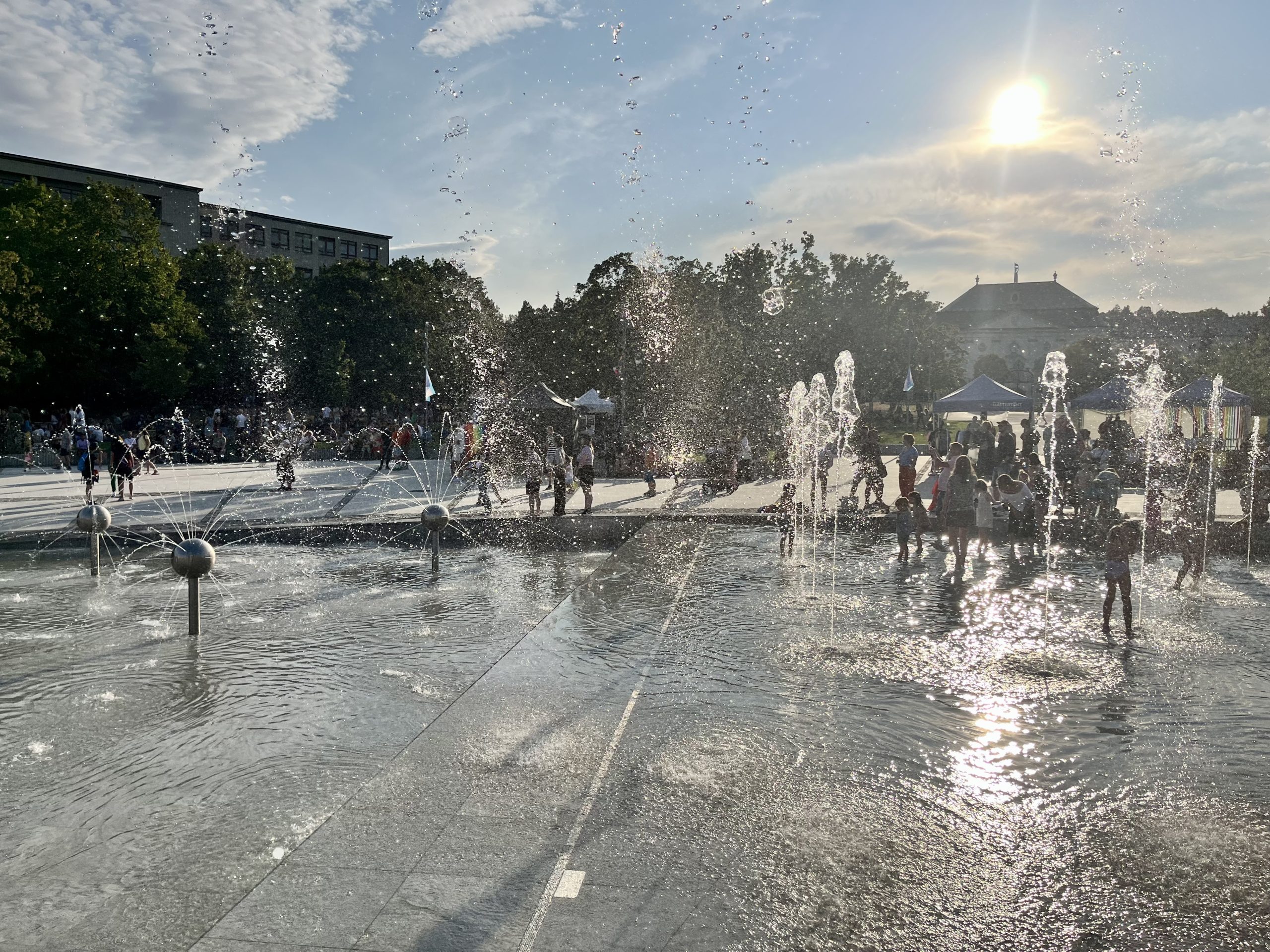
Dnes, vyše 40 rokov od prvého otvorenia fontány s námestím, sa samotná fontána s vodným bazénom stáva priestorom družby, nie však národov, ale bežných ľudí. Čo dnes priestoru chýba je skutočne stánok s langošom, a nebol by to znak úpadku, práve naopak. Ak sa aj niekedy stánky s langošmi dopustili devalvácie verejného priestoru našich miest, bolo to práve preto, že im chýbalo kúpalisko v susedstve. Obnova námestia však nie je ešte na konci. Čím viac bude miesto populárne, tým viac bude chýbať základné zázemie bežných služieb. To pôvodne zabezpečovali, dnes už dávno privatizované pavilóny s reštauráciou. Ďalší dôkaz chybného postupu v minulosti, kedy privatizácia mestského majetku bola arabeliným prsteňom na všetky problémy stavu verejného priestoru. Posledné želanie však tkvie v návrate pôvodného mobiliáru od architektky Viktórie Cvengrošovej a architekta Virgila Dropu. Je to nevyhnutný krok k dôslednému naplneniu obnovy takto významného a netypového miesta Bratislavy.
Námestie Slobody, rovnako ako novootvorená SNG, prinieslo do mesta prekvapivo viac, než si ktokoľvek trúfal očakávať. Bezprostrednosť užívateľov a prejavovaná radosť z týchto staro-nových priestorov je niekedy až prehnane dojemná, zato úprimná. Stretávame sa s novou formou spätnej väzby užívateľov a užívateliek týchto miest, ktorá jednoducho búra rigidné formulácie o tom, čo sa v priestore patrí, čo je hodné jeho reprezentácie. Jednoducho, ľudia milujú svoj nový priestor. Zvykajme si, lebo je to dobrá správa pre naše mesto a rovnako aj pre túto krajinu.
[:en]
Námestie Slobody [Square of Freedom] is the second space in Bratislava in half a year that has emerged from an architectural competition in search of a solution to the question “what to do about it?”. Compared to other procedures, 2021 architects and LABAK did not take the path of denying or erasing the past, but the path of responsible care. They brought refined and minimal interventions in the framework of updating and (re)modernizing the existing spatial form.
For decades, we have dreamed of activating public space marked by dehumanized scale. Monumentalism and its self (re)presentation was a distinct manifestation of late modernism. The narrative that the architecture of late modernism was to blame for the decline of public space took hold so strongly in our environment that it became an ideological tool for the systematic erasure of its material memory. Alongside this, few have considered the real cause of the decline and dehumanisation of public space emerging between 1968 and 1989. Today we know that it was always closer to the absence of care (Istropolis), to programmatic decay (Hotel Kyjev), than to the malignancy of the form of architecture as its immanent, irreparable characteristic.
Today, more than 40 years after the first opening of the fountain and the square, the fountain and the pool itself is becoming a place of friendship, not between nations, but between ordinary people. What the space lacks today is indeed a lángos stand, and this would not be a sign of decline, quite the contrary. If there was ever a time when lángos stalls devalued the public space of our cities, it was precisely because they lacked a swimming pool in the neighbourhood. But the renewal of the square is not yet at an end. The more popular the place becomes, the more it will lack the basic facilities of ordinary services. This was originally provided by the now long-privatised pavilions with a restaurant. Further proof of the wrong approach in the past, when privatisation of municipal property was the silver bullet for all the problems of the state of the public space. The last wish, however, lies in the return of the original furnishings by architect Viktoria Cvengrošová and architect Virgil Droppa. It is a necessary step towards the consistent fulfilment of the restoration of such an important and atypical place of Bratislava.
Námestie Slobody, as well as the newly opened Slovak National Gallery, brought surprisingly more to the city than anyone dared to expect. The immediacy of the users and the joy expressed in these old-new spaces is sometimes overly touching, but sincere. We are encountering a new form of feedback from the users of these places that simply breaks down rigid formulations of what belongs in a space, what is worthy of its representation. Quite simply, people love their new space. Let’s get used to it, because it’s good news for our city and for this country as well.
[:]