[:sk]Blízke veci / BARBARA ZAVARSKÁ[:en]Close Things / BARBARA ZAVARSKÁ[:]
[:sk]Prstom pevne na ženskej línii[:]
[:sk]Tento rozhovor mi vnukol myšlienku o dvojakej typológii blízkych vecí: objekty “pasívne” a “aktívne”. Niektoré blízke predmety v sebe nesú spomienku na človeka a iné priamo obsahujú čas strávený s ním, spoločné momenty, ktoré ich doslova ošúchali do mäkkosti. Ako také karty, celé hodiny hrané s omamou.

Ešte predtým, než sa dostaneme k objektu samotnému, sa ťa spýtam na tvoj vzťah k veciam, k zbieraniu ako takému. Na návšteve u teba som videla množstvo všelijakých objektov rozložených po priestore. Z tej atmosféry som nadobudla pocit, že máš vzťah k veciam ako symbolom či nositeľom spomienok. Povieš mi k tomu niečo viac?
Je to zaujímavá téma. Na jednej strane by som túžila žiť v nejakom minimalistickom priestore, takom, kde sa môžeš skoncentrovať na svoje myšlienky. Vždy, keď je čas a poviem si, že sa idem na niečo sústrediť, začnem upratovať to neskutočné množstvo vecí, čo mám. A potom sa do niečoho zahĺbim.
A teraz trochu odbočím, ale súvisí to s témou. Nedávno sme si v Punkte robili test od Gallup Institute s názvom Clifton Strenghts Assesment. Spočíva v tom, že identifikovali tridsaťštyri “strenghts”, ktoré predstavujú tvoje dary či talenty. Rozdeľuje sa to na štyri okruhy, kde je strategické uvažovanie, budovanie vzťahov, potom influencing ako schopnosť ujať sa vedenia a to posledné je executing, čiže schopnosť vykonať, zrealizovať.
Tie danosti, ktoré ti vyjdu v prvej pätici, používaš 95% času. A tie silné stránky, ktoré máš až na konci, si vykrývaš tými, ktoré máš na začiatku. Mne z toho vyšla taká zaujímavá vec. Moje najsilnejšie sú hlavne vzťahové a realizačné. Zo skupiny tých strategických mám len jednu, ale je u mňa dosť vysoko – je to input, čo je istá forma zvedavosti. Táto moja schopnosť vkladu sa vzťahuje práve na to, že je pre mňa dôležité zbieranie rôznych informácií, vedomostí, alebo aj vecí. A ja si tieto informácie ukladám z dôvodu, že sa mi niekedy môžu hodiť. V práci sa to prejavuje tak, že viem veľakrát priniesť niečo, čo v tom momente dokáže nasmerovať diskusiu alebo projekt. Preto je pre mňa dôležité aj cestovanie, preto rada čítam historické či antropologické texty. A keď sa rozprávame o zbieraní objektov, tak tieto rodinné sú o identite, o pochopení seba samého.
Objekty vo svojej podstate tiež predstavujú informácie. Samé o sebe o niečo komunikujú, ale my im často dávame ešte väčšiu hodnotu, ak vieme, čo sa s nimi spája. Aké emócie, udalosti. Takže to, že zbieraš rôzne veci a rada sa nimi obklopuješ, považuješ za súčasť tvojho osobnostného nastavenia, tvojej vášne pre zbieranie informácií?
Určite. Je to tiež spôsob práce s informáciami. Čo je ešte celkom k téme, že v prvej päťke Clifton Strengths mam aj restorative talent, čo prekladajú ako napravujúci alebo problem solving. A to ja vlastne robím nonstop, stále rozmýšľam, čo by som mohla opraviť, vyriešiť alebo obnoviť. Aj z tohto dôvodu si odkladám veľa vecí, lebo viem, že ich ešte môžem zužitkovať. A naozaj, často využívam v domácnosti princíp upcyklácie alebo použitie starého nanovo, mám to rada aj v dizajne a architektúre. Pre mňa je dôležité, aby veci neboli len pekné, ale aj funkčné. Možno preto, že som stále vystavovaná množstvu vecí, na ktoré len sadá prach.
Aké typy objektov máš okolo seba?
Veľa vecí z tých, ktoré vlastním, som zdedila. Je v tom veľa vnímania rodinnej minulosti, sú to napríklad umelecké diela mojich rodičov, knižnica môjho otca. Moja mama bola človek, ktorý veľa chodil na rôzne blšáky. Zaujímali ju objekty, staré fotografie, všetko to využívala aj vo svojej tvorbe. Zbierala aj sklo, porcelán. A otcova mama zbierala napríklad aj čipky a kroje.
Čiže toto všetko som zdedila. Moja mama si od nejakých šesťdesiatych rokov odkladala šaty, vtedy bol ten problém, že oblečenie sa ťažho zháňalo, veci sa museli šiť. Raz bola na výlete v Londýne a doniesla si odtiaľ čierny lesklý gumený kabát. A ja som ako tínedžerka tieto jej veci nosila. Tento kabát bol perfektný, i keď podšívka bola zvnútra už úplne deravá.
Ale dnes, ak nasleduješ princípy Marie Kondo, máš veci vyhodiť hneď, ak niečo rok nepoužiješ a necítiš pri tom sparking joy… A ja mám v šatníku aj takéto “vykopávky”.
Keď spomínaš Marie Kondo – ja sama sa s takouto radikálnosťou neviem úplne stotožniť. Ako sa k tomu vzťahuješ ty?
Keby som žila sama, mám iný pohľad na vec. Ale súčasťou môjho priestoru sú aj životy môjho partnera Aleša a syna Oskara. Zrazu ťa vie totálne paralyzovať moment, že už nemáš kam umiestniť veci. Všade je prach. A do toho občas ešte prídu nejaké chrobáky, lebo v starom dome je to jednoducho takto.
Pamätám si na časy, keď sme sa sťahovali z Palisád. Mama sa v tom dome narodila v 1948. Ja som tam žila do roku 2004. Na tom mieste teda existoval vyše polstoročný nános všetkých možných vecí. Niečo som si vedela zobrať, ale väčšina išla preč. Boli tam haldy starých obliečok a prestieradiel. Alebo mamine platne, ktoré vo veľkom zbierala. V pivnici sme mali sklenenú mozaiku z nejakej jej monumentálky. Množstvo vecí išlo preč, čo mi je dnes ľúto. Potom mi raz hovoril kamarát, že si to mohol dať na záhradu. Ale vtedy, v 2004, som ešte nemala sieť ľudí ako teraz. Teraz by som povedala príď, zober si. Alebo dala na Facebook do mojej obľúbenej skupiny Nevyhadzujte, darujte!.
Keď ťa tak počúvam, zdá sa mi, že vaša rodina bola úplne anti-Marie Kondo. Je tam cítiť silnú materiálnu tradíciu, tie haldy vecí a minulosť v nich obsiahnutá.
Vyzerá to tak, že u nás sa buď zhromažďuje alebo vyhadzuje, mimo princípov Marie Kondo. S tým súvisí jedna vec, ktorú môj otec nevedel zabudnúť mojej mame. Keď v sedemdesiatych rokoch realizoval Biely priestor v bielom priestore (S.Filko, M.Laky, J.Zavarský), a napriek úspechu v zahraničí to vyzeralo, že to ostane navždy iba šuflíková vec, mama mu vyhodila niektoré filce, ktoré boli súčasťou tohto diela. Sama nemala doma dosť miesta na vešanie svojich gobelínov. Po revolúcii o Biely priestor začal byť záujem, a ešte neskôr, po roku 2000, im k tomu vydali knihu. Pamätám si, ako otec stále opakoval: Toto mi vyhodila!. Išlo o tie najstaršie kúsky, ktorých zostalo len zopár.
Otec zbieral množstvo kníh, ktoré som teraz zdedila. Z jedného bytu sme darovali asi dvadsať krabíc, potom ďalších dvadsať a vyzeralo to, akoby nič neubudlo. Knihy boli pre generáciu mojich rodičov vzácne. Vtedy to boli presne tie informácie, tie zásadné inputy. Zakaždým, keď som sa doma na niečo pýtala otca, že čo ako funguje, povedal mi pozri si to v tej knihe, tam to nájdeš. Po čase som na to bola alergická, lebo som to chcela vypočuť priamo od neho. Ale on ma vždy nasmeroval na nejakú knihu. A doteraz si pamätám – off-the-record – že raz, keď som ho vyprovokovala, do mňa jednu takú knihu hodil: Na, pozri sa! Je však pravda, že môj otec vedel dlho a obšírne o veciach vykladať, čiže z jednej otázky som častokrát dostala prednášku. Nebol tam kompromis, buď si to nájdi alebo teda počúvaj. Dnes by som si najradšej všetky jeho knihy nechala, v každej jednej vidím kúsok z neho, to široké spektrum jeho záujmu od výtvarného umenia, divadla, architektúry po históriu a filozofiu.
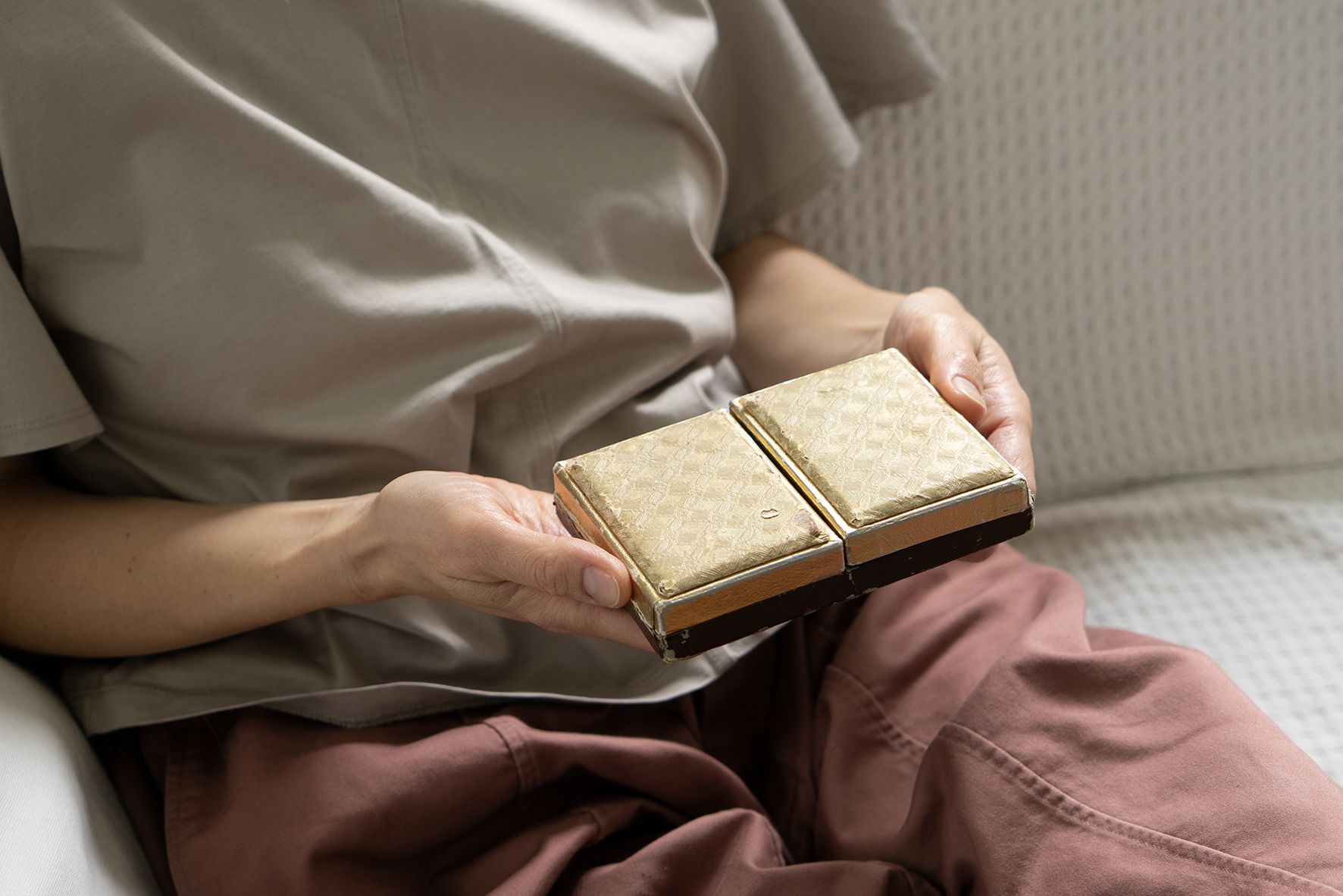
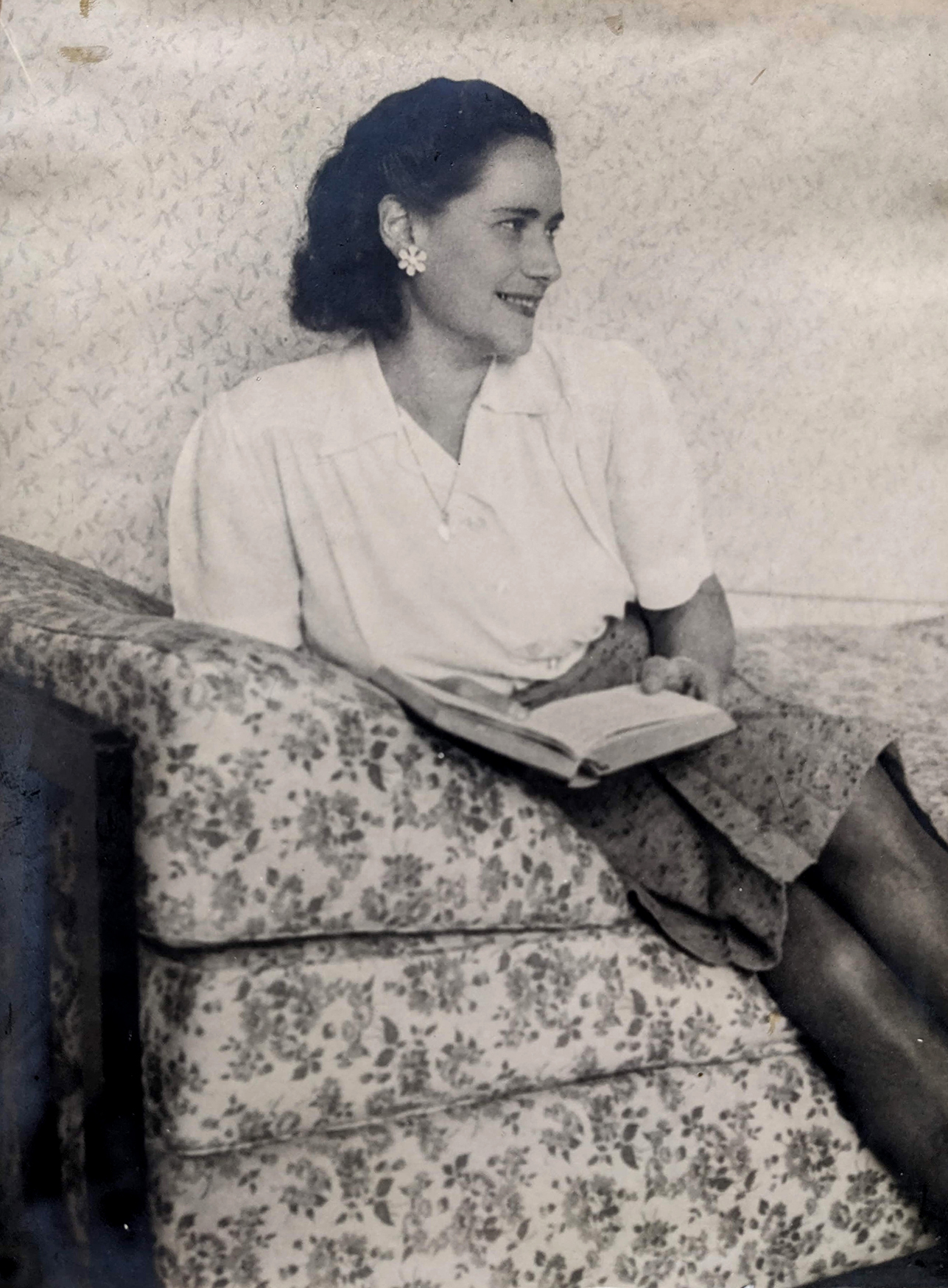
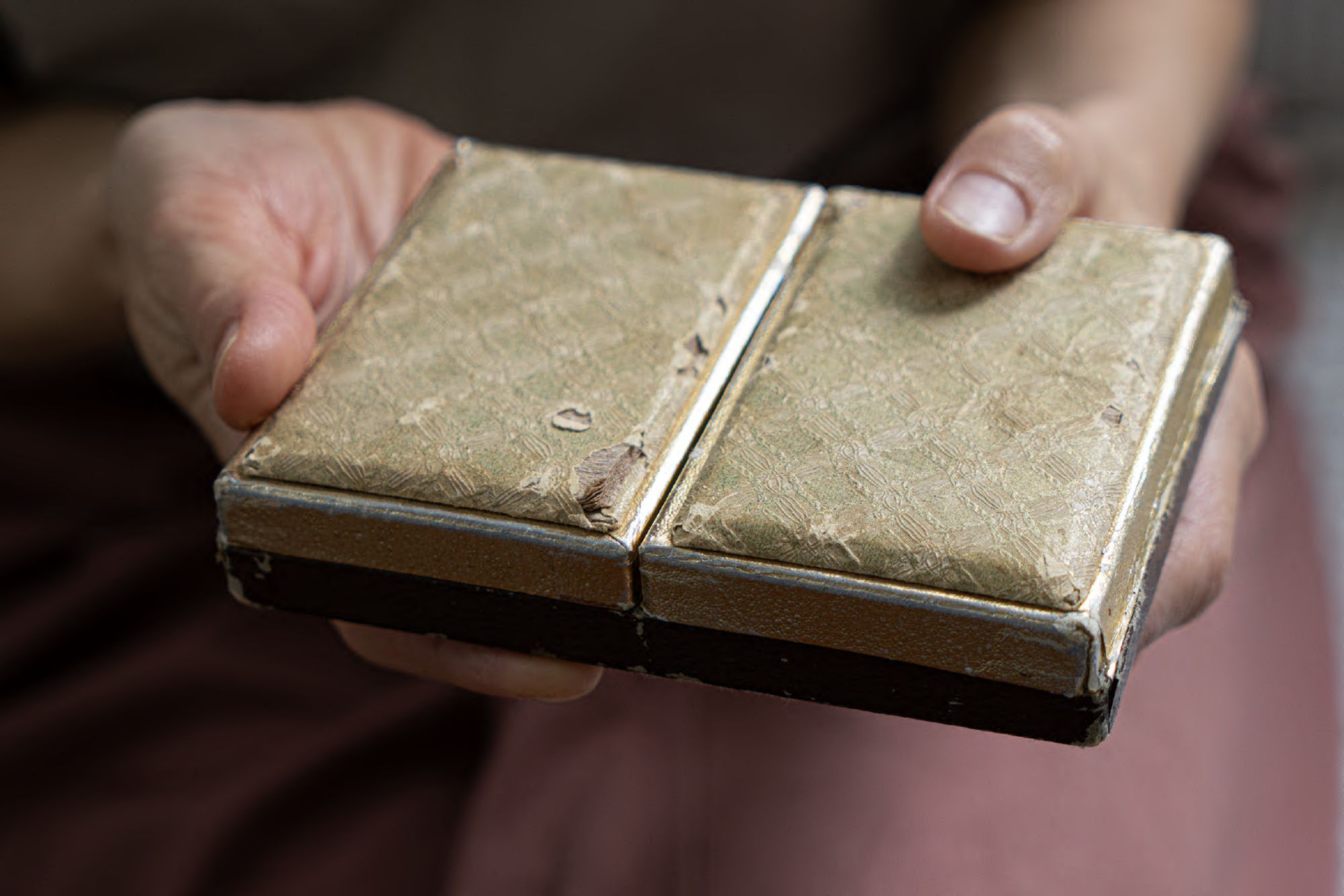
A z tohto všetkého, z tohto obrovského množstva všetkých rodinných vecí, ktoré si spomenula, si pre tento rozhovor vybrala jednu jedinú. Keď si mi prezradila, o čo ide, hneď ma zaujalo to, že sa nejedná o pasívny objekt, že to nie je nejaká vázička alebo svietnik, ktoré stoja na parapete. Tvoja blízka vec je niečo, čo v sebe nesie hodnotu spoločne strávaného času. Je to tiež vec, ktorá vizuálne pôsobí až magicky. Keď sa pozriem na tú zatvorenú krabičku, asi by som nevedela povedať, čo presne sa v nej skrýva. Mohlo by to byť všeličo. Takže prečo práve tieto hracie karty?
Sú spojené s mojou omamou, ktorá bola vášnivá kartárka. A mne pripomínajú obdobie, keď som bola tínendžerka a spolu sme hrávali karty v ich dome na Hroboňovej pri Horskom parku. Mali tam krásnu záhradu. Hrávali sme amerického žolíka, buď u nich na verande alebo na záhrade.
Omama so mnou dokázala hrať hodiny a hodiny. Pritom to je taká pomalá hra. Tento americký žolík spočíva v tom, že vykladáš veľa postupiek a potom tam špekuluješ, čo s čím pospájaš, aby si sa zbavila všetkých kariet. Je to taká špekulatívna, strategická hra.
Spája sa mi to jednak s časom stráveným s ňou, a potom mi to pripomína i to, čo som sama nezažila, ale veľa som o tom počula. A síce, ako sa starí rodičia po vojne presťahovali na Palisády a začali nový život. A v rámci toho susedstva k nim chodili susedia hrať žolíka. Neviem, či s týmito kartami. Predpokladám, že nie. To boli päťdesiate roky a v tých časoch bola jedna jediná čiernobiela televízia na celý náš dom, v ktorom žilo šesť rodín. A možno i na niekoľko domov. Vtedy sa televízia chodila pozerať k jednému susedovi domov. Viac sa počúvalo rádio. A preto bol čas i na karty. Moja omama vytvorila susedskú komunitu, kartársku partiu, ktorá tam u nás v kuchyni po večeroch hrávala karty a niekde pod stolom boli aj deti.
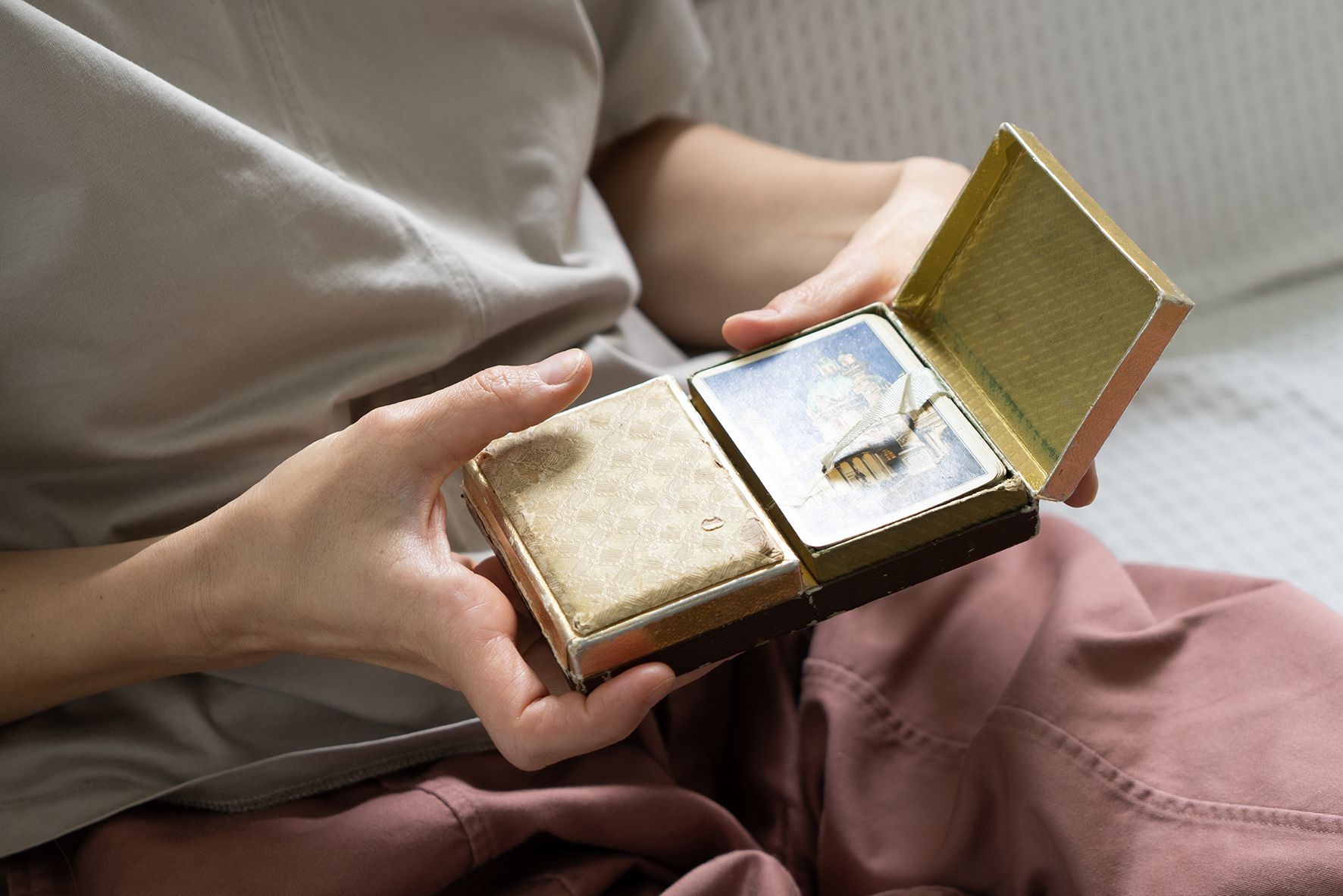
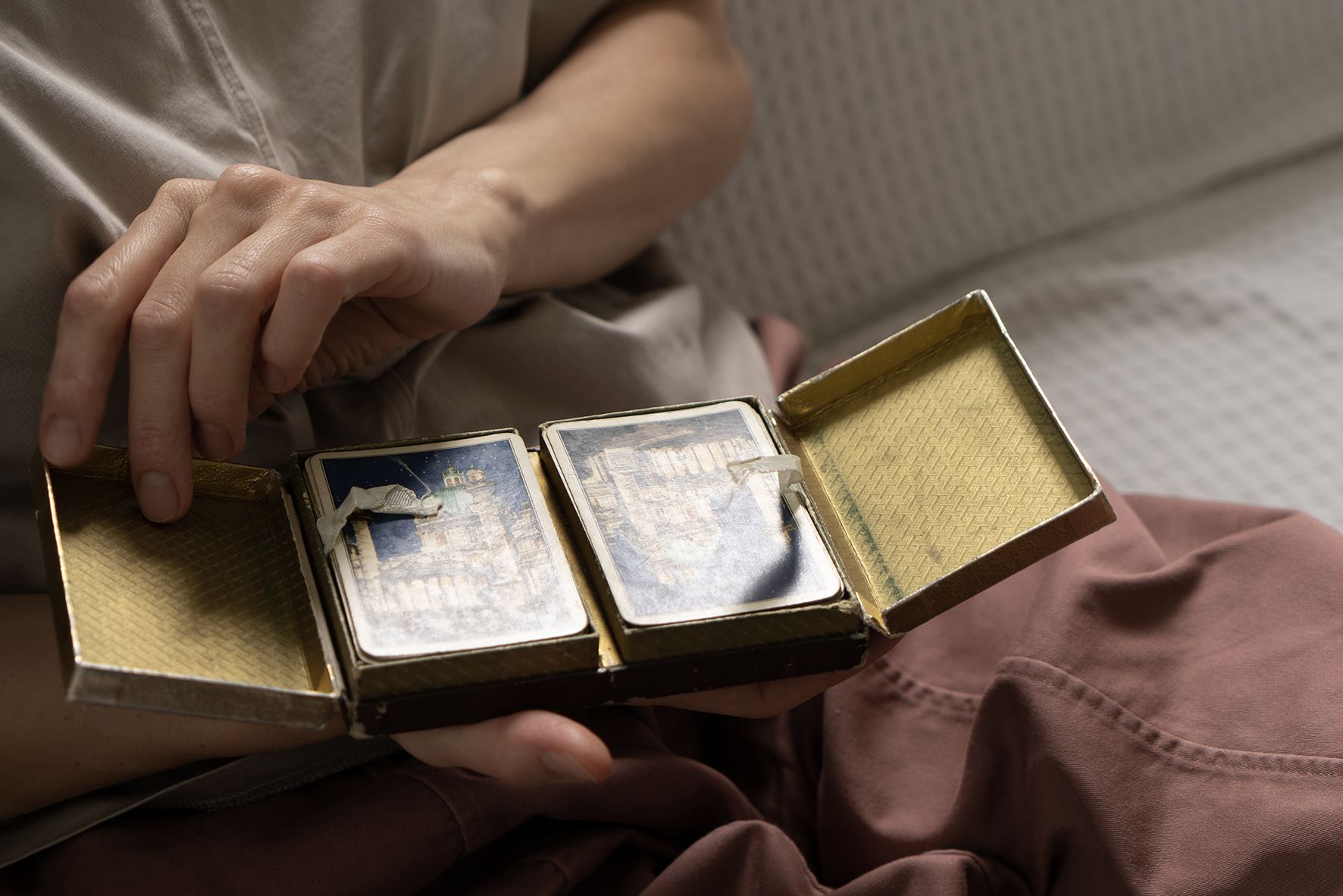
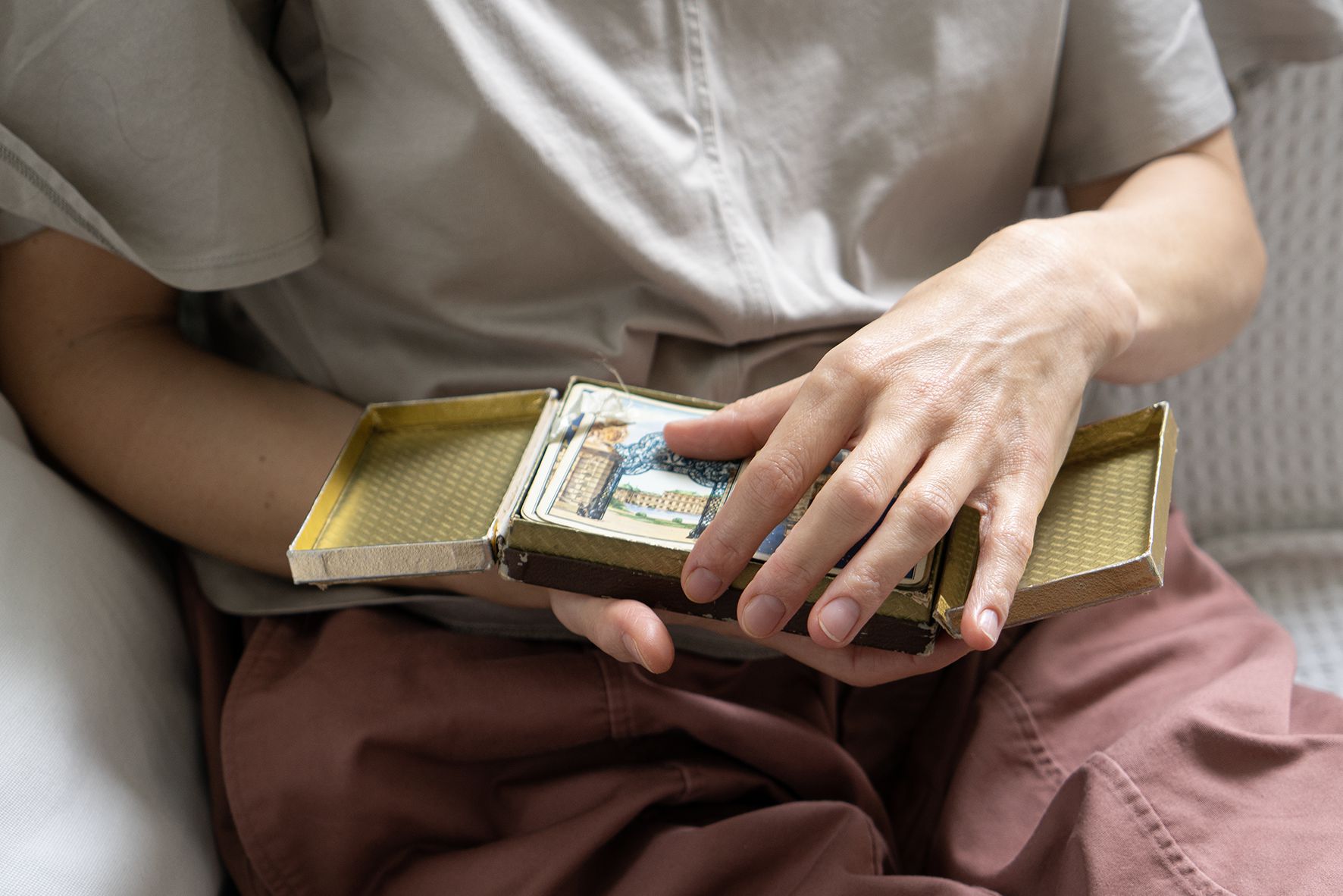
Tá krabička je naozaj krásna, až ma dojíma, s akou precíznosťou je vyrobená. Poctivo, ako sa kedysi robili veci. A teraz som si všimla, že tie karty boli vyrobené vo Viedni, tu je to napísané takým malinkým písmom.
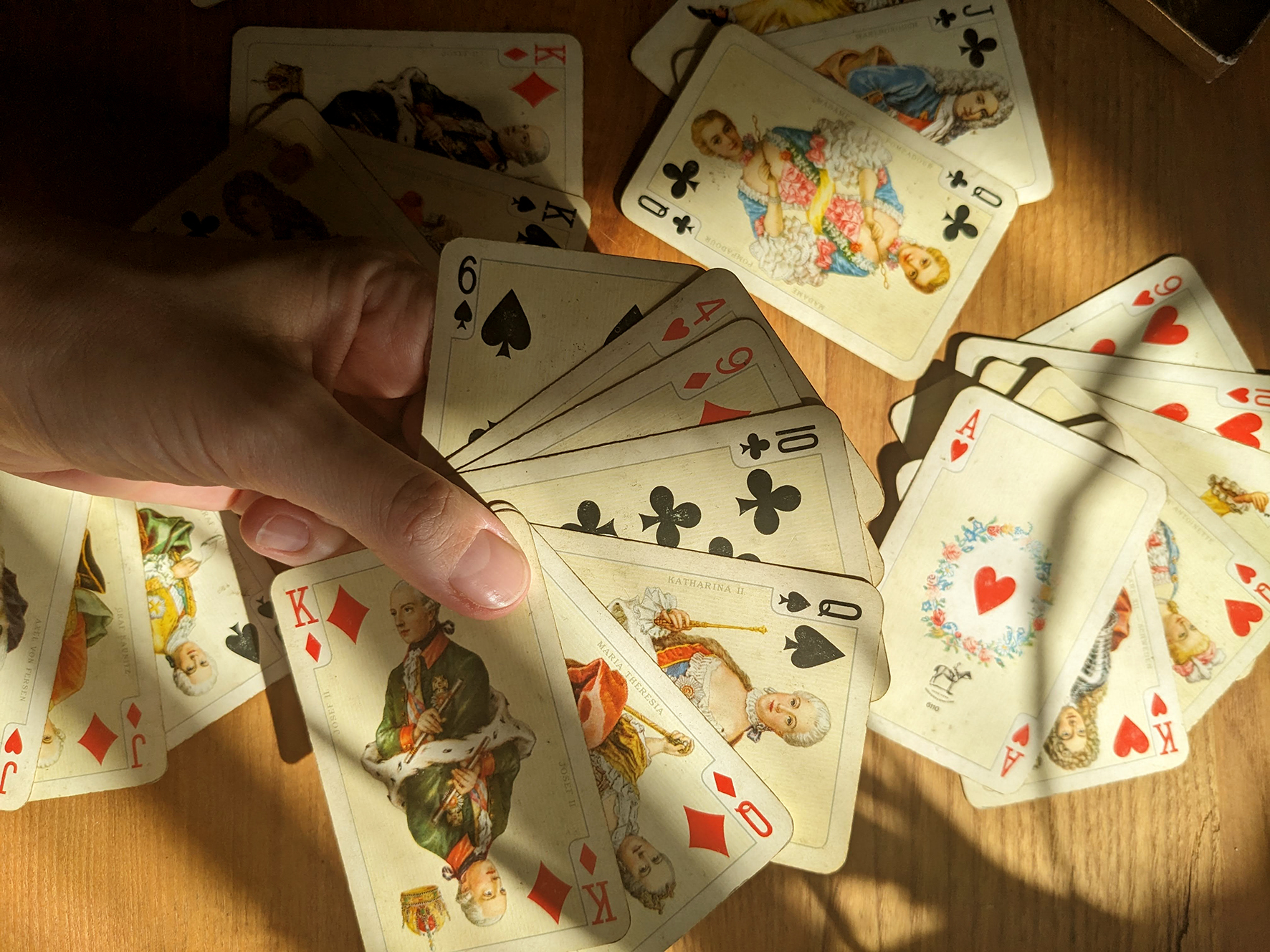
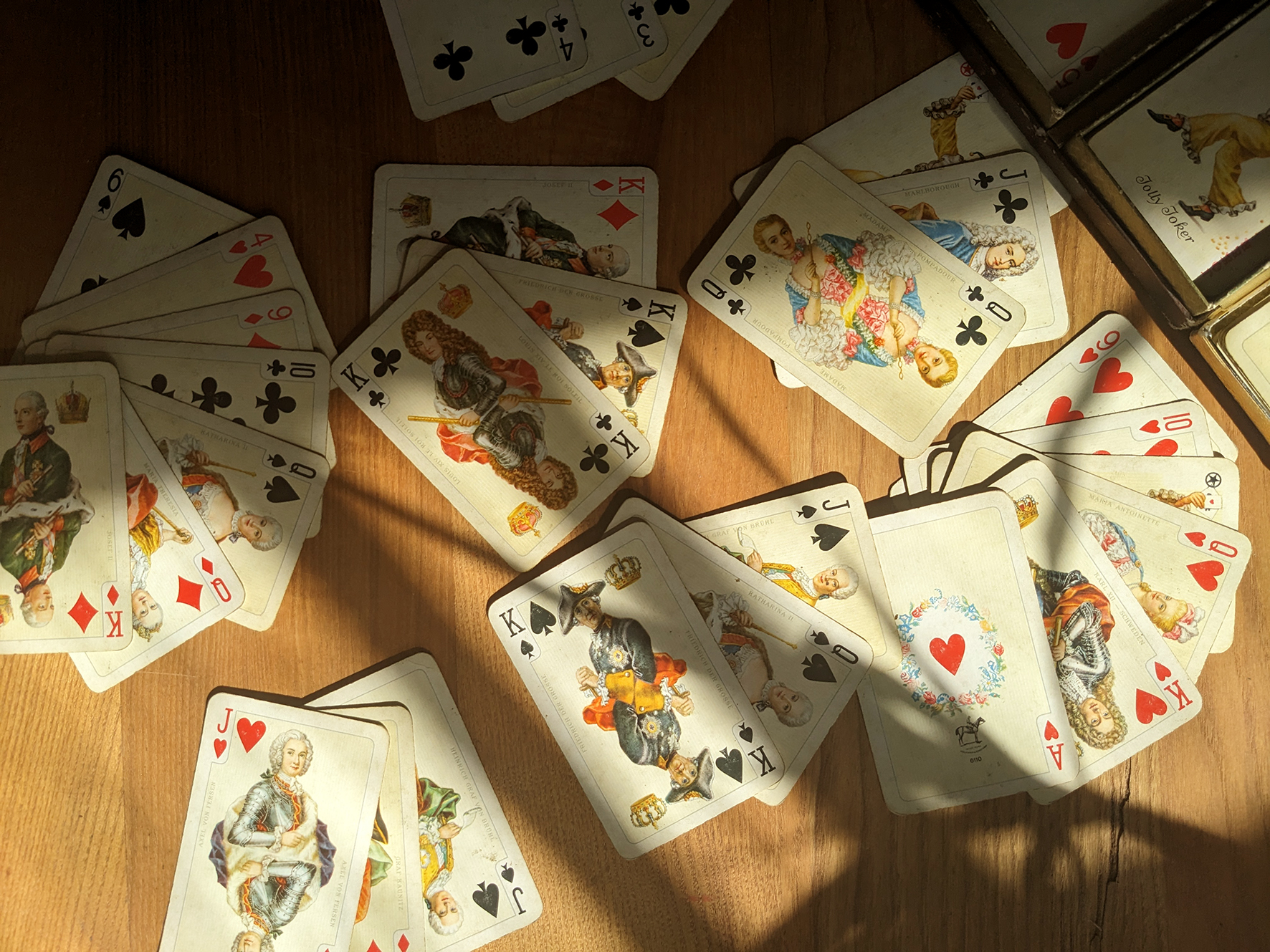
Ja som si toho výrobcu googlila a zistila som, že tento Ferdinand Piatnik je veľmi úspešná rakúska firma, ktorá dokonca ešte stále existuje. Vyvážajú do celého sveta, tisícky kariet a iných stolových spoločenských hier. Vznikli začiatkom 19. storočia a až do druhej svetovej vojny vyrábali len karty do celej bývalej monarchie. Po druhej svetovej začali s puzzle. Keď sa pozrieš na ich web, tých kariet je tam od výmyslu sveta. Všelijaké tematické od reprodukcií umenia, obrazov… Na týchto kartách je napríklad Mária Terézia a jej deti, Ludvík XIV Slnko, ale aj Madame Pompadour a iní významní grófi.
Čo sa ti vybaví, keď si spomínaš na tvoju omamu?
Omama bola elegantná a spoločenská dáma. Pre mňa bola vždy vzorom vitality, energie a ženskej sily. Bola veľmi silná osoba. Pochádzala z Lučenca a vyštudovala farmáciu v Prahe. Počas vojny sa jej rozpadlo prvé manželstvo po tom, ako jej syna zobrali do koncentráku. Myslím, že mal vtedy štyri roky, Janko. Ona sama sa išla ukryť do kláštora v Budapešti, kým syna nechala u svojej sestry v Lučenci. Jej manžel bol zverolekár a preto dostal výnimku. Myslela, že jej dieťa tam bude v bezpečí… Synčeka to žiaľ nezachránilo. V Budapešti potom stretla môjho opapu, ktorý sa tam tiež ukrýval. A tam sa zaľúbili. On bol zo Sabinova, právnik a výborný huslista. Skladal jej piesne, niektoré mám dodnes. Ostatne, obom cez vojnu zahynula väčšia časť rodiny, z početných súrodencov sa zachránilo zopár.
No a potom si založili novú rodinu, narodili sa im dve dcéry: moja mama a jej sestra. Mama prišla na svet v roku 1948 a sestra o šesť rokov neskôr. V tom čase bolo okolo nášho domu, eklektickej vily raného 20. storočia na Palisádach 43, také veľké susedstvo, neboli tam ploty, všetky deti sa hrali spolu vo vzájomne prepojených záhradách. Tak mi mama opisovala jej detstvo. A tam som potom vyrastala i ja, na tých príbehoch. Kto sa s kým poznal, kto sa s kým kamarátil. To všetko som počúvala.
Tie Palisády sú stále vo mne. A zároveň aj ten moment, keď sa omama s opapom neskôr odsťahovali. Okolo roku 1970 odišli do toho spomínaného domčeka pri Horskom parku na Hroboňovej. Prežili tam spolu pekných vyše 20 rokov. Tam to bolo krásne, omama sa starala o záhradu a o nás, vnúčence.
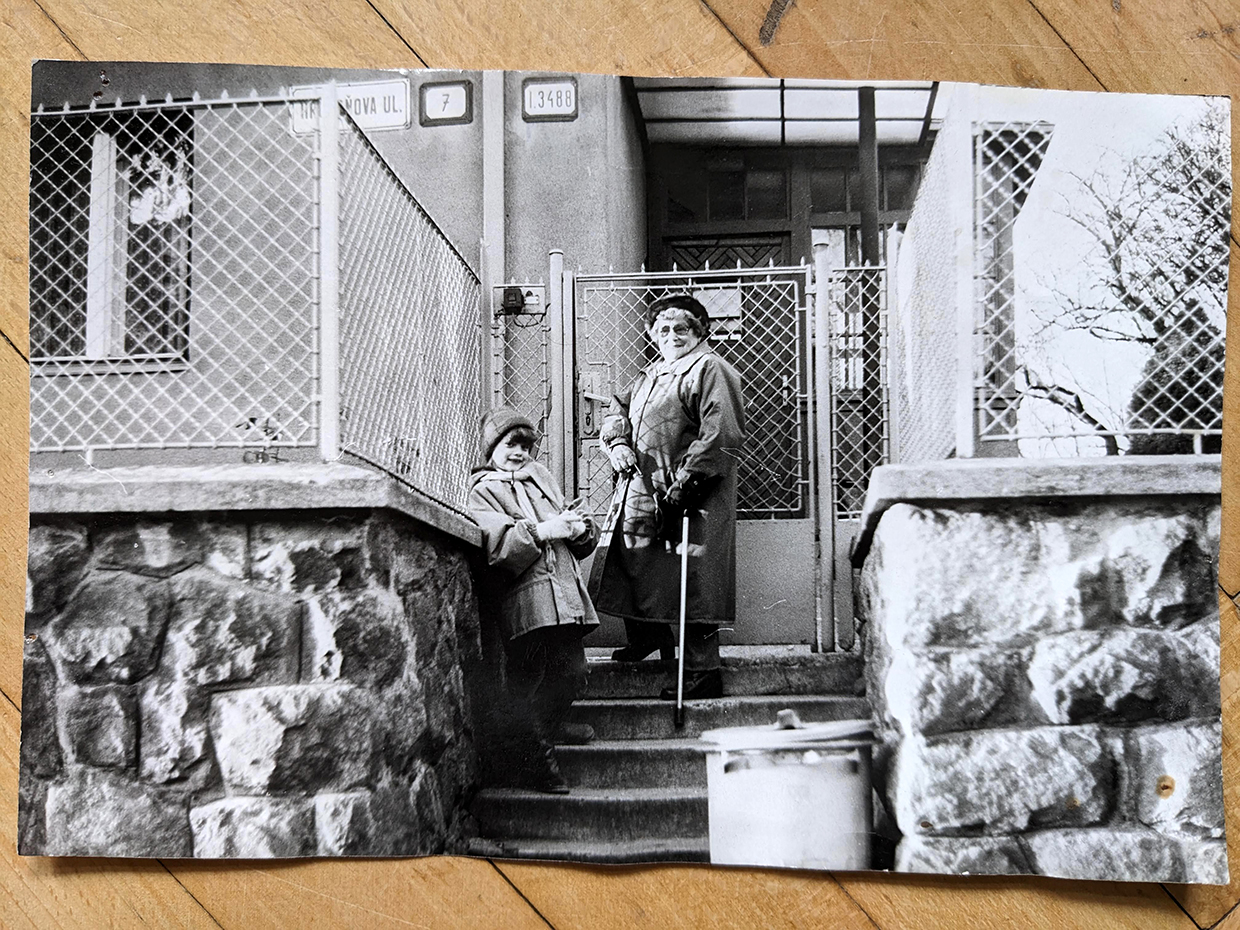
A tam ste hrávali karty?
Áno, tam som hrávala potom ja s ňou. V hlave mám stále jasnú mentálnu mapu celého domu aj so záhradou. Ja som tam totiž trávila moje prvé roky života na dennej báze, namiesto jasiel. Bola to myslím medzivojnová stavba, na čistom štvorcovom pôdoryse, tri izby a kuchyňa, vstup cez verandu. Dookola bola záhrada, taký ofset domu. Presne viem, kde boli ruže, jahody, maliny, egreše, ríbezle, šťavel, paradajky, topinambury, broskyne, baracky, hrušky, čerešne, višne, orech, jablká… My sme hrávali karty v lete vzadu na záhrade vedľa lesných jahôd, na jeseň a na jar na tej verande na fotke. (V zime sa tam len sušilo ovocie.) Veranda mala presklené kazetové okná, ktoré mi dovolila omama pomaľovať fixkami na sklo.
Toho amerického žolíka som sa myslím naučila v nejakom tábore. A potom som to musela naučiť ju, lebo ona poznala len klasický žolík, ktorý som zase nikdy nevedela ja. Tieto karty ma tak fascinovali. Ona mala rôzne, ale tieto boli pre mňa ako pre dieťa úplne magické. Vlastne mi ani nedošlo, čo presne je na nich zobrazené, ale boli proste kráľovské. Takto som si predstavovala, že asi najstaršie karty mohli vyzerať. Pre mňa predstavujú aj také spojenie s monarchiou, tým Rakúsko-Uhorskom, odkiaľ oni pochádzali. U nich doma sa hovorilo maďarsky aj nemecky, neustále bola pustená rakúska telka ORF-ka a tiež aj maďarská TV.
Takýto bol aj celý ten náš dom na Palisádach 43. Pamätám si, že ešte niekedy v deväťdesiatych rokoch tam žila tante Hilda. Ona bola presne tá Prešpuráčka, ktorá vedela nemecky, maďarsky, celý čas sedela v tom svojom okne na prízemí, fajčila a pozorovala svoje okolie, o všetkom vedela. Cez ňu som si uvedomila pozíciu toho nášho domu, to, ako bol situovaný v Starom meste. Hilda mi často opisovala tri obrovské gaštany, ktoré stáli oproti domu. Ona ich sledovala každé ročné obdobie, ako sa menia, že ten strom má tú svoju krásu, ktorú ti dokáže ponúknuť v každom ročnom období. Celú tú zmenu od kvitnutia až po moment, kedy gaštany opadali. Vtedy bolo z nášho domu vidno Dóm Sv. Martina. To je dnes už asi nemožné. Ten dom predali a on sa úplne zmenil, teraz má nadstavbu a tak ďalej. Pre mňa i on reprezentoval tú starú Bratislavu, to ozajstné susedstvo.
Pri tvojom rozprávaní vnímam dve hlavné línie v rámci príťažlivosti k tvojej blízkej veci. Jednak je to stará mama, ktorá je pre teba, ako tomu rozumiem, doteraz inšpiratívna. To sú tie ženské vzory, ktoré sú pre nás, čím sme staršie, tým dôležitejšie. V puberte a v ranej mladosti človek síce vníma dospelých, i to, že majú niečo za sebou, ale nemáme takú životnú skúsenosť, aby sme dokázali úplne doceniť ich príbeh. To ich konanie a tú silu, ktorá je taká nezlomná, ako to bolo u tvojej omamy.
A potom, ako ďalšiu silnú vrstvu tu vnímam aj tvoj vzťah k tomu miestu alebo miestam – domy na Hroboňovej a na Palisádach. Všetko, čo si videla, zažila vo vašom dome, v tejto štvrti, a ako ťa to formovalo. A samozrejme je tam aj ten čas strávený s omamou, ktorý je skrytý medzi tými kartami. Chvíle, ktoré ste spolu zažili.
Áno. V podstate mi tieto karty pripomínajú moje detstvo, ktoré je spojené so silnými osobnosťami rodičov a starých rodičov. Dnes mi po nich ostali len spomienky, ale aj blízke veci a isté životné hodnoty. Omame som vďačná, že mi ukázala, aké dôležité je pestovanie vzťahov. Ona aj opapa boli neúnavní udržiavači vzťahov, už len to kvantum listov, ktoré si vymieňali so vzdialenými členmi rodiny, ktorí prežili holokaust. Často som sa prehrabávala vo veľkej krabici s listami a pohľadnicami s cudzokrajnými známkami. A zároveň omama pracovala na tom, aby sa i jej najbližšia rodina pravidelne stretávala, hostila návštevy a najmä pripravovala spoločné obedy a sviatky. Bola v tom nekompromisná a v tomto zmysle bola našou Yiddishe momme. Na tejto fotke na verande sme so známymi z Ameriky, ja som tam asi jednoročná nad červeným melónom.

Všetci v rodine sme hovorili “idem za omamou”, ale mysleli sme tým oboch starých rodičov. Opapa hral svoju úlohu tiež, jeden druhého veľmi podporovali a pomáhali si. Bol omaminými “nohami”, pretože ona mimo záhrady veľmi nevychádzala, mala silnú astmu a koxartrózu. Som vďačná, že som mohla byť pri ich spoločnom stárnutí a vidieť, že také silné puto môže pretrvať do neskorého veku.
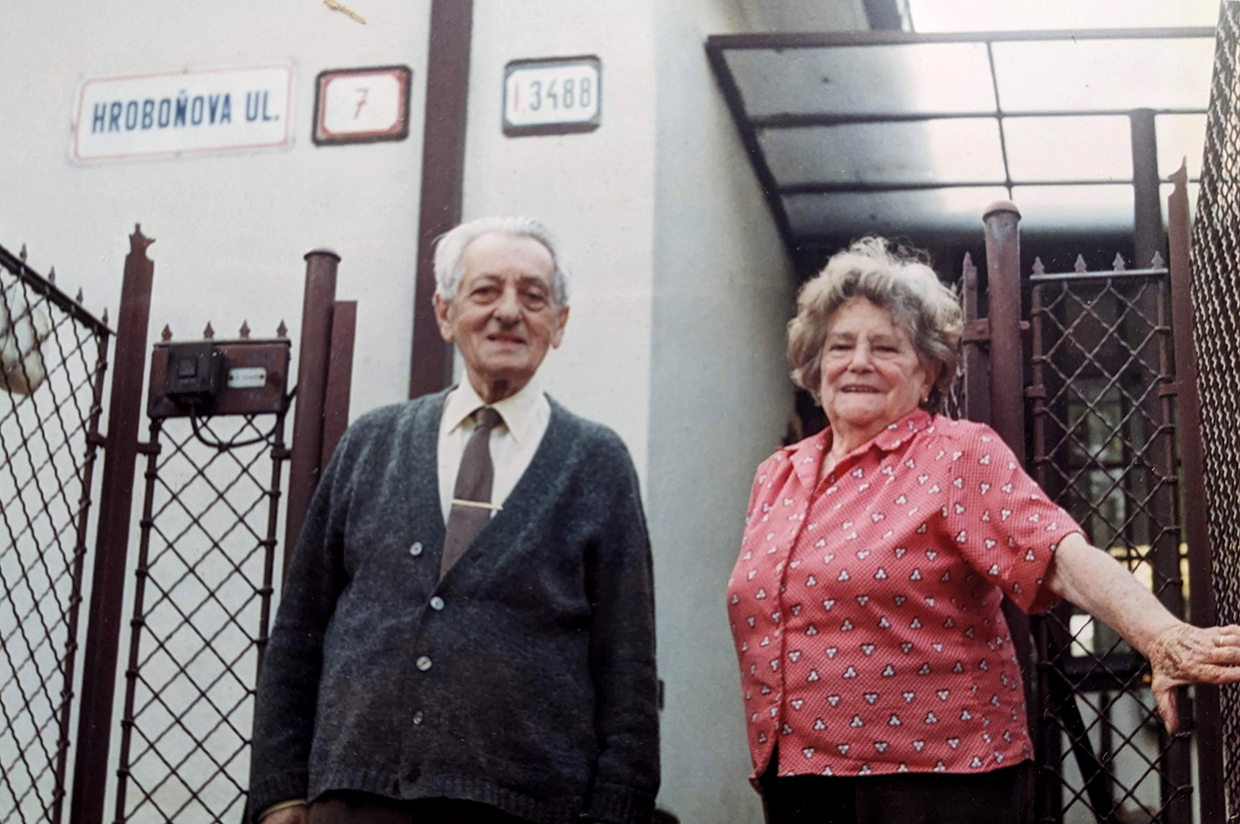
A dôležitý je pre mňa i ten priestor, kde sme (sa) hrávali. Zrejme vtedy sa vo mne sformovala určitá typológia intímneho priestoru, ktorý pre mňa predstavuje domov. Asi to bude dom so záhradou.
No a ja som si uvedomila, že odvtedy som vlastne nenašla žiadnu kartovú partáčku či parťáka. Chcela som amerického žolíka naučiť hrať Oskara, ale desať rokov je asi ešte skoro na takéto hry. Ale bolo by pekné, keby táto tradícia mala pokračovanie. Možno by som si potrebovala na staré kolená k tým kartám a všetkým ostatným nazbieraným veciam zaobstarať domček so záhradkou. Tam budem potom sedávať a hrať žolíka :).
Barbara Zavarská študovala architektúru na UMPRUM v Prahe (Prof. E. Jiřičná) a na VŠVU v Bratislave (Prof. I. Vaško), odkiaľ má aj doktorát so zameraním na kultúrny manažment v architektúre. V roku 2007 spoluzaložila OZ Punkt, ktoré sa zaoberá rozvojom mesta v interdisciplinárnom dialógu a šírením inovatívnych prístupov v dizajne, architektúre a urbanizme. V OZ Punkt je v riadiacej pozícií, venuje sa strategickému rozvoju, dramaturgii a participatívnym procesom. Na Slovensko priniesla medzinárodný prezentačný formát PechaKucha Nights, je spoluautorkou komunitného podujatia Dobrý trh, alebo platformy o ľuďoch a mestách CTZN.sk. Je zakladajúcou členkou ateliéru totalstudio a Aliancie Stará tržnica. Žije a pracuje v Bratislave.
[:en]This conversation gave me the idea of a twofold typology of close things: objects “passive” and “active”. Some close objects carry within them the memory of a person and others directly contain the time spent with them, shared moments that literally rubbed them into softness. Such like cards, for hours played with grandma.
Before we get to the object itself, let me ask you about your relationship to things, to collecting as such. On my visit to you, I saw all sorts of objects spread out over the space. I got the feeling from the atmosphere that you have a relationship to objects as symbols or carriers of memories. Can you tell me more about that?
It’s an interesting topic. On the one hand, I would like to live in a minimalist space, one where you can concentrate on your thoughts. Whenever it’s time and I tell myself I’m going to focus on something, I start cleaning up the incredible amount of stuff I have. And then I’ll dig into something.
And now I’m digressing a little bit, but it’s related to the topic. We recently took a test at Punkt from the Gallup Institute called the Clifton Strenghts Assessment. It consists of identifying thirty-four strenghts that represent your gifts or talents. It breaks this down into four headings where there’s strategic thinking, relationship building, then influencing as the ability to take the lead, and the last one is executing, or the ability to execute, to make it happen.
You use the abilities that come out in the top five 95% of the time. And those strengths that you have at the end, you make up for with the ones you have at the beginning. To me, that’s an interesting thing that came out of that. My strongest ones are mainly relational and implementational. Of the strategic ones, I only have one, but it’s pretty high up there with me – it’s input, which is a form of curiosity. This input ability of mine just relates to the fact that it’s important for me to gather different information, knowledge, or even things. And I store this information for the reason that it may come in handy sometimes. At work, this manifests itself in the way that I can many times bring something to the table that can direct a discussion or a project at that moment. That’s also why travel is important to me, why I like to read historical or anthropological texts. And when we talk about collecting objects, these family ones are about identity, about understanding yourself.
Objects, by their very nature, also represent information. They communicate something in themselves, but we often give them even more value if we know what is associated with them. What emotions, events. So you consider the fact that you collect things and like to surround yourself with them as part of your personality set, your passion for collecting information?
Definitely. It’s also a way of working with information. Which is still quite related to the topic that in the top five Clifton Strengths I also have restorative talents, which they translate as remedial or problem solving. And I actually do that nonstop, I’m always thinking about what I could fix or solve or restore. That’s also why I put a lot of things off because I know I can still make use of them. And indeed, I often use the principle of upcycling or using the old anew in my home, and I also like it in design and architecture. It’s important to me that things are not just pretty, but also functional. Maybe it’s because I’m always exposed to a lot of things that just gather dust.
What types of objects do you have around you?
I inherited a lot of the things I own. There’s a lot of perception of the family past, there’s my parents’ artwork, my dad’s library, for example. My mom was a person who went to a lot of different flea markets. She was interested in objects, old photographs, and she used all of that in her work. She also collected glass, porcelain. And my dad’s mom also collected lace and costumes, for example.
So I inherited all this. My mother, from the sixties onwards, put away clothes, and then the problem was that clothes were hard to find, things had to be sewn. One time she was on a trip to London and she brought back a black shiny rubber coat. And I wore these things of hers as a teenager. This coat was perfect, even though the lining was already completely leaky on the inside.
But today, if you follow Marie Kondo principles, you’re supposed to throw things away right away if you don’t use something for a year and don’t feel sparking joy about it… And I have “digs” like that in my closet, too.
When you mention Marie Kondo – I can’t quite identify with that kind of radicalism myself. How do you relate to it?
If I lived alone, I have a different perspective. But part of my space includes the lives of my partner Aleš and my son Oskar. Suddenly you can be totally paralysed by the moment that you have nowhere to put things. There’s dust everywhere. And occasionally some bugs come in, because in the old house it’s just like that.
I remember when we moved from Palisády. My mother was born in that house in 1948. I lived there until 2004. So there was over half a century of all kinds of stuff in that place. I was able to take some of it, but most of it was gone. There were piles of old bedding and sheets. Or Mom’s records, which she collected in bulk. We had a glass mosaic from one of her monuments in the basement. A lot of things went away, which I regret today. Then one day a friend told me he could have put it in the garden. But back then, in 2004, I didn’t have the network of people I have now. Now I would say come, take it. Or put it on Facebook in my favorite group, Nevyhadzujte, darujte! [Don’t Throw It Away, Donate It].
Listening to you, it seems to me that your family was completely anti-Marie Kondo. There’s a strong sense of material tradition there, those piles of stuff and the past contained in them.
It seems like in our country it’s either hoarded or thrown away, outside of Marie Kondo principles. Related to this is one thing my father couldn’t forget my mother. When he realized Biely priestor v bielom priestore [White Space in White Space] (S.Filko, M.Laky, J.Zavarský) in the seventies, and despite its success abroad, it looked like it would forever remain a drawer thing, my mother threw away some of the felts that were part of this work. She herself didn’t have enough space at home to hang her tapestries. After the revolution, there was interest in White Space, and even later, after 2000, they published a book on it. I remember my father saying over and over again: She threw this out to me. These were the oldest pieces, of which there are only a few left.
My father collected many books, which I have now inherited. We donated about twenty boxes from one apartment, then another twenty, and it seemed like nothing was left. Books were precious to my parents’ generation. Back then, they were exactly the information, the vital inputs. Every time I asked my dad at home about something, that what works how, he’d tell me look it up in that book, that’s where you’ll find it. After a while I was allergic to it because I wanted to hear it directly from him. But he always directed me to a book. And I still remember – off-the-record – that one time when I provoked him, he threw one of those books at me: Here, look! But it’s true that my father knew how to expound at length about things, so that I often got a lecture out of a single question. There was no compromise, either find it or listen to it. Today, I’d like to keep all his books, I see a bit of him in every single one, that broad spectrum of his interest from fine art, theatre, architecture to history and philosophy.
And out of all of this, out of this vast array of all the family things you could think of, you picked one and only one for this interview. When you told me what it was, I was immediately struck by the fact that it is not a passive object, that it is not a vase or a candlestick that sits on a windowsill. Your close thing is something that carries the value of time spent together. It’s also a thing that visually has an almost magical effect. Looking at that closed box, I don’t think I could tell you exactly what’s inside. It could be anything. So why these playing cards?
They’re connected to my obsession, which was being an avid card player. And they remind me of the time when I was a teenager and we used to play cards together in their house on Hroboňova Street near Horský Park. They had a beautiful garden there. We used to play American Joker, either on their porch or in the garden.
Grandma could play with me for hours and hours. It’s such a slow game. This American Joker is all about laying out a bunch of straights and then speculating what to pair with what to get rid of all the cards. It’s such a speculative, strategic game.
I associate that with both the time spent with it, and then it also reminds me of something I haven’t experienced myself, but I’ve heard a lot about it. Namely, how my grandparents moved to the Palisády after the war and started a new life. And as part of that neighbourhood, the neighbours used to come over and play jousting. I don’t know if with these cards. I suppose not. That was the fifties, and in those days there was one single black and white television for our whole house, which was six families living there. And maybe several houses. In those days, the TV used to go to one neighbour’s house to watch. You listened to the radio more. And that’s why there was time for cards. My grandma formed a neighborhood community, a card playing group that would play cards in our kitchen there in the evenings, and somewhere under the table were the kids.
That box is really beautiful, I am touched by the precision with which it is made. Honestly, the way things used to be made. And now I notice that the cards were made in Vienna, here it is written in such tiny print.
I googled the manufacturer and found out that this Ferdinand Piatnik is a very successful Austrian company that even still exists. They export all over the world, thousands of cards and other board board board games. They were founded in the early 19th century, and until WWII they only produced cards for the entire former monarchy. After World War II they started with puzzles. If you look at their website, there are cards from all over the world. Everything themed from reproductions of art, paintings… On these cards there is, for example, Maria Theresa and her children, Louis XIV the Sun, but also Madame Pompadour and other important counts.
What comes to mind when you think of your Grandma?
Grandma was an elegant and sociable lady. To me, she was always a model of vitality, energy and feminine strength. She was a very strong person. She came from Lučenec and studied pharmacy in Prague. During the war, her first marriage broke up after her son was taken to a concentration camp. I think he was four years old then, Janko. She herself went into hiding in a convent in Budapest, while she left her son with her sister in Lučenec. Her husband was a veterinarian and therefore he got an exemption. She thought that her child would be safe there… Unfortunately, it did not save her son. Then she met my oppa in Budapest, who was also hiding there. And that’s where they fell in love. He was from Sabinov, a lawyer and an excellent violinist. He composed songs for her, some of which I still have. By the way, both of them lost most of their family during the war, few of their numerous siblings survived.
And then they started a new family, they had two daughters: my mother and her sister. My mother was born in 1948 and my sister six years later. At that time there was such a big neighborhood around our house, an eclectic early 20th century villa at 43 Palisády street, there were no fences, all the children played together in the interconnected gardens. That’s how my mother described her childhood to me. And then I grew up there too, on those stories. Who knew who, who was friends with who. I listened to all that. Palisády are still in me. And also that moment when grandma and grandpa later moved away. Around 1970 they went to that aforementioned little house by the Horský Park [Forest park]on Hroboňova Street. They lived there together for well over 20 years. It was beautiful there, Omama took care of the garden and us grandchildren.
And you played cards there?
Yes, that’s where I played with her afterwards. I still have a clear mental map of the whole house and garden in my head. I spent my first years of life there on a daily basis, instead of the nursery. It was, I think, an interwar building, on a clean square floor plan, three rooms and a kitchen, entered through a porch. There was a garden all around, sort of an offset to the house. I know exactly where there were roses, strawberries, raspberries, gooseberries, gooseberries, currants, sorrel, tomatoes, Jerusalem artichokes, peaches, barackas, pears, cherries, walnuts, apples… We used to play cards in the summer in the back garden next to the wild strawberries, and in the fall and spring on that porch in the photo. (In the winter, it was just where the fruit dried.) The porch had glass casement windows, which grandma let me paint with glass markers.
I think I learned that American Joker at some camp. And then I had to teach it to her, because she only knew the classic joker, which in turn I never knew. I was so fascinated by these cards. She had a variety, but these were absolutely magical to me as a child. I actually didn’t even realize what exactly was depicted on them, but they were just royal. This is what I imagined probably the oldest cards might have looked like. For me they also represent such a connection to the monarchy, that Austro-Hungarian Empire where they came from. In their home, Hungarian and German were spoken, and there was always an Austrian TV ORF on, and Hungarian TV as well.
That was our whole house at 43 Palisády Street. I remember that back in the nineties Aunt Hilda lived there. She was exactly the Pressburger who knew German, Hungarian, sat in her window on the ground floor all the time, smoking and observing her surroundings, she knew everything about everything. Through her I became aware of the position of our house, how it was situated in the Old Town. Hilda often described to me the three huge chestnut trees that stood opposite the house. She watched them change every season, how that tree had a beauty of its own to offer you in every season. All that change from when the chestnuts bloomed to when they fell. That was when you could see St. Martin’s Cathedral from our house. That’s probably impossible today. They sold that house and it’s completely changed, now it’s got an extension and everything. For me, it also represented that old Bratislava, that real neighbourhood.
In your narrative, I perceive two main lines within the attraction to your cause. Firstly, it’s your grandmother, who I understand has been an inspiration to you so far. It’s those female role models that are more important to us the older we get. In puberty and early adolescence, one does get a sense of adults, and of the fact that they’ve been through something, but we don’t have the life experience to be able to fully appreciate their story. That of their actions and that strength that is so unbreakable, as it was with your grandma.
And then, as another strong layer here, I also see your relationship to that place or places – the houses on Hroboňová and on Palisády. Everything that you saw, experienced in your house, in that neighborhood, and how it shaped you. And of course there’s also the time spent with the drug that’s hidden between those cards. The moments you had together.
Yeah. In fact, these cards remind me of my childhood, which is associated with the strong personalities of my parents and grandparents. Today, I am left with only memories of them, but also close things and certain values in life. I am grateful to grandma for showing me the importance of nurturing relationships. Both she and grandpa were tireless relationship maintainers, just the quantum of letters they exchanged with distant family members who survived the Holocaust. I often rummaged through a large box of letters and postcards with foreign stamps. And at the same time, grandma worked to make sure that her immediate family also met regularly, hosted visitors, and especially prepared lunches and holidays together. She was uncompromising in this and in that sense she was our Yiddishe momme. In this photo on the porch, we are with friends from America, I’m there, about a year old, over a red melon.
Everyone in the family used to say “I’m going to grandma”, but we meant both grandparents. Grandpa played his part too, they were very supportive and helped each other. He was the ‘legs’ of the grandma because she didn’t get out much outside the garden, she had severe asthma and coxarthrosis. I am grateful to have been there as they grew old together and to see that such a strong bond can last into late old age.
And the space where we (used to) play is also important for me. Obviously, that’s when a certain typology of intimate space was formed in me, which for me is home. I guess it would be a house with a garden.
Well, I realized that I haven’t actually found a card partner or a playmate since then. I wanted to teach the American Joker to play Oscar, but ten years old is probably too early for such games. But it would be nice if this tradition had a continuation. Maybe I need to get a house and garden to go with those cards and all the other stuff I’ve collected in my old age. I’ll sit there and play joker then :).
Barbara Zavarská studied architecture at UMPRUM in Prague (Prof. E. Jiřičná) and at the Academy of Fine Arts in Bratislava (Prof. I. Vaško), where she also holds a doctorate with a focus on cultural management in architecture. In 2007, she co-founded Punkt, which deals with the development of the city in interdisciplinary dialogue and the dissemination of innovative approaches in design, architecture and urbanism. She is in a management position in Punkt, working on strategic development, dramaturgy and participatory processes. She brought the international presentation format PechaKucha Nights to Slovakia, is co-author of the community event Dobrý trh [Good Market], or the platform about people and cities CTZN.sk. She is a founding member of the totalstudio studio and the Old Market Hall Alliance. She lives and works in Bratislava.
[:]