[:sk]Mestom / CITLIVO VZDELÁVAŤ V ARCHITEKTÚRE A PLÁNOVANÍ MIEST[:en]Through the City / SENSITIVE EDUCATION IN ARCHITECTURE AND URBAN PLANNING[:]
[:sk]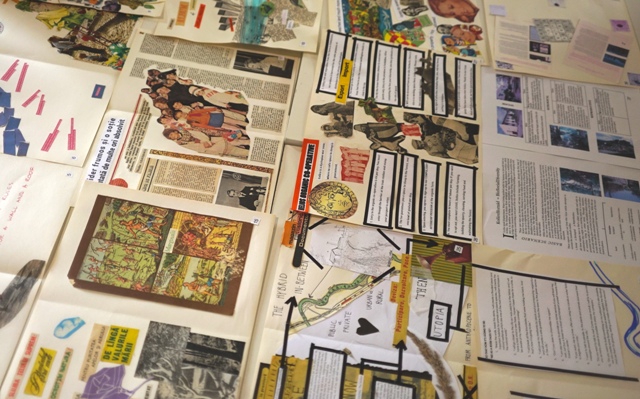
Foto: Gréta Čandová, 2021.
Miestotvorba
Miestotvorba (v angličtine môžeme hovoriť o ‘urban design’ alebo ‘spatial practice’) pre nás v sebe spája architektúru a urbanizmus, sociológiu, ekonómiu, geografiu, politiku, právo, umelecké prístupy a mnohé iné. Vychádzame z presvedčenia, že tvorbou priestoru môžeme chápať akúkoľvek činnosť, ktorá ho vedome pretvára. Miestotvorba tak kladie dôležitosť na procesy, ktoré priestor vytvárajú.
Rozšírenie toho, čo znamená tvorba priestoru, ako aj nové formy takejto tvorby a vzdelávania sa v nej, nie je žiadna nová téma. Venuje sa jej aj aktuálny koncept Nového Európskeho Bauhausu, ktorý do značnej miery ovplyvňuje aj víziu pre tunajšiu architektúru.[1] V zahraničí sa tomu tiež venuje napríklad Nishat Awan, Tatjana Schneider, Jeremy Till či Markus Miessen. V ich ponímaní sú miestotvorkyne a miestotvorcovia ľudia pohybujúci sa na pomedzí rôznych disciplín, ktoré sa venujú priestoru – geografia, architektúra, sociológia, politika a mnohé iné. Pohybujú sa tým pádom aj v iných rámcoch tvorby priestoru, ako sú napríklad zapájanie komunít, etika plánovania, design politík, research ako priestorová prax. Využívajú pri tom tiež rôznorodé nástroje týchto disciplín. Mnoho ďalších autoriek mapuje aj s tým súvisiace premeny výučby v architektúre.[2]
Na Slovensku a v širšom kontexte nášho regiónu sa však formálny a neformálny systém vzdelávania mení len málo. Na vysokých školách sa tvorba priestoru stále vyučuje výlučne na školách architektúry a urbanizmu. Toto učenie sa väčšinou sústredí na fyzické pretváranie priestoru a je často oddelené od iných disciplín, ktoré sa zameriavajú na nás všetkých – ľudí, systémy, zvieratá, rastliny. Spoločenský a politický rozmer praxe tým do väčšej miery uniká a s ním uniká aj to, do akej miery naše výsledky ovplyvňujú dennodenný život ľudí a iných živých či neživých aktérov. Postupy tvorby priestoru (fyzického alebo iného), ktoré sú medziodborové, inkluzívne, progresívne, rovnostárske, sociálne a environmentálne spravodlivé, stále nie sú populárne medzi skupinou tých, ktorí majú moc navrhovať mesto. Hierarchické štruktúry vzdelávania v architektúre a urbanizme totiž predurčujú a reprodukujú úzke vymedzenie disciplín. O podmienkach, v akých výučba prebieha aj vďaka silnému podfinancovaniu verejného školstva, hovorí veľa aktuálna vlna protestov vysokoškolských vyučujúcich v susednom Česku.[3] Vo vzduchu však visí nádej.
V našom regióne sa začínajú objavovať prístupy, ktoré tento stereotyp môžu prekročiť. Napríklad, v susednom Česku vedie Akadémiu výtvarných umení (kde sa nachádza aj škola architektúry) po prvý raz od jej založenia v roku 1799 žena, v bratislave vyštudovaná Mária Topoľčanská. Jej agenda sa sústreďuje aj na uváženie sociálnych tém, akou je napríklad dostupné bývanie. No zameriava sa aj na spôsoby, akými sa spolu učíme.[4] Na Slovensku sú spôsoby, akými sa spolu v miestotvorbe vzdelávame a tým tento odbor spoluvytvárame, predmetom našej školy Never Never School. V tomto článku načŕtame ako takýto proces môže vyzerať.
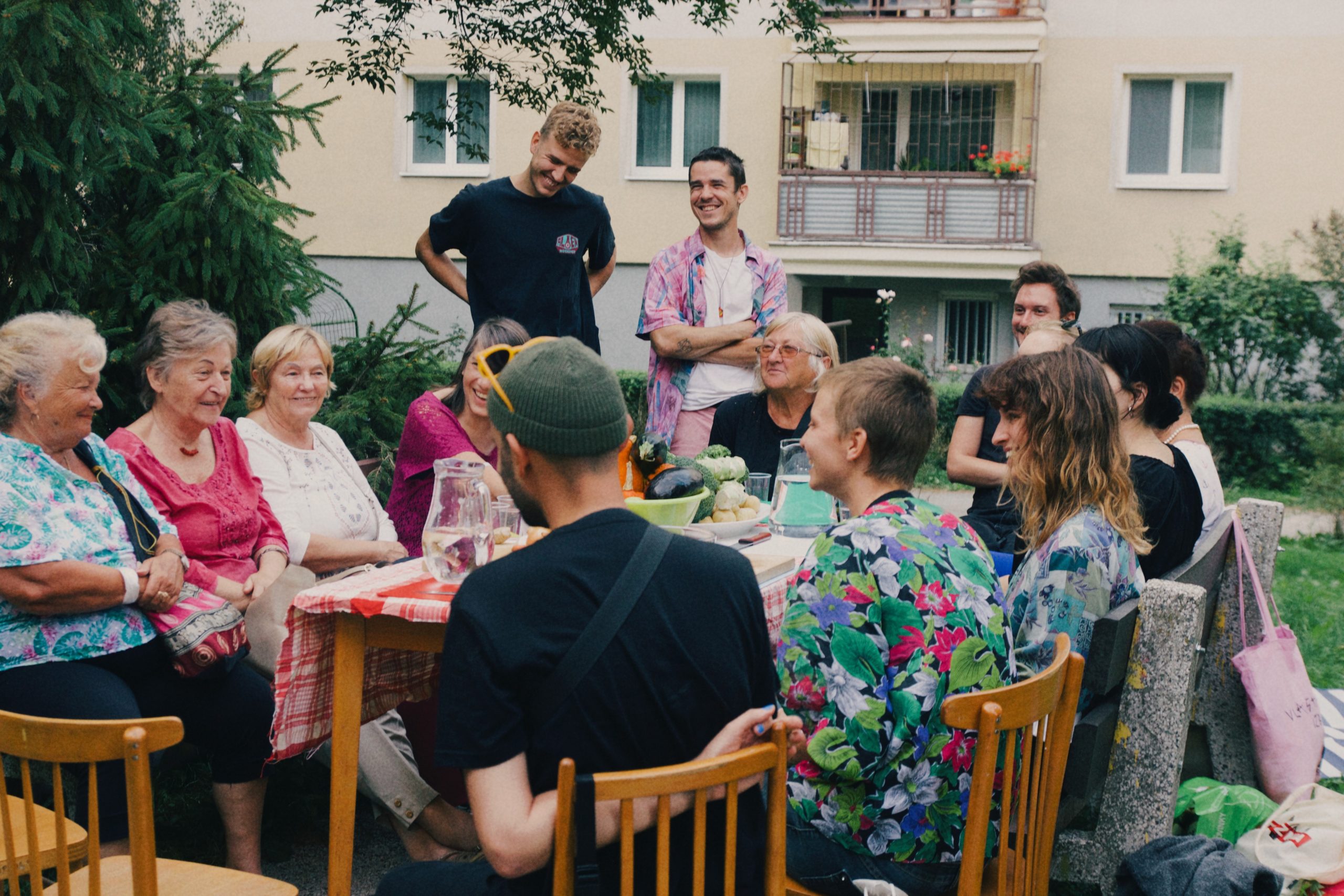
Foto: Gréta Čandová, 2021.
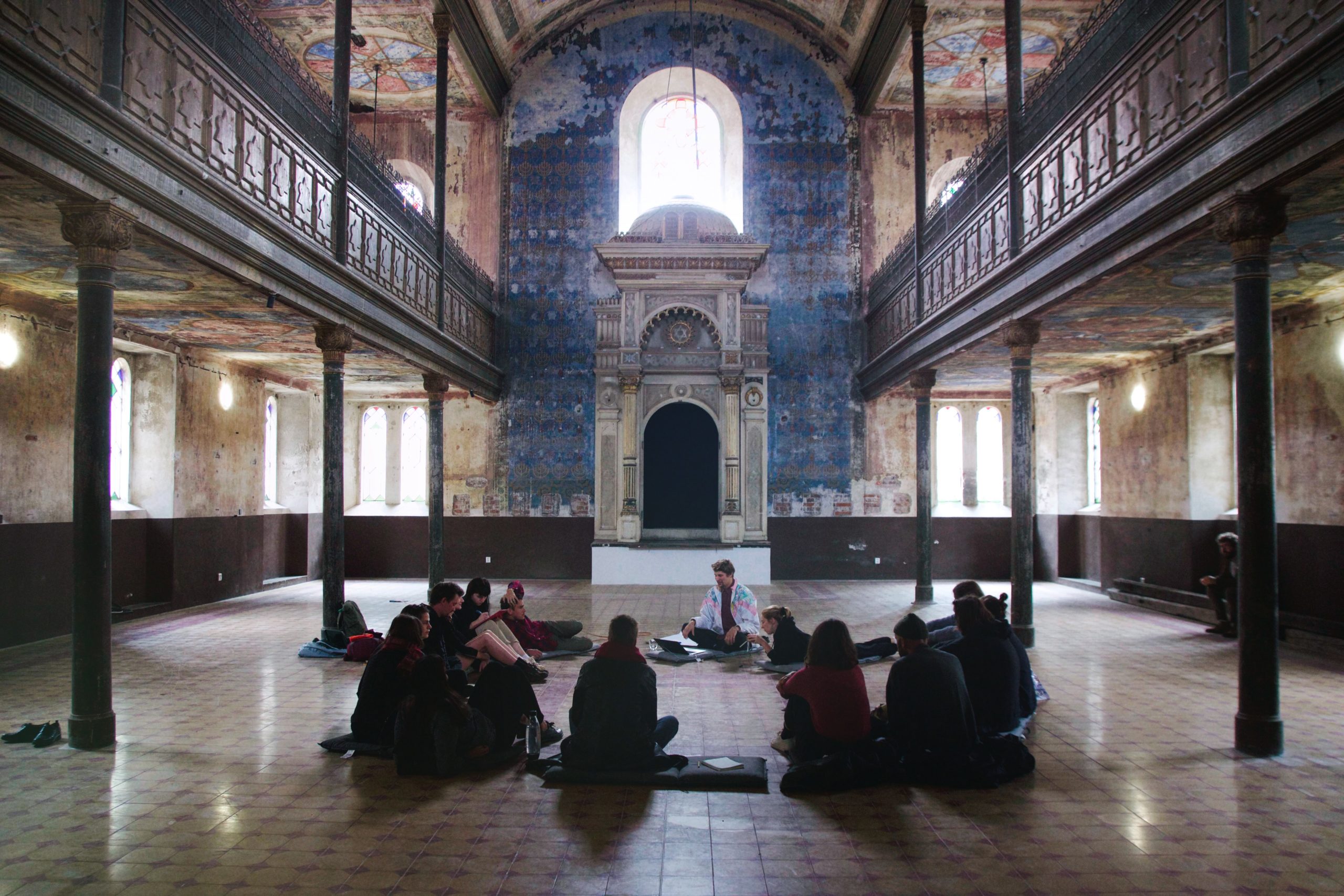
Foto: Gréta Čandová, 2021.
Prečo práve starostlivá výučba?
Počas školy prekračujeme hranice hierarchie učiteľ – žiak a spoločne sa vzdelávame v oblasti aktuálnych výziev, ktorých riešenie vnímame ako závislé od našej vzájomnej starostlivosti.[5] Možnosť starať sa, vytvárať a rozvíjať vzťahy, spoločenstvá a komunity vo svojom okolí totiž pre nás stojí v centre starostlivého mesta. A v súvislosti s ním stojí aj pozorné vnímanie potrieb rôznych aktérov a aktériek. Každý a každá z nás má totiž iné vízie a potreby, ktoré vychádzajú z toho ako sme boli vzdelané, aké máme perspektívy, skúsenosti, alebo čo nám napríklad umožňuje naše telo. Tieto potreby sa odrážajú aj v predstavách o podobe tvorby dobrého mesta, ktoré je tak pre každú osobu trochu iné – tieto rozdiely a mnohosť dáva Never Never School naproti tradičnému vzdelávaniu do popredia.
Takýto prístup môže byť spôsobom posilňujúcim schopnosť odboru smerom k inklúzii a sociálnej a environmentálnej spravodlivosti a tým aj šancou lepšie čeliť socio-ekonomickým krízam v zmysle vízie tvorby podmienok ‘dobrého života’[6]. Pre priblíženie načrtneme perspektívy starostlivej pedagogiky podľa jednotlivých členiek Never Never organizačného tímu: Naša kolegyňa architektka Zuzana vníma starostlivú pedagogiku ako podporu ľudí naučiť sa to, o čo sami a samé javia záujem na základe ich potrieb, prípadne prepájania potrieb s perspektívou ich potenciálneho záujmu. Základným slovom v takejto výučbe je usmerňovať. Usmerňovať to, čo tí ľudia chcú robiť, rôznymi spôsobmi. Niekedy to znamená diskutovať s nimi hodinu a pol, inokedy si s nimi 15 minút kresliť alebo dať ich dokopy s inou skupinou či jednotlivcom… Výučbu všetky dávame do kontextu potrieb ďalších ľudí a vecí okolo, vrátane svojich vlastných potrieb. Ako hovorí naša kolegyňa sociologička Lýdia, ide tiež o to pomôcť s priznaním svojho aktuálneho naladenia sa, svojich predošlých skúseností, politických názorov, spôsobov, akými pracujeme… a možnosť prejaviť ich na základe toho v ich ďalšej práci.
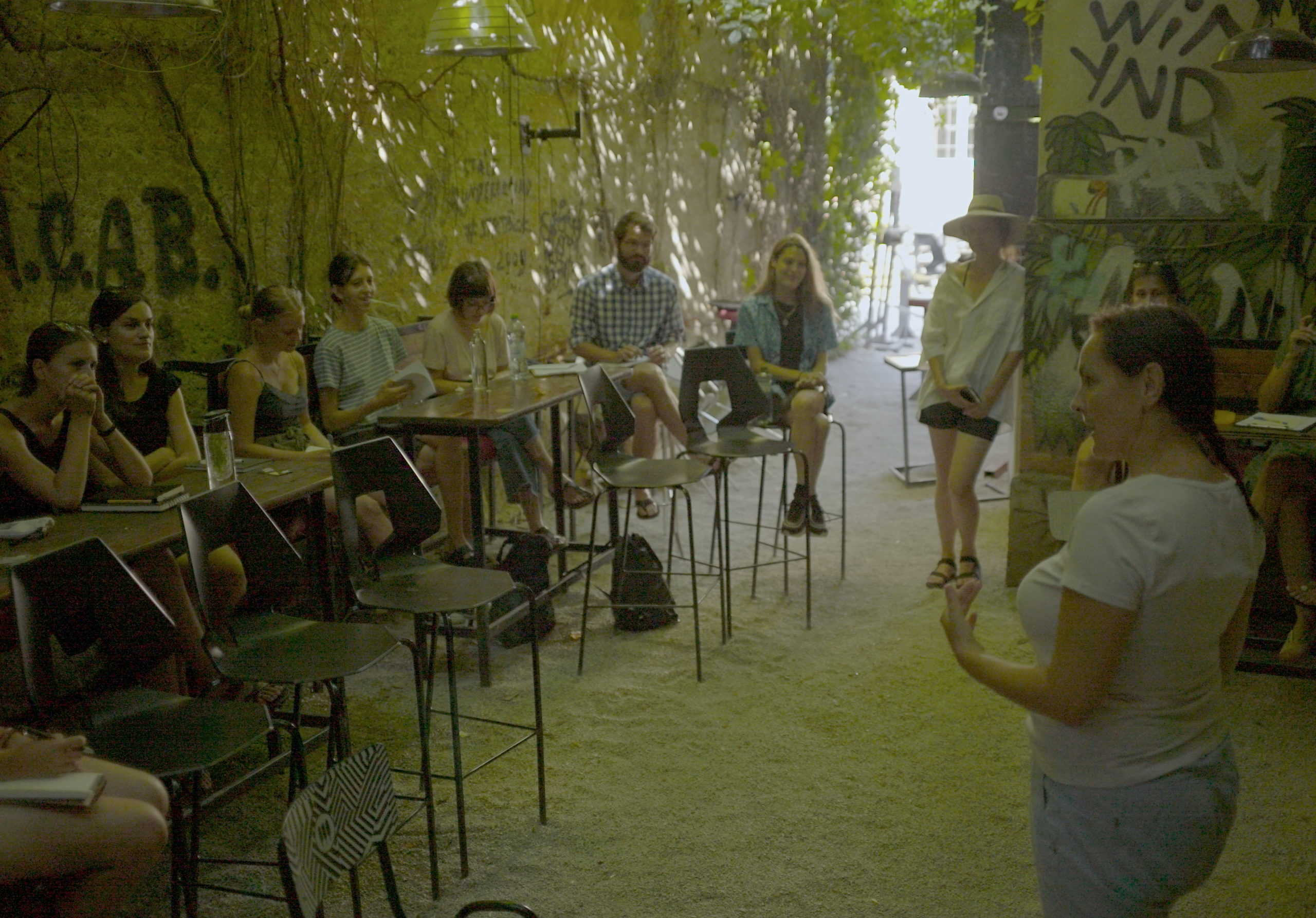
Foto: Gréta Čandová, 2021.
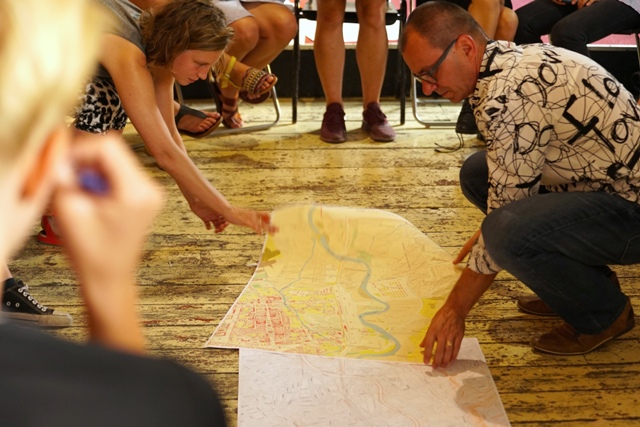
Foto: Gréta Čandová, 2021.
Podľa Viktórie, opäť architektky v Spolke, je v starostlivej výučbe dôležitá nejaká forma emancipácie. Na Slovensku je v školách všetko definované v rámci hierarchie. K učeniu vie naopak povzbudiť emancipovanejší, demokratickejší proces diskusie. No dôležitý je aj kontext kde sa učíme. V prípade Never Never School vytvárame priestor pre učenie v mieste, s ktorým nemá nikto predošlú skúsenosť. Možnosť vytvoriť si iný a vlastný priestor k vzdelávaniu, kde nie sú jasne stanovené pravidlá toho, čo napríklad myslíme architektúrou je už samo o sebe emancipačné. Aj podľa architektky Kristiny neformálne metódy a osobná skúsenosť provokujú k citlivejšiemu, hĺbavejšiemu vzťahu k priestoru, k občianskej angažovanosti a spojitosti s príbehom mesta okolo. Mizne tradičný hierarchický rámec a tak každý či každá dostáva šancu prejaviť sa v najviac komfortnej forme.
Vytvorenie priestoru, kde nie sú jasne stanovené pravidlá je však veľmi náročné. Základom ‘caring pedagogies’ je podľa našej spolupracovníčky Hany dávanie slobody osobe, ktorá sa učí, no aj dávanie nástrojov toho, ako túto slobodu zvládnuť, pretože na takúto slobodu nie sme zvyknuté. Skrátka: máš slobodu robiť si čo chceš, ale nenechávame ťa len tak. Môžeš sa na nás obrátiť, spoľahnúť. Pedagóg alebo pedagogička vytvára záchrannú sieť. Myslí na jednotlivé potreby ľudí bez hodnotenia, aké sú. A to je jedna z najťažších vecí na starostlivej forme učenia druhých, o ktorej sa rozprávame. Dávame napríklad pozor aj na to, aby sa prejavila aj osoba, ktorá sa do diskusie zapája málo. Aj miestnosť ako takú nastavujeme podľa toho, či sa učenia zúčastňujú napríklad osoby, ktoré dobre nepočujú alebo nevidia a tak musíme prispôsobovať veľkosť svojej prezentácie. Keď je zúčastnená osoba nestarostlivá, mala by si vedieť to včas odhaliť a začať s tým otvorene a trpezlivo pracovať. Myslieť na detail.
Spolutvorba nepatrí len do praxe po škole
To všetko sa premieta aj do našej výučby. V rámci Never Never School v roku 2018 boli formáty učenia sa zmiešané. V jednom dni sme sa učili mapovať miesto pozorným načúvaním mu, v tom druhom sme krajinu zaznamenávali cez pohybový workshop… To boli formáty, ktoré vytvárali alternatívne možnosti toho ako sa vyjadriť a diskutovať o téme. Diskutovanie vo verbálnej alebo písomnej forme sú najčastejšie používané spôsoby. Ľuďom, ktorí v nich nie sú prirodzene dobrí a dobré však nedávajú priestor zapojiť sa do diskusie. Mať možnosť vyjadriť svoj názor a expertízu v inej forme bolo oslobodzujúce a osobne veľmi prínosné. Informácie a skúsenosti nasiaknuté z netradičnej metódy výuky či pozorovania ostávajú v pamäti dlhšie a ponúkajú priestor pre slobodnú analýzu a interpretáciu.
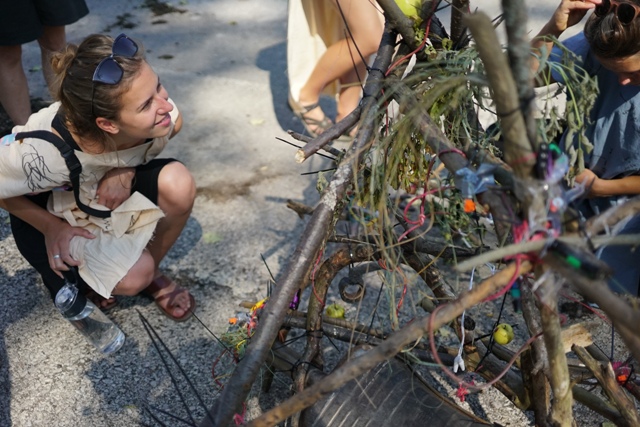
Foto: Gréta Čandová, 2021.
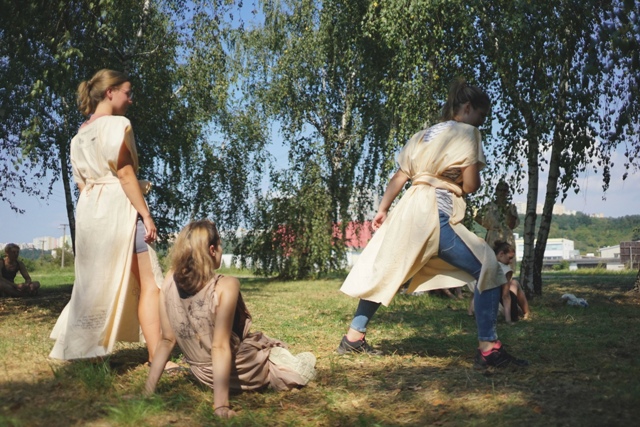
Foto: Gréta Čandová, 2021.
Jedným z prejavov dobrej starostlivej výučby je, že si každý a každá ponechá svoj ‘rukopis’ v metaforickom zmysle, no ešte ho viac prehĺbi a rozvinie. V roku 2021 sme počas letnej školy starostlivú výučbu praktikovali skrz ponúknutie konzultácii pre projekty účastníčiek a účastníkov. Ich výsledky sa nelíšili od ich počiatočných návrhov. No boli hlbšie, rozvinutejšie, a… naozaj jeden od druhého veľmi odlišné. To nás potešilo najviac.
Starostlivé pedagogiky sú silne prepojené s praxou spolutvorby a vedením participačných projektov: V rámci nich koncipujeme priestor, kde ľudia môžu spolu s nami rozmýšľať alebo akokoľvek prispievať do tvorby mesta. Never Never sú testom metód toho čo môže fungovať a čo naopak nie, kde sa kto cíti dobre a môže svojvoľne rozmýšľať a kde nie, … a to sú všetko rôzne polohy zapájania ľudí do tvorby miest. Pedagogika a participácia sú prepojené a používame pri nich často tie isté metódy. Obe sú o spolutvorbe a nie o jednosmernom vnímaní informácií. No aj participácia, aj facilitácia, aj miestotvorba tak isto ako starostlivé učenie si vyžaduje svoj čas, čas, ktorý nás niečo stojí. Aby sme sa na ne pripravili, aby sme si z nich niečo zobrali a preniesli do praxe, aby sme si naše skúsenosti zosobnili a aby sme s nimi vedeli dlhodobo narábať.
‘Škola’ znamená pôvodne voľný čas (z gréčtiny). Je to ten čas, ktorý potrebujeme aby bol voľný. Bez toho sa to nedá. Ako hovorí Zuzana, učenie cez spoločný zážitok starostlivej pedagogiky je ten spôsob učenia, ktorý nie len dobre funguje, keďže od mala sa učíme podľa napodobňovania, ale ktorý ďalej učíme cez svoje bytie a príbehy. Tak trochu sa vraciame späť k minulým storočiam, ale nič nové k tomu čo dodať nie je.
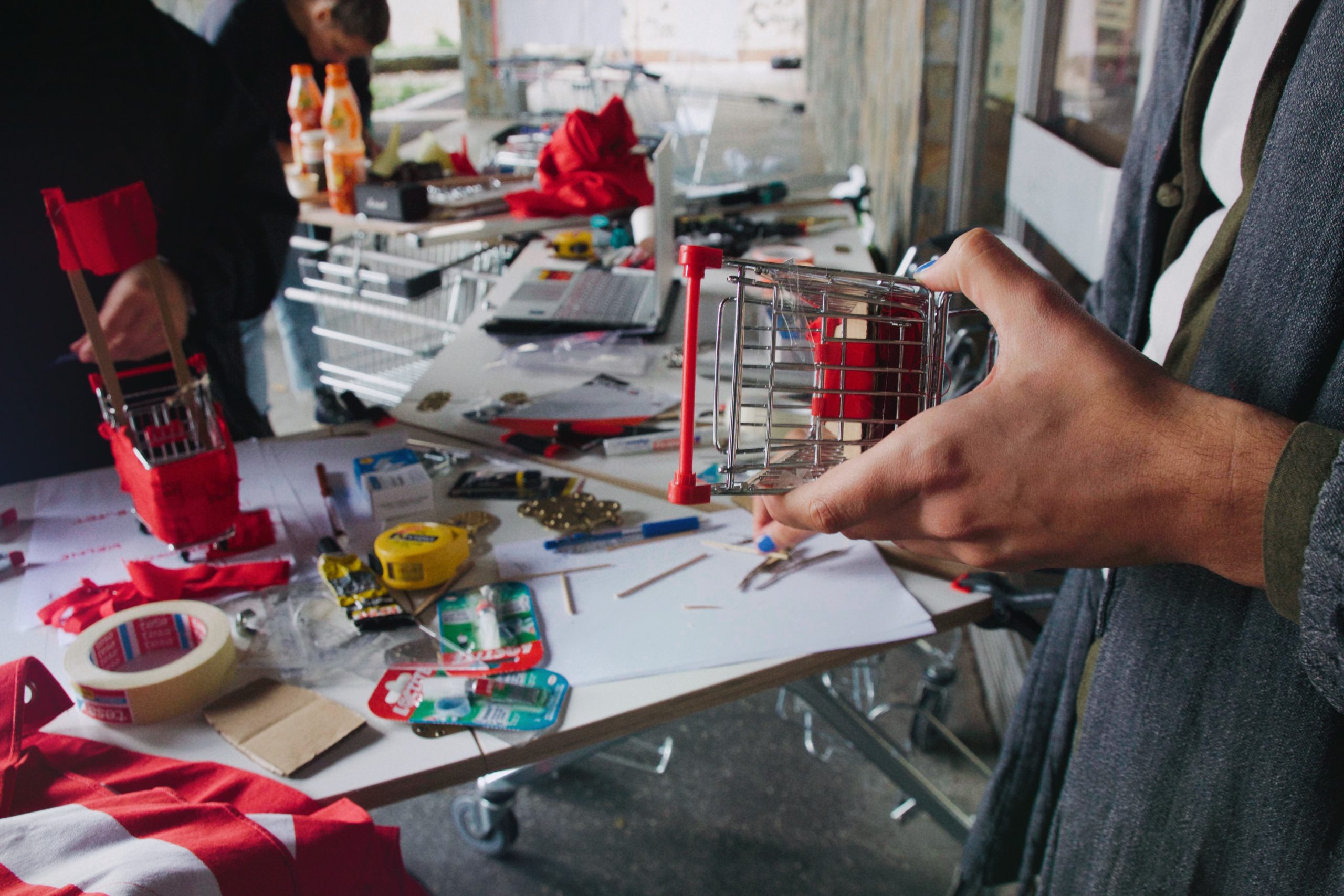
Foto: Gréta Čandová, 2021.
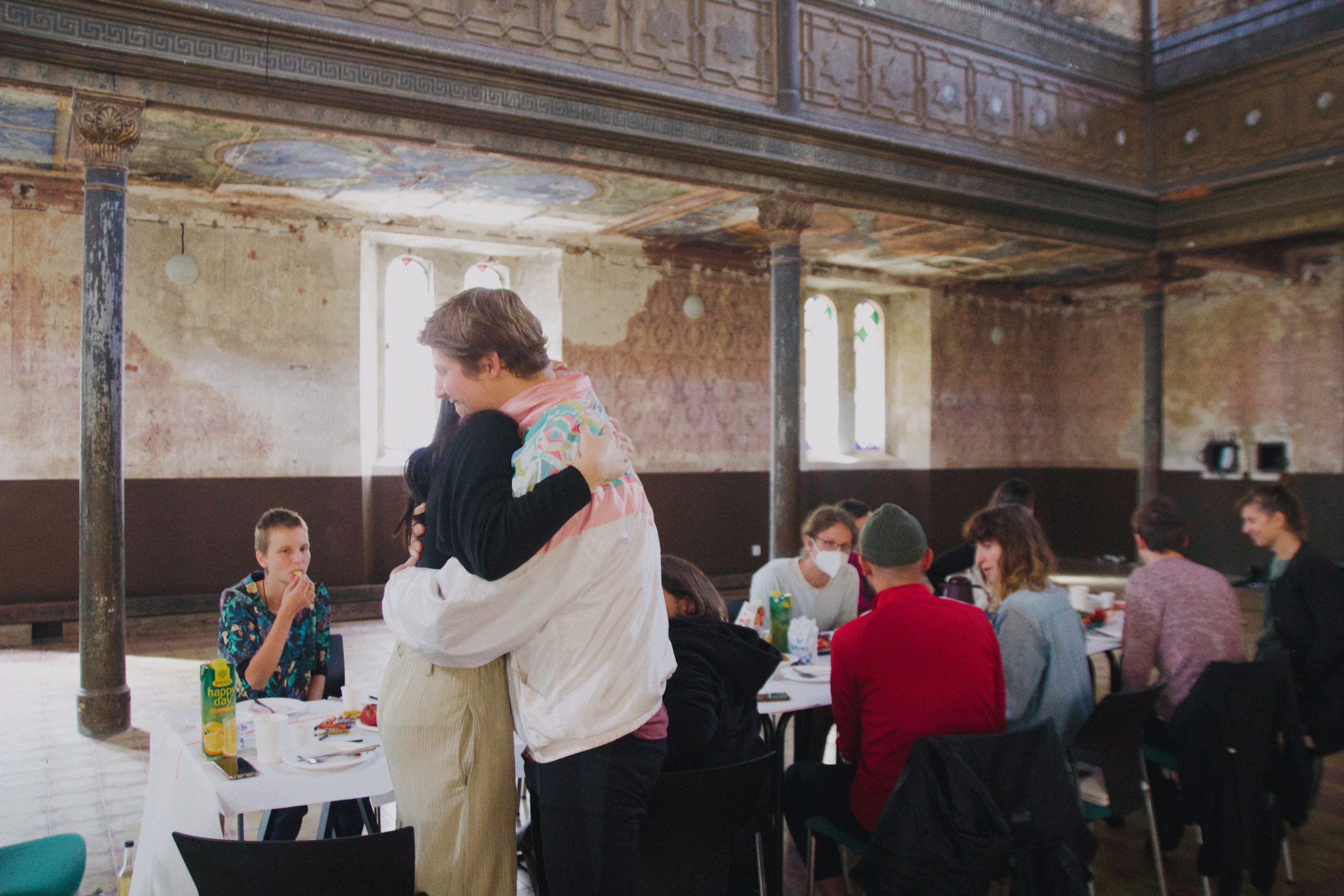
Foto: Gréta Čandová, 2021.
Text bol pôvodne publikovaný vo forme rozhovoru vo februári 2022 v publikácii NASADIŤ SI KLOBÚK STAROSTLIVOSTI: Citlivé plánovanie budúcnosti v mestách (Grešáková, Mravčáková, Tabačková, Never Never School, eds.). Publikácia je zdarma prístupná na: nevernever.spolka.cc.
Súčasná podoba textu bola autorsky upravená pre MAG D A mag.
1 Viac o Novom európskom Bauhause je príjemne prezentované napríklad v podcaste Slovenskej Komory Architektov (2021)
2 Spatial Agency: Other Ways of Doing Architecture od Nishat Awan, Tatjana Schneider, Jeremy Till (2011), Crossbenching: Towards a proactive mode of participation as a Critical Spatial Practice od Markusa Miessena (2017), Radical Pedagogies. Architectural Education and the British Tradition od Daisy Froud a Harriet Harris (2015), Making Trouble to Stay With: Architecture and Feminist Pedagogies od Torsten Lange a Emily Eliza Scott (2017).
3 Pozrite si Otvorený list od vysokoškolskej pedagogičky VUT v Brne.
4 Artalk.cz (2021) AVU si zvolila novou rektorku, historicky první ženou v čele instituce bude Maria Topolčanská. Dostupné na: https://artalk.info/news/avu-si-zvolila-novou-rektorku-historicky-prvni-zenou-v-cele-instituce-bude-maria-topolcanskahttps://artalk.cz/2021/12/01/avu-si-zvolila-novou-rektorku-prvni-zenou-v-cele-instituce-se-stane-maria-topolcanska/ (cit. 10. 1. 2022)
5 Tronto J (1993) Moral Boundaries: A Political Argument for an Ethic of Care. New York: Routledge, s. 103.
6 Gibson-Graham J K, Cameron J a Healy S (2013) Take back the economy.An Ethical Guide for Transforming Our Communities. Minneapolis, London: University of Minnesota Press, s. 46 – 58.
Latour B (2008) A Cautious Prometheus? A Few Steps Toward a Philosophy of Design (with Special Attention to Peter Sloterdijk) [lecture]. Networks of Design. Dostupné na: http://www.bruno-latour.fr/sites/default/files/112-DESIGN-CORNWALL-GB.pdf (cit.19. 1. 2022).
Fitz A a Krasny E (eds.) (2019) Critical Care. Architecture and Urbanism for a Broken Planet. Vienna, London, Cambridge: Architekturzentrum Wien, The MIT Press.
[:en]
Photo: Gréta Čandová, 2021.
Urban design
For us, urban design combines architecture and urbanism, sociology, economics, geography, politics, law, artistic approaches and many others. We start from the conviction that the creation of space can be understood as any activity that consciously reshapes it. Urban design thus places importance on the processes that create space.
The expansion of what urban design means, as well as new forms of such making and learning about it, is not a new topic. It is also addressed in the current concept of the New European Bauhaus, which to a large extent influences the vision for local architecture.[1] It is also addressed abroad by Nishat Awan, Tatjana Schneider, Jeremy Till and Markus Miessen, for example. In their conception, urban designers are people moving at the intersection of different disciplines that deal with space – geography, architecture, sociology, politics, and many others. They thus also move within other frameworks of place-making, such as community engagement, planning ethics, policy design, research as spatial practice. In doing so, they also make use of the diverse tools of these disciplines. Many other authors have also charted related transformations of teaching in architecture[2].
However, in Slovakia and in the broader context of our region, there is little change in the formal and non-formal education system. At universities, placemaking is still taught exclusively in schools of architecture and urban planning. This learning tends to focus on the physical transformation of space and is often disconnected from other disciplines that focus on all of us – people, systems, animals, plants. The social and political dimensions of the practice are thus largely missed, and with it the extent to which our outcomes affect the daily lives of people and other living or non-living actors. Practices of making space (physical or otherwise) that are interdisciplinary, inclusive, progressive, egalitarian, socially and environmentally just are still not popular among the group of those who have the power to design the city. Indeed, the hierarchical structures of education in architecture and urbanism predetermine and reproduce a narrow delineation of disciplines. The current wave of protests by university lecturers in the neighbouring Czech Republic speaks volumes about the conditions in which teaching takes place, thanks to the severe underfunding of public education.[3] However, there is hope in the air.
In our region, approaches are beginning to emerge that can go beyond this stereotype. For example, in the neighbouring Czech Republic, the Academy of Fine Arts (where the architecture school is also located) is headed for the first time since its foundation in 1799 by a woman, the Bratislava-educated Mária Topoľčanská. Her agenda also focuses on the consideration of social issues such as affordable housing. But it also focuses on the ways in which we learn together. In Slovakia, the ways in which we learn together in urban design, and thus co-create the field, are the subject of our Never Never School. In this article we outline what such a process might look like.
Photo: Gréta Čandová, 2021.
Photo: Gréta Čandová, 2021.
Why the caring pedagogy?
During school, we go beyond the teacher-student hierarchy and learn together about current challenges that we see as dependent on our caring for each other to solve.[5] For the opportunity to care, to create and develop relationships, and communities in our neighbourhoods, is at the heart of the caring city for us. And in the context of this, attentiveness to the needs of different actors and stakeholders also stands at the heart of caring. For each and every one of us has different visions and needs based on how we have been educated, our perspectives, experiences, or what our bodies allow us to do, for example. These needs are also reflected in ideas about the shape of the making of a good city, which is thus slightly different for each person – these differences and multiplicity put Never Never School in contrast to traditional education in the foreground.
Such an approach can be a way of strengthening the department’s capacity towards inclusion and social and environmental justice, and thus a chance to better confront socio-economic crises in terms of a vision of creating the conditions for a ‘good life'[6]. To zoom in, we outline the perspectives of caring pedagogy according to the individual members of the Never Never organizing team: Our colleague Susan, an architect, sees caring pedagogy as supporting people to learn what they and they alone are interested in, based on their needs, or linking needs with the perspective of their potential interest. The key word in such teaching is to guide. To direct what those people want to do, in different ways. Sometimes that means discussing with them for an hour and a half, other times it means drawing with them for 15 minutes, or putting them together with another group or individual… We put everyone’s teaching in the context of the needs of other people and things around them, including our own needs. As our sociologist colleague Lydia says, it’s also about helping them to acknowledge their current attunement, their previous experiences, their political views, the ways in which we work… and being able to express them based on that in their other work.
Photo: Gréta Čandová, 2021.
Photo: Gréta Čandová, 2021.
According to Viktória, again an architect in Spolka, some form of emancipation is important in careful teaching. In Slovakia, everything in schools is defined within a hierarchy. In contrast, a more emancipated, democratic process of discussion can encourage learning. But the context where we learn is also important. In the case of Never Never School, we are creating a space for learning in a place that no one has previous experience of. The possibility to create a different and own space to learn, where there are no clear rules about what we mean by architecture, for example, is in itself emancipatory. Also according to architect Kristina, informal methods and personal experience provoke a more sensitive, deeper relationship to space, to civic engagement and connection to the story of the city around. The traditional hierarchical framework disappears and so everyone or every one gets a chance to express themselves in the most comfortable form.
However, creating a space where the rules are not clearly established is very challenging. The basis of ‘caring pedagogies’, according to our collaborator Hana, is giving freedom to the person who is learning, but also giving them the tools to manage this freedom, because we are not used to such freedom. In short: you have the freedom to do whatever you want, but we don’t just leave you to it. You can turn to us, count on us. An educator creates a safety net. She thinks of people’s individual needs without evaluating what they are. And that’s one of the hardest things about the caring form of teaching others that we talk about. For example, we also pay attention to the person who shows up and has little involvement in the discussion. We also adjust the room itself according to whether the learning is being attended by, for example, a person who cannot hear or see well, and so we have to adjust the size of our presentation. When the person involved is not caring, you should be able to detect this early on and start to work with it openly and patiently. Think about the detail.
Co-creation doesn’t just belong in after-school practice
All of this translates into our teaching. At Never Never School in 2018, the learning formats were blended. On one day we were learning to map a place by listening carefully to it, on the other we were recording the landscape through a movement workshop… These were formats that created alternative ways of expressing and discussing the topic. Discussing in verbal or written form were the most commonly used ways. However, people who are not naturally good and good at them are not given the space to engage in discussion. Having the opportunity to express my opinion and expertise in a different form was liberating and personally very beneficial. Information and experiences absorbed from a non-traditional method of teaching or observation stay in the memory longer and offer room for free analysis and interpretation.
Photo: Gréta Čandová, 2021.
Photo: Gréta Čandová, 2021.
One manifestation of good caring teaching is that each and every one retains his or her ‘handwriting’ in the metaphorical sense, but deepens and develops it even further. In 2021, during the summer school, we practiced caring teaching through offering consultations for participants’ projects. Their results did not differ from their initial proposals. But they were deeper, more developed, and… really very different from one another. That was what pleased us the most.
Caring pedagogies are strongly linked to the practice of co-creation and the leadership of participatory projects: in them, we conceive a space where people can think with us or contribute in any way to the making of the city. Never Never are a test of methods of what can work and what can’t, where one feels comfortable and can think arbitrarily and where not, … and these are all different positions of involving people in the making of cities. Pedagogy and participation are linked and we often use the same methods for them. Both are about co-creation and not about one-way perception of information. But participation, facilitation, and urban design, like careful learning, all take time, time that costs us something. To prepare ourselves for them, to take something from them and put it into practice, to personalize our experiences and to be able to handle them in the long term.
‘School’ originally means leisure (from the Greek). It is the time we need to be free. It cannot be done without it. As Susan says, learning through the shared experience of caring pedagogy is the kind of learning that not only works well, since we learn by imitation from a young age, but that we continue to learn through our being and stories. We’re kind of going back to centuries past, but there’s nothing new to add to that.
Photo: Gréta Čandová, 2021.
Photo: Gréta Čandová, 2021.
The text was originally published in the form of an interview in February 2022 in the publication PUT ON YOUR CARING HAT: Sensible Future Planning in Cities (Grešáková, Mravčáková, Tabačková, Never Never School, eds.). The publication is available free of charge at: nevernever.spolka.cc.
The current form of the text was adapted by the author for MAG D A mag.
1 More about the New European Bauhaus is nicely presented, for example, in the podcast of the Slovak Chamber of Architects (2021)
2 Spatial Agency: Crossbenching: Toward a Proactive Mode of Participation as a Critical Spatial Practice by Nishat Awan, Tatjana Schneider, Jeremy Till (2011), Other Ways of Doing Architecture by Markus Miessen (2017), Radical Pedagogies; Architectural Education and the British Tradition by Daisy Froud and Harriet Harris (2015), Making Trouble to Stay With: Architecture and Feminist Pedagogies by Torsten Lange and Emily Eliza Scott (2017).
3 See Open List by a university teacher at the Brno University of Technology.
4 Artalk.cz (2021) AVU has elected a new rector, the first ever woman at a Czech institution will be Maria Topolčanská. Available at: https://artalk.info/news/avu-si-zvolila-novou-rektorku-historicky-prvni-zenou-v-cele-instituce-bude-maria-topolcanska (cited 10 Jan 2022)
5 Tronto J (1993) Moral Boundaries: a Policy Argument for an Ethics of Care. New York: Routledge, p 103.
6 Gibson-Graham J K, Cameron J and Healy S (2013) Take Back the Economy. an Ethical Guide for Transforming Our Communities. Minneapolis, MN: University of Minnesota Press, pp. 46–58;
Latour B (2008) A Cautious Prometheus? Some Steps Towards a Philosophy of Design (with Special Attention to Peter Sloterdijk) [lecture]. Networks of Design. Available at: http://www.bruno-latour.fr/sites/default/files/112-DESIGN-CORNWALL-GB.pdf (cited 19 Jan. 2022); Fitz A and Krasny E (eds.) (2019) Critical care; Fitz A and Krasny E (eds.) (2019) Critical Care. Architecture and Urbanism for a Broken Planet. Vienna, London, Cambridge: Architekturzentrum Wien, The MIT Press.
[:]