[:sk]Blízke veci / TOMÁŠ JANYPKA[:en]Close Things / TOMÁŠ JANYPKA[:]
[:sk]Dylanov smútok a žuvačka Niny Simone[:en]Dylan's Sorrow and Nina Simone's Bubblegum[:]
[:sk]Emócie, s ktorými sa nám spája konkrétna hudba, enigmatický objekt LP platne ešte viac umocňuje. Obzvlášť takej, ktorá už má nejaký ten život za sebou. O Bobovi Dylanovi objavenom na severe Európy a knihe Nina Simone’s Gum: A Memoir of Things Lost and Found rozpráva Tomáš Janypka.
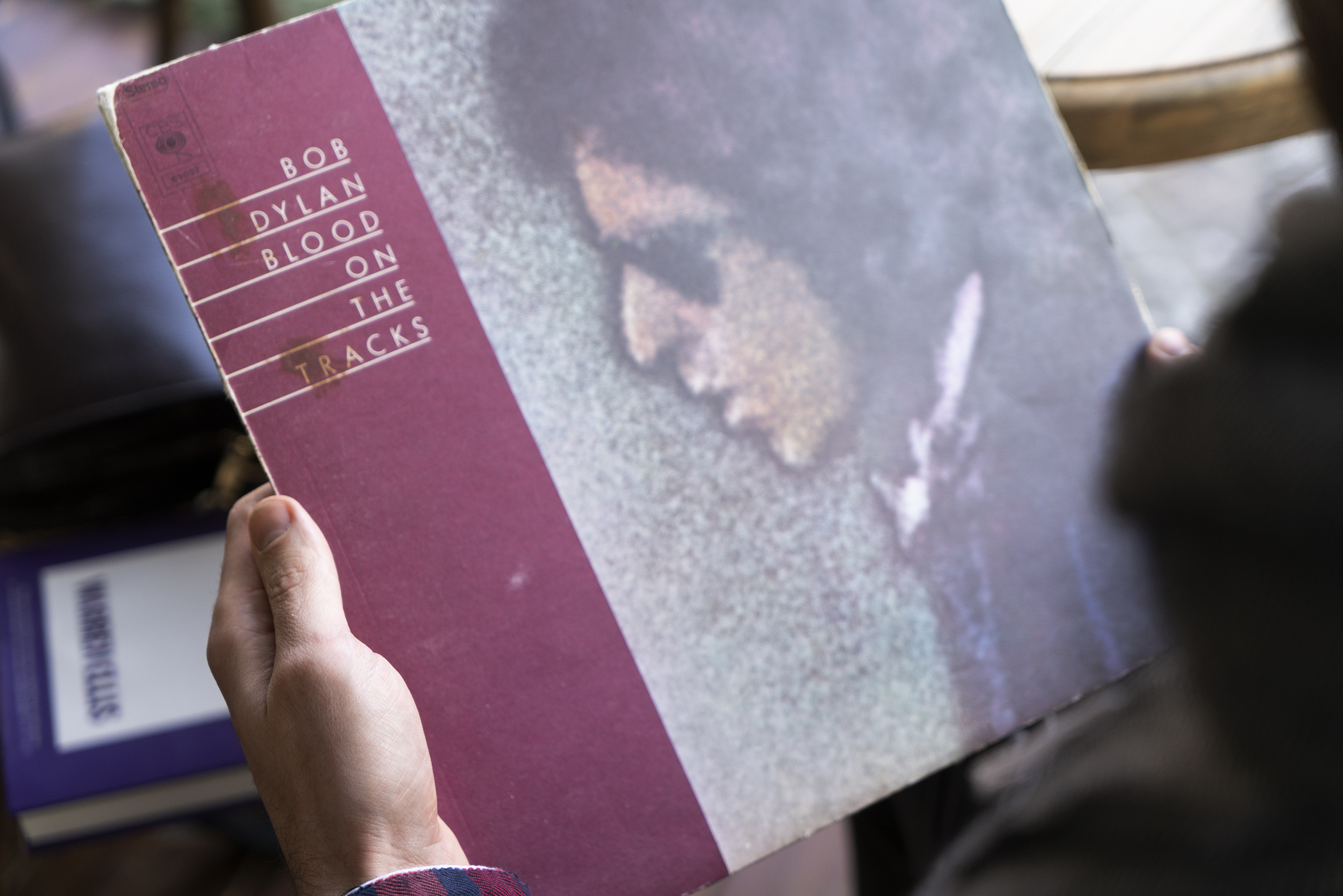
(Tomáš vyťahuje blízku vec z plátenej tašky)
Takže je to platňa!
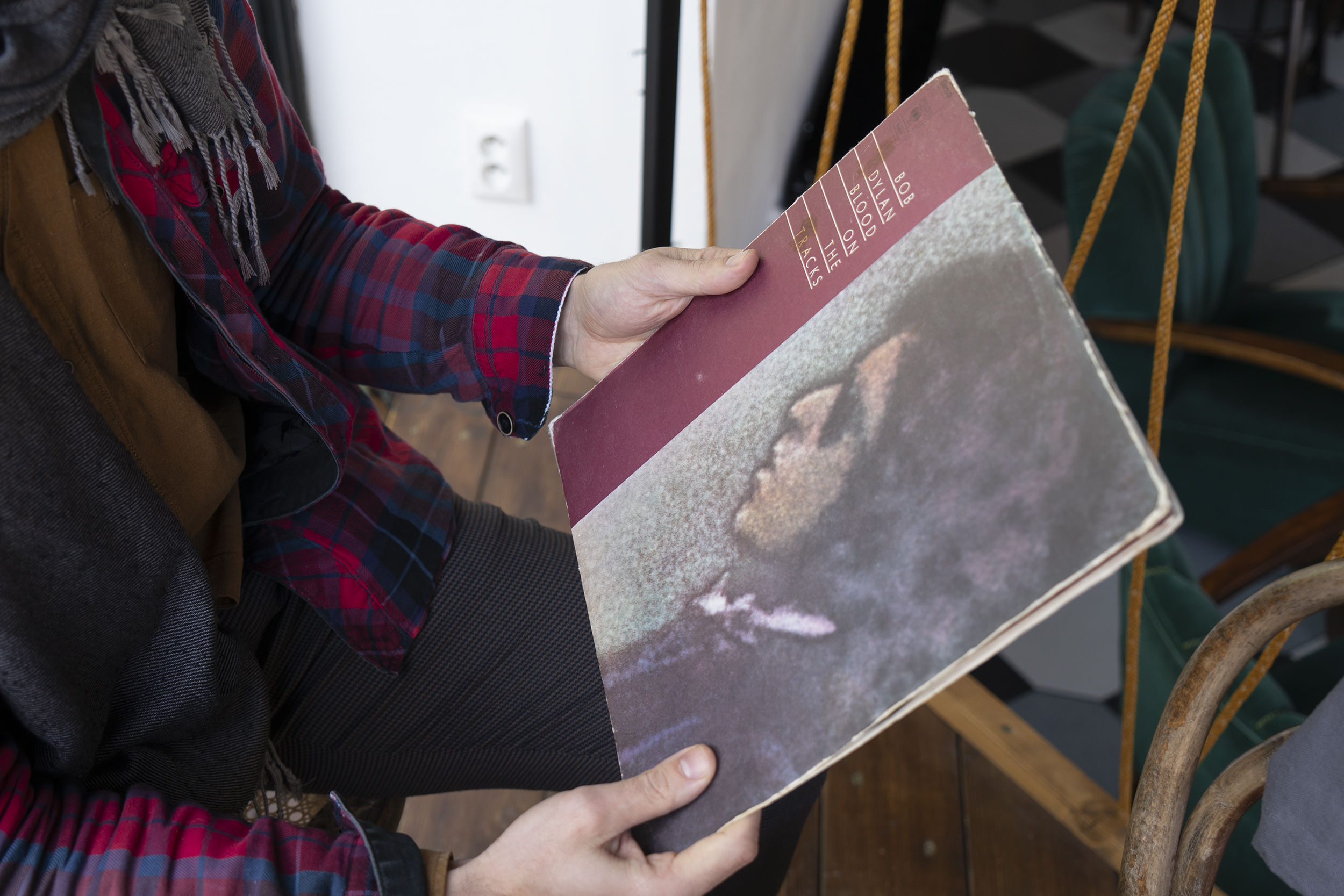
Áno, je to platňa. Keď si mi napísala, či by sme nezrealizovali rozhovor, práve som trávil sviatky v rodičovskom dome a premýšľal som, aké z blízkych vecí tam vlastne mám… A toto bola prvá, ktorá si ma “zavolala”. Album Boba Dylana Blood on the Tracks spolu s jeho coverom je pre mňa veľmi dôležitý objekt, aj emočne. Spájajú sa mi s ním rôzne veci.
Platňu som objavil v čase, kedy som sa prvýkrát ocitol na dlhší čas v zahraničí – konkrétne v Osle. Strávil som tam pol roka na Erazme. Tento album som našiel na nejakom blšáku, kde ma k sebe doslova pritiahol. Bolo to pre mňa veľmi dôležité obdobie, a keď som sa k tej platni teraz vrátil, akoby sa mi znova začalo otvárať. Rovnako ako Bob Dylan a stretnutie s jeho hudbou.
Tento album tvoria také “porozchodové” piesne, majú inú atmosféru ako hudba jeho slávnych 60. rokov. Po tom veľkom boome prišli zrazu piesne, ktoré už v sebe mali niečo iné. Myslím, že sa vtedy rozišiel so svojou manželkou.
Pokaždé, keď si platňu po dlhšom čase pustím, vnímam, že tie piesne majú nejakú silu, ktorou rozprávajú. Dylan je pre mňa veľký básnik a mám rád jeho veci, ale tento album, celý, aký je, aj s jeho coverom, ku mne tak nejako jasne prehovára.
Vraciaš sa k nemu často?
Mám obdobia, kedy si ho púšťam. Ale má špecifickú atmosféru, ktorá ma dostane do určitého stavu. A nie vždy tam chcem ísť. Je to taká emočne “rozjitřená” vec.
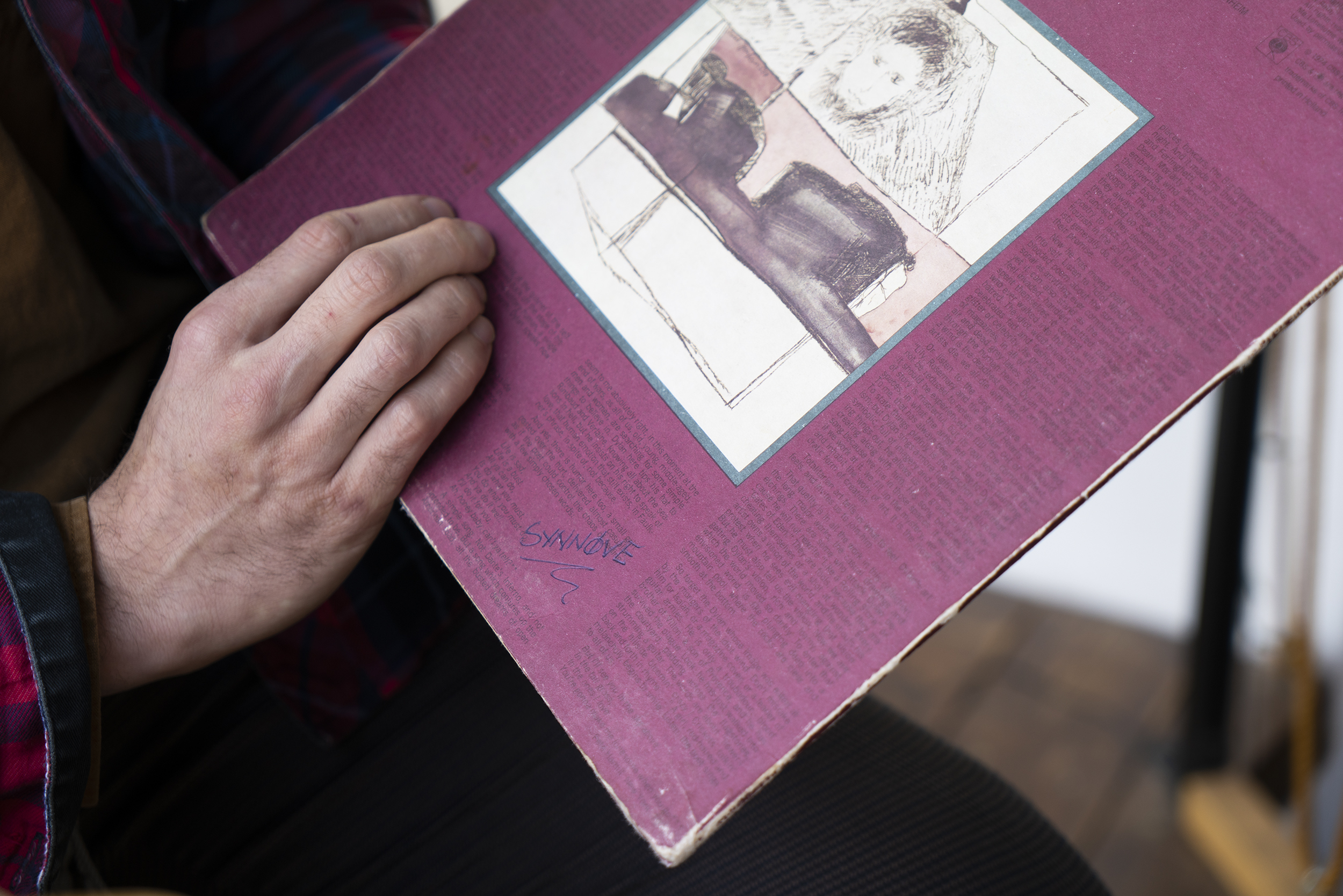
Na coveri je jedna pasáž, ktorá sa mi páči. Je to časť eseje, ktorú napísal Pete Hamill v 1974:
Or listen to the long narrative poem called “Lily, Rosemary And The Jack of Hearts.” It should not be reduced to notes, or taken out of context; it should be experienced in full. The compression of story is masterful, but its real wonder is in the spaces, in what the artist left out of his painting. To me, that has always been the key to Dylan’s art. To state things plainly is the function of journalism; but Dylan sings a more fugitive song: allusive, symbolic, full of imagery and ellipses, and by leaving things out, he allows us the grand privilege of creating along with him. His song becomes our song because we live in those spaces. If we listen, if we work at it, we fill up the mystery, we expand and inhabit the work of art. It is the most democratic form of creation.
Totalitarian art tells us what to feel. Dylan’s art feels, and invites us to join him.
To je naozaj veľmi pekné.
K tejto eseji na zadnej strane platne som sa vlastne dostal len teraz, keď som sa rozhodol, že moja blízka vec bude tento album. A táto pasáž mi obzvlášť rezonovala. Spája sa mi aj s mojou vlastnou tvorbou, s premýšľaním o priestore, ktorý ponúkaš v tvorbe alebo v konkrétnom diele sebe a divákovi. O množstve priestoru, ktorý otvoríš, a ktorý si sám divák môže zaplniť, vyhodnotiť, priniesť do neho svoju vlastnú aktivitu.
Akými vecami sa rád obklopuješ? Existuje nejaký typ objektov, ktoré máš rád vo svojom prostredí?
Určite zošity. Rôzne druhy zošitov. A knihy. Čo týka domáceho priestoru, mám rád istú čistotu bývania, ale zároveň mám rád rôzne veci, ktoré človek nájde alebo od niekoho dostane. Napríklad pohľadnicu. A niekde mám vystavenú aj futbalovú kartičku od môjho strýka, ktorú si dal vytlačiť a radoval sa z nej (smiech). V našom rodinnom dome mám zase strom vytvorený z korálov, ktorý mi v izbe visí odjakživa.
Blízke veci sú pre mňa aj blízki ľudia alebo situácie, ktoré za nimi vnímam. Tým, že sú naokolo, vedia niekedy rozprávať. Často, práve vtedy, keď to potrebujem, sa k nim viem vztiahnuť.
Nie som si ale istý, či som nejaký veľký zberateľ.
Zbieral si niekedy niečo?
Teraz ma napadá, že som zbieral známky. A hokejové kartičky. Ale to sú asi veci iného druhu. V istom období som veľa čítal fantasy a sci-fi časopisy a vtedy vychádzal slovenský fanzin Fantázia. Spomínam si, že som si v nejakom momente objednal všetky čísla spätne. Ale nikdy som ich neprečítal, len som si ich jednoducho potreboval mať (smiech).
Ale možno predsa len niečo mám. Zbieram lístky z divadelných predstavení alebo z koncertov, dlho som zbieral aj cestovné lístky. Potom som vždy riešil tú očistu, ktorú človek raz za čas robí, keď sa mu v batohu nahromadí množstvo týchto vecí. A pri nej som sa vždy dostal k uvažovaniu o nejakej dôslednosti tohto typu zbierania. To vyhodnocovanie, čo nie, čo áno, či by som mal odložiť každý jeden lístok, alebo či ten medzi Púchovom a Žilinou nie je až taký podstatný (smiech). To sú také absurdné zberateľské dilemy. Mám však rád aj tú fázu očisťovania, ktorá prichádza, keď sa potrebujem zbavovať vecí. Učím sa to robiť. Akt pretrieďovania je pre mňa veľmi dôležitý. Mám však stále celé pakle tohto typu vecí a vždy si pri nich hovorím, že to ešte niečomu môže slúžiť. A vzápätí si poviem, čo by znamenalo toto všetko nemať, úplne to pustiť. Zároveň v tom zbieraní nie som veľmi dôsledný. Robím to, lebo to potrebujem robiť, ale časť mňa si kladie otázku, prečo vlastne. Je to taký neustály vnútorný dialóg.
Uvažujem o tom tak, že sú to informácie o mne uchované v nejakej v hmote, je tam zachytený čas, a vlastne aj to, čím som bol. Tieto útržky dokážu spätne vyvolať nejakú časť mňa: pripomenú mi, že aj takto som sa cítil, o tomto som sníval, premýšľal, tohto som sa bál. Niečo v tomto mi príde veľmi dôležité. Človek niekým bol, keď mal sedemnásť, a vrátiť sa späť do tohto pocitu – do toho, čím všetkým sme v tom okamihu boli – sa nedá. Teda pokiaľ človek nenahrá album, ako napríklad Dylan, nie je možný tento typ spojenia. Zbieranie je možno takým reflexom, snahou mať aspoň niečo hmotné, keď už človek nič netransformoval do nejakej osobnej výpovede.
Zamýšľal som sa aj na tým, ako to súvisí s tým, v čom žijeme, že dnes sa dá všetko zachytiť na mobil alebo nahrať. Ale to už sa mi spája s jednou knihou, ktorú mám a ktorá súvisí aj s týmto našim rozhovorom. Píše sa v nej o objektoch – blízkych veciach, a zároveň o inšpirácii súvisiacej s tým, čo v sebe nesú. V tom zmysle, že ich prítomnosť, vzťah k nim môže prinášať ďalšie, nové veci.
Čo je to za knihu? Chceš mi ju ukázať?
Môžem.
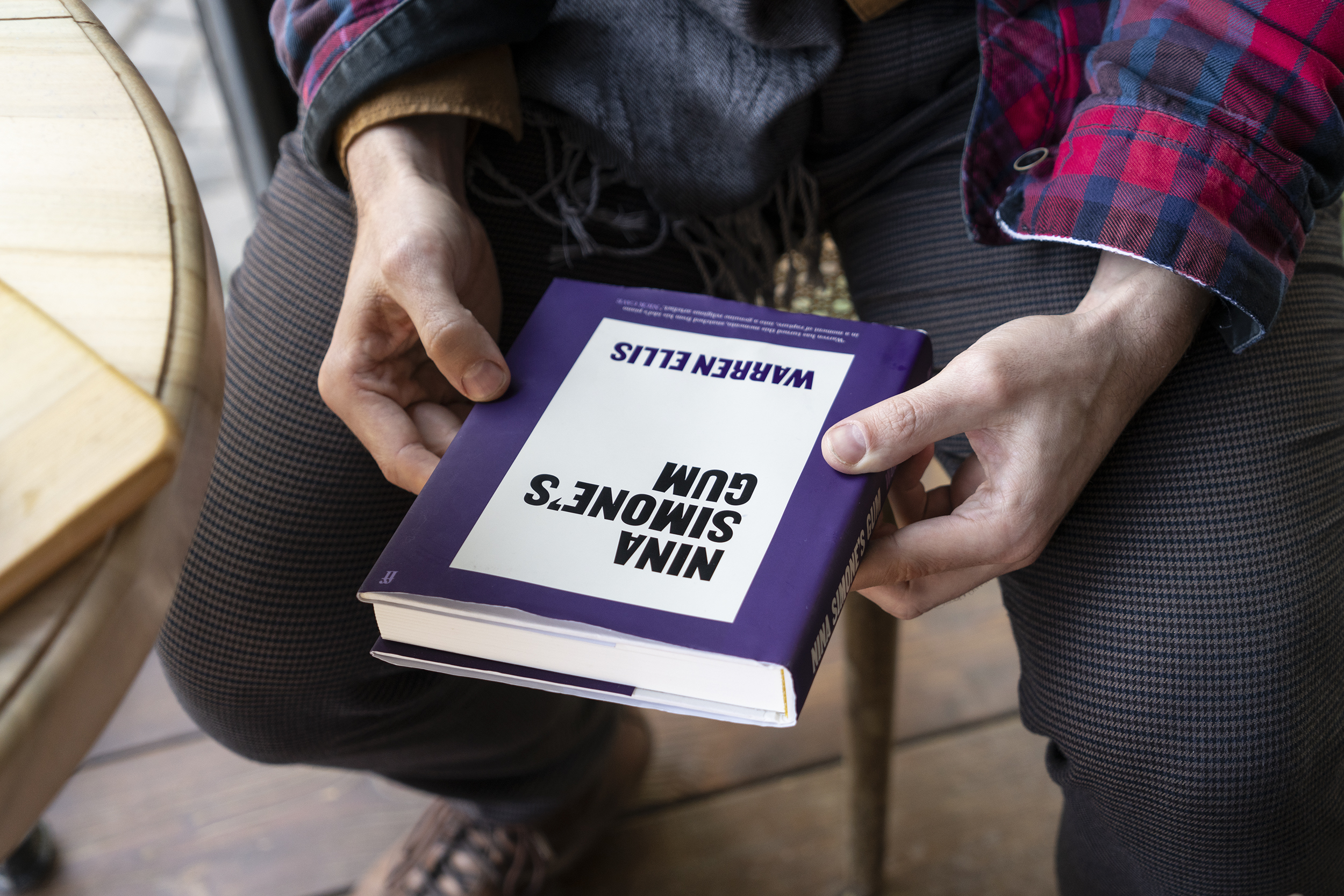
Žuvačka Niny Simone. Dobrý názov.
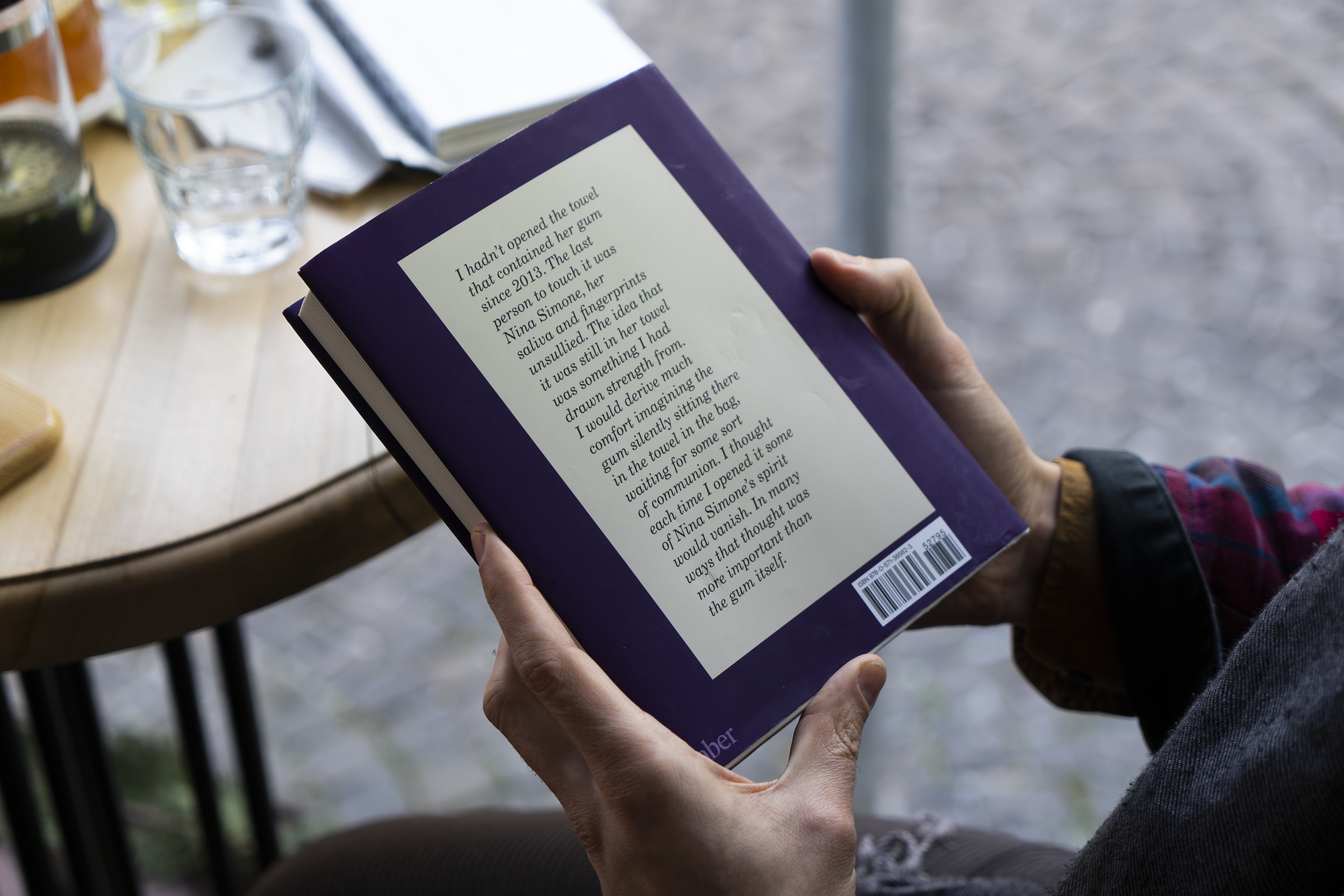
Skúsim o nej v krátkosti niečo povedať. Volá sa NINA SIMONE’S GUM a napísal to Warren Ellis, hudobník od Nicka Cavea.
Začína to tak, že v roku 1999 bol v Londýne jeden z posledných koncertov Niny Simone, na ktorom bol aj Warren Ellis. Nina Simone bola už staršia a keď vyšla na scénu, bolo vidno, že je to pre ňu náročné, že sa necíti dobre. Keď prišla k piánu, vytiahla z úst žuvačku a prilepila ju na naň. A potom začala hrať. V priebehu toho hrania sa niečo zmenilo, akoby nastala nejaká veľká transformácia. Aspoň tak to popisujú ľudia, ktorí tento koncert zažili, vrátane Ellisa – že bol jedným z tých veľkých transformačných zážitkov. Tá hudba, ten spoločný akt toho koncertu niečo zmenili, niečo sa tam udialo, a oni boli toho svedkami.
Keď Nina Simone dohrala, Warren Ellis vybehol na pódium, celkom spontánne, zobral tú jej žuvačku z piána a zabalil ju do jej uteráka. V tom momente sa o tom nikto nedozvedel. On ju potom ďalších 20 rokov nosil so sebou, ako nejaký talizman. Najskôr na turné, potom ju mal uloženú na nejakom mieste, celý ten proces popisuje v knihe.
V roku 2015 vyšiel dokument o Nickovi Caveovi s názvom 20 000 dní na Zemi, a myslím, že práve v ňom Ellis túto vec prvýkrát spomenul. Dovtedy bola iba jeho, taký veľmi dôležitý artefakt naviazaný na jeho inšpiráciu, v podstate taká časová kapsula Niny Simone s jej slinami, zubami otlačenými do žuvačky. A on v tomto momente, v konverzácii s Caveom, túto svoju vzácnu vec začal zdieľať so svetom.
Nakoniec bola žuvačka Niny Simone minulý rok na výstave Nicka Cavea v Kodani.
Vystavili tú pôvodnú žuvačku, spolu s jej uterákom?
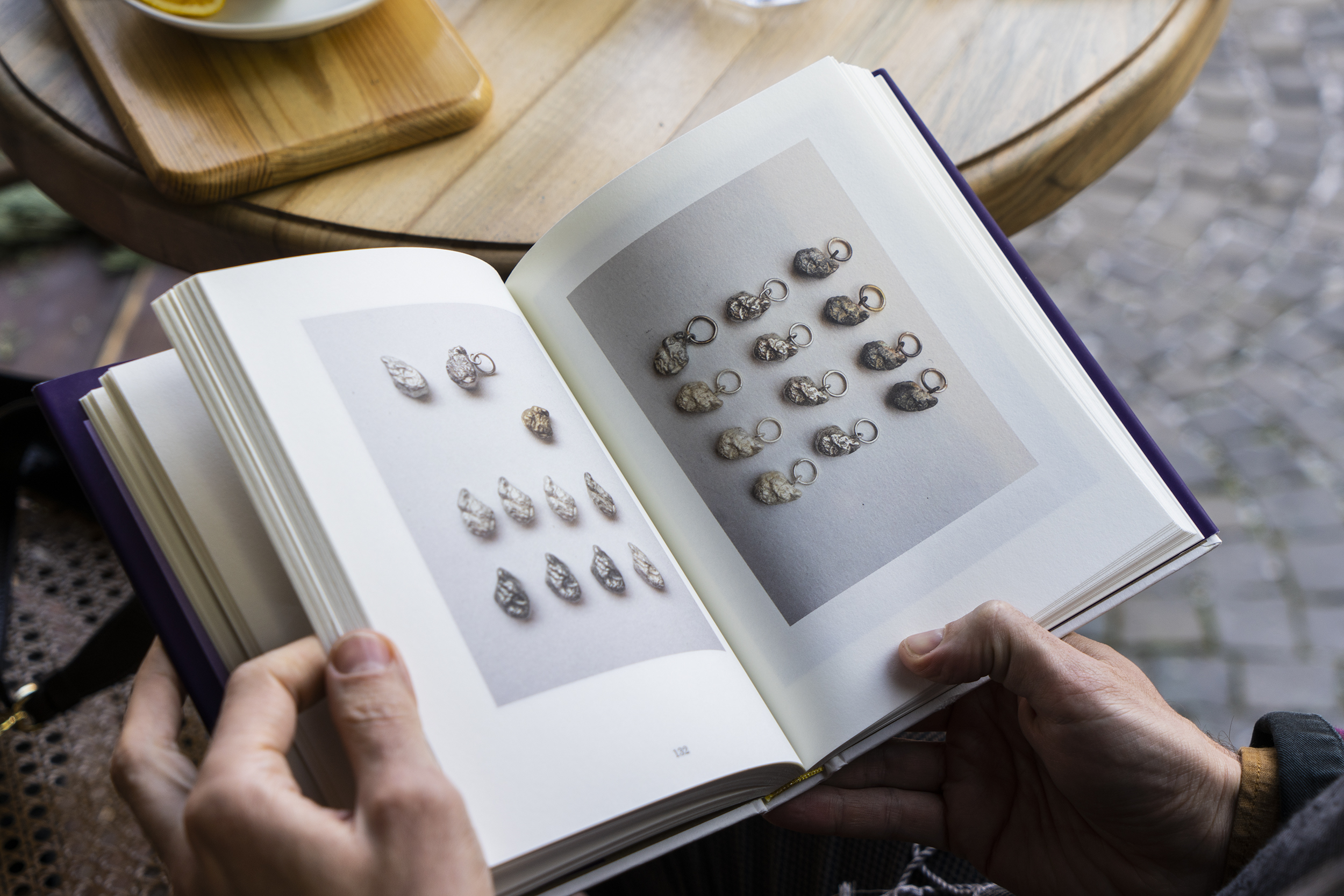
Warren Ellis sa rozhodol urobiť ešte predtým kópiu. V knihe popisuje celý ten proces, ako našiel nejakú šperkárku, ktorej dôveroval, ako potom spolu pracovali – to, ako popisuje tento proces transformácie objektu, je veľmi zaujímavá časť. Z toho ako hovorí o vzťahu, ktorý k tej žuvačke má, je jasné, že to je pre neho veľmi dôležitá vec. Už len ten samotný začiatok – keď si pre ňu vyliezol na pódium a vôbec nad tým nepremýšľal, jednoducho to musel spraviť.
Mám z toho pocit, že to nebolo len o tom odniesť si spomienku z koncertu, ale bola tam prítomná ešte nejaká iná sila.
Energia toho konkrétneho momentu zachytená v objekte.
Áno, a pozoruhodná je aj starostlivosť, ktorú mu venoval. V knihe spomína na moment, kedy v uteráku zabalenú žuvačku s tou šperkárkou prvýkrát otvárali. Aj ona do knihy prispela svojim listom, v ktorom tento moment opisuje. Síce to celé znie dosť bizarne, ale aj na ňu to vraj silne zapôsobilo. A preto mi tento príbeh veľmi sedí k tomu konceptu blízkych vecí. Ale toto je až taký transcendentný objekt, taká moderná relikvia.
Žuvačka je síce centrálnym bodom knihy, ale Ellis v nej píše aj o iných objektoch, otvára tam istý typ premýšľania o veciach, veľmi pekne popisuje práve to naše vzťahovanie sa k nim. Tak celkovo hovorí o týchto procesoch, o inšpirácii. Je to v niečom dobrá metafora umenia – ako sa dá tvoriť takmer z ničoho, alebo koľko toho môže narásť z nejakej obyčajnej veci.
Tu je jedna veľmi dobrá pasáž z knihy:
The things we collect are the things that are of significance to us first and foremost. Outside your orbit and people connected to it they have no significance. They’re specific things. These things that are precious to us are really just precious to us. For some reason I have a hard time throwing out shoes that have served me well. I had a cupboard full of worn shoes in the corridor, and eventually I started photographing each pair to allow myself to get rid of them. There’s a connection there. I can’t just let them go. Shoes I have used only for concerts, shoes that you can’t repair any more, shoes that have been repaired one too many times. I threw out the shoes. A few years later I lost the photos.
Tomáš Janypka (*1989) je tvorca, choreograf a performer, ktorý sa primárne pohybuje v Česko-Slovenskom kontexte. Vyštudoval Ateliér Fyzického Divadla na JAMU v Brne. Jeho hlavnou devízou je jemnosť, otvorenosť a schopnosť spolupráce s umelcami z rôznych oblastí. Zaoberá sa otázkami spojenými s našimi intímnymi udalosťami, percepciou tela a jeho limitov, váhou vecí na fyzickej a spirituálnej rovine. Uvažuje, ako tieto skúsenosti môže zdielať fyzicky a emocionálne v spoločnom priestore s divákom. Fascinujú ho autentické a osobité momenty vo verejnom priestore, ktoré zachytáva formou fotografie a textu.
V roku 2020 vytvoril spolu so Sabinou Bočkovou autorské dielo song lines: expedice 97/18, otvárajúce tému absencie-straty blízkej osoby. S Robertou Štěpánkovou od 2018 organizuje IMMEDIATUS – séria okamžitých nocí. Pre Festival Kiosk spoluvytváral v rokoch 2018-2020 imerzívnu skupinu Guides. V roku 2021 viedol celoročný výskum v architektonickom a vizuálnom projekte Completing the Sphere od Juraja Gábora. Jeho diela boli ďalej uvedené aj na festivaloch 4+4 dny v pohybu, Malá Inventúra, Hybaj Ho,…
Ako interpret a spoluautor tvoril medzi inými s Jarom Viňarským, Sonjou Pregrad, Dominique Boivin, Petrou Tejnorovou. Pôsobí ako feedback mentor a umelecký konzultant na DAMU v medzinárodnom programe MA DOT. Pod vedením Berrak Yedek sa stáva facilitátorom Somatického Dialogu. Je spoluzakladateľom spolku Z druhé strany, ktorý zastrešuje tvorbu nastupujúcej generácie umelcov na poli súčasného tanca a live performing arts.
[:en]The emotions with which we associate a particular music are further enhanced by the enigmatic object of the LP record. Especially one that has already had some life behind it. Tomáš Janypka talks about Bob Dylan discovered in the north of Europe and the book Nina Simone’s Gum: A Memoir of Things Lost and Found.
(Tomáš pulls a close object out of a canvas bag)
So it’s a record!
Yes, it’s a record. When you wrote to me to see if we could do an interview, I was just spending the holidays at my parents’ house and wondering what kind of close things I actually have there… And this was the first one that “called” me. Bob Dylan’s album Blood on the Tracks, along with his cover of it, is a very important object to me, emotionally as well. I associate different things with it.
I discovered the record when I first found myself abroad for an extended period of time – specifically in Oslo. I spent half a year there at Erasmus. I found this album at some flea market, where it literally drew me to it. It was a very important time for me, and coming back to that record now, it’s like it’s opening up to me again. Like Bob Dylan and meeting his music.
This album is made up of such “post-breakup” songs, they have a different vibe than the music of his famous 60s. After that big boom suddenly came songs that already had something different in them. I think that’s when he split up with his wife.
Every time I listen to a record after a long time, I feel that those songs have a power that they speak with. Dylan is a great poet to me, and I love his stuff, but this album, the whole album as it is, even with his cover, speaks to me so clearly somehow.
Do you go back to it often?
I have periods when I play it. But it has a specific vibe that gets me in a certain state. And I don’t always want to go there. It’s such an emotionally “stirred up” thing.
There’s one passage on the cover that I like. It’s part of an essay that Pete Hamill wrote in 1974:
Or listen to the long narrative poem called “Lily, Rosemary And The Jack of Hearts.” It should not be reduced to notes, or taken out of context; it should be experienced in full. The compression of story is masterful, but its real wonder is in the spaces, in what the artist left out of his painting. To me, that has always been the key to Dylan’s art. To state things plainly is the function of journalism; but Dylan sings a more fugitive song: allusive, symbolic, full of imagery and ellipses, and by leaving things out, he allows us the grand privilege of creating along with him. His song becomes our song because we live in those spaces. If we listen, if we work at it, we fill up the mystery, we expand and inhabit the work of art. It is the most democratic form of creation.
Totalitarian art tells us what to feel. Dylan’s art feels, and invites us to join him.
That’s very nice indeed.
I actually only got to this essay on the back of the record now that I’ve decided that my close thing is going to be this album. And this passage particularly resonated with me. It also connects to my own work, thinking about the space you offer in your work or in a particular piece to yourself and to the viewer. About the amount of space you open up that the viewer themselves can fill, evaluate, and bring their own activity into.
What kind of things do you like to surround yourself with? Are there any types of objects you like in your environment?
Definitely notebooks. Different kinds of notebooks. And books. As far as domestic space, I like a certain cleanliness of living, but I also like different things that one finds or gets from someone. For example, a postcard. And somewhere I have a football card from my uncle that he had printed and enjoyed (laughs). In our family home, I have a tree made of coral that has been hanging in my room forever.
Things close to me are also close people or situations that I perceive behind them. By being around, they can sometimes speak. Often, just when I need it, I can relate to them.
I’m not sure I’m any great collector, though.
Have you ever collected anything?
I remember now that I collected stamps. And hockey cards. But I guess that’s a different kind of thing. At a certain time I read a lot of fantasy and science fiction magazines, and at that time there was a Slovak fanzine called Fantázia. I remember at some point I subscribed to all the older back. But I never read them, I just had to have them (laughs).
But maybe I do have something after all. I collect tickets from theatre shows or concerts, and I collected travel tickets for a long time. Then I’ve always dealt with that purge that one does once in a while when you accumulate a lot of these things in your backpack. And in doing that, I always got to thinking about some kind of consistency in that kind of collecting. That evaluation of what not to do, what to do, whether I should put down every single ticket, or whether the one between Púchov and Žilina is not so important (laughs). These are such absurd collecting dilemmas. But I also like the purging phase that comes when I need to get rid of things. I’m learning to do that. The act of sorting is very important to me. But I still have a whole packet of this type of stuff, and I always tell myself when I’m looking at it that it can still serve a purpose. And then I say to myself, what would it mean not to have all this stuff, to let it go completely. At the same time, I’m not very consistent in my collecting. I do it because I need to do it, but part of me wonders why actually. It’s such a constant internal dialogue.
The way I think of it is that it’s information about me preserved in some kind of matter, it’s captured time, and it’s actually captured what I was. These fragments can recall some part of me: they remind me that this is also how I felt, this is what I dreamed about, thought about, feared. Something in this feels very important to me. One was somebody when one was seventeen, and it’s impossible to go back to that feeling – to what we all were at that moment. Unless one records an album, like Dylan, for example, that kind of connection is not possible. Perhaps collecting is such a reflex, an attempt to at least have something material when one hasn’t transformed anything into a personal statement.
I was also thinking about how it relates to what we’re living in, that nowadays everything can be captured on a cell phone or recorded. But that’s already connected to a book I have that’s also related to this conversation we’re having. It’s about objects – things that are close to us, and at the same time about the inspiration related to what they hold. In the sense that their presence, their relationship to them, can bring other, new things.
What kind of book is this? Do you want to show it to me?
I can.
Nina Simone’s gum. Good title.
I will try to say something about it briefly. It’s called NINA SIMONE’S GUM and it’s written by Warren Ellis, Nick Cave’s musician.
It starts off by saying that in 1999, one of Nina Simone’s last concerts was in London, and Warren Ellis was there. Nina Simone was getting on in years and when she came on stage it was obvious that she was finding it difficult, that she wasn’t feeling well. When she walked up to the piano, she pulled gum out of her mouth and stuck it on. And then she started to play. In the course of that playing, something changed, as if some great transformation had taken place. At least that’s how people who experienced the concert, including Ellis, describe it – that it was one of those great transformative experiences. The music, the communal act of that concert changed something, something happened there, and they witnessed it.
When Nina Simone finished playing, Warren Ellis ran onstage, quite spontaneously, took that piece of gum from her piano and wrapped it in her towel. At that point, no one knew about it. He then carried it around with him for the next 20 years, like some kind of talisman. First on tour, then he had it stored in some place, he describes the whole process in the book.
There was a documentary about Nick Cave called 20,000 Days on Earth that came out in 2015, and I think that’s where Ellis first mentioned this thing. Until then it was just his, such a very important artifact tied to his inspiration, basically like a time capsule of Nina Simone with her spittle-stained, gum-stained teeth. And it was at this point, in conversation with Cave, that he began to share this precious thing of his with the world.
Finally, Nina Simone’s gum was on display at Nick Cave’s exhibition in Copenhagen last year.
Did they exhibit that original gum, along with her towel?
Warren Ellis decided to make a copy before that. In the book he describes the whole process, how he found a jeweller he trusted, how they then worked together – the way he describes this process of transforming the object is a very interesting part. It’s clear from the way he talks about the relationship that he has with the gum that this is a very important thing for him. Just the very beginning of it – when he climbed on stage to get it and didn’t think about it at all, he just had to do it.
I get the feeling from that that it wasn’t just about taking away a memory from the gig, but there was another force present.
The energy of that particular moment captured in the object.
Yes, and the care he took with it is also remarkable. In the book, he recalls the moment he and the jeweler first opened the gum wrapped in a towel. She also contributed a letter to the book describing that moment. Although it all sounds rather bizarre, she said it made a strong impression on her as well. And that’s why this story fits so well with the concept of close things for me. But this is such a transcendent object, such a modern relic.
Chewing gum may be the central point of the book, but Ellis writes about other objects in the book as well, opening up a kind of thinking about things there, describing very nicely just our relating to them. So overall he talks about these processes, about inspiration. It’s in some ways a good metaphor for art – how you can create from almost nothing, or how much can grow out of some ordinary thing.
Here’s one very good passage from the book:
The things we collect are the things that are of significance to us first and foremost. Outside your orbit and people connected to it they have no significance. They’re specific things. These things that are precious to us are really just precious to us. For some reason I have a hard time throwing out shoes that have served me well. I had a cupboard full of worn shoes in the corridor, and eventually I started photographing each pair to allow myself to get rid of them. There’s a connection there. I can’t just let them go. Shoes I have used only for concerts, shoes that you can’t repair any more, shoes that have been repaired one too many times. I threw out the shoes. A few years later I lost the photos.
Tomáš Janypka (*1989) is a creator, choreographer and performer who primarily works in the Czech-Slovak context. He graduated from the Studio of Physical Theatre at JAMU in Brno. His main strength is his subtlety, openness and ability to collaborate with artists from different fields. He deals with issues related to our intimate events, the perception of the body and its limits, the weight of things on the physical and spiritual level. He considers how these experiences can be shared physically and emotionally in a shared space with the viewer. He is fascinated by authentic and personal moments in public space, which he captures through photography and text.
In 2020 he created together with Sabina Bočková the authorial work song lines: expedition 97/18, opening the theme of absence-loss of a close person. With Roberta Štěpánková, he has been organizing IMMEDIATUS – a series of instant nights since 2018. For Festival Kiosk he co-created the immersive group Guides from 2018-2020. In 2021 he led a year-long research in the architectural and visual project Completing the Sphere by Juraj Gábor. His work has gone on to be featured in festivals including 4+4 dny v pohybu, Malá Inventúra, Hybaj Ho,…
As a performer and co-author, he has worked with Jaro Viňarský, Sonja Pregrad, Dominique Boivin, Petra Tejnorová, among others. He works as a feedback mentor and artistic consultant at DAMU in the international program MA DOT. Under the guidance of Berrak Yedek, he is becoming a facilitator of Somatic Dialogue. He is the co-founder of Z druhé strany, which represents the work of the emerging generation of artists in the field of contemporary dance and live performing arts.
[:]