[:sk]Blízke veci / RICHARD GLASNER[:en]Close Things / RICHARD GLASNER[:]

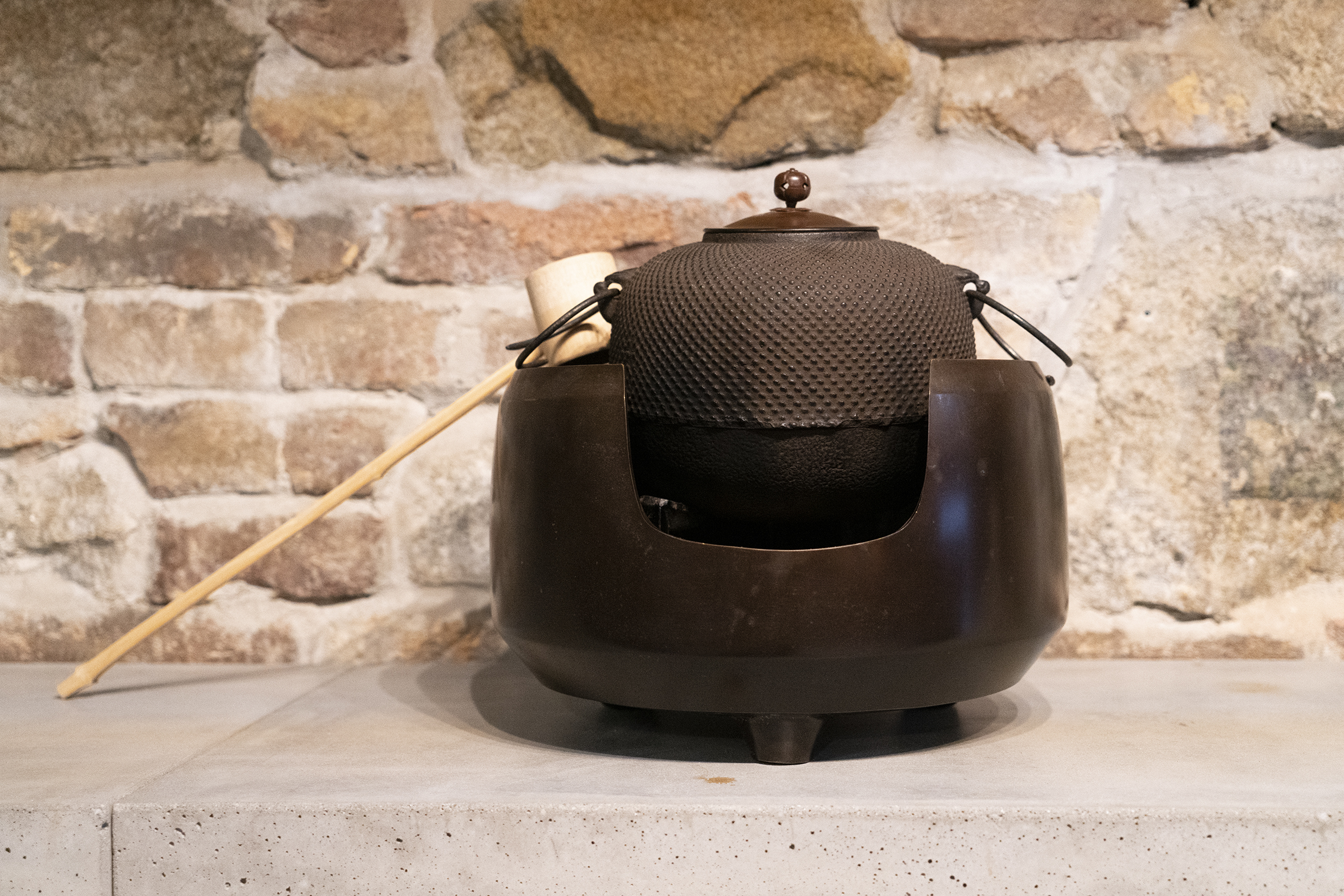
[:sk]Richardova blízka vec prišla z obrovskej diaľky – z Japonska. Čagama, veľkolepá nádoba na ohrievanie vody počas japonského čajového obradu, je len jednou časťou komplexného rituálu, v ktorom všetko niečo znamená, a ktorý je súčasťou jednej nesmierne fascinujúcej kultúry.
Aký je príbeh za blízkou vecou, ktorú si vybral?

Začalo to v jednej čajovni, kde som pred dvadsiatimi rokmi brigádoval. A tam neustále kolovalo, čo sa nedá urobiť pri čajovom obrade. Jednoducho, že nemôžeš úplne reprodukovať japonský čajový obrad na Slovensku, lebo nebudeš mať všetko. Lebo napríklad taká čagama (veľká kovová nádoba na ohrev vody) sa jednoducho nedá doviezť, o to viac, keď je to historická, liatinová, neskutočne ťažká vec. A v tej čajovni sa rozprávala taká historka, že keď bola prekladateľka (a aj veľká japonofilka) pani Čarnogurská v 90. rokoch v Japonsku, jej kolega, ktorý tam tiež cestoval, si ako jediný v histórii priniesol čagamu na Slovensko – a to len preto, že tam nechal všetky svoje veci. Jednoducho všetko, čo mal so sebou, oblečenie, kufor…všetkého sa vzdal, aby si mohol zobrať tú jednu jedinú vec. Čiže čagama sa pre mňa vtedy stala až takým symbolom toho, čo sa nedá.

A teraz, po 20 rokoch, keď som plánoval otvoriť čajovňu, uvedomil som si, že mám to, čo som tak dlho považoval za nemožné – historickú čagamu.

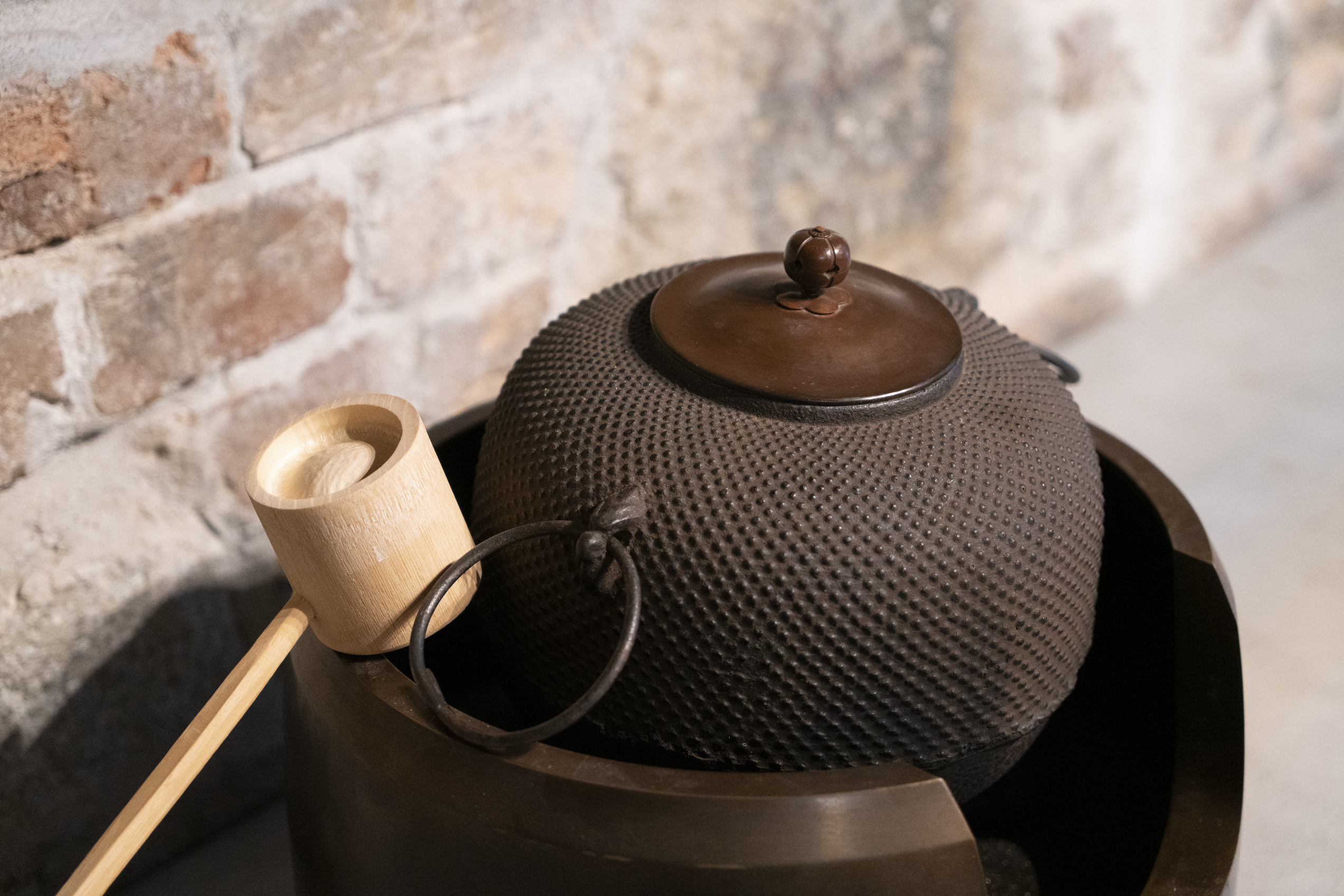
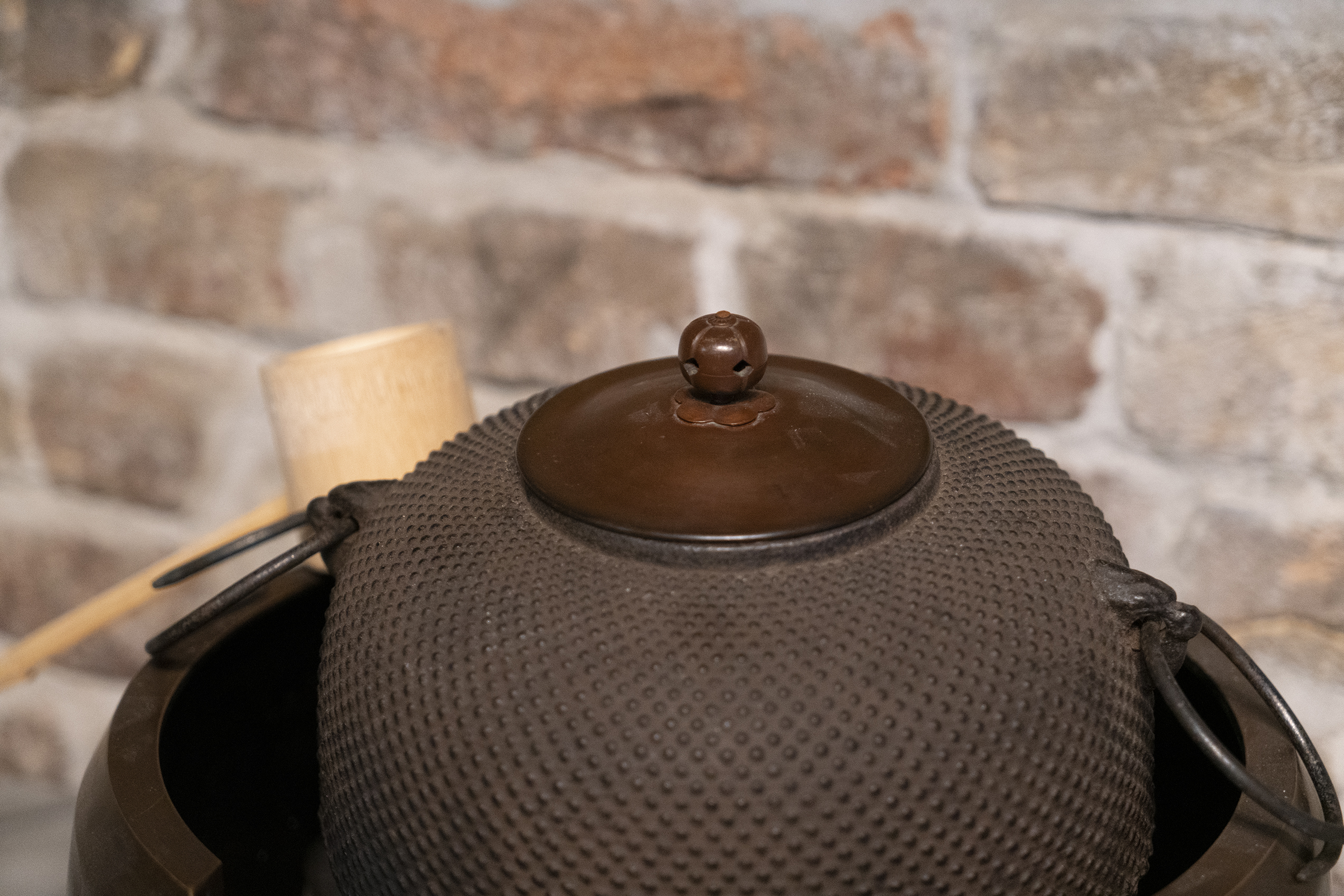
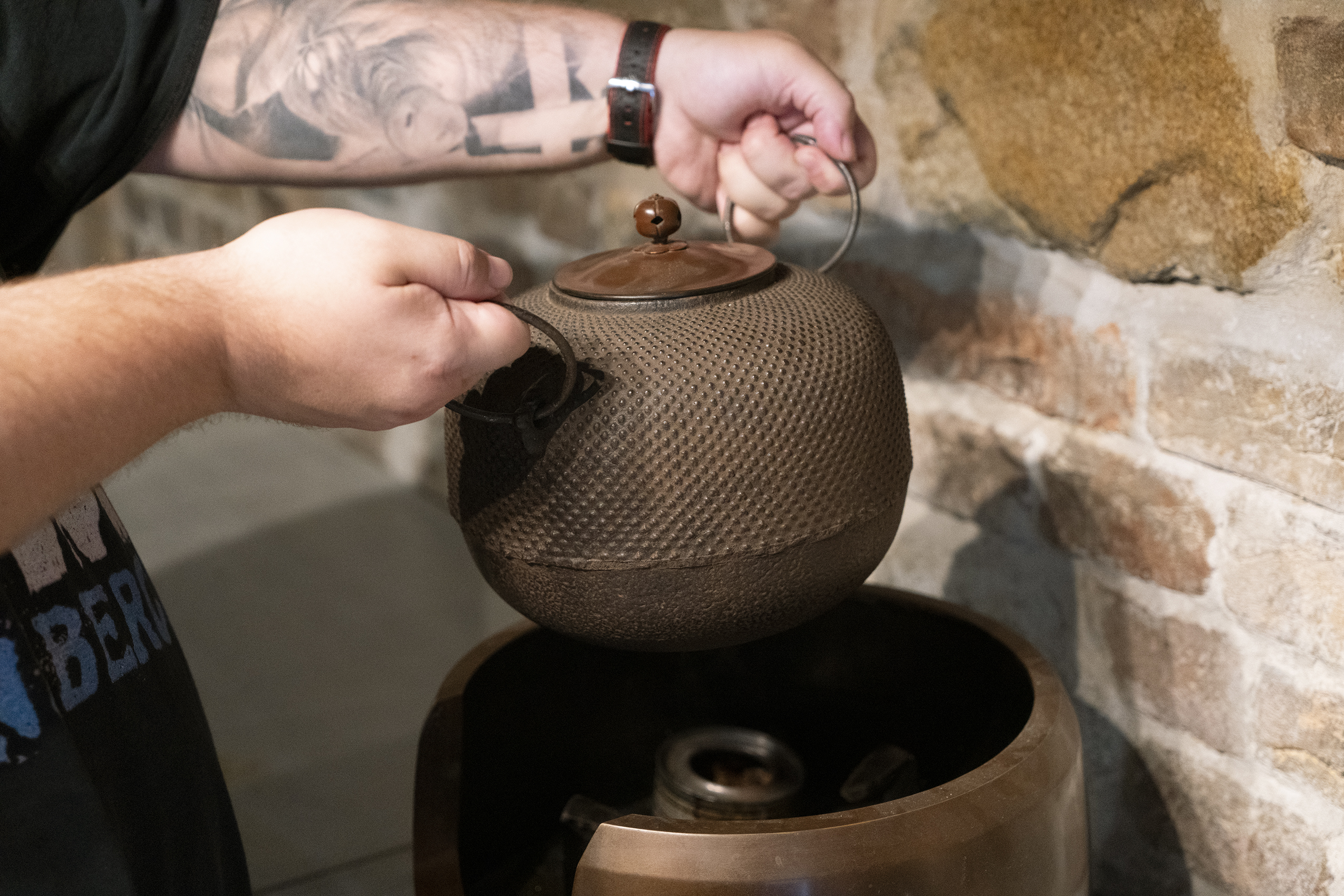
Čagama ako taká slúži na ohrievanie vody pred čajovým obradom. A aj keď som ju už získal, musel som postupne hľadať spôsoby, ako ju používať v našich podmienkach. V Japonsku radi používajú pramenitú vodu. A ja som v tej svojej dvakrát prevaril Fatru plus (smiech), čím sa vytvorila vrstva vodného kameňa a tak som predišiel hrdzaveniu vnútra. A potom je tu ďalšia vec – čím pod tým kúriť. Japonci na to používajú popol. V domoch kúria uhlím, takže to dáva zmysel. Tu to však nemôžem používať, lebo každé uhlie je cítiť vo vzduchu. Nakoniec som zistil, že ideálna cesta je lieh.

A ako si teda tú tvoju čagamu vybral? Muselo to byť takmer ako keď sa niekto rozhoduje pre životného partnera/partnerku.

Veru áno, je to dlhodobá záležitosť. Vyberal som si dlho, ale nakoniec to bolo celkom intuitívne a spontánne. Uvidel som ju, a vedel som, že to je ona.

Vieš aj, aká je stará?

Viem aj neviem. Japonci vek vecí hodnotia takým zvláštnym spôsobom. Sú tie nové, potom je dlho, dlho nič, a až potom sú starožitnosti. Porovnám to s porcelánovými miskami, ktoré som kupoval na pitie alebo aj iné na polievku, z lakovaného dreva. A keď som ich kupoval, tak som sa pýtal, aké sú staré. Odpoveď toho predavača bola: to nie je veľmi staré, to má tak sto, stopäťdesiat rokov. Táto čagama by mala mať približne 120 rokov. Ale to je z ich pohľadu relatívne nová záležitosť.

No a tu chcem spomenúť, že japonské blšáky boli tie najlepšie, aké som kedy zažil. Nájdeš tam všetko od samurajského brnenia po čajové misky. Ale to brnenie má asi 400 rokov, a tá hodnota je adekvátna veku…často sa blíži k hodnote domu. Takže na rovnakom blšáku narazíš na misku za päť Eur a takéto brnenie v cene nehnuteľnosti.

Japonsko je pre mňa krajina neuveriteľných kontrastov. A doteraz som si nebol pre seba schopný definovať pocit, či je tá krajina moderná, alebo naopak historická, lebo ten kontrast je vo všetkom. Na jednej ulici mrakodrapy striedajú staroveké svätyne. A najviac scifi zážitok sú vždy záchody.

Ten kontrast vnímam aj v samotnej čagame, tento spodný “obal” na mňa pôsobí veľmi moderne, až futuristicky, a naopak, vnútro vyzerá dosť staro. Spomínal si, že si ju kupoval online, takže si si ju predtým nemohol poriadne ohmatať. Aký bol ten pocit, keď konečne prišla?

Ja som sa na to veľmi tešil, ale bolo to zároveň frustrujúce, lebo také bolo spolupracovať so slovenskou colnicou… No a ťažké bolo tiež neprezradiť partnerke, pre čo ideme, lebo to malo byť prekvapenie aj pre ňu. A ja nešoférujem, takže ma musela na tú colnicu odviezť. Tak som len dúfal, že si neprečíta názov na krabici, keďže hovorí japonsky. Našťastie na krabici nič nebolo. Bolo to celé vyčerpávajúci proces, ale bol som z toho veľmi nadšený, a doteraz som. Je to vec, o ktorej som ani nepredpokladal, že ju raz budem mať. Taká detská fantázia, ako keď chce byť niekto kozmonaut. Akoby som si konečne sadol do rakety. Samozrejme, že to nie je finálny životný cieľ. Ale sú veci, o ktoré sa neusiluješ, lebo je to v nejakom období až fantaskné, nedosiahnuteľné. A potom príde moment, kedy to zrazu držíš v rukách.
Ako prebieha taký tradičný japonský čajový obrad? Kedy do neho vstupuje čagama?

Ona vlastne slúži len na zohriatie vody. Celé to prebieha tak, že sa vezme čavan, čo je miska na čaj, do neho naberieš matchu, nechá sa zovrieť voda, zaleješ to a vyšľaháš.

Takže čajový obrad sa robí iba s matchou?

Nie, existuje aj čajový obrad pre senchu, ale ten, čo poznáme my, je s matchou. Existujú rôzne čajové obrady, a v Číne majú ešte úplne iné, ich vlastné. Tento sa nazýva čadó, a je to tradičný čajový obrad s matchou.

V Japonsku sú tri školy, ktoré sa tomuto venujú, a každá z nich robí obrad trochu inak. A tie rozdiely spočívajú v takých jemných veciach, ako je napríklad preferovaný typ bambusu, z ktorého sa vyrába nejaká vec, slúžiaca pri obrade. A členovia každej tej školy sú veľmi presvedčení o tom, že práve oni sú tí praví nástupcovia čajového obradu. Školy sa volajú Urasenke, OmotesenkeMushakōjisenke …. Sú nazvané podľa troch miestností domu, kde kedysi býval ten pôvodný čajový majster Sen s rodinou.

Omotesenke bol už historicky veľmi drahý obrad pre vyššiu vrstvu, a naopak Urasenke je otvorený všetkým. Nuž a niekedy sa stane, že niekto niečo v rámci obradu zmodernizuje a všetci sa chytajú za hlavy…že ako sa to mohlo stať.

A oni sa presviedčajú, kto z nich je najlepší, že práve táto škola najlepšie pochopila toho majstra (smiech). Ale keď sa na to pozrieš zblízka a očistíš si tie názvy od takej čajovej “mytológie”, tak to je vo svojej podstate veľmi zábavné.

Ako by si popísal jednotlivé časti čajového obradu?

Má to veľa zaujímavých maličkostí. Napríklad vchod do chyže je znížený, aby sa každý musel zohnúť. Jednotlivých krokov, ktoré má čajový obrad, je neskutočne veľa. A každý jeden krok, pohyb, napríklad to, ako sa čajový majster otočí, niečo predstavuje. Napríklad také nakladanie čagamy popolom – sú k tomu aj dobré videá na Youtube – tak to človek robí aj 30 minút, v reálnej rýchlosti. A to len nakladá popol. Vyrovnáva ho, uhládza. Ale pre toho majstra je to vlastne taká vnútorná meditácia, nemá pri tom žiadnych divákov, klientov. Takto to pripravuje, aby potom dvakrát za deň urobil čaj.

Čajové obrady trvajú od 20-30 minút po niekoľko hodín. Je to super zážitok. Jeden, na ktorom som bol, viedla asi 80 ročná pani. Bolo neuveriteľné ju sledovať, ako sa vo svojom pokročilom veku elegantne a s ľahkosťou zdvíhala zo zeme, v kimone a s miskami v ruke. Majiteľ obchodu, v ktorom sa to dialo, sa venoval predaju historickej keramiky. A mal tam takú poličku s čavanmi, z ktorých si každý mohol vybrať. A keď si z neho pila, tak ti povedali, že to je, mimochodom, od takého a takého majstra, a že ste si dobre vybrali, lebo je veľmi vzácny, a keby ste ho chceli kúpiť, tak jeho cena sa pohybuje na aukciách okolo 10 000 eur.

Tí ľudia boli perfektní. Keď sme odchádzali, tak nám majiteľ obchodu každému nakreslil čavan, z ktorého sme pili. A kresbu nám daroval ako spomienku.

Je tiež zaujímavé, že v Japonsku sa nedáva sprepitné, pokladajú to za neslušné. Ale čo nie je problém, je venovať malý darček. Z tohto dôvodu sme so sebou priniesli slovenský med. Japonci majú med radi a najbežnejší je tam agátový. My sme doniesli horský med, a keď sme im ho tam nechali po tom čajovom obrade, ako darček, bola to vyslovene šou. Boli z toho nadšení. Manželka majiteľa sa nás pýtala, ako zvykneme na Slovensku takýto med konzumovať, či je k tomu nejaký špeciálny prístup. Až som sa hanbil povedať, že si ho dávame len tak normálne na vianočku (smiech). Postupne sa tam zbehla celá rodina, a tá stará pani sa takmer rozplakala. A potom niekto hovorí, že japonci sú bezcitní a s odstupom – vôbec nie.

Naspäť k obradu: ďalšia zaujímavá vec je, že tie čavany, misky na pite počas čajového obradu, majú mať vždy nejakú chybu.

A to je myslené v súlade s tou ich filozofiou wabi-sabi?

Áno. Ak sa niekto venuje zen budhizmu, je tam taká paralela, hovorí sa jej distraction meditation. Spočíva to v pozeraní sa na objekt a obdivovaní jeho dokonalosti cez tú nedokonalosť. Ale aj to má veľmi svojské pravidlá. Napríklad, že takú misku treba otočiť tri a pol krát. Čavan v rukách otočíš presne tri a pol krát, takto ju poobdivuješ, a potom sa z nej môžeš napiť. Mne je ten ich až absolútny tradicionalizmus veľmi sympatický.

A keď sa vrátime k čajovému obradu – aká je jeho história v rámci spoločnosti? Býval kedysi tento rituál súčasťou každej domácnosti? Rodinná tradícia, ktorá sa predávala z generácie na generáciu?

Nie. Vždy to fungovalo iba v rámci tých škôl, ktoré som spomínal. Je veľa ľudí v Japonsku, ktorý nikdy čajový obrad nevideli. Ale zase tam nie sú ľudia, ktorí by nepili čaj. Je sencha, gyokuro a matcha, vznešenejšie čaje, a potom na opačnej strane sú také tie ich každodenné, a z nich najviac pijú banchu, väčšinou po jedle. Hocikde, kam prídeš, dostaneš pohár čaju. Ale vtedy to nie je spojené so žiadnym obradom. Čajový obrad je taká úzkoprofilová záležitosť – možno ako u nás vedieť tancovať odzemok, ak by som to mal porovnať. A treba povedať, že Japonsko je počtom ľudí obrovská krajina, majú 125 miliónov obyvateľov. Takže aj keby bolo takýchto profesionálnych majstrov 10 000, je to ako kvapka v mori. Akurát majú tú výhodu, že oni sa o to kultúrne dedičstvo naozaj starajú. Vážia si vlastnú históriu a sú veľmi srdeční voči ľuďom, ktorí prejavujú k ich histórii úctu. Vtedy by ťa nosili na rukách. Japonsko je veľmi rozporuplná krajina, tie extrémy sú až neuveriteľné. Ale krásna. Asi najkrajšia, v akej som kedy bol.
Richard Glasner v súčasnej dobe vedie čajovňu ICHIGO Tea, venuje sa tvorbe parfémov, keramiky a gastronómii. Popri tom pripravuje gastronomické zážitkové eventy a vo voľnom čase na to všetko zarába ako public relations konzultant. Má ukončené magisterské štúdium na Katedre Sociálnej Práce PdF UK. Od roku 2020 je aj vyučený cukrár. Oboje si váži.

[:en]Richard’s close thing came from a great distance – from Japan. The chagama, the magnificent vessel used to heat water during the Japanese tea ceremony, is just one part of a complex ritual in which everything means something, and which is part of an immensely fascinating culture.

What’s the story behind the close thing you chose?

It started in a tea room where I used to work as a part-time employee twenty years ago. And there was a constant rumour going around about what couldn’t be done at a tea ceremony. Simply that you can’t completely reproduce the Japanese tea ceremony in Slovakia because you won’t have everything. Because, for example, a chagama (a large metal vessel for heating water) simply cannot be imported, even more so when it’s a historic, cast-iron, incredibly heavy thing. And there was a story told in the tea room that when the translator (and also a great Japanophile) Mrs Čarnogurská was in Japan in the 1990s, a colleague of hers, who also travelled there, was the only one in history to bring a chagama to Slovakia – and that only because he left all his things there. He simply gave up everything he had with him, his clothes, his suitcase… he gave up everything to take that one thing. So the chagama became for me at that time such a symbol of what cannot be.

And now, 20 years later, when I was planning to open a tea shop, I realized that I have what I thought was impossible for so long – a historic chagama.

As such, the chagama is used to heat the water before the tea ceremony. And even though I had already acquired it, I had to gradually look for ways to use it in our conditions. In Japan, they like to use spring water. And I boiled Fatra plus in mine twice (laughs), which created a layer of scale and so prevented the inside from rusting. And then there’s the other thing – what to heat it with underneath. The Japanese use ash for that. They heat with coal in their houses, so it makes sense. But I can’t use it here because any coal can be smelled in the air. In the end, I found that the ideal way is alcohol.

So how did you choose your chagama? It must have been almost like someone deciding on a life partner.

Yes, it’s a long-term thing. I chose for a long time, but in the end it was quite intuitive and spontaneous. I saw it and I knew it was the one.

Do you know how old it is?

I know and I don’t know. The Japanese judge the age of things in such a strange way. There’s the new ones, then there’s the long, long nothing, and then there’s the antiques. I compare it to the porcelain bowls I used to buy for drinking or even other soup bowls, made of lacquered wood. And when I was buying them, I used to ask how old they were. The salesman’s answer was: it’s not very old, it’s about a hundred, a hundred and fifty years old. This chagama should be about 120 years old. But that’s relatively new from their point of view.

Now, I want to mention here that the Japanese flea beetles were the best flea beetles I’ve ever experienced. You can find everything from samurai armor to tea bowls. But that armor is about 400 years old, and the value is appropriate for the age…often approaching the value of the house. So on the same flea market you’ll find a bowl for five Euros and such armor at the price of real estate.

Japan to me is a country of incredible contrasts. And until now, I haven’t been able to define for myself the feeling of whether the country is modern or historical, because the contrast is in everything. On one street, skyscrapers alternate with ancient shrines. And the most scifi experience are always the toilets.

I also notice the contrast in the chagama itself, this bottom ” shell ” looks very modern, even futuristic to me, and on the contrary, the inside looks quite old. You mentioned that you bought it online, so you couldn’t feel it properly before. How did it feel when it finally arrived?

I was really looking forward to it, but it was frustrating at the same time, because it was so frustrating to work with Slovak customs… And it was also hard not to tell my partner what we were going for, because it was going to be a surprise for her as well. And I don’t drive, so she had to drive me to that customs. So I just hoped she wouldn’t read the name on the box, since she speaks Japanese. Luckily, there was nothing on the box. It was a whole exhausting process, but I was very excited about it, and so far I am. It’s a thing I didn’t even think I’d have one day. Such a childhood fantasy, like someone wanting to be an astronaut. It’s like I finally got to sit in a rocket. Of course, it’s not the final life goal. But there are some things you don’t aspire to because it’s almost fanciful at some point, unattainable. And then there comes a moment when you suddenly hold it in your hands.

How does such a traditional Japanese tea ceremony happen? When does chagama enter into it?

It actually only serves to heat the water. The whole thing is you take a chawan, which is a tea bowl, you scoop the matcha into it, boil the water, pour it in, and whisk it.

So the tea ceremony is only done with matcha?

No, there is also a tea ceremony for sencha, but the one we know is with matcha. There are different tea ceremonies, and in China they still have completely different ones of their own. This one is called chado, and it’s a traditional tea ceremony with matcha.

There are three schools in Japan that do this, and each one does the ceremony a little differently. And those differences lie in such subtle things as the preferred type of bamboo used to make some of the things used in the ceremony. And the members of each of those schools are very convinced that they are the true successors of the tea ceremony. The schools are called Urasenke, Omotesenke, Mushakōjisenke …. They are named after the three rooms of the house where the original tea master, Sen, and his family once lived.

Omotesenke has historically been a very expensive ceremony for the upper class, and conversely Urasenke is open to all. Well, sometimes what happens is that someone modernizes something within the ceremony and everyone grabs their heads…that how could that happen.

And they convince each other who is the best, that this particular school has understood the master the best (laughs). But when you look at it closely and you cleanse the names of that kind of tea party “mythology”, it’s inherently very funny.

How would you describe the different parts of the tea ceremony?

It has a lot of interesting little details. For example, the entrance to the hut is lowered so everyone has to bend down. The different steps that the tea ceremony has are incredibly many. And every single step, movement, like the way the tea master turns around, represents something. For example, such as loading the chagama with ash – there are good YouTube videos for this – so one does this for 30 minutes, at real speed. And that’s just loading the ash. He’s levelling it, smoothing it. But for the master, it’s actually like an inner meditation, he has no audience, no clients. So he prepares it like this, then twice a day he makes tea.

Tea ceremonies last from 20-30 minutes to several hours. It’s a super experience. The one I was at was conducted by a lady of about 80 years old. It was incredible to watch her, in her advanced age, lift herself off the ground gracefully and with ease, wearing a kimono and with bowls in hand. The owner of the shop where this was happening was in the business of selling vintage pottery. And he had a shelf of chawan that everyone could choose from. And when you drank from it, they told you that it was, by the way, by such and such a master, and that you had chosen well, because it was very rare, and if you wanted to buy it, it was going for around 10,000 euros at auction.

Those people were perfect. When we left, the shop owner drew us each a chavan to drink from. And he gave us the drawing as a memento.

It’s also interesting that they don’t tip in Japan, they consider it rude. But what is not a problem is to give a small gift. That’s why we brought Slovak honey with us. The Japanese like honey and the most common there is acacia honey. We brought mountain honey, and when we left it there after the tea ceremony, as a gift, it was quite a show. They were very excited about it. The owner’s wife asked us how we used to consume such honey in Slovakia, if there was any special approach to it. I was ashamed to say that we were just having it as a normal Christmas treat (laughs). Gradually the whole family ran there, and the old lady almost cried. And then somebody says that the Japanese are heartless and in hindsight – not at all.

Back to the ceremony: another interesting thing is that those chawan, the drinking bowls during the tea ceremony, are always supposed to have some kind of flaw.

And this is meant to be in line with their wabi-sabi philosophy?

Yes. If one is into Zen Buddhism, there’s a parallel, it’s called distraction meditation. It consists of looking at an object and admiring its perfection through that imperfection. But even that has very peculiar rules. For example, that such a bowl has to be turned three and a half times. You turn the chawan in your hands exactly three and a half times, you admire it like that, and then you can drink from it. I like their almost absolute traditionalism.

Coming back to the tea ceremony – what is its history within the society? Was this ritual once a part of every household? A family tradition that was passed down from generation to generation?

No. It has only ever worked within the schools I mentioned. There are many people in Japan who have never seen the tea ceremony. But then again, there aren’t people there who don’t drink tea. There’s sencha, gyokuro, and matcha, the more noble teas, and then on the other side there are these everyday ones, and of those they drink bancha the most, usually after meals. Everywhere you go, you get a cup of tea. But then it’s not connected with any ceremony. The tea ceremony is such a narrow thing-maybe like us knowing how to dance the odzemok, if I had to compare. And it has to be said that Japan is a huge country in terms of people, they have 125 million inhabitants. So even if there are 10,000 such professional masters, it’s like a drop in the ocean. But they have the advantage that they really take care of this cultural heritage. They value their own history and they are very cordial to people who show respect for their history. Back then, they would carry you on their hands. Japan is a very contradictory country, the extremes are unbelievable. But beautiful. Probably the most beautiful I’ve ever been to.

Richard Glasner currently runs the ICHIGO Tea shop, he is a perfume maker, ceramic maker and caterer. Alongside this, he prepares gastronomic experience events and in his spare time he earns money for all this as a public relations consultant. He has a Master’s degree from the Department of Social Work at the Faculty of Social Work, Charles University. Since 2020 he is also a trained pastry chef. He appreciates both.

[:]

14 / 10 / 2021
by Katarína Poliačiková
[:en]Share on Facebook[:][:sk]Zdieľaj na Facebook[:]