[:sk]Rozhovor / KANAVA[:en]Interview / KANAVA[:]
[:sk]Kanava je novovzniknutý projekt, ktorý prináša príbehy súčasných remeselníkov na Slovensku. Kanava je platforma pre ľudí, ktorí sa rozhodli investovať svoj čas do oživovania tradičných remesiel a tvorby nadčasových objektov, ktoré môžu slúžiť ďalším generáciám. S jej zakladateľkami Paulou Blahovou a Kristínou Šipulovou sa rozprávala Katarína Poliačiková.[:en]Kanava is a newly created project that brings the stories of contemporary artisans in Slovakia. Kanava is a platform for people who have decided to invest their time in reviving traditional crafts and creating timeless objects that can serve future generations. Katarína Poliačiková spoke with its founders, Paula Blahová and Kristína Šipulová.[:]
[:sk]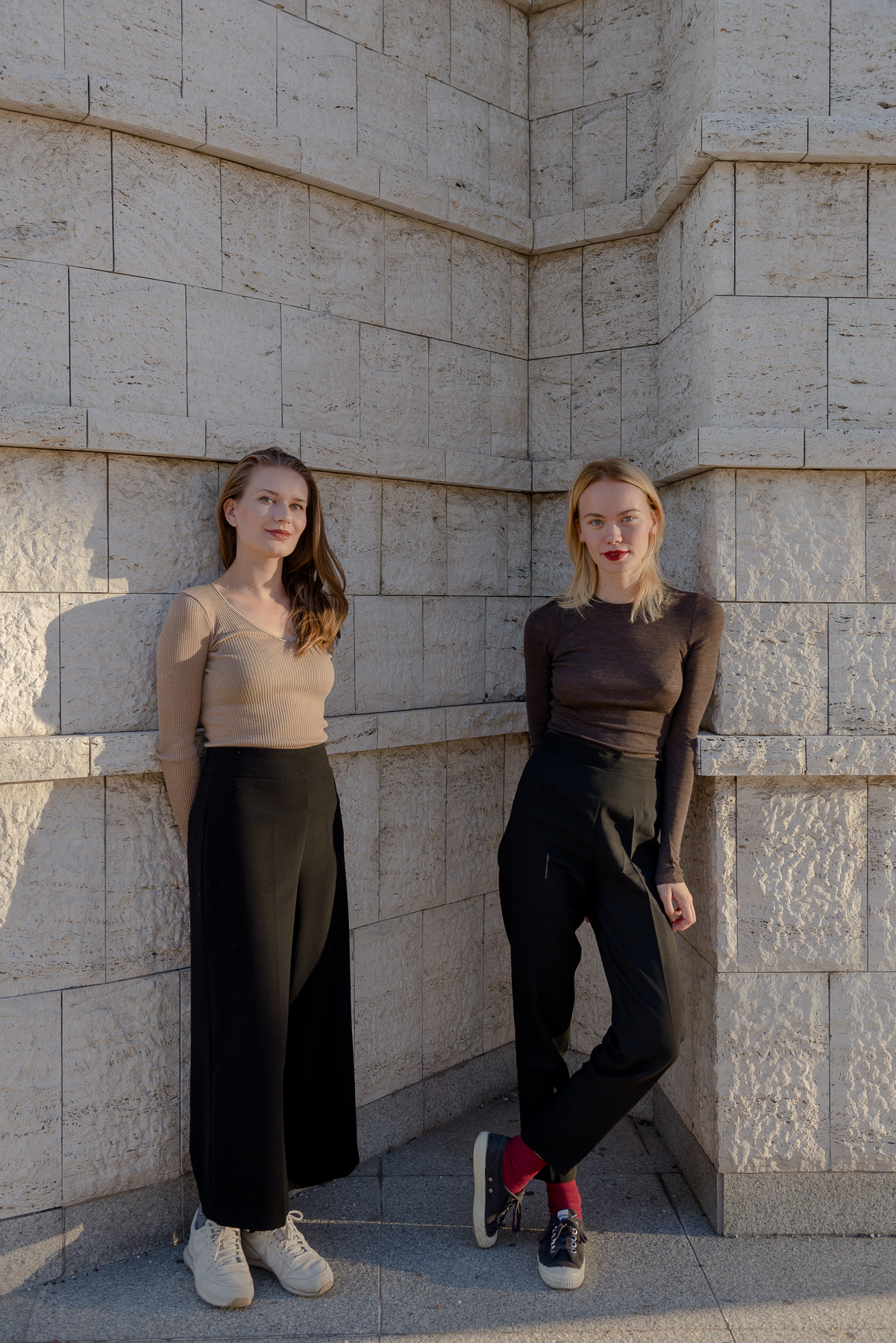
Foto: Kvet Nguyen.
KP: Začnem otázkou, ktorá môže byť trochu ťažká. Ak by ste mali Kanavu popísať v jednej vete, aká by bola?
PB a KŠ: Trvalo nám dlhšie, kým sme si túto vetu zadefinovali. Nechceli sme klásť dôraz len na samotné objekty, chceli sme prerozprávať príbeh a motiváciu, ktorá viedla k ich vzniku. Kanava je kolekcia príbehov o objektoch a ich tvorcoch. Príbeh, ako ho ponímame my, v sebe spája inšpiráciu, proces, objekt a jeho tvorcu.
Kto stojí za Kanavou? Viem, že ste to vy dve, ale aké je vaše pozadie? A aký je samotný príbeh vzniku Kanavy?
KŠ: Paula, povedz ty, ako som si ťa pritiahla.
PB: Pamätám si, že som Kiku a jej tvorbu sledovala veľmi dlho, páčila sa mi jej estetika a to, čo robila, a stále som nevedela prísť na to, odkiaľ je, že má slovenské meno, ale pôsobila na mňa tak medzinárodne. A potom, niekedy v decembri minulého roku som na Instagrame zahliadla, že Kristína Šipulová hľadá stážistku do svojho textilného štúdia. Sedela som práve v lietadle z Dánska, kde som vtedy žila a nevedela som, či tam ešte chcem ostať. Vôbec som netušila, čo z toho bude, ale vyskúšala som to a poslala som jej email. A tak som sa vo februári ocitla v Bratislave v jej textilnom štúdiu.
KŠ: Vlastne sme sa prvýkrát videli na Skype, keď Paula bola ešte v Dánsku. Už vtedy som mala som pocit, že sme na podobnej vlne. Intuícia fungovala aj cez Skype. Iskra preskočila (smiech). Bolo to hneď dosť osobné, dobre sa nám spolu rozprávalo a neskôr aj pracovalo.
Po mesiaci, ako sme spolu začali fungovať, prišiel Covid a zrazu sme rozmýšľali, či by sme sa mali stretávať, alebo nie, no a potom som odišla z Bratislavy a ostali sme v spojení na diaľku. Prišlo to práve v období, keď sme začali pracovať na jednej tapisérii, mala som mať výstavu v Paríži. Chýbali sme si, často sme si volali. Korona všetky tieto pracovné prípravy zredukovala.
Raz, keď som bola v Telgárte, sme si zavolali a Paula mi povedala, že rozmýšľala o remesle ako takom a že by s tým chcela niečo spraviť. Že na Slovensku niečo chýba, jedno miesto, kde by sa dali nájsť zdroje a ľudia…PB: Ten príbeh začal tým, že som si zariaďovala byt a hľadala som tkaný koberec. Začala som googliť a dostala som sa k stránkam, ktoré ponúkali kvalitné produkty, ale tie weby neboli robené dobre, veci boli dosť zle nafotené. Chvíľku som nad tým premýšľala, a potom som o tom povedala Kike, ktorá už mala v hlave dlhšiu dobu podobný nápad.
KŠ: Áno, ja som si to už nosila dlhšie, aj som o tom pred troma rokmi písala diplomovku – o význame remesla v súčasnosti. Paulina stáž v mojom štúdiu sa nakoniec veľmi prirodzene vyvinula do spolupráce, do rovnocennosti. Povedali sme si, poďme na tom začať spolu pracovať. Kanava teda vznikla už ako náš spoločný projekt. Ja som vlastne počas celého štúdia na VŠVU hľadala takúto parťáčku a nenašla som ju. Aj vtedy, keď som dala von ponuku stáže, tak som vlastne nehľadala len stážistu či stážistku, vedela som, že chcem týmto spôsobom nájsť blízkeho človeka. Vnútorne som túžila nájsť spriaznenú osobu pre tvorbu.
PB: Trochu sme asi odbočili od otázky. Pre mňa bola Kristína remeselníčka, textilná dizajnérka, ja som bola v dobe, keď sme sa stretli, trochu “stratená”, nevedela som úplne, akým smerom sa vybrať. Študovala som v Amsterdame Fashion Management, moja špecializácia bola textil. Chodila som aj na stáže, na začiatku to bola produkcia a resourcing, čo znamenalo veľa excelových tabuliek, ale už vtedy som zistila, že ma baví výskum, hľadanie, inklinovala som k storytellingu. Bavilo ma pátrať po tom, čo sa skrýva za samotným dizajnom, za farbou, ktorú si vyberieme. Práve vďaka Kristíne som si zadefinovala to, že nemusím robiť len rukami, ale aj hlavou. V podstate to tak aj máme rozdelené, Kristína je založená esteticky, ja sa viac zameriavam na obsah, texty. Podľa mňa sa tak krásne dopĺňame. Aj v tom, že Kristína je viac snová, ja som tá realistická s nohami na zemi. Vo mne ten manažment ešte stále žije. Zároveň sa pri nej učím, že nie všetko musí byť vždy presne zadefinované.
KŠ: Tým, že tvorím, tak som prirodzene senzitívnejšia. Moje pozadie je v textilnom ateliéri na VŠVU, snažila som sa počas štúdia veľa cestovať mimo, načerpať iné skúsenosti. Mala som pocit, že je to dosť dôležité. K textilnému remeslu som sa začala viac približovať na stáži v Dánsku, konkrétne v štúdiu Beck & Kinch. Vyrábali sme napríklad látky pre módne domy Chanel alebo Dior. Všetko muselo byť veľmi precízne. Tam som pochopila niečo dôležité. Dovtedy som mala pocit, že remeslo je v úzadí. Čo som zažila tam, bol úplný opak – tam bolo remeslo grom všetkého. Ľudia za tým dokázali prísť, vyzdvihnúť si niečo osobne z druhého konca sveta. Malo to obrovskú hodnotu, bolo to vzácne. A mne sa páčilo, že niečo tak exkluzívne bolo robené na “obyčajných” drevených krosnách. Bolo to krásne, rodinné štúdio, ktoré založila matka s dcérou. Tam som pochopila, že sa to dá. Samozrejme, môžeme povedať, že je to do istej miery utópia, že hovoríme o Škandinávii, kde veci fungujú úplne inak, ako na Slovensku. Ale mňa to veľmi inšpirovalo. Po návrate zo stáže som začala robiť na bakalárskej práci, ktorá bola o tkaní a vývoji nových látok a začala som tkať na drevených krosnách. V magisterskom štúdiu som pokračovala na VŠVU, ale išla som na stáž do Paríža, do štúdia Edelkoort / Trend Union.
To bola ďalšia inšpiratívna skúsenosť. Tam sme veľmi nepracovali s rukami, bolo to štúdio, v ktorom som načerpala určitú estetiku. Tá estetika a niečo, čo som vnímala ako spoločný jazyk bolo práve tým, čo ma tam pritiahlo. Vďaka tejto stáži som získala veľký rozhľad, venovali sme sa tam do hĺbky rešeršu, pripravovali sme “trend books”, rôzne prezentácie pre klientov, vizuálne identity. Denne som mala na stole kopu kníh, o fotografii, o histórii umenia. Dennodenne som sa ponárala do toho, čo všetko sa deje, čo všetko vzniklo, akí sú mladí dizajnéri, aké sú prúdy, ako veci navzájom súvisia. Bolo to celé skôr štúdium, a byť v Paríži bolo celkovo veľmi inšpiratívne. Po návrate som ako diplomovú prácu vytvorila kolekciu ručne tkaných odevov. Rozhodla som sa spolupracovať s remeselníkmi, všetko to pretaviť do uceleného projektu. Bolo to celé o význame, filozofii remesiel. Aj preto nie je Kanava založená na sledovaní niečoho ľudového, dekoratívneho, je skôr o hľadaní rôznych médií a remeselníkov, ktorých spája podobný prístup k tvorbe. V Kanave spolu pôsobíme tak, že ja idem do hĺbky remesla a jeho foriem, a Paula sa zameriava na tú manažérsku časť.
PB: Tu je podľa mňa ešte podstatné, že ja som to dievča z Bratislavy a Kristína je z Telgártu, a ja som vždy závidela tie tradície ľudovej kultúry, čo bolo pre mňa v prostredí, kde som vyrastala, niečo vzdialené, nebola som k tomu vedená, na rozdiel od Kristíny. Myslím, že sa od seba navzájom veľa učíme. Mňa to vždy fascinovalo a zrazu tu mám to svoje “folklórne dievča” (smiech).
KŠ: Súhlasím, ten pôvod je v mojom prípade dosť dôležitý, prostredie ma na mojej ceste veľmi ovplyvnilo.
Keď som sa zamýšľala nad tým, čo je esencia vášho projektu, napadla ma taká analógia. Keď sme s priateľom na jar nasadili po prvýkrát paradajky, a po troch mesiacoch starostlivosti a polievania sme obrali prvé plody, dali sme ich na tanier a dívali sme sa na ne, mali sme pocit, že ich ani nedokážeme zjesť, také špeciálne nám prišli. Zrazu bol za tými plodmi bol čas, mesiace, kedy sme sledovali, ako kvitli, rástli a zreli. Pre mňa to, ako metafora, súvisí s remeslami. Pri remesle tvorí čas veľkú súčasť a hodnotu produktu, diela. Ľudia musia pochopiť, že za takýmto objektom, ktorý sa môže stať súčasťou ich príbytku – za jeho vznikom je kvantum času. Nie je to len čas, kedy sa ten predmet vytvára, ale aj čas, ktorý tomu predchádza. To množstvo pokusov, omylov, chýb, budovania remeselnej zručnosti. Objekt stojí na konci dlhej cesty. Mám pocit, že v našom prostredí nie sú ľudia zvyknutí vnímať hodnotu remesla týmto spôsobom a je tu potrebná nejaká osveta. Práve preto sa mi zdá dôležité to, čo Kanava komunikuje. Tú hodnotu času.
PB: Väčšina z remeselníkov, ktorých prezentujeme, má ten príbeh celkovo veľmi prepojený s osobným životom. To, čo robia, vzniklo ako taký “vedľajší produkt” niečoho, čo bol vlastne ich život. Napríklad Andrea Kurjaková (ktorá založila projekt Rurozo) nám rozprávala, že keď chodila na VŠVU, mala problém s tým, že si rada zapisovala na papier, ale zápisníky, ktoré sa dali kúpiť, ju nejakým spôsobom obmedzovali. Tak sa proste rozhodla vyrobiť si vlastný. Alebo Vierka, ktorý vyrába vlnu, najskôr založila so svojim manželom farmu a zadovážili si ovce, ako veľmi nenáročné zvieratá. Zároveň si povedali, že chcú využiť všetko, čo im farma prinesie. Začala strihať ovce a robiť vlnu, a našla v tom svoju veľkú vášeň. To sa mi na tých príbehoch páči – tá filozofia, že nejdem urobiť “peknú vec”, ale idem robiť niečo, pretože to má zmysel, pretože to potrebujem ja sama. Vtedy je ten produkt úprimný.
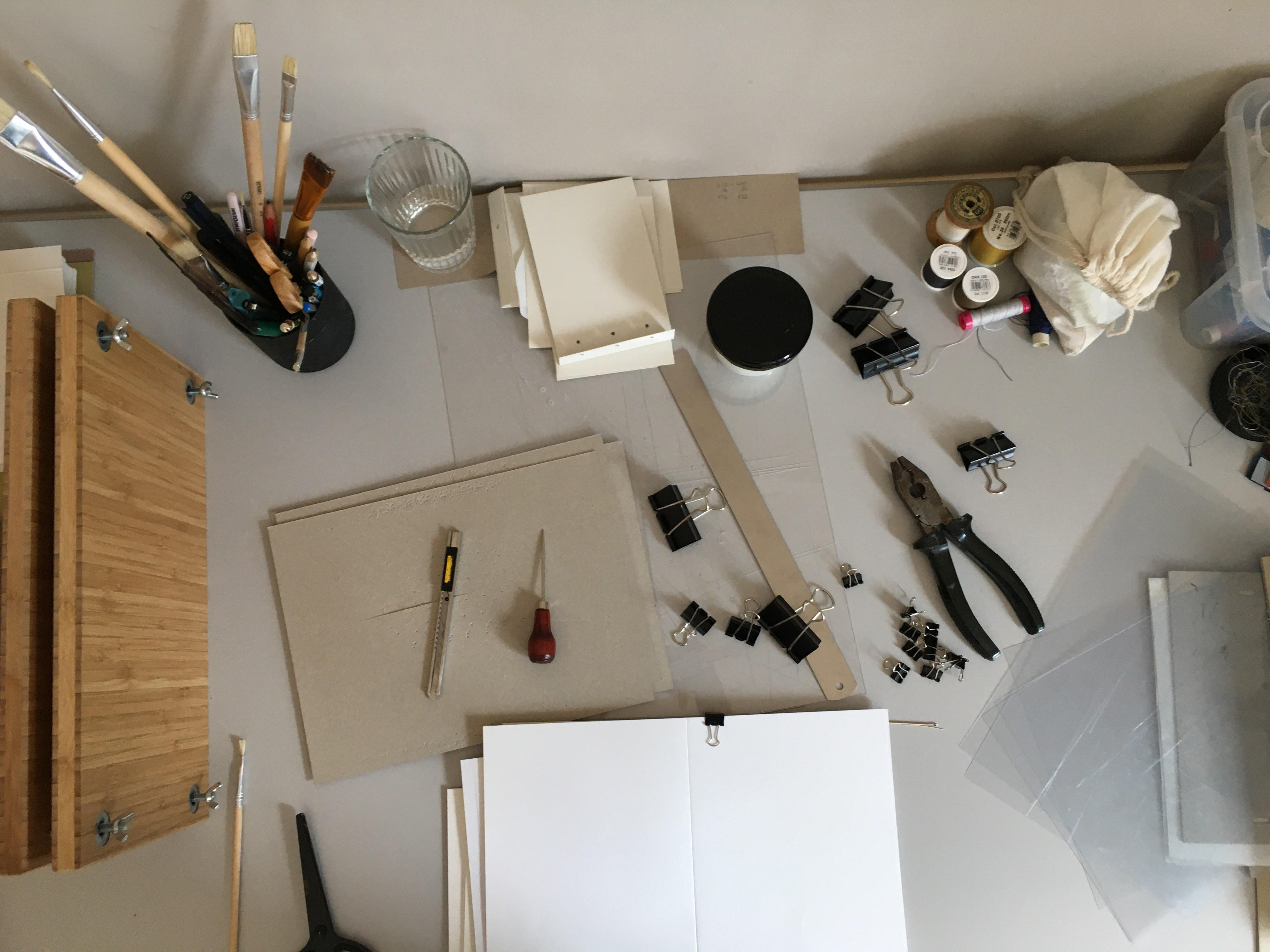
Tvorba papierových zošitníkov, Foto: Andrea Kurjaková.
KŠ: Cez tvorcov, ktorých spájame v Kanave zisťujeme, že rozhodnutiu začať robiť remeslo väčšinou predchádza veľmi veľa času. Je to podobné, ako keď sa niekto odhodláva na veľkú životnú cestu, alebo novú prácu. Ten človek už predtým zažíva veci, ktoré ho k tomu vedú, remeslo býva často životným rozhodnutím. Niečo, čo vyviera z vnútra tých ľudí. Vzniknuté objekty sú tak vyznením konkrétnych životov. To sa mi zdá dôležité spomenúť. Pred pár dňami som čítala veľmi peknú esej od architekta Louisa Kahna, kde píše o tom, že pre človeka má najväčšiu hodnotu to, čo je “unmeasurable”, nemerateľné. A práve remeslo je “unmeasurable”. Prišlo mi krásne, ako to pomenoval. Vtedy, keď človek stojí pred niečím a zažije také to “ach, wow”. To sa stáva práve pred takýmto typom objektu, diela. Mňa napríklad fascinuje tapiséria, ktorú teraz robím. Ten čas sa ani nedá rátať na hodiny. Keď sa ma niekto spýta, ako by som vyčíslila hodnotu mojej práce, na základe akej jednotky, príde mi to absolútne nemožné – je to unmeasurable. A v tom spočíva tá fascinácia.
Niečo, čo nás totálne presahuje, vesmírny pocit.
KŠ: Presne tak. My ľudia sme si vytvorili meracie nástroje, ale tieto veci sú nemerateľné a aj preto je remeslo také fascinujúce. Ten čas je práve to, čo tvorí základnú hodnotu. Je to investícia času, ktorá robí objekty vzácnymi, a táto hodnota pretrváva počas života objektu. Niečo vytvorené z mäkkého materiálu, ako je textil, pretrvá tisícročia, lebo to nesie hodnotu času a tiež toho, že si to niekto váži.
Prišlo mi teraz na um Portugalsko, kde v súčasnosti vzniká viacero iniciatív na udržanie a rozvoj remeselných tradícií a ich prepojení so súčasným dizajnom. Spomeniem napríklad projekt Passa Ao Futuro. Portugalsko a Slovensko sú si v mnohých aspektoch veľmi blízke. Čo sa týka remesiel, Portugalsko má tiež veľkú tradíciu, hlavne v kožiarstve, keramike, košikárstve, textile… Je tam podľa mňa dosť cítiť, že kontinuita rodinných remeselných tradícií nebola prerušené znárodňovaním majetku a desaťročia dlhou medzerou v súkromnom podnikaní, ako tomu bolo u nás. Portugalsko je celosvetovo známe vysokou úrovňou remeselného spracovanie, zastrešuje produkciu mnohých svetových značiek, hlavne výrobcov obuvi. Napadá ma tiež jeden veľmi úspešný projekt s názvom A Vida Portuguesa. Značku založila žurnalistka Catarina Portas v roku 2007, na začiatku to bol len obchod v centre Lisabonu, ktorý ponúkal výber tradičných miestnych produktov, overených a obľúbených generáciami. Odvtedy sa značka rozšírila do celého Portugalska, stala sa známou na celosvetovej úrovni. Koncept A Vida Portuguesa (v preklade Portugalský život) je postavený na znovuobjavovaní a sprostredkovaní tradičných portugalských výrobkov – keramiky, mydla, vlnených produktov a textílií…všetko je zabalené v peknej vizuálnej identite, krásnych interiéroch obchodov. Čo sa mi ale páči na tomto projekte najviac, je fakt, že produkty nakupujú nielen turisti, ale vo veľkej miere aj domáci. Je to na jednej strane obchod s kvalitnými a vkusnými “suvenírmi”, na druhej strane tradičné a veľmi kvalitné veci do každej domácnosti. Vždy, keď som v Lisabone, ma napadne, že by som niečo podobné uvítala na Slovensku. Spomínam tento projekt, lebo je to jeden zo spôsobov, ako rozvíjať myšlienku zviditeľňovania remesiel a zároveň zabezpečiť finančnú udržateľnosť projektu. Aká je cesta, ktorou by sa Kanava chcela v budúcnosti vydať? Aký je vás potenciálny “biznis model”? Má Kanava ambíciu sprostredkovať remeslo širšej cieľovej skupine, urobiť remeselné produkty dostupné? Alebo reprezentatívne pre našu krajinu smerom do zahraničia?
KŠ: Ja si myslím že áno. Ale to je hlavne o škálovaní. Častokrát je to o počte kusov, naši remeselníci sú často len jeden človek, nie fabrika, ktorá vyrába veci. Práve v tomto aspekte je to trochu problematické. Ak majú byť výrobky dostupné, treba vedieť škálovať ich produkciu a zároveň nestratiť kvalitu. Možno by bolo zaujímavé založiť nejakú malú manufaktúru, kde by pracovali na produktoch viacerí ľudia. To by mohlo fungovať, lebo myslím, že v súčasnosti narastá záujem o remeslo medzi mladými ľuďmi. Keď si spomínala ten portugalský obchod, tam sa bavíme možno o tisícke výrobkov z jedného typu produktu. A to je veľká výzva a otázka. Chceme niečo, čo je “one of a kind”, dať do sériovosti, alebo si chceme zachovať jedinečnosť? Myslím, že my ako Kanava môžeme časom uvažovať o vytváraní nejakých limitovaných edícií, ktoré budú dostupnejšie, ale stále si zachovajú istú špeciálnosť.
PB: Už dlhšiu dobu sledujeme rôzne zahraničné inšpirácie a projekty podobné Kanave. Mne pri tejto téme napadol jeden projekt z Čiech, volá sa In August Company. Majú v ponuke napríklad drevené výrobky, alebo ľanové obrusy, nejakú keramiku. U nich to funguje na takom princípe, že si nadizajnujú vlastný produkt a nájdu si remeselníka, ktorý im ho vyrobí v sérii. To je jeden spôsob, ako pristúpiť k produkcii a dostupnosti.
KŠ: Zároveň treba povedať, že nie každý remeselník má o takéto niečo záujem.
PB: My si veľmi chceme dať záležať na tom, aby sme zachovali podpis konkrétneho remeselníka či remeselníčky. Takže skôr nás to tiahne k jedinečnosti ako k masovejšej produkcii.
KŠ: A čo sa týka nejakej osvety, dá sa to poňať rôzne. Napríklad aj tak, že podnietime ľudí k zamysleniu, načo je im doma desať tanierov, ktoré nemajú až tak radi, že namiesto nich môžu vlastniť oveľa menej, ale hodnotnejších produktov. A v konečnom dôsledku bude výsledná cena už porovnateľná so sériovou keramikou. Pri osvete je tiež potrebné rozprávať aj o nejakom cykle – ak sa začne remeselníkovi dariť predaj, možno to už nebude päť jedinečných kúskov, ale vytvorí menšiu sériu. Ak zákazník chápe hodnotu objektu, remeselník má väčšiu motiváciu uvažovať o škálovaní produkcie. Koniec koncov, nestačí len písať krásne príbehy, uvedomujeme si, že tí ľudia, ktorých propagujeme, potrebujú aj z niečoho žiť. Určite sa nikdy nebudeme zaoberať masovou produkciou, ale viem si predstaviť limitované edície o počte, povedzme, päťdesiat kusov.
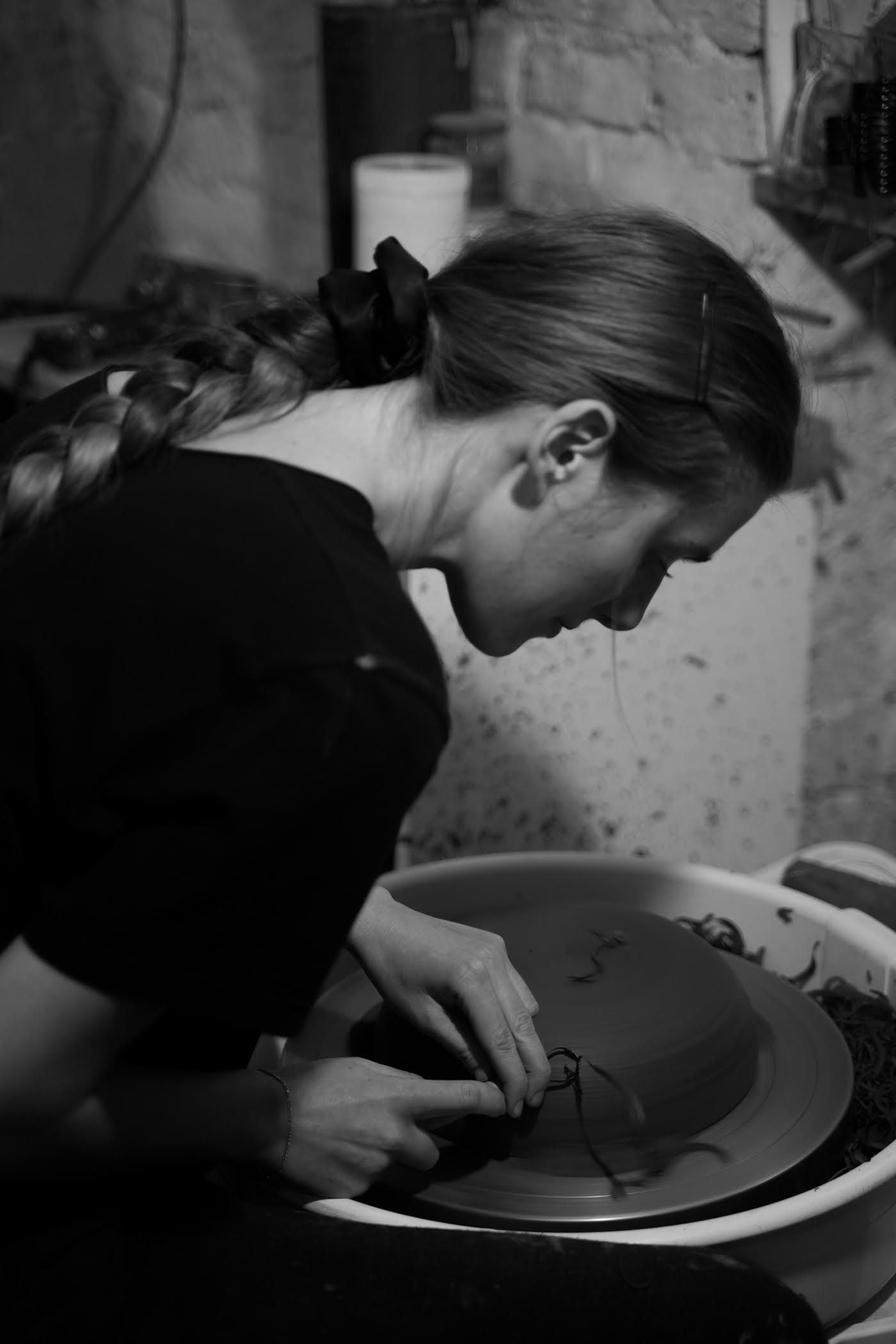
Točenie na kruhu, Foto: Joanna Joy, Karolína Kučerová.
Ak to chápem správne, je pre vás dôležité zachovať ten správny pomer určitej vzácnosti a dostupnosti.
KŠ: Áno, určite nechceme prejsť od “galerijných” kusov k sériovosti dostupnej pre celú krajinu, ale skôr hľadať nejakú cestu medzi.
PB: Nám sa na tomto prístupe veľmi páči aj ten aspekt času, nielen pri samotnej produkcii, ale aj vo vzťahu remeselníkov a zákazníkov. Niekto si niečo objedná a bude si na to musieť počkať. To je to, čo my hlásame – že kvalitné veci proste trvajú. Rozprávala som sa o tom s mojimi rodičmi a zistila som, že je im veľmi ťažké vysvetliť, že chceme propagovať niečo, čo nebude ihneď dostupné. Oni si práve zažili v minulom režime tie momenty, kedy na produkty čakali a nechcú to zažiť znova. Ja to absolútne chápem, som taká ta mileniálka, ktorej nevadí, že si musí počkať mesiac na jeden hrnček (smiech). Ale v zásade ide o to, že prechádzame z rýchlosti do pomalosti. V rýchlosti nám uniká individualita.
KŠ: Nám nejde o absolútnu dostupnosť, ale skôr priniesť ľuďom určitý pocit: ako si veci viac vážiť, ako im rozumieť, ako si zušľachťovať vlastný život tým, že sa dokážeme obklopiť síce menej, ale krásnymi vecami, ktoré nesú svoj príbeh. Ak by sa nám to darilo, sme na dobrej ceste.
Akých ľudí, remeselníkov, ste doteraz cez Kanavu predstavili?
PB: Boli to zatiaľ samé ženy, čo si myslím že je taká naša sila, keďže aj my dve sme ženy, ale určite sa nechceme limitovať, prihlásiť sa môžu aj muži, len sa to zatiaľ nedeje (smiech).
KŠ: Čo sa týka materiálov, predstavili sme doteraz tvorkyne, ktoré pracujú s keramikou, papierom, včelím voskom, drevom, vlnou. Sú to väčšinou mladí ľudia.
PB: Zaujímavé je, že väčšina z nich nežije v meste a sú ovplyvnení prostredím, v ktorom vyrastali a je to cítiť v ich tvorbe. Každý jeden z nich má silný príbeh, každý má čo povedať. Keď sa spýtame na inšpiráciu, tak tam vždy zaznie to silné prepojenie tvorby a života.
KŠ: Všetkých remeselníkov predstavujeme formou rozhovorov, kedy im posielame otázky, a vždy nás prekvapí, aké krásne, detailné, premyslené odpovede dostávame. A ešte je pekné, že sa títo naši remeselníci podporujú aj navzájom, keď sa vďaka Kanave spoznajú.
To je to, ako prirodzene vzniká tá “togetherness”, komunita, o ktorej ste hovorili na začiatku.
KŠ a PB: Presne tak, a raz by sme ich spojili na nejakom evente, kde by sa mohli viac spoznať. Tam aj postupne smerujeme, že by sme časom spravili nejaký launch kde by sme uviedli aj e-shop. A predstavujeme si to ako krásnu večeru, kde by boli zakomponované rôzne objekty. Budeme jesť, rozprávať sa, navzájom sa spoznávať.
To ma privádza k otázke, aká je vaša zahraničná inšpirácia. Viete vypichnúť zopár platforiem, projektov, ktoré vás silne ovplyvnili?
KŠ: Myslím, že to je jasné. The New Craftsmen, britská organizácia, ktorá má v Londýnskom Mayfair aj kamenný obchod. Pôsobia nielen v predaji ale aj ako združujúca platforma pre britských remeselníkov. Ďalšia inšpirácia je Hole & Corner, magazín o remesle, myslím, že teraz už začínajú aj s e-shopom. Trochu inou inšpiráciou, ktorá už ide smerom do umenia, je LOEWE Foundation, ktorú poznám cez Krzysztofa Lukasika, ktorý tam pracoval a s ktorým som mala možnosť absolvovať vo Francúzsku workshop.
PB: Práve pri The New Craftsmen, ktorých veľmi obdivujeme, sme si pozerali, ako začínali, aký bol ich prvý Instagram post. Bolo to aj trochu povzbudivé, vidieť, že veci nie sú od začiatku dokonalé. Uvedomujeme si, že je to vývoj, proces.
Myslím že toto je niečo, na čo často zabúdame. Chceme, aby od začiatku všetko fungovalo, aby to zašlapalo. A pritom za projektami, ku ktorým vzhliadame, väčšinou stojí veľmi veľa práce a dlhá cesta.
KŠ: Presne tak. Ľudia sa nás už pýtajú, kedy spustíme e-shop, ale my chceme, aby Kanava rástla kvalitne, organicky. Chceme napredovať, ale dávame si na to pozor,
PB: Mám kamarátku, ktorá to pekne zhrnula keď povedala, že musíš niekde začať, aby si získala spätnú väzbu od ľudí. Sme úplne otvorené aj negatívnym komentárom, chceme rásť s našimi fanúšikmi.
KŠ: Zatiaľ do toho investujeme náš vlastný čas, nezačali sme s veľkým budgetom, chceli sme to proste skúsiť.
Moja posledná otázka: ako vyzerá a čo robí Kanava o päť rokov?
KŠ a PB: Tak to je jasné, to už máme nasnívané (smiech). Raz by sme veľmi chceli vydať nejakú publikáciu. Predstavujeme si, že v tom čase už budeme mať e-shop, a krásny priestor. Budeme robiť vzdelávacie programy, eventy, kde budú remeselníci rozprávať, aký je proces ich tvorby. Možno podnikať cesty priamo za nimi. Chceme sa orientovať nielen na zákazníka, ale aj na remeselníkov, posilňovať komunitu, prepájať ich medzi sebou alebo s dizajnérmi. Pomáhať im s prezentáciou, možno časom začať nejaký consulting pre remeselníkov aj pre klientov, ktorí nevedia presne, ako sa k čomu dostať. A možno by sme mohli otvoriť “Kanava Academy”, kde by sme mohli robiť summer school na nejakom krásnom mieste na Slovensku.
A zamerať sa na mladých ľudí. Taká tá prvá myšlienka, čo sme mali, bola že remeslo je stále živé a že sa oplatí učiť sa to od starších generácií. Na mladých ľuďoch, ktorí sa venujú remeslu, pozorujeme, že sú takí…proste spokojnejší.
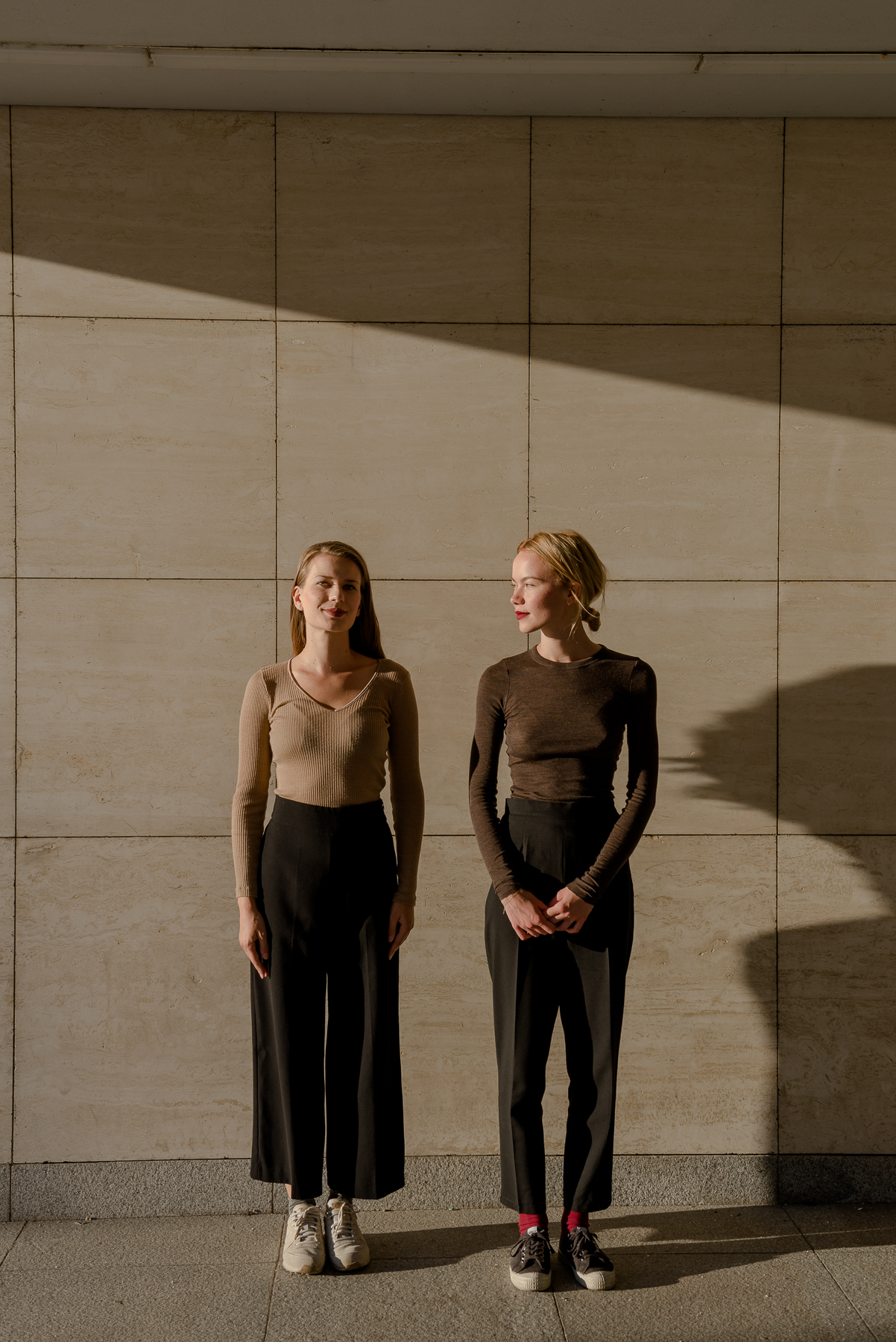
Foto: Kvet Nguyen.
O Kanave sa viac dozviete tu:
kanava.sk
@kanava.studio
facebook.com/kanavastudio
BIO
Paula Blahová
Paula vyštudovala módny manažment na Amsterdam Fashion Institute so zameraním na produkciu a textil. Pôsobila v niekoľkých dizajnových štúdiách ako Nehera, Petra Kubíková, alebo Mark Kenly Domino Tan a Nadia Wire v Kodani. Získala tak prehľad o rôznych textilných technikách a ich inováciách. Vo svojej práci prepája teoretické vedomosti a vizuálne vyjadrenie.
Kristína Šipulová
Počas štúdia na Vysokej škole výtvarných umení v Bratislave a na Národnej akadémii umení v Oslo v Nórsku absolvovala stáž v dánskom štúdiu Beck & Kinch, kde vyrábala ručne tkané látky pre módne domy Chanel a Dior. Pracovala v štúdiu Trendunion v Paríži a v štúdiu Marlène Huissoud. Pôsobila ako lektorka kurzu Textilnej technológie a Teórie farieb na Medzinárodnej akadémii módy IFA v Paríži.
[:en]
Photo: Kvet Nguyen.
KP: I’ll start with a question that may be a little difficult. If you had to describe Kanava in one sentence, what would it be?
PB and KŠ: It took us longer to define that sentence. We didn’t just want to put the emphasis on the objects themselves, we wanted to retell the story and the motivation that led to their creation. Kanava is a collection of stories about objects and their creators. The story, as we conceive it, combines inspiration, process, object and its creator.
Who is behind Kanava? I know it’s you two, but what’s your background? And what is the story behind the creation of Kanava?
KŠ: Paula, you tell me how I attracted you.
PB: I remember following Kika and her work for a very long time, I liked her aesthetic and what she was doing and I still couldn’t figure out where she was from, that she had a Slovak name, but she struck me as so international. And then, sometime last December, I saw on Instagram that Kristína Šipulová was looking for an intern for her textile studio. I was sitting on a plane from Denmark, where I was living at the time, and I didn’t know if I wanted to stay there anymore. I had no idea what would happen, but I gave it a try and sent her an email. And that’s how I found myself in her textile studio in Bratislava in February.
KŠ: Actually, the first time we saw each other on Skype was when Paula was still in Denmark. Even then I had a feeling that we were on a similar wavelength. The intuition worked over Skype as well. It was quite personal right away, we had a good time talking and later working together.
After a month of working together, Covid came along and suddenly we were wondering whether we should meet or not, and then I left Bratislava and we stayed in touch remotely. It came just at the time when we started working on a tapestry, I was going to have an exhibition in Paris. We missed each other, we called each other a lot. Covid reduced all these work preparations.
One day when I was in Telgárt, we called each other and Paula told me that she had been thinking about the craft itself and that she wanted to do something about it. That there was something missing in Slovakia, one place where resources and people could be found…PB: The story started when I was furnishing my flat and I was looking for a woven carpet. I started googling and I came across sites that offered quality products, but the sites were not done well, the stuff was pretty badly photographed. I thought about it for a while, and then I told to Kika, who had had a similar idea in her head for a while.
KŠ: Yes, I’ve been holding on to that for a long time, I also wrote a thesis about it three years ago – about the importance of craft in the present. Paula’s internship in my studio eventually evolved very naturally into a collaboration, into an equivalence. We said, let’s start working on this together. So Kanava was already created as our joint project. Actually, I was looking for such a partner during my whole studies at the AFAD and I didn’t find it. Even when I put out the offer of an internship, I wasn’t actually looking for just an intern or a trainee, I knew that I wanted to find a close person this way. Inwardly, I longed to find a kindred person for work.
PB: I think we’ve digressed a little bit from the question. For me Kristina was a craftswoman, a textile designer, I was a bit “lost” at the time when we met, I didn’t quite know what direction to take. I was studying Fashion Management in Amsterdam, my specialisation was textiles. I also went on internships, in the beginning it was production and resourcing, which meant a lot of excel spreadsheets, but even then I found that I enjoyed research, searching, I tended towards storytelling. I enjoyed looking for what was behind the design itself, behind the colour we choose. It was thanks to Kristina that I defined that I don’t have to work only with my hands, but also with my head. Basically, we have this division, Kristina is aesthetically based, I focus more on the content, the texts. I think we complement each other so beautifully. Also in that Kristina is more dreamy, I’m the realistic one with my feet on the ground. That management still lives in me. At the same time, I’m learning with her that not everything always has to be exactly defined.
KŠ: By working, I am naturally more sensitive. My background is in the textile studio at AFAD, I tried to travel outside a lot during my studies, to get other experiences. I felt it was quite important. I started to get closer to textile craft during my internship in Denmark, specifically at the Beck & Kinch studio. We were making fabrics for fashion houses like Chanel or Dior. Everything had to be very precise. There I understood something important. Until then, I had the feeling that craft was on the back burner. What I experienced there was the complete opposite – there was craftsmanship on top of everything. People were able to come to it, to pick up something personally from the other side of the world. It had tremendous value, it was precious. And I loved that something so exclusive was made on “ordinary” wooden looms. It was a beautiful, family-run studio started by a mother and daughter. That’s where I understood that it could be done. Of course, we can say that it is to some extent a utopia, that we are talking about Scandinavia, where things work completely differently than in Slovakia. But I was very inspired by it. After I came back from my internship, I started working on my bachelor thesis, which was about weaving and developing new fabrics, and I started weaving on wooden looms. I continued my master’s studies at the University of Applied Sciences, but I went to Paris for an internship at the Edelkoort / Trend Union studio.
That was another inspiring experience. We didn’t work with our hands much there, it was a studio where I picked up a certain aesthetic. That aesthetic and what I perceived as a common language was what drew me there. I gained a lot of insight through that internship, we did in-depth research there, we prepared “trend books”, different presentations for clients, visual identities. I had a lot of books on my desk every day, about photography, about art history. Every day I was immersing myself in what was going on, what all was being created, what young designers were like, what the currents were, how things were interconnected. It was all more of a study, and being in Paris was overall very inspiring. When I came back, I created a collection of handwoven garments as my thesis. I decided to collaborate with the artisans, to translate it all into a coherent project. It was all about the meaning, the philosophy of craft. That’s why Kanava is not based on pursuing something folksy, decorative, it’s more about finding different mediums and artisans who share a similar approach to making. The way we work together in Kanava is that I go into the depth of the craft and its forms, and Paula focuses on the management part.
PB: I think it’s also important here that I’m the girl from Bratislava and Kristina is from Telgárt, and I’ve always envied those traditions of folk culture, which was something distant for me in the environment where I grew up, I wasn’t led to it, unlike Kristina. I think we learn a lot from each other. I’ve always been fascinated by it, and suddenly I have this “folk girl” (laughs).
KŠ: I agree, that background is quite important in my case, the environment has influenced me a lot on my journey.
When I was thinking about what is the essence of your project, I thought of an analogy. When my friend and I first planted tomatoes in the spring, and after three months of tending and watering, we picked the first fruits, put them on a plate and looked at them, we felt like we couldn’t even eat them, they were so special to us. Suddenly there was time behind those fruits, months of watching them bloom, grow and ripen. For me, as a metaphor, it’s related to crafts. In craft, time is a big part and value of the product, the work. People need to understand that there is a quantum of time behind such an object that can become part of their abode – behind its creation. It is not only the time when the object is created, but also the time that precedes it. The amount of trial, error, mistakes, the building of craftsmanship. The object stands at the end of a long journey. I feel that in our environment people are not used to seeing the value of craft in this way, and there is a need for some education. That’s why what Kanava is communicating seems important to me. The value of time.
PB: Most of the craftspeople we present have that story very much connected to their personal lives overall. What they do has come about as a kind of “by-product” of something that was actually their life. For example, Andrea Kurjakova (who founded the Rurozo project) told us that when she went to AFAD, she had a problem with the fact that she liked to write things down on paper, but the notebooks that you could buy somehow limited her. So she just decided to make her own. Or Vierka, who produces wool, first started a farm with her husband and got sheep, as they were very undemanding animals. At the same time, they told themselves that they wanted to make use of everything the farm would bring them. She started shearing sheep and making wool, and found her great passion in it. That’s what I like about those stories – that philosophy that I’m not going to do a “nice thing,” but I’m going to do something because it’s meaningful, because I need to do it myself. That’s when the product is honest.
Making paper scrapbooks, Photo: Andrea Kurjaková.
KŠ: Through the makers we bring together in Kanava, we find that the decision to start making craft usually takes a very long time. It’s similar to someone committing to a big life journey or a new job. That person has experienced things before that lead them to it, craft is often a life decision. Something that springs from within those people. So the objects created are the manifestation of particular lives. That seems to me to be important to mention. A few days ago I read a very nice essay by the architect Louis Kahn, where he writes about the fact that what is most valuable to a person is what is “unmeasurable”, immeasurable. And it is craft that is “unmeasurable”. I found it beautiful how he named it. It’s when one stands in front of something and experiences that kind of “oh, wow”. That’s what happens in front of this type of object, of work. For example, I’m fascinated by the tapestry I’m doing now. You can’t even count the time in hours. When someone asks me how I would quantify the value of my work, based on what unit, I find it absolutely impossible – it’s unmeasurable. And therein lies the fascination.
Something that totally transcends us, a cosmic feeling.
KŠ: Exactly. We humans have created measuring tools, but these things are immeasurable, and that’s why the craft is so fascinating. That time is what creates the fundamental value. It’s the investment of time that makes objects precious, and that value endures throughout the life of the object. Something made from a soft material like textiles will last for millennia because it carries the value of time and also of being treasured.
Portugal came to mind, where a number of initiatives are currently being developed to preserve and develop craft traditions and their links with contemporary design. I will mention, for example, the Passa Ao Futuro project. Portugal and Slovakia are very close in many aspects. As far as crafts are concerned, Portugal also has a great tradition, especially in leatherwork, ceramics, basketry, textiles… There, I think it is quite felt that the continuity of family craft traditions has not been interrupted by the nationalisation of property and the decades long gap in private enterprise, as it has been here. Portugal is known worldwide for its high level of craftsmanship, it represents the production of many global brands, especially shoe manufacturers. I can also think of a very successful project called A Vida Portuguesa. Founded by journalist Catarina Portas in 2007, the brand started out as just a shop in the centre of Lisbon, offering a selection of traditional local products, tried and trusted by generations. Since then, the brand has spread throughout Portugal, becoming known on a global level. The concept of A Vida Portuguesa (translated as Portuguese Life) is built on rediscovering and communicating traditional Portuguese products – ceramics, soaps, wool products and textiles… all wrapped in a nice visual identity, beautiful store interiors. But what I like most about this project is the fact that the products are bought not only by tourists, but also to a large extent by locals. It’s on the one hand a shop with quality and tasteful “souvenirs”, on the other hand traditional and very high quality things for every household. Whenever I am in Lisbon, I always think that I would like to see something similar in Slovakia. I mention this project because it is one way of developing the idea of making crafts more visible and at the same time ensuring the financial sustainability of the project. What is the path that Kanava would like to take in the future? What is your potential “business model”? Does Kanava have the ambition to communicate craft to a wider target group, to make craft products accessible? Or representative of our country towards foreign countries?
KŠ: I think so. But it’s mostly about scaling. A lot of times it’s about the number of pieces, our artisans are often just one person, not a factory that makes things. That’s where it’s a little bit problematic. If the products are to be affordable, you have to be able to scale production without losing quality. Maybe it would be interesting to set up a small manufactory where several people work on the products. That could work, because I think there is a growing interest in crafts among young people at the moment. When you mentioned the Portuguese shop, we are talking about maybe a thousand products of one type of product. And that is a big challenge and a big question. Do we want to put something that is ‘one of a kind’ into serialisation, or do we want to retain uniqueness? I think we, as Kanava, can think about creating some limited editions over time that will be more affordable but still retain a certain specialness.
PB: We have been following various foreign inspirations and projects similar to Kanava for a long time. One project from the Czech Republic came to my mind, it’s called In August Company. They offer, for example, wooden products, or linen tablecloths, some ceramics. They work on the principle that they design their own product and find a craftsman who will make it for them in a series. That’s one way to approach production and accessibility.
KŠ: At the same time, it has to be said that not every artisan is interested in something like this.
PB: We are very keen to make sure that we keep the signature of the particular craftsman or craftswoman. So we’re more drawn to uniqueness rather than mass production.
KŠ: And in terms of some education, there are different ways to think about it. For example, we can also encourage people to think about why they have ten plates at home that they don’t like so much, that they can have much fewer, but more valuable products instead. And in the end, the resulting price will already be comparable to mass-produced ceramics. When educating, you also need to talk about some kind of cycle – if the artisan starts to make good sales, maybe it won’t be five unique pieces anymore, but they’ll create a smaller series. If the customer understands the value of the object, the artisan is more motivated to consider scaling up production. After all, it’s not enough to just write beautiful stories, we realize that the people we are promoting need something to live off of as well. We will certainly never engage in mass production, but I can imagine limited editions of, say, fifty pieces.
Photo: Joanna Joy, Karolína Kučerová.
If I understand correctly, it is important for you to maintain the right ratio of certain rarity and availability.
KŠ: Yes, we certainly don’t want to move from “gallery” pieces to a seriality available to the whole country, but rather to look for some way in between.
PB: What we also really like about this approach is the time aspect, not only in the production itself, but also in the relationship between the craftsmen and the customers. Someone will order something and have to wait for it. That’s what we preach – that quality things just take time. I’ve talked to my parents about this and I’ve found it very difficult to explain to them that we want to promote something that’s not going to be immediately available. They’ve just been through those moments in the last regime where they waited for products and they don’t want to experience that again. I totally get it, I’m the kind of millennial who doesn’t mind having to wait a month for one cup (laughs). But basically, it’s about going from fast to slow. In the speed, we miss the individuality.
KŠ: For us, it’s not about absolute accessibility, but rather to bring people a certain feeling: how to appreciate things more, how to understand them, how to ennoble our own lives by being able to surround ourselves with admittedly fewer but beautiful things that carry a story. If we can do that, we are on the right track.
What kind of people, artisans, have you introduced through Kanava so far?
PB: It’s been all women so far, which I think is such a strength of ours as we are both women as well, but we certainly don’t want to limit ourselves, men can apply too, it’s just not happening yet (laughs).
KŠ: In terms of materials, we’ve featured women artists so far who work with ceramics, paper, beeswax, wood, wool. They are mostly young people.
PB: What’s interesting is that most of them don’t live in the city and are influenced by the environment they grew up in and you can feel it in their work. Every single one of them has a strong story, they all have something to say. When we ask about inspiration, there is always that strong connection between creation and life.
KŠ: We introduce all the artisans through interviews where we send them questions and we are always surprised by the beautiful, detailed, thoughtful answers we get. And what’s even nicer is that these artisans of ours also support each other when they get to know each other through Kanava.
That’s how the “togetherness”, the community that you talked about at the beginning, naturally arises.
KŠ and PB: Exactly, and one day we would bring them together at an event where they could get to know each other more. That’s where we’re also gradually heading, that we would eventually do some kind of launch where we would also launch an e-shop. And we envision it as a beautiful dinner where different objects would be incorporated. We’ll be eating, talking, getting to know each other.
That brings me to the question, what is your foreign inspiration. Can you single out a few platforms, projects that have strongly influenced you?
KŠ: I think that’s obvious. The New Craftsmen, a British organization that has a brick-and-mortar shop in London’s Mayfair. They operate not only in sales but also as a bringing together platform for British craftspeople. Another inspiration is Hole & Corner, a craft magazine, I think they are now starting an e-shop. A slightly different inspiration, which is already going in the direction of art, is the LOEWE Foundation, which I know through Krzysztof Lukasik, who used to work there and with whom I had the opportunity to do a workshop in France.
PB: Just with The New Craftsmen, who we admire a lot, we were looking at how they started, what was their first Instagram post. It was also a bit encouraging to see that things weren’t perfect from the start. We realize that it’s an evolution, a process.
I think this is something we often forget. We want everything to work from the beginning, to click. And yet the projects that we look up to usually have a lot of work and a long journey behind them.
KŠ: Exactly. People have been asking us when we’re going to launch the e-shop, but we want Kanava to grow in a quality, organic way. We want to move forward, but we’re keeping an eye on it,
PB: I have a friend who summed it up nicely when she said you have to start somewhere to get feedback from people. We’re completely open to negative comments as well, we want to grow with our fans.
KŠ: We’re investing our own time in it for now, we didn’t start with a big budget, we just wanted to give it a go.
My last question: what does Kanava look like and do in five years?
KŠ and PB: Well, that’s clear, we’ve already got that in our dreams (laughs). We would really like to do a publication one day. We imagine that by that time we will have an e-shop, and a beautiful space. We’ll do educational programs, events where artisans will talk about what the process of making them is like. Maybe take trips directly to see them. We want to focus not only on the customer, but also on the artisans, strengthening the community, connecting them with each other or with designers. Helping them with presentations, maybe eventually start some consulting for both artisans and clients who don’t know exactly how to get to what. And maybe we could open a “Kanava Academy” where we could do a summer school in some beautiful place in Slovakia.
And focus on young people. So the first idea we had was that the craft is still alive and that it’s worth learning it from the older generations. What we see in young people who are involved in the craft is that they are so…just happier.
Photo: Kvet Nguyen.
You can find out more about Kanava here:
kanava.sk
@kanava.studio
facebook.com/kanavastudio
BIO
Paula Blahová
Paula studied fashion management at the Amsterdam Fashion Institute with a focus on production and textiles. She has worked in several design studios such as Nehera, Petra Kubíková, or Mark Kenly Domino Tan and Nadia Wire in Copenhagen. This gave her an insight into different textile techniques and their innovations. In her work she combines theoretical knowledge and visual expression.
Kristína Šipulová
During her studies at the Academy of Fine Arts in Bratislava and the National Academy of Arts in Oslo, Norway, Kristina completed an internship at the Danish studio Beck & Kinch, where she produced handwoven fabrics for the fashion houses Chanel and Dior. She has worked at the Trendunion studio in Paris and at Marlène Huissoud’s studio. She has worked as a lecturer for the Textile Technology and Colour Theory course at the International Fashion Academy IFA in Paris.
[:]