[:sk]Recenzia / NEFORMÁLNE MO(NU)MENTY[:en]Review / INFORMAL MO(NU)MENTS[:]
[:sk]Stále príliš málo sa na Slovensku vo verejnom priestore premyslene pracuje s menšími formami architektúry. Kvalitné miesto-špecifické inštalácie sú skôr výnimočnou náhodou. Preto nás v MAG D A na konci leta zaujal projekt VŠVU, ktorý bol produkčne veľkoryso nastavený a takéto diela priniesol.[:en]There is still too little thoughtful work with smaller forms of architecture in public space in Slovakia. High-quality site-specific installations are rather an exceptional coincidence. That's why at MAG D A at the end of the summer we were attracted by the project of the AFAD, which was generously set in terms of production and brought such works.[:]
[:sk]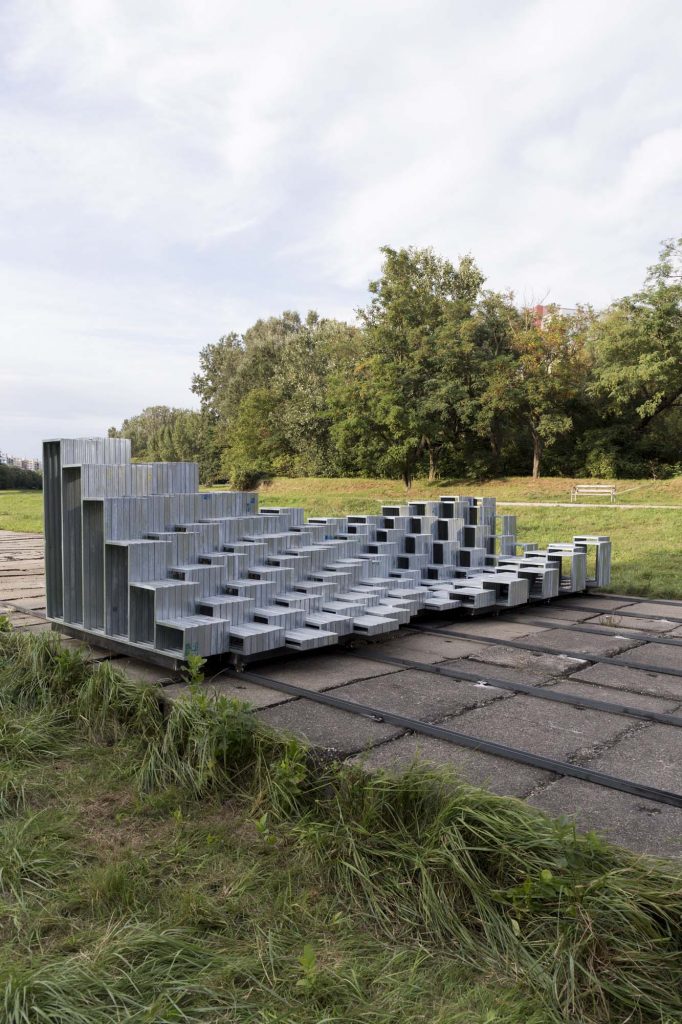
Terminál, foto: Šimon Parec.
Cesta
Celé sa to udialo v Petržalke. Teda ešte predtým na pôde školy, kde študenti a pedagógovia z rôznych odborov (architektúra, socha, objekt, intermédia) rozdiskutovali obsahovo širší projekt Jantárová cesta. Hlavnými iniciátormi bol Jakub Kopec, František Demeter, Juraj Rattaj, Danica Pišteková a čiastočne Jaroslav Kyša. Názov odkazuje na historicky významnú obchodnú cestu, ktorá v minulosti prepájala Európu. Zároveň sa tak volá aj existujúca ulica, ktorá sa približne kryje s centrálnou radiálou Petržalky (pôvodne sa volala Ulica Československých interbrigadistov). Okrem spojenia rôznych ateliérov VŠVU, cesta následne prepájala VŠVU s mestskou samosprávou, miestnymi organizáciami, s odbornou a laickou verejnosťou a hlavne s obyvateľmi Petržalky prostredníctvom dočasnej výstavy Neformálne mo(nu)menty, ktorej sa budeme venovať v tomto texte.
Zadanie
Zadanie si aktéri zadefinovali takto: „Na jednej strane reagujú na dané situácie v parku v súvislosti s plánovanou električkovou traťou, pozdĺž jej trasy rozptýlené betónové relikty z výstavby sídliska, skratky a cestičky, ktoré trať pretne, či rôzne typy pôsobiacich síl, formy imaginárnych križovatiek, nástupíšť, zastávok, či terminálov, kým na druhej strane formujú metódy, ktoré každému projektu dovoľujú pracovať s rovnakými pravidlami založenými na danej situácii avšak s potenciálom iného výsledku na inom mieste.“ Následne prišla prípravná a realizačná fáza. S výdatnou spoluprácou pedagógov a priateľov vznikli tri materiálovo, formálne aj obsahovo rôznorodé objekty – Desire Lines, Míľniky a Terminál. Všetky tri sú pochôdzne. Sú aj nie sú site specific. Nejde úplne o konkrétne miesto – site, ale o viac komplexnú reakciu na lokalitu ako takú. Diela do seba integrujú sochárske aj architektonické prístupy. Tu dajme jedno banálne pripomenutie (lebo na banality sa zabúda najľahšie), že trvalé umiestnenie sochy, objektu v mestskom prostredí by malo vždy prebiehať v spolupráci autora diela a architekta, aby priestorové ukotvenie diela bolo v maximálnom súlade s okolím. Len tak je to dobré pre dielo, pre miesto, aj pre mesto.
Lokalita
Výber lokality bol racionálny. Petržalka je fenomén aj z medzinárodného hľadiska. Je to v podstate tretie najväčšie mesto Slovenska podľa počtu obyvateľov, ktoré má v sebe už od začiatku vložené viaceré anomálie a špecifiká. Je to kompaktná rozsiahla mestská štruktúra, ktorá nemá centrum. Študenti si ako intuitívne centrum zvolili menší fragment nedokončenej centrálnej osi Petržalky, ktorý sa dnes čiastočne zhoduje s okolím Chorvátskeho ramena a má rekreačno parkový charakter. Je to príjemná lokalita s množstvom zelene, cyklotrasou, priestorom pre prechádzky a venčenie psov. Je to časť sídliska, kde je plánovaná budúca výstavba električkovej trate a zároveň je to miesto, v ktorom sa stretávajú typologicky rozličné stavby – panelové domy, kostol, Kaufland, športoviská. Všetko toto študenti zmapovali, problematizovali a snažili sa zakomponovať do svojich výstupov.
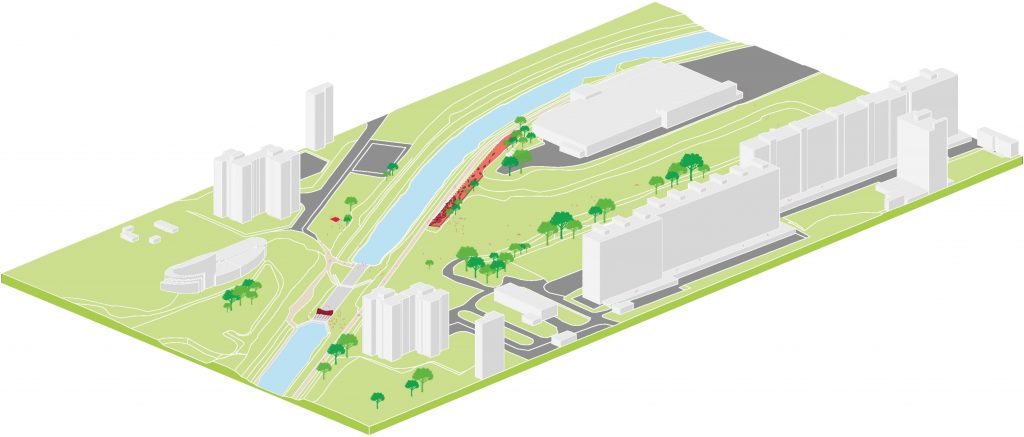
Axonometria lokácie, červenou sú vyznačené konkrétne miesta, kde sú diela situované.
Nejde o prvý dočasný umelecký projekt v danom prostredí – spomeňme projekt Rameno z roku 2006 (kurátori Fedor Blaščák a Dušan Brozman), alebo projekt Billboart v koncepcii Miry Keratovej (2008). Petržalka sa odvtedy razantne menila. A rozdiel nie je len v cenách bytov. Pôvodné obnažené panely zakrylo zateplenie, ktoré výrazne a už na prvý pohľad zmenilo charakter sídliska. Zahusťuje sa, plus mínus sa zlepšuje infraštruktúra a samozrejme mení sa aj vnímanie tejto časti mesta zvonku. Marketing nových developerských počinov láka na názvy ako Vienna Gate, Petržalka City, Hájpark…Pristáli tu prvé kontajnery s hipsterskou gastrokultúrou. Na sídlisko sa vracia komunitný život. O tom, že džentrifikácia je v plnom prúde svedčia aj nové adresy pre súčasné umenie – galérie Photoport, Hot Dock project, Parapet, LOM, Apart, ktoré sa sem presťahovali z centra mesta. Tento širší kontext výstava Neformálne mo(nu)menty komentuje v rámci verejných diskusných podujatí, ktoré tvorili sprievodný program výstavy.
Predskokan
Ešte predtým než prebehla realizácia Neformálnych mo(nu)mentov vzniklo v rámci Jantárovej cesty ešte jedno, viac autonómne dielo. Špecifická plávajúca inštalácia Ošetrenie duší od Jozefa Piláta (aktuálny finalista Ceny Oskara Čepana a doktorand v Ateliéri intermédii VŠVU). Autor do jej realizácie zapojil dobrovoľníkov, ktorí jednotlivo nafúkali rôzne veľké gumené duše. Každá mala nejaký kaz a bolo ich treba ošetriť. Autor ich následne spojil a vyslal na Dražiak ako symbolické prepojenie rôznych príbehov, ktoré plynú vedľa seba. Aj tento objekt bol pochôdzny a na hranici sochy a hracieho vodného prvku.
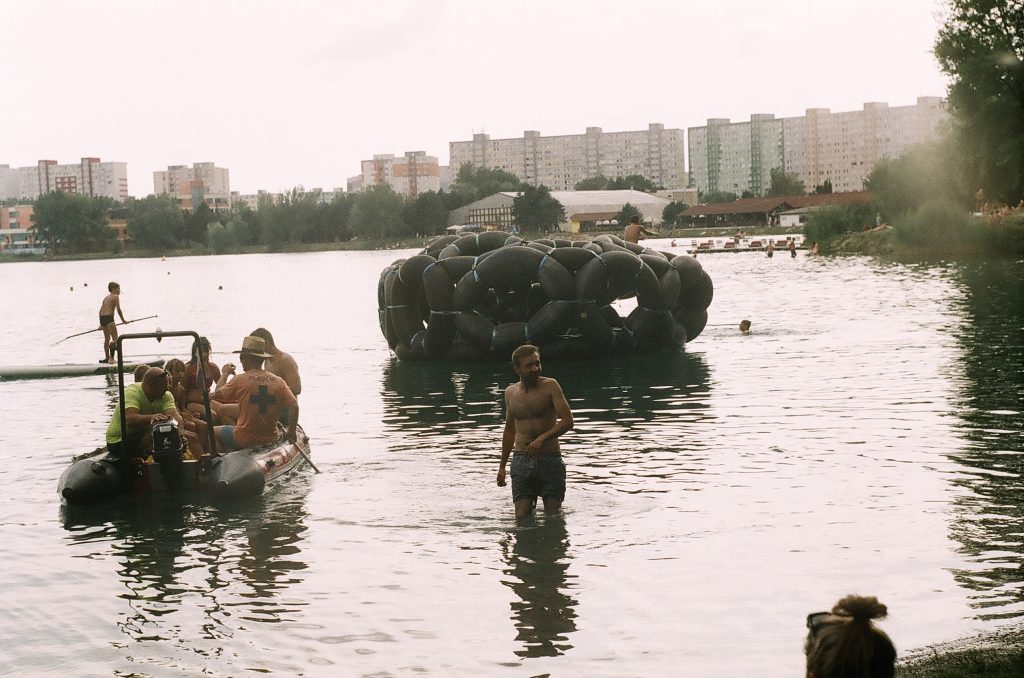
Ošetrené duše na Draždiaku foto: Jozef Pilát.
Neformálne mo(nu)menty
Sú tri a sú umiestnené na dohľad od seba. Vytvárajú výstavný celok, no fungujú aj jednotlivo.
DESIRE LINES
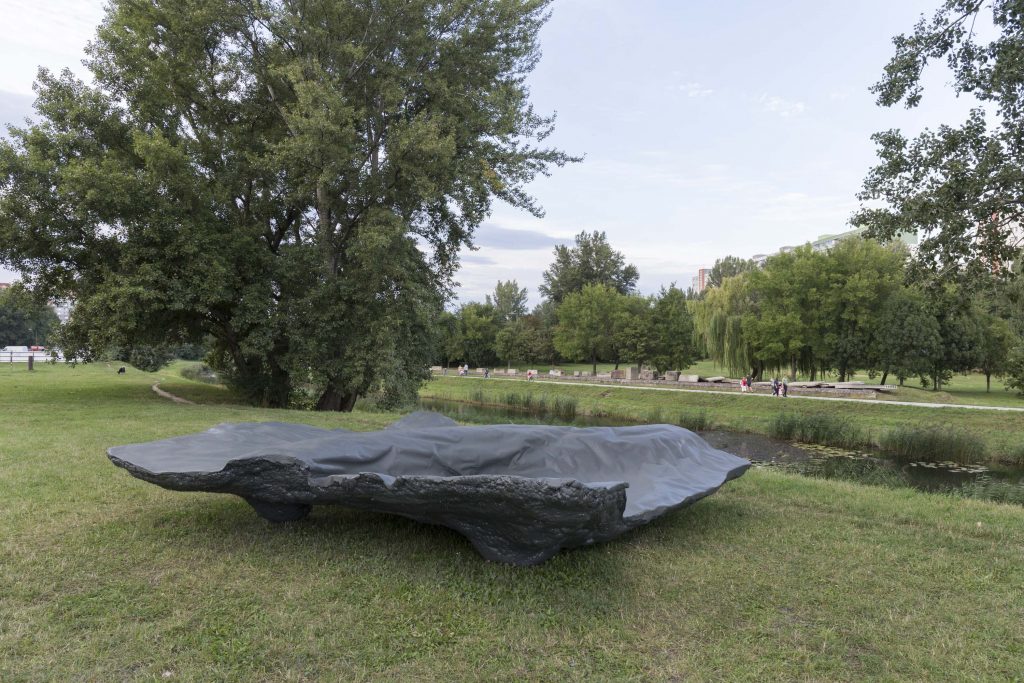
Je to najexperimentálnejší, no zároveň aj najneekologickejší objekt. A to hlavne vďaka materiálu, tvrdenej polyuretánovej PUR pene. Výsledný tvar je odliatkom fragmentu prírodného chodníka v mierke 1:1, skratky vychodenej pešími pri neďalekom Kauflande. Ide o špecifický ready-made, negatív kúsku petržalskej krajiny. Aj tento objekt má pridanú funkciu a jeho tvary zvládnu skupiny polihávajúcich ľudí aj detské hry. Objekt je poctou každodennosti na sídlisku, urbánnym anomáliam. Zachytáva istú prírodnú situáciu, ktorá sa v blízkej budúcnosti zmení. Kvôli neekologickému materiálu je tiež mementom naznačujúcim prítomnosť dystopických spodných prúdov. Hráme sa a dnes ešte spokojne polihávame na jej budúcich troskách.
Desire Lines, foto: Šimon Parec
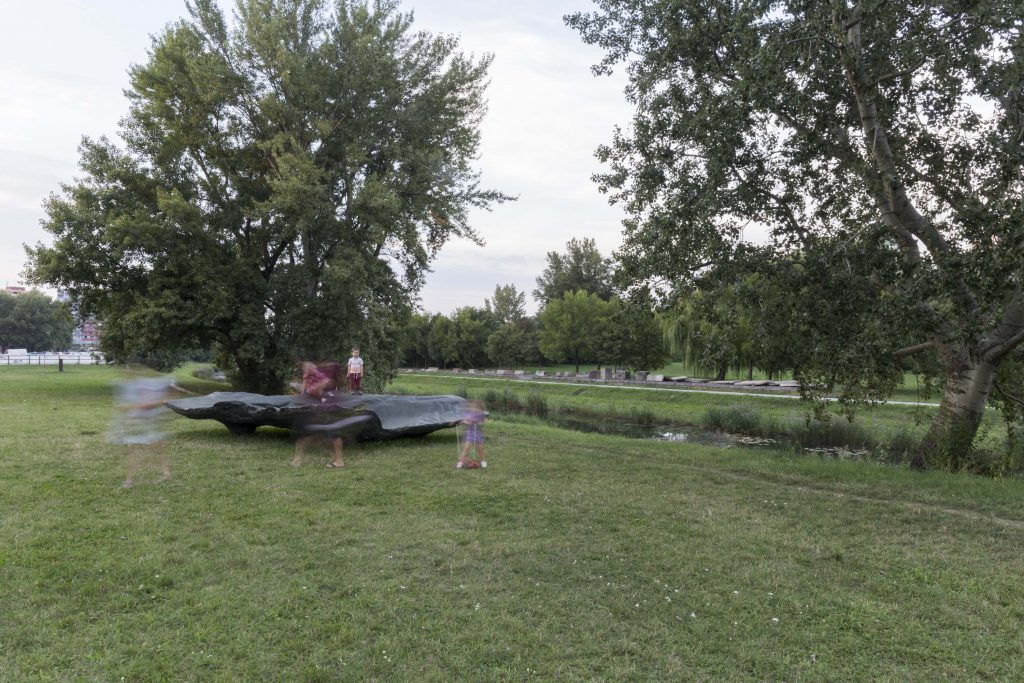
Desire Lines, foto: Šimon Parec.
MÍĽNIKY
Najnenápadnejšou a zároveň najviac klasickou sochárskou inštaláciou sú Míľniky. Je to zdanlivo voľne pohodená zostava panelov z čias výstavby sídliska. Súčasťou autorského tímu bola aj študentka sochy na VŠVU, no zároveň aj skončená archeologička a toto dielo súčasný archeopark, alebo lapidárium pripomína. Začiatky budovania sídliska sa v slovníku miestnych spájajú s označením “betonóva džungľa”. Zo súčasného pohľadu sa ozaj môžu javiť ako pravek. Čo bolo na počiatku? Betónový BIG BANG. Časová neukotvenosť diela odkazuje na z hľadiska dejín krátke, ale pritom spoločensky a ideologicky komplikované časy, ktoré sa okolo tohto nepodstatného betónu prehnali. Rozmiestnenie prehistorických panelov balancuje na hranici medzi zámerným a nezámerným a vytvára tak pre náhodného návštevníka estetickú pascu, do ktorej sa môže, ale aj nemusí chytiť.
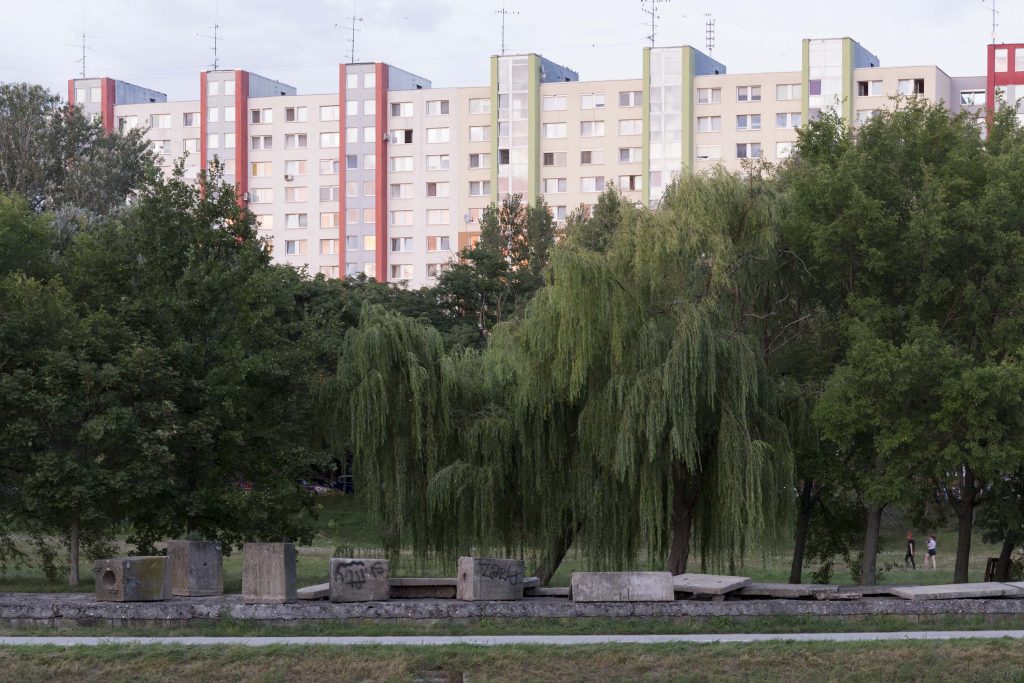
Míľniky, foto: Šimon Parec.
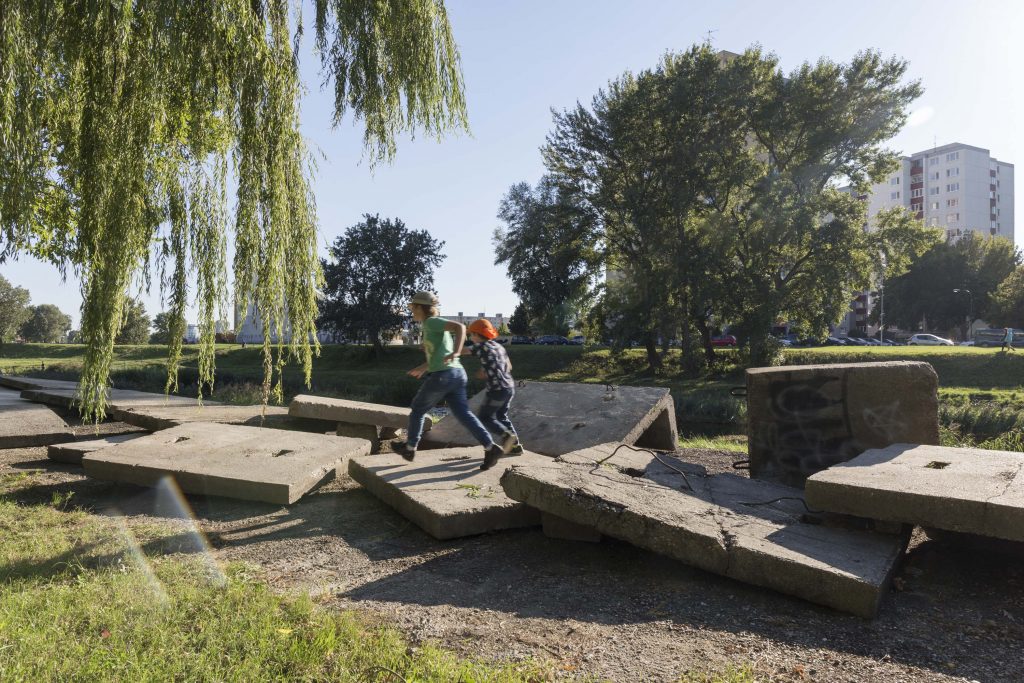
Míľniky, foto: Šimon Parec.
TERMINÁL
Kovový objekt Terminál otvára diskusiu o zmenách, ktoré prinesie plánovaný most novej električkovej trate. Aktuálne oba brehy prepája veľká betónová plocha. V budúcnosti má však zaniknúť a presuny medzi jednotlivými brehmi bude potrebné riešiť inak. Veľká posuvná konštrukcia z nepravidelných, rôzne veľkých schodov – objemov, je sochou, ale zároveň funkčným objektom auditória, ktorý môže slúžiť pre verejnosť a pri organizovaní komunitných podujatí. Koľajnice, v ktorých je umiestnená avizujú budúcu električkovú trať. Zároveň je to objekt, ktorý baví deti ako funkčná mobilná preliezka, čo bolo zrejmé hneď počas vernisáže. Jeho tvar prirodzene zapadá do prostredia panelových domov. Dielo vzniklo recykláciou zbytkového materiálu z iného projektu. Autori ho vnímajú ako prekážku, aj otázku. Ako priestor pre diskusie o budúcnosti verejného priestoru Petržalky.
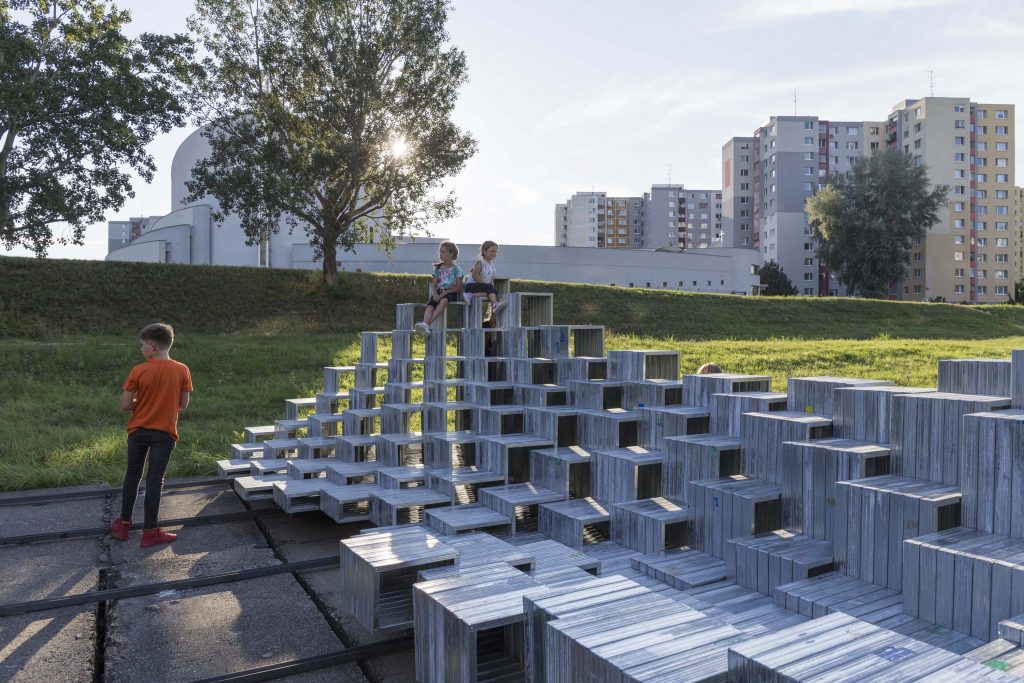
Terminál, foto: Šimon Parec.
Dočasné monumentálky?
Objekty majú byť v Petržalke umiestnené iba dočasne. Ukazuje sa, že doba nepraje trvalým riešeniam. Aj monumentálne sochárske diela od súčasnych autorov poukazujú na to, že duch našej doby je definovaný všadeprítomnou zmenou a dočasnoťou. Spomeňme si na tomto mieste tiež na osud dreveníc na paneláku od Tomáša Džadoňa v Košiciach, či Zrakovú pyramídu od Juraja Gábora pri Žiline. Boli, ale už nie sú. Ostali nám na ne len hmlisté spomienky určené na zabudnutie.
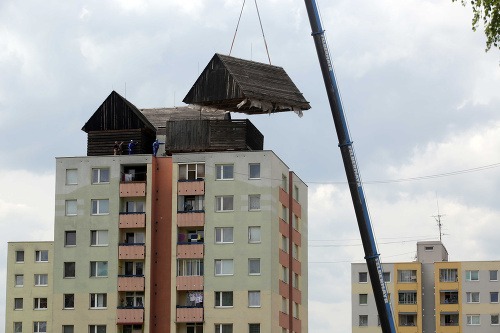
Pamätník ľudovej architektúry od Tomáša Ďzadoňa v Košiciach odstránili na žiadosť obyvateľov bytovky v roku 2016.
Tím projektu:
Pedagógovia:
František Demeter (Maliarstvo;. 1, 2, 3), Jakub Kopec (Arch. tvorba; 1, 2, 3), Danica Pišteková (Arch. tvorba; 1, 2, 3), Juraj Rattaj (Socha, objekt, inštalácia; 1, 2, 3)
Študenti:
Paulína Gajerová (Maliarstvo; 1), Adam Priecel (Maliarstvo; 1), Simona Plachá (Arch. tvorba; 1), Karin Brániková (Arch. tvorba; 2), Jakub Čulák (Socha, objekt, inštalácia; 2), Saša Smolková (Socha, objekt, inštalácia; 2), Simona Svitková (Úžitkové umenie; 2), Michal Golák (Socha, objekt, inštalácia; 3), Michaela Kacsiová (Socha, objekt, inštalácia; 3), Sophie Magnin (Arch. tvorba; 3), Vanesa Rybárová (Arch. tvorba; 3), Ema Hesterová (Teória a dejiny umenia; 1, 2, 3); Jozef Pilát (Intermédiá; 1, 2, 3)
Realizácia:
Black Dog (1), Pathfinders Trucks s.r.o. (2), Dionýz Troskó (3), Marcel Mališ (3), Lujza Stopková (3), Šimon Parec (3) a ďalší.
[:en]
Terminal, photo: Šimon Parec.
Road
It all happened in Petržalka. That is, even before that, at the school, where students and teachers from various disciplines (architecture, sculpture, object, intermedia) discussed the broader project Amber Road. The main initiators were Jakub Kopec, František Demeter, Juraj Rattaj, Danica Pišteková and partly Jaroslav Kyša. The name refers to a historically important trade route that connected Europe in the past. It is also the name of an existing street that roughly coincides with the central radial of Petržalka (originally called Ulica Československých interbrigádistov). In addition to connecting the various studios of the AFAD, the road subsequently linked the AFAD with the municipal government, local organisations, the professional and lay public, and most importantly with the inhabitants of Petržalka through the temporary exhibition Informal mo(nu)ments, which will be discussed in this text.
Task
The actors defined the task as follows: “On the one hand, they respond to given situations in the park in relation to the planned tramway, the concrete relics of the construction of the housing estate scattered along its route, the shortcuts and paths that the line will cross, or the different types of forces at work, the forms of imaginary crossings, platforms, stops, or terminals, while on the other hand, they shape methods that allow each project to work with the same rules based on a given situation but with the potential for a different result in a different place.” Then came the preparation and implementation phase. With abundant collaboration from educators and friends, three objects diverse in material, form, and content emerged – Desire Lines, Milestones, and Terminal. All three are walking. They are and are not site specific. They are not entirely site-specific, but a more complex response to the site itself. The works integrate both sculptural and architectural approaches. Here let us give one banal reminder (because banalities are the easiest to forget) that the permanent placement of a sculpture, an object in an urban environment should always be done in collaboration between the author of the work and the architect, so that the spatial anchoring of the work is in maximum harmony with its surroundings. Only in this way is it good for the work, for the place, and for the city.
Location
The choice of location was rational. Petržalka is a phenomenon also from the international point of view. It is in fact the third largest city in Slovakia in terms of population, which has several anomalies and specificities embedded in it from the very beginning. It is a compact, large urban structure that has no centre. The students chose as an intuitive centre a smaller fragment of the unfinished central axis of Petržalka, which today partially coincides with the surroundings of the Chorvátske rameno and has a recreational and park character. It is a pleasant location with lots of greenery, a cycle path, space for walking and dog walking. It is a part of a housing estate where the future construction of a tram line is planned and at the same time it is a place where typologically different buildings meet – prefabricated houses, a church, Kaufland, sports grounds. The students mapped all this, problematized it and tried to incorporate it into their outputs.
Axonometry of the site, the specific locations where the works are situated are marked in red.
This is not the first temporary art project in this environment – think of the Rameno project from 2006 (curated by Fedor Blaščák and Dušan Brozman), or the Billboart project conceived by Mira Keratová (2008). Petržalka has changed dramatically since then. And the difference is not only in the prices of flats. The original bare panels were covered by insulation, which has significantly changed the character of the housing estate at first glance. It is getting denser, plus or minus the infrastructure is being improved and of course the perception of this part of the city from the outside is changing as well. The marketing of new development projects attracts names such as Vienna Gate, Petržalka City, Hájpark…The first containers with hipster gastro culture have landed here. Community life is returning to the housing estate. The fact that gentrification is in full swing is evidenced by the new addresses for contemporary art – Photoport Gallery, Hot Dock Project, Parapet, LOM, Apart, which have moved here from the city centre. The exhibition Informal Mo(nu)ments comments on this wider context in the public discussion events that formed the exhibition’s accompanying programme.
Presenter
Even before the realization of Informal Mo(nu)ments, another, more autonomous work was created within the framework of the Amber Road. A specific floating installation The Treatment of Souls by Jozef Pilát (current finalist of the Oskar Čepan Award and PhD student at the Intermedia Studio of the Academy of Fine Arts). The author involved volunteers who individually inflated various large rubber souls. Each one had some kind of defect and needed to be treated. The author then connected them and sent them to Draždiak as a symbolic connection of different stories that run side by side. This object was also a walk-on and on the border of a sculpture and a playful water element.
Treated air chambers at Draždiak, photo: Jozef Pilát.
Informal mo(nu)ments
There are three and they are located within sight of each other. They form an exhibition unit, but they also function individually.
DESIRE LINES
It is the most experimental, but at the same time the most environmentally friendly object. This is mainly due to the material, hardened polyurethane PUR foam. The resulting shape is a 1:1 scale cast of a fragment of a natural footpath, a shortcut walked by pedestrians at a nearby Kaufland. It is a specific ready-made, negative of a piece of the Petržalka landscape. This object also has an added function, and its shapes can handle groups of lounging people and children’s games. The object is a tribute to the everyday in the housing estate, to urban anomalies. It captures a certain natural situation that will change in the near future. Because of its non-ecological material, it is also a memento suggesting the presence of dystopian undercurrents. We are playing and today we are still contentedly lying on its future ruins.
Desire lines, photo: Šimon Parec.
Desire lines, photo: Šimon Parec.
MILESTONES
The most inconspicuous and at the same time the most classic sculptural installation are the Milestones. It is a seemingly loose assemblage of panels from the time of the construction of the housing estate. The author’s team included a student of sculpture at the Academy of Fine Arts, but she is also a trained archaeologist, and this work is reminiscent of a contemporary archaeopark, or lapidarium. The beginnings of the construction of the settlement are associated in the vocabulary of the locals with the term “concrete jungle”. From a contemporary point of view, they may indeed appear prehistoric. What was in the beginning? Concrete BIG BANG. The timelessness of the work refers to the historically brief yet socially and ideologically complicated times that swept around this insubstantial concrete. The placement of the prehistoric panels teeters on the line between intentional and unintentional, creating an aesthetic trap for the casual visitor that they may or may not fall into.
Milestones, photo: Šimon Parec.
Milestones, photo: Šimon Parec.
TERMINAL
The metal object Terminal opens a discussion about the changes that the planned bridge of the new tram line will bring. Currently, a large concrete surface connects the two banks. However, it is due to disappear in the future and transfers between the banks will need to be handled differently. The large sliding structure of irregular, differently sized steps – volumes, is a sculpture, but also a functional auditorium object that can be used for the public and in the organization of community events. The rails in which it is placed announce a future tram line. It is also an object that entertains children as a functional mobile climbing frame, which was immediately apparent during the opening. Its shape fits naturally into the environment of the prefabricated houses. The work was created by recycling leftover material from another project. The authors see it as both an obstacle and a question. As a space for discussion about the future of public space in Petržalka.
Terminal, photo: Šimon Parec.
Temporary monuments?
The objects are to be placed in Petržalka only temporarily. It turns out that time does not favour permanent solutions. Even monumental sculptural works by contemporary artists show that the spirit of our time is defined by ubiquitous change and temporariness. At this point, let us also remember the fate of the wooden houses on the panel building by Tomáš Džadoň in Košice, or Visual pyramid pyramid by Juraj Gábor near Žilina. They were, but they are no more. We are left with only vague memories of them, destined to be forgotten.
Folk Architecture Monument by Tomáš Ďzadoň in Košice was removed at the request of the residents of the apartment building in 2016.
The project team:
Educators:
František Demeter (Painting; 1, 2, 3), Jakub Kopec (Architecture; 1, 2, 3), Danica Pišteková (Architecture; 1, 2, 3), Juraj Rattaj (Sculpture, object, installation; 1, 2, 3)
Students:
Paulína Gajerová (Painting; 1), Adam Priecel (Painting; 1), Simona Plachá (Architecture; 1), Karin Brániková (Architecture; 2), Jakub Čulák (Sculpture, object, installation; 2), Saša Smolková (Sculpture, object, installation; 2), Simona Svitková (Applied Arts; 2), Michal Golák (Sculpture, object, installation; 3), Michaela Kacsiová (Sculpture, object, installation; 3), Sophie Magnin (Architecture; 3), Vanesa Rybárová (Architecture; 3), Ema Hesterová (Theory and History of Art; 1, 2, 3); Jozef Pilát (Intermedia; 1, 2, 3)
Realization:
Black Dog (1), Pathfinders Trucks s.r.o. (2), Dionýz Troskó (3), Marcel Mališ (3), Lujza Stopková (3), Šimon Parec (3) and others.
[:]