[:sk]Speed Date / WOVEN, architektky [:en]Speed Date / WOVEN, architects[:]
[:sk]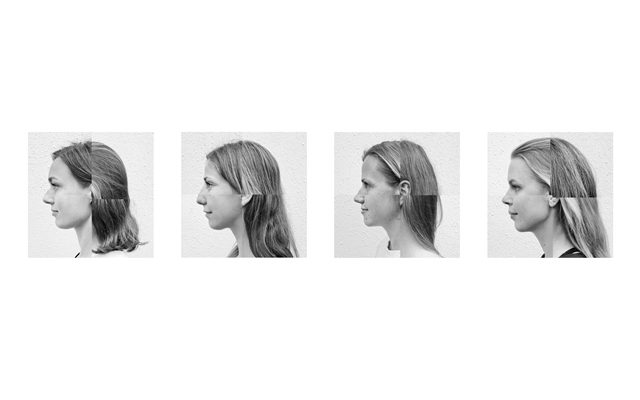
J (Jarmila), O (Oľga), V (Vilma), P (Petronela)
Odkiaľ si?
J: Z Bratislavy.
O: Zo Šale.
V: Z Ružomberka
P: Z Bratislavy
Kde si študovala?
J: Na VŠVU v Bratislave.
O: Hlavne na VŠVU v Bratislave a potom kade-tade po stážach.
V: V Bratislave na VŠVU a FA STU a v Tallinne na EKA.
P: V Bratislave na VŠVU a vo Viedni na Akadémii umenia.
Kto bol najlepší učiteľ ?
J: Od útleho detstva až do dospelosti učiteľka výtvarnej Mária Klimanová.
O: Na strednej v Trenčíne Zuzka Dianovská, na výške to bolo najintenzívnejšie asi v ateliéri Benjamína Brádňanského.
V: Na VŠVU Víto Halada.
P: Imro Vaško a Marián Zervan v Bratislave, Angelika Schnell a Wolfgang Tschapeller vo Viedni.
Čo boli/sú tvoji rodičia?
J: Poľnohospodári a podnikatelia.
O: Učiteľka a technik.
V: Úradníčka a projektant.
P: Farmaceutka-organistka a neurolingvista-vysokoškolský učiteľ.
Čo ťa v dizajne, alebo v architektúre nebaví?
J: Monotónnosť.
O: Autocad, bezbariérovosť, funkčnosť, detail, užívateľ…
V: Konce.
P: Komunita, Hranice, Príbeh.
Naopak čo veľmi?
J: Hra a imaginatívnosť, vžívanie sa do role používateľa.
O: Rôznorodosť, mäkkosť, materiály, sny, priestory, významy…
V: Začiatky.
P: Paradoxy, Seba-referenčnosť, alebo keď sa návrh neberie príliš vážne.
Čo počúvaš?
J: Najradšej audioknihy.
O: Sufjana Stevensa a guilty pleasures.
V: V poslednej dobe uprednostňujem ticho.
P: Hudbu svojho manžela (BZGRL) alebo Tim Hecker.
Obľúbený film, animák, seriál?
J: Nemám obľúbený, ale napadol mi maďarský film On Body and Soul, ktorý na mňa veľmi zapôsobil.
O: Call me by your name. Vonku lialo, išla som sama do kina a plakala som ako nikdy.
V: Obľúbený nemám.
P: Neviem, či obľúbené, ale prvé, čo mi napadlo – film: My dinner with André; animák: nový Spiderman si vyslovene užíva, že je kreslený, a to je na tom výborné; seriál: The League of Gentlemen.
Koho uznávaš ako autoritu v svojom odbore a mimo neho a prečo?
J: Vo svojom odbore napr. švajčiarskeho architekta Petra Zumthora, za absolútnu nekompromisnosť. Mimo odbor je to možno Richard Dawkins, ako autor, cez ktorého som sa dostala k popular science literatúre ako takej a začala si rozširovať obzory práve do úplne iných odborov.
O: Na domácej scéne hlavne Moniku Mitášovú a Mariana Zervana, lebo rozhovory (nielen) o architektúre sú s nimi vždy zážitkom. Ďalej moju šéfku zo stáže na CITA v Kodani, Mette Ramsgaard Thomsen, lebo je to nielen výnimočná architekta, ale hlavne úžasná žena.
V: Súhlasím s Petronelou. Sama by som to lepšie nepovedala.
P: Nebudem menovať, ale obdivujem ľudí, ktorí sú dobrí vo svojom odbore, no majú aj komplexný rozhľad a popri tom všetkom sú skromní, teda nebažia po externom uznaní.
Akú vec si naposledy kúpil?
J: Práve včera nosič na deti na hory.
O: Lampu do ateliéru a dva metre filcu.
V: Rukavice, už tretie túto zimu.
P: Lístok na MHD.
Kupuješ si odbornú literatúru? Čo konkrétne naposledy?
J: Naposledy som si obstarala knihu od štúdia Elemental: Incremental Housing and Participatory Design Manual.
O: Project Japan (Rem Koolhaas, Hans Ulrich Obrist), o japonských metabolistoch.
V: Elements of Venice od Giulia Foscari.
P: Reza Negarestani – Intelligence and Spirit, Michel Denis – Space and spatial cognition
Chodíš voliť?
J: Áno, vždy keď môžem.
O: Už mi prišiel voličský preukaz.
V: Áno.
P: Samozrejme.
Kto robí najlepšie párty?
J: Najlepší kamoši.
O: Tento vlak mi ušiel..(?)
V: Ja, špecializujem sa na tie pyžamové.
P: Môj starší brat (naposledy zorganizoval koktejlovú párty s impro drinkmi).
Obľúbená kupola?
J: Tá v Sade Janka Kráľa.
O: Tá Dedečkova na SPU v Nitre.
V: Tá Fosterova na Reichstag v Berlíne.
P: Kugelmugel Republik vo Viedni sa ráta ako kupola?
Šaty na párty. Od koho?
J: Zo sekáča.
O: Od seba. Ale hlavne – žiadny čas, žiadne šaty, žiadna párty.
V: Pyžamo.
P: Monterky
Hrdina z minulosti?
J: Jana z Arku.
O: Amelia z Montmartru.
V: Hm, napríklad tento pán: Ignaz Fülöp Semmelweis.
P: Môj dedo!
Najlepší/najkrajší dom?
J: Maison de verre v Paríži.
O: Dám len za posledné obdobie. Napr. skleník na zámku v Ledniciach alebo István Szabó a jeho reformovaný kostol v Budapešti.
V: Mám slabosť pre ikonické vily.
P: Momentálne je to pre mňa Barbican.
Máš nejaké stereotypy pri tvorbe? Ako sa prejavujú?
J: Mám skôr problém s rutinou a vlastne sa momentálne zo stereotypov celkom teším. Ale samozrejme sú určité postupy, ktoré ako architektka opakujem, napríklad často začínam uvažovať od kocky.
O: Vo vyjednávaní medzi najhorším a najlepším možným výsledkom.
V: Mám isté zaužívané postupy, napr. navrhovanie variantov.
P: Dlho sa hrám s jazykom, so slovami – až potom to interpretujem do priestorovej tvorby.
Čo máš na ploche?
J: Takú grafiku od Wolsa. Už od strednej.
O: Pixel City. Tokio.
V: Neviem, už to tam bolo.
P: Oslo Fjord, ktorý som odfotila počas nášho škandinávskeho roadtripu s WOVEN.
Najlepšia výstava, dielo?
J: Za posledné obdobie bola výborná výstava Homo Faber, o remeslách, ktoré prežili v Európe. Konala sa v Benátkach iba počas pár dní v Septembri 2018.
O: Na čo si tak spomínam, je Katharina Grosse vo Veletržáku, Kintera v Rudolfine, Šimon Chovan v žilinskej synagóge, alebo dánsky a nemecký pavilón na umeleckom bienále 2017, ktoré ma fascinovali akousi témou krásnych ruín a znovuzrodenia po apokalypse (čisto moja interpretácia :).
V: Amsterdam DNA v Amsterdam Museum, ale tiež rôzne v SNG, napríklad: Uchovávanie sveta, Rituál múzea v digitálnom veku. Priznám sa, že často ma viac ako vystavené diela, zaujíma spôsob vystavovania.
P: Ach, tieto superlatívy. Napríklad Milan Adamčiak v SNG, alebo Calder v Tate Modern ma nečakane ohúril.
Čo z domácej a zahraničnej scény rešpektuješ? A prečo?
J: Rešpektujem ľudí, ktorí hovoria o ekológii a konajú v tomto smere akýmkoľvek spôsobom. Architektov a dizajnérov, ktorí upozorňujú, alebo riešia environmentálne témy. Pretože iný, väčší problém nevidím.
O: Dedeček, Koolhaas, Eisenman, SANAA, Kengo Kuma, Selgas Cano. Lebo mám pocit, že je to intelektuálne vzrušujúce a vychádza to z vnútorných, autorských túžob a problémov, nie z vonkajších obmedzení.
V: Rešpektujem ľudí, ktorí posúvajú moje uvažovanie a od ktorých mám možnosť učiť sa.
P: V podstate najrôznejšiu tvorbu, hlavne nech z nej vyžaruje úprimnosť a nadšenie.
Morálka alebo peniaze?
J: To je hrozná otázka.
O: Bohužiaľ to prvé.
V: Ideálne aj aj.
P: A oni sa navzájom vylučujú?
Výnimočná kniha?
J: Všetkým odporúčam knihu Last Chance to See /Douglas Adams, Mark Carwardine/. To je naozaj výnimočná kniha.
O: Boris Vian a Pena dní. Podľa životných období ale: z teenagerských čias: Murakamiho Nórske drevo, v dvadsiatke Paolo Giordano a Osamelosť prvočísel, v dvadsaťpäťke Nicole Krauss a Man walks into a room, v tridsiatke (tu som zatiaľ len krátko) Sylvia Plath a The Bell Jar.
V: Pre mňa v poslednej dobe The Glass Room od Simona Mawera.
P: Steinbeck: East of Eden, Salinger: Franny and Zooey (a všetky knihy o rodine Glassovcov), Marquez: Sto rokov samoty – neviem si pomôcť, milujem tieto rodinné ságy.
Optimista, pesimista, nihilista?
J: Optimista.
O: Optimista s občasnými extrémnymi sklonmi.
V: Optimista, ale popletené ma volajú aj Miss Skepsa.
P: Beznádejná optimistka.
Máš nejaké hobby?
J: Áno – cestovanie, jazyky, hory a všetky možné športy, prácu s drevom, ale aj napríklad šitie alebo pečenie.
O: Knihy, basketbal, genealógia.
V: Áno, mám.
P: Haha, asi sám život – veľmi ma to baví!
Individuálne alebo v kolektíve?
J: Individuálne v kolektíve.
O: Vo štvorici!
V: Individuálne vo štvorici.
P: Individuálne alebo popletene.
Slovensko zem zasľúbená?
J: To je jasné.
O: So far so good.
V: To neviem, ale som tu rada a nikam sa nechystám.
P: Žiaľ, mám málo lokál patriotstva v sebe.
Vysvetlivky:
J (Jarmila) je Marianna Maczová.
O (Oľga) je Danica Pišteková.
V (Vilma) je Veronika Michalíková.
P (Petronela) je Anna Cséfalvay.[:en]
J (Jarmila), O (Oľga), V (Vilma), P (Petronela)
Where are you from?
J: Bratislava.
O: Šaľa.
V: Ružomberok
P: Bratislava.
Where did you study?
J: At AFAD in Bratislava.
O: Mostly at AFAD in Bratislava and then I did internships here and there.
V: In Bratislava at AFAD and at the Faculty of Architecture of the Slovak University of Technology and in Tallinn at EKA.
P: In Bratislava at AFAD and in Vienna at the Academy of Arts.
Who was your best teacher?
J: From my early childhood to adulthood, it was my art teacher Mária Klimanová.
O: It was Zuzka Dianovská at the high school in Trenčín and I guess it was the studio of Benjamín Brádňanský at the university where it was most intense.
V: Víto Halada at AFAD.
P: Imro Vaško and Marián Zervan in Bratislava, Angelika Schnell and Wolfgang Tschapeller in Vienna.
Who were/are your parents?
J: Farmers and entrepreneurs.
O: A teacher and a technician.
V: A civil servant and a draughtsman.
P: A pharmacist-organist and a neurolinguist-university teacher.
What don’t you enjoy in design?
J: Monotonousness.
O: Autocad, barrier-free, functionality, detail, user…
V: Endings.
P: Community, Borders, Story.
And on the contrary, what do you?
J: Play and imaginativeness, putting myself in the shoes of a user.
O: Diversity, softness, materials, dreams, spaces, meanings…
V: Beginnings.
P: Paradoxes, self-referencing or when design doesn’t take itself too seriously.
What do you listen to?
J: I’m mostly into audiobooks.
O: Sufjan Stevens and guilty pleasures.
V: Lately I prefer silence.
P: My husband’s (BZGRL) music or Tim Hecker.
Your favourite film or cartoon?
J: I don’t have a favourite one, but I was largely impressed by the Hungarian film On Body and Soul.
O: Call Me by Your Name. It was pouring down and I went to cinema alone and I was crying as never before.
V: I don’t have a favourite one.
P: I don’t know if I can call them favourite, but the first thing that came to my mind – the film: My Dinner with André; cartoon: the new Spiderman purely enjoys the fact it’s animated, and that is the great thing about it; series: The League of Gentlemen.
Who do you respect as an authority in and out of your field?
J: In my field it is Swiss architect Peter Zumthor, for his absolutely uncompromising attitude. Outside my field it could be Richard Dawkins, as an author that brought me to popular scientific literature as such and started broadening my horizons, turning me towards completely different fields.
O: On the local scene, it is mainly Monika Mitášová and Marian Zervan, because discussing with them (not only) about architecture is always a real pleasure. Next, I respect my supervisor at CITA in Copenhagen, Mette Ramsgaard Thomsen, as she is not only an exquisite architect, but mostly an amazing woman.
V: I agree with Petronela. I couldn’t say it better.
P: I won’t be saying any names, but I admire people who apart from being good at their field have a complex overview and besides all that are modest, that is they don’t yearn for external recognition.
What thing did you last buy?
J: It was yesterday – a mountain baby carrier.
O: A lamp for the studio and two metres of felt.
V: Gloves, that’s my third pair this winter.
P: A ticket for public transport.
Do you buy professional literature? What was the latest book?
J: The last book I got myself was by Elemental: Incremental Housing and Participatory Design Manual.
O: Project Japan (Rem Koolhaas, Hans Ulrich Obrist), on Japanese metabolists.
V: Elements of Venice by Giulia Foscari.
P: Reza Negarestani – Intelligence and Spirit, Michel Denis – Space and Spatial Cognition
Do you vote?
J: I do, every time I can.
O: My electoral card has already arrived.
V: I do.
P: Of course.
Who throws best parties?
J: Best buddies.
O: I missed this train… (?)
V: I do, I specialise on pajamas parties.
P: My older brother (last time he organised a cocktail party with improvised drinks).
Your favourite dome?
J: The one in Janko Kráľ’s Park in Bratislava.
O: The one by Dedeček at the Slovak University of Agriculture in Nitra.
V: The Foster’s one on Reichstag in Berlin.
P: Does Kugelmugel Republik in Vienna count as a dome?
Party dress. Made by…?
J: From a secondhand shop.
O: By myself. But mainly – no time, no dress, no party.
V: Pajamas.
P: A working overall.
Your hero from the past?
J: Joan of Arc.
O: Amelie from Montmartre.
V: Hmm, for instance this gentleman: Ignaz Fülöp Semmelweis.
P: My grandad!
Best/nicest house?
J: Maison de verre in Paris.
O: I’ll just mention the latest ones. For example, the greenhouse at the Chateau Lednice or István Szabó and his reformed church in Budapest.
V: I have a weakness for iconic villas.
P: At the moment, it’s Barbican.
Do you have any stereotypes when you work? How do they show?
J: I have more problems with a rut and I am actually quite happy about stereotypes now. But of course, there are certain procedures I repeat as an architect, for example, my common point of departure is a cube.
O: Negotiating between the worst and best possible result.
V: I have certain common procedures, e.g. designing variants.
P: I take a long time to play with language, with words – and only then I interpret it into spatiality.
What’s on your desktop?
J: One graphic print by Wols. Since high school.
O: Pixel City. Tokio.
V: I don’t know, it’d been there before.
P: Oslo Fjord that I took picture of during our Scandinavian road trip with WOVEN.
Best exhibition/artwork?
J: Recently, I saw the excellent Homo Faber exhibition dedicated to craftsmanship still alive in Europe. It took place just for a few days in September 2018 in Venice.
O: I recall Katharina Grosse in the National Gallery Prague, Kintera in Rudolfinum, Šimon Chovan in the Žilina’s synagogue or Danish and German pavilion at the Biennale of Arts 2017 that fascinated me with a topic of beautiful ruins and rebirth after apocalypse (purely my interpretation 🙂
V: Amsterdam DNA in Amsterdam Museum, but also others in the Slovak National Gallery, e.g.
Preserving the World, Museum Ritual in the Digital Age. I admit that I am often more interested in the way of exhibiting than in the exhibited works.
P: Ach, these superlatives. For example, Milan Adamčiak in SNG, or I was unexpectedly stunned by Calder in Tate Modern.
What do you respect both from the local and foreign design scene? And why?
J: I respect people that talk about ecology and take action in this respect in whatever way. Architects and designers that bring forth or sort out environmental topics. Because I don’t see any other greater problem.
O: Dedeček, Koolhaas, Eisenman, SANAA, Kengo Kuma, Selgas Cano. As I have a feeling that their works are intellectually teasing, coming from inner, authorial desires and problems, not from external limitations.
V: I respect people that push my thinking forward and those who I can learn from.
P: It’s actually a large variety of production, but the most important thing is that it radiates sincerity and enthusiasm.
Morals or money?
J: That’s an awful question.
O: The first, unfortunately.
V: Ideally both.
P: And do they contradict each other?
Extraordinary book?
J: I recommend Last Chance to See by Douglas Adams and Mark Carwardine to everyone. It’s a truly unique book.
O: Boris Vian’s Froth on the Daydream. It depends on the period of life, but: 1. At my teenage – Murakami’s Norwegian Wood; 2. In my twenties it was Paolo Giordano’s Solitude of Prime Numbers; when I was twenty-five it was Nicole Krauss’s A Man Walks into a Room; and 3. in my thirties (well, it’s been a short time so far) Sylvia Plath’s The Bell Jar.
V: For me lately it was The Glass Room by Simon Mawer.
P: Steinbeck: East of Eden, Salinger: Franny and Zooey (and all the books about the Glass family), Marquez: One Hundred Years of Solitude – I can’t help it, I just love those family sagas.
Optimist, pessimist, nihilist?
J: An optimist.
O: An optimist with occasional extreme tendencies.
V: An optimist, but the woven call me Miss Skeptic.
P: A hopeless optimist.
Do you have any hobby?
J: Travelling, languages, mountains and all kinds of sports, woodwork, but also sewing and baking.
O: Books, basketball, genealogy.
V: Yes, I do.
P: Haha, that’d be life itself – I enjoy it a lot!
Solo or in a collective?
J: Solo in a collective.
O: In four!
V: Solo in four.
P: Solo or woven.
Slovakia as the Promised Land?
J: It is clear.
O: So far so good.
V: I don’t know, but I like being here and am not going anywhere.
P: Sadly, there is only little local patriotism in me.
Legend:
J (Jarmila) is Marianna Maczová.
O (Oľga) is Danica Pišteková.
V (Vilma) is Veronika Michalíková.
P (Petronela) is Anna Cséfalvay.[:]