[:sk]Esej / MANHATTANHENGE[:en]Essay / MANHATTANHENGE[:]
[:sk]"Niekedy začiatkom júla sa slnko dostane na určitú pozíciu a jeho lúče sa tak zarovnajú s rovnobežnými ulicami, ktoré pretínajú ostrov od východu na západ."[:en]"Sometime in early July, the sun reaches a certain position so that its rays align with the parallel streets that crisscross the island from east to west."[:]
[:sk]
-
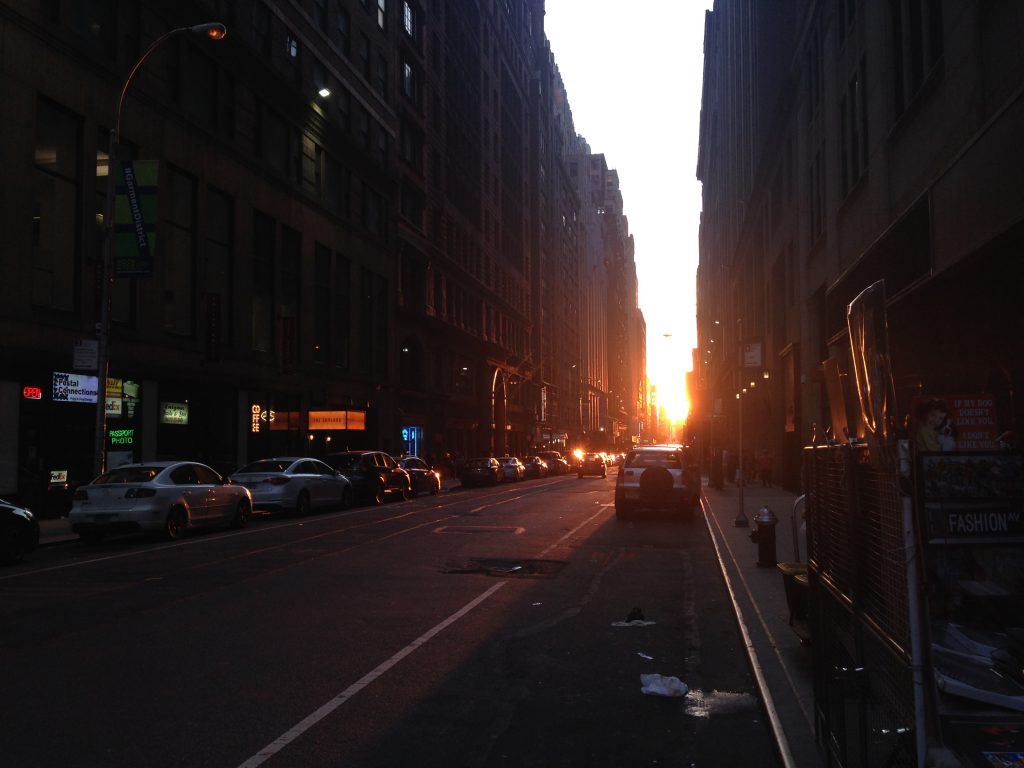
Foto: Katarína Poliačiková.
1. Manna-hatta
Na Manhattan-e sa mi vždy páčilo to trojité “a”, ktoré ho rytmicky rozdeľuje a zároveň mu dodáva určitú údernosť a sebavedomie. Keď rozdelíme názov najzaľudnenejšieho ostrova na svete na Man+hat+tan, skrýva sa v ňom opálený muž v klobúku. Opálený muž v klobúku, kráčajúci Central parkom. Názov Manhattan má svoj príbeh, ktorý však nehovorí o mužovi, ani o klobúku, a siaha až do časov, keď ostrov pokrývali naozajstné lesy. A boli to práve tieto lesy, ktoré vtedy naplnili významom dnes abstraktne znejúce slovo. “Manhattan” je prvým pôvodným názvom miesta, ktorý zaznamenali európania pri objavovaní Severnej Ameriky. Pri jeho interpretácii sa etymológovia vracajú na začiatok sedemnásteho storočia, k reči pôvodných obyvateľov územia. Oblasť od severu Hudson Valley až po New Jersey a Pensylvániu v tých časoch obývali indiáni z kmeňa Delaware. Hovorili dvoma rôznymi dialektami jazyka Lenape: Munsee a Unami. Aj keď toto územie objavil taliansky moreplavec Giovanni da Verrazzano už v roku 1524, k samotnému zmapovaniu prišlo až v ďalšom storočí. Názvy “Manahata”, “Manahatin” a “Manna-hatta” sa v roku 1609 objavili v dokumentoch z expedície angličana Henryho Hudsona, plaviaceho sa pod holandskou vlajkou.
K hľadaniu samotného významu slova sa viaže niekoľko etymologických legiend. Napríklad misionár John Heckewelder vo svojich štúdiách jazyka a zvykov Amerických indiánov popísal miestnu tradíciu opíjania sa alkoholom. Ten mali dostať od holanďanov, ktorí od nich v roku 1625 kúpili ostrov. “Mannahattanink”, “Mannahachtanink” alebo “Manahachtanienk” podľa Heckeweldera znamenalo “ostrov, kde sme sa opojili”. Podľa dôsledného rozboru však delawarské slovo “/mënáhtiin/”, nesúce význam “všetci opití”, nemá s Manhattanom nič spoločné – minimálne etymologicky. Rovnako, ako jeho ďalšie výklady: “ostrov mnohých kopcov” alebo “vír pri bráne pekla”.
Formovanie naratívu je spôsob, ako si privlastniť takmer čokoľvek. Obzvlášť dôležité sú príbehy pri vytváraní si vzťahu k novému miestu. A presne takto sa interpretácia indiánskych názvov miest stala samostatným žánrom vo euro-americkom folklóre.[1] Čo všetko by ešte mohol Manhattan predstavovať? Napríklad zabudnutý rituálny tanec alebo pomenovanie fázy mesiaca.
K tomu, čo sa naozaj skrýva za jeho významom, sa dostávame cez osobu Alberta Anthonyho s indiánskym menom “Osamelá borovica”. Anthony, ktorý pôsobil koncom devätnásteho storočia ako kňaz, si po svojom otcovi zachoval dobrú znalosť jazyka pôvodnej komunity Delawarských indiánov. Práve vďaka nemu sa etymológom podarilo odkryť presný zmysel slova, ktorý pramení v nárečí Munsee. Pravý príbeh pôvodnej formy Manhattanu, “Manaháhtaan”, nám hovorí o kultúre, ktorá dokonale poznala a rešpektovala svoje miesto: miesto ako zdroj neobyčajne kvalitných surovín a vlastnej identity. Na území dolnej časti ostrova, presne tam, kde sa dnes nachádza Wall Street a Financial District, pred niekoľkými storočiami rástli biele orechy s drevom vychýrenej kvality. Bolo až také výnimočné, že pre indiánov predstavovalo najcharakteristickejšiu črtu ostrova. Slovo “Manaháhtaan” prezrádza špecifické využitie tohto dreva. V reči Munsee znamenalo Manah zbierať a aht luk.
A tu príbeh končí: Manhattan znamená “miesto, kde zbierame drevo na naše luky.
2. Manhattan
Manhattan, epicentrum New York City, sa vo svojom jasne vyhranenom priestore rozpína do výšky a zažiť ho je isté vertigo. Skúsenosť tohto miesta sa zdieľa len veľmi ťažko – aj preto som riadky, ktoré nasledujú, prepisovala niekoľkokrát. Dnes má Manhattan (okrem dreva na luky) hocičo, na čo si pomyslíte. Všetky druhy jazykov, architektúry, jedla, lásky, šťastia, nešťastia, počasia. Manhattan je v detailoch. Je to rytmus chôdze a správna rýchlosť, akou potiahnete metro card cez turniket. Chaos s vlastnými pravidlami a miesto neuveriteľných historiek, kde vedia byť vzdialené veci zvláštne na dosah. Manhattan je predovšetkým mnoho vrstiev: nielen tých viditeľných, ktoré sa sformovali cez architektúru, ale aj vrstiev ľudských naratívov. New York City dodáva veľkú intenzitu čomukoľvek. Emóciám, príbehom, interakciám, a vďaka jeho urbanizmu aj svetlu. Po čase si možno všimnete, že naozaj existuje niečo ako “New York kind of light”. Nekompromisné a veľkolepé. Svetlo, ktoré dokáže dať majestátnosť aj smetiam na chodníku.
-
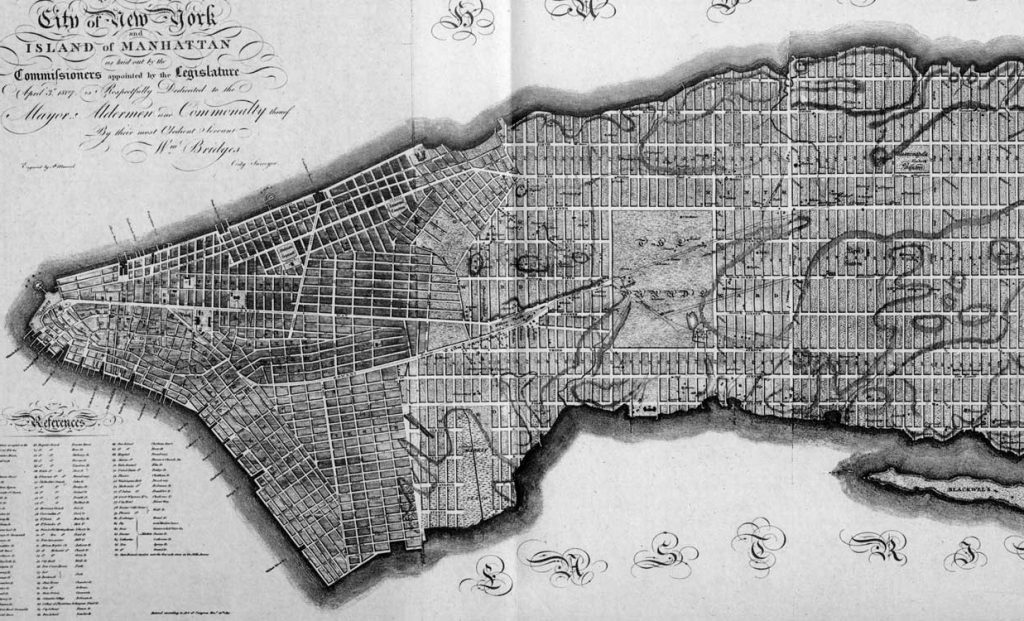
Zdroj:http://affordablehousinginstitute.org/
3. Manhattanheng
V lete sa mi zdá Manhattan najviac sám sebou, a teda občas neznesiteľný. Niekedy v júni sa masy betónu rozpália a vyhasnú až na konci septembra. Vtedy si vždy pripomeniem temnú stranu newyorského leta, ktorú dokonale vystihujú úvodné vety z knihy Bell Jar od Sylvie Plath. Aby sa tá neopísateľná horúčava nestratila v preklade, tu je originál:
“New York was bad enough. By nine in the morning the fake, country-wet freshness that somehow seeped in overnight evaporated like the tail of a sweet dream. Mirage-grey at the bottom of their granite canyons, the hot streets wavered in the sun, the car tops sizzled and glittered, and the dry, cindery dust blew into my eyes and down my throat.”[2]
Spomínané rozpálené kaňony z granitu vznikli úplne neromanticky, a to vďaka urbanistickému konceptu gridironu, ktorý je na Manhattane dotiahnutý do absolútneho extrému. Dvanásť vertikálnych Avenues pretína dvestoosemnásť horizontálnych ulíc. To znamená takmer 10 600 rohov, na ktorých sa stále niečo deje. Zatracovaný aj chválený, “grid” dáva všetkému chaosu aspoň formálny poriadok a ak aj netušíte nič iné, viete aspoň, kde stojíte. Mriežka, na ktorej Manhattan vyrástol, vytýčila budúcnosť mesta ďaleko dopredu. Jej dve dimenzie, ktoré sa môžu javiť ako obmedzujúce, otvorili cestu trojdimenzionálnej slobode neustále rastúcich a navzájom sa prekrývajúcich horizontálnych vrstiev.[3] Manhattan je obrovský tetris, v ktorom sa môžete prechádzať a nekonečne obdivovať krásu eklektických architektonických bizarností. Architektúru Manhattanu tvoria vrstvy vízií a zlyhaní, ktoré neustále prepisujú samy seba. A práve vďaka tejto mriežke má New York aj svoj “Stonehenge” – teda Manhattanhenge, ktorý s prehistorickou stavbou v Anglicku alebo rituálmi pôvodných obyvateľov nemá nič spoločné. Manhattanhenge nič nemeria a vznikol vlastne náhodou. Oficiálne zdroje popisujú Manhattanhenge ako “prírodno-urbánny úkaz”. Niekedy začiatkom júla sa slnko dostane na určitú pozíciu a jeho lúče sa tak zarovnajú s rovnobežnými ulicami, ktoré pretínajú ostrov od východu na západ. Večerné svetlo vtedy pretína ostrov s takmer filmovým efektom. Počas tých zopár dní, kedy je úkaz najlepšie viditeľný, sa v rôznych miestach formujú skupiny pozorovateľov, vybavených go-pro kamerami a selfie sticks. Všade, len nie na Times Square, ktoré už dávno prežiarilo prírodu. Spomínam si na jeden večer, kedy som, neoboznámená s týmto fenoménom, kráčala dole Manhattanom s nejakou dobrou hudbou v ušiach, míňala davy ľudí a zopár bláznov, ktorí v strede premávky vášnivo debatovali s blčiacou slnečnou guľou na konci temného koridoru mrakodrapov. Hlboké oranžové svetlo, odrážajúce sa na tmavých fasádach budov bolo takmer hmatateľné – akoby sa po ceste nasýtilo všetkým chaosom mesta. Slnečná trajektória dokonale kopírovala horizontálnu sieť ulíc. Alebo ulice slnko? Golden hour sa zmenila na Fire hour a počas tých pár minút, kým sa slnko ponorilo do Hudson River, bolo celé mesto v ohni. Na Manhattane sa nikto nikdy nezastaví, ale zrazu to bolo inak. Ostala som zaseknutá v dave ľudí, netušiac, že som sa ocitla v najlepšom čase na najlepšom mieste. Ničomu som nerozumela, ale nechala som sa uniesť typickým New Yorkom – mestom, ktoré neustále balansuje na rozhraní fikcie a reality a v ktorom má takmer každá situácia kvality filmovej scény. Moju iniciáciu do Manhattanhenge zavŕšil zvláštny, rytmický pokrik:
“AYYYY-COOOOOO-WAAAAA-TAH-WAH-DOLLA”
“AYYYY-COOOOOO-WAAAAA-TAH-WAH-DOLLA”
“AYYYY-COOOOOO-WAAAAA-TAH-WAH-DOLLA”
Takmer ako v púšti, to svetlo a horúčava zrazu dali priestor vysokej abstrakcii a priamo predo mnou nadobúdali zvuky nové významy. Znelo mi to ako nejaká mantra v Munsee, spomínanej reči Amerických indiánov – z čias, kedy tu ešte neexistovala žiadna betónová sieť ulíc, ktorá by usporiadala svetlo. Trvalo však iba okamih, kým sa “AYYYY-COOOOOO-WAAAAA-TAH-WAH-DOLLA” úplne neromanticky zmenilo na “Iced cold water for one dollar.”
-
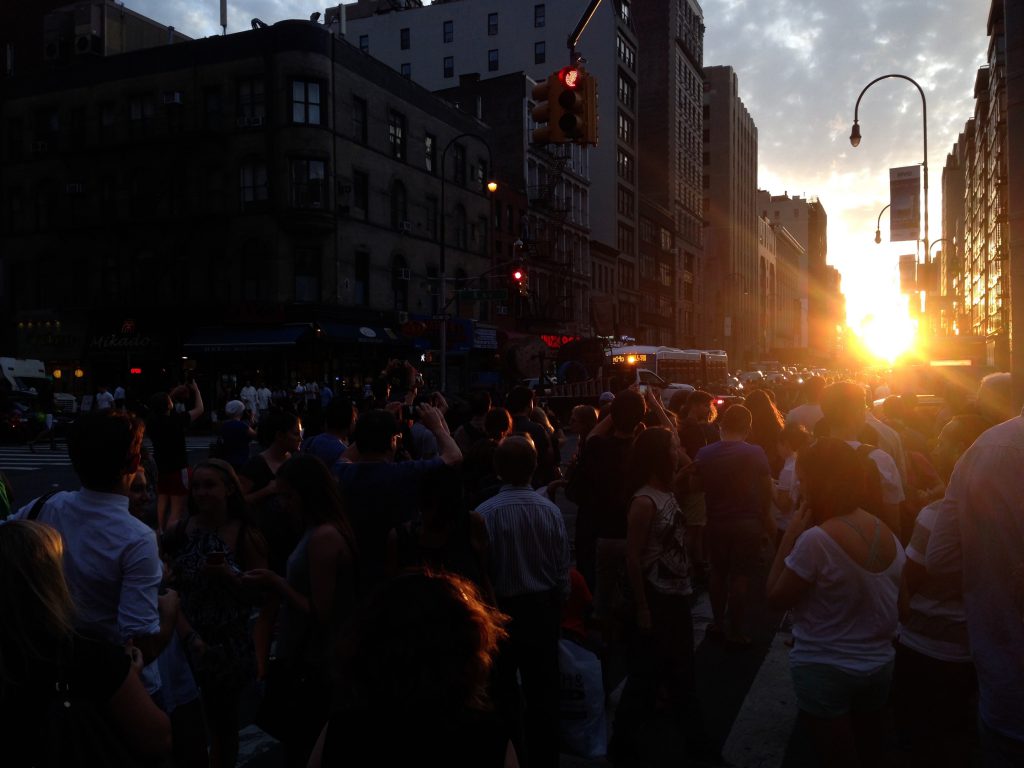
Foto: Katarína Poliačiková
1 https://repository.si.edu/bitstream/handle/10088/16790/anth_Manhattan.pdf?sequence=1
2 Sylvia Plath, The Bell Jar
3 Rem Koolhaas, Delirious New York: A Retroactive Manifesto for Manhattan
Photo: Katarína Poliačiková.
1. Manna-hatta
What I’ve always liked about Manhattan is the triple “a” that rhythmically divides it and also gives it a certain punch and confidence. When we divide the name of the world’s most populated island into Man+hat+tan, it hides a tanned man in a hat, walking through Central Park. The name Manhattan has a story behind it, but it’s not about the man or the hat, and it dates back to a time when the island was covered in real forests. And it was these forests that then infused the now abstract-sounding word with meaning. “Manhattan” is the first original place name recorded by Europeans exploring North America. In interpreting it, etymologists go back to the early seventeenth century, to the speech of the original inhabitants of the area. The area from north of the Hudson Valley to New Jersey and Pennsylvania was inhabited at that time by the Delaware Indians. They spoke two different dialects of the Lenape language: Munsee and Unami. Although the territory was discovered by the Italian navigator Giovanni da Verrazzano as early as 1524, the actual mapping did not take place until the following century. The names ‘Manahata’, ‘Manahatin’ and ‘Manna-hatta’ appeared in 1609 in documents from the expedition of the Englishman Henry Hudson, sailing under the Dutch flag.
There are several etymological legends attached to the search for the actual meaning of the word. For example, missionary John Heckewelder, in his studies of the language and customs of the American Indians, described a local tradition of getting drunk on alcohol. They were supposed to have gotten it from the Dutch, who bought the island from them in 1625. According to Heckewelder, “Mannahattanink”, “Mannahachtanink” or “Manahachtanienk” meant “the island where we got drunk”. However, according to careful analysis, the Delaware word “/mënáhtiin/,” carrying the meaning “all drunk,” has nothing to do with Manhattan – at least etymologically. Nor, for that matter, do its other interpretations, “the island of many hills” or “the vortex at the gates of hell.”
Shaping the narrative is a way to appropriate almost anything. Narratives are especially important in forming a relationship with a new place. And this is precisely how the interpretation of Native American place names has become a genre of its own in Euro-American folklore.[1] What else could Manhattan represent? A forgotten ritual dance, for example, or the naming of the phase of the moon.
We get to what really lies behind its meaning through the person of Albert Anthony with the Indian name “Lone Pine”. Anthony, who served as a priest in the late nineteenth century, retained his father’s intimate knowledge of the language of the native Delaware Indian community. It was thanks to him that etymologists were able to uncover the exact meaning of the word, which originated in the Munsee dialect. The true story of Manhattan’s original form, “Manaháhtaan,” tells us of a culture that knew and respected its place perfectly: a place as a source of extraordinary quality raw materials and an identity of its own. Centuries ago, white walnuts with wood of exquisite quality grew on the lower part of the island, exactly where Wall Street and the Financial District are today. It was so exceptional that for the Indians it was the most characteristic feature of the island. The word ‘Manaháhtaan’ reveals the specific use of this wood. In the Munsee language Manah meant to gather and aht bow.
And here the story ends: Manhattan means “the place where we gather wood for our bows.
2. Manhattan
Manhattan, the epicenter of New York City, expands in its clearly defined space and to experience it is something of a vertigo. The experience of this place is hard to share – which is why I have rewritten the lines that follow several times. Today, Manhattan (except for the bow wood ) has anything you can think of. All kinds of languages, architecture, food, love, happiness, unhappiness, weather. Manhattan is in the details. It’s the rhythm of walking and the right speed at which you swipe your subway card through the turnstile. A chaos with its own rules and a place of incredible stories, where distant things can be strangely within reach. Above all, Manhattan is many layers: not just the visible ones formed through architecture, but also layers of human narratives. New York City adds great intensity to anything. To emotions, to stories, to interactions, and, thanks to its urbanism, to light. Over time, you might notice that there really is such a thing as “New York kind of light”. Uncompromising and spectacular. A light that can give majesty even to the trash on the sidewalk.
Source:http://affordablehousinginstitute.org/
3. Manhattanheng
In the summer, I find Manhattan to be most like itself, and thus unbearable at times. Sometimes in June, the masses of concrete get hot and don’t burn out until late September. That’s when I’m always reminded of the dark side of a New York summer, perfectly captured by the opening lines of Sylvia Plath’s Bell Jar. Lest that indescribable heat be lost in translation, here’s the original:
“New York was bad enough. By nine in the morning the fake, country-wet freshness that somehow seeped in overnight evaporated like the tail of a sweet dream. Mirage-grey at the bottom of their granite canyons, the hot streets wavered in the sun, the car tops sizzled and glittered, and the dry, cindery dust blew into my eyes and down my throat.”[2]
The aforementioned hot granite canyons were created in a completely unromantic way, thanks to the urban concept of the gridiron, which is taken to the absolute extreme in Manhattan. Twelve vertical Avenues are intersected by two hundred and eighteen horizontal streets. That means nearly 10,600 corners with something going on all the time. Both reviled and praised, the “grid” gives all the chaos at least a formal order, and even if you suspect nothing else, at least you know where you stand. The grid on which Manhattan grew up set the future of the city far ahead. Its two dimensions, which can seem constraining, have opened the way for the three-dimensional freedom of ever-growing and overlapping horizontal layers.[3] Manhattan is a giant tetris in which you can walk around and endlessly marvel at the beauty of eclectic architectural oddities. The architecture of Manhattan is made up of layers of visions and failures that constantly rewrite themselves. And it is because of this grid that New York has its own “Stonehenge” – that is, a Manhattanhenge that has nothing to do with the prehistoric buildings of England or the rituals of the original inhabitants. Manhattanhenge doesn’t measure anything and was actually created by accident. Official sources describe Manhattanhenge as a “natural-urban phenomenon”. Sometime in early July, the sun reaches a certain position and its rays align with the parallel streets that cross the island from east to west. The evening light then crosses the island with an almost cinematic effect. During the few days when the phenomenon is most visible, groups of observers, equipped with go-pro cameras and selfie sticks, form in various locations. Everywhere but Times Square, which has long since been illuminated by nature. I remember one evening when, unfamiliar with this phenomenon, I walked down Manhattan with some good music in my ears, passing crowds of people and a few crazies in the middle of traffic, passionately debating a flickering ball of sunlight at the end of a dark corridor of skyscrapers. The deep orange light reflecting off the dark facades of the buildings was almost palpable – as if it had saturated all the chaos of the city along the way. The sun’s trajectory followed the horizontal grid of the streets perfectly. Or was the street the sun? Golden hour turned into Fire hour, and for the few minutes it took for the sun to sink into the Hudson River, the entire city was on fire. No one ever stops in Manhattan, but suddenly it was different. I was stuck in the crowd, unaware that I was in the best place at the best time. I didn’t understand anything, but I got carried away by the typical New York – a city that constantly balances between fiction and reality and where almost every situation has the qualities of a movie scene. My initiation into Manhattanhenge was capped by a strange, rhythmic shout:
“AYYYY-COOOOOO-WAAAAA-TAH-WAH-DOLLA”
“AYYYY-COOOOOO-WAAAAA-TAH-WAH-DOLLA”
“AYYYY-COOOOOO-WAAAAA-TAH-WAH-DOLLA”
Almost like in the desert, the light and the heat suddenly gave way to high abstraction, and right in front of me the sounds took on new meanings. It sounded to me like some mantra in Munsee, the aforementioned language of the American Indians – from a time when there was no concrete street grid to organize the light. But it took only a moment for “AYYY-COOOOO-WAAAAA-TAH-WAH-DOLLA” to become, quite unromantically, “Iced cold water for one dollar.”
Photo: Katarína Poliačiková.
1 https://repository.si.edu/bitstream/handle/10088/16790/anth_Manhattan.pdf?sequence=1
2 Sylvia Plath, The Bell Jar
3 Rem Koolhaas, Delirious New York: A Retroactive Manifesto for Manhattan
[:]