[:sk]Výstava / PODKROVIE + IVA DURKÁČOVÁ + ĽUBOŠ KOTLÁR + MIRA KUBÁŇOVÁ + MARTINA MÄSIAROVÁ + JÁN SKALIČAN[:en]Exhibition / ATTIC + + IVA DURKÁČOVÁ + ĽUBOŠ KOTLÁR + MIRA KUBÁŇOVÁ + MARTINA MÄSIAROVÁ + JÁN SKALIČAN[:]
[:sk]V Mirbachovom paláci Galérie mesta Bratislavy počas leta (10. júl – 30. september 2018) prebieha výstava PODKROVIE. Výstava sa koná v rámci každoročne organizovaného Štipendia Radislava Matuštíka. Štipendium je určené pre začínajúcich kurátorov. Jeho aktuálna držiteľka a kurátorka výstavy, architektka Gabriela Smetanová píše o svojej reťazovej, participatívnej koncepcii.[:en]The Mirbach Palace of the Bratislava City Gallery is hosting the exhibition ATTIC during the summer (10 July - 30 September 2018). The exhibition takes place within the framework of the annual Radislav Matuštík Scholarship. The scholarship is intended for emerging curators. Its current recipient and exhibition curator, architect Gabriela Smetanová, writes about her chained, participatory concept.[:]
[:sk]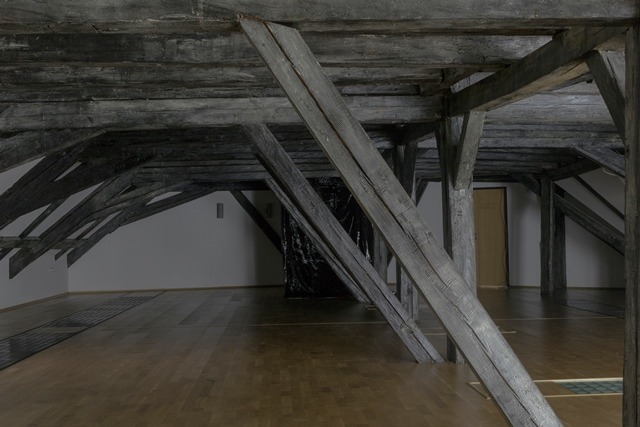
Mira Kubáňová, Putovné plátno, foto: Ľuboš Kotlár.
PODKROVIE je skôr projektom ako výstavou, galerijným personálom nazývaným experiment.
PODKROVÍM skúšame niekoľko vecí. Možnosti spolupráce skupiny ľudí na spoločnej výstave. Vzťahovanie sa, k miestu a zúčastnených k sebe navzájom. PODKROVIE nepredstavuje zavŕšené produkty, ale ponúka pozorovanie priebehu. Sleduje princípy ako nedefinitívnosť – procesuálnosť, premenlivosť – efemérnosť inštalácie.
Agonizmus
Pôvodným východiskom koncepcie výstavy je agonistická teória Chantal Mouffe. Princípy agonizmu rozvíja primárne v rámci politickej teórie, aplikovanej na verejný priestor. Úvodnou tézou je, že liberalizmus je na základe svojho individualistického a racionalistického prístupu neschopný pojať pluralistickú povahu sociálneho sveta. Ďalšou výhradou voči liberalizmu je jeho predpoklad konsenzu. Mouffe popiera predstavu verejného priestoru ako miesta kde vzniká univerzálny konsenzus – harmonický celok založený na rozume, s ktorým nutne prichádza moment rozhodnutia.
Politické pre ňu znamená večne prítomný agonizmus, existencia plurality názorov a prístupov, absencia definitívnosti, nerozhodnuteľnosť. Demokracia pre ňu neznamená kompromisné zmierenie jednotlivých rozličných projektov (konsenzus), ale neustálu možnosť ich konfrontácie.
Výstava sa volá PODKROVIE preto, lebo sa v podkroví odohráva. Prebieha ako konfrontácia so samotným výstavným priestorom a súčasne zúčastnených medzi sebou (so sebou).
Spolupráca (Konfrontácia)
Skupinové výstavy, kurátorské koncepcie tematických výstav považujem vo väčšine prípadov za rôzne stupne konsenzu v rámci spolupráce, v závislosti od miery komponovania, vzájomnej komunikácie, alebo definitívnosti obrazu výstavy.
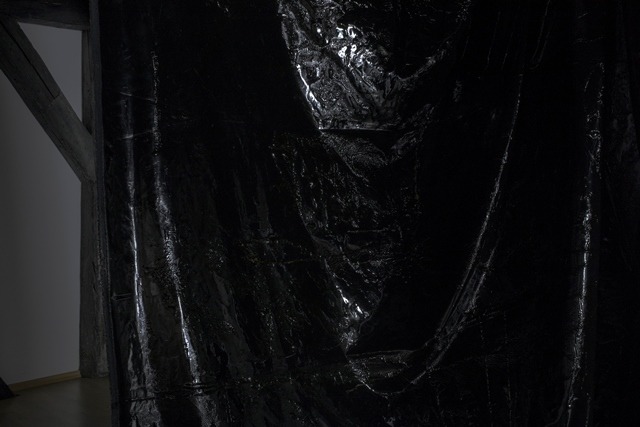
Podkrovie, Mira Kubáňová, foto: Ľuboš Kotlár
V 80tych rokoch na Waršawskej akadémii výtvarných umení, pod vedením Grzegora Kowalskeho prebiehal workshop s názvom “Spoločný priestor, Vlastný priestor”. Projekt bol založený na vzájomnej neverbálnej komunikácii. Študenti začínajú od vlastných akcií. (Vlastným priestorom), zároveň však akcia každého participanta vyvoláva spontánnu reakciu ďalšieho. Postupne prechádzajú k vzájomnej spolupráci (do Spoločného priestoru). Komunikácia sa tu stáva hodnotou sama o sebe. Tieto cvičenia prebiehali v prostredí voľného prejavu myšlienok, v priestoroch akadémie.
Artur Zmijewski s transformáciou tejto “výučnej metódy” pokračoval ďalej, jej prenesením do reálneho života. V Them (2007), filme premietanom na Documente v Kasseli zorganizoval workshop, kam pozval členov rôzne antagonisticky ideologicky vyhranených skupín. V úvode si jednotlivé skupiny vytvorili svoje reprezentatívne plagáty, symbolickú identifikáciu (Vlastný priestor). S nimi potom vstúpili do spoločného (Verejného) priestoru a vzájomnej neverbálnej konfrontácie.
Dôležitosť tohto záznamu (bezohľadu na konkrétne výsledky konfrontácie) spočíva vo vizualizovaní tézy nemožnosti definitívneho konsenzu. Išlo o dielo negatívne, skeptické, neformulujúce žiadne konkrétne pozitívne (politické) názory. Hovorí ale o povahe verejného priestoru, legitimizuje agonistický princíp. Kritické umenie podľa mňa dnes nespočíva v nutnej radikalite, ale schopnosti pomenovať, definovať, čítať, reagovať.
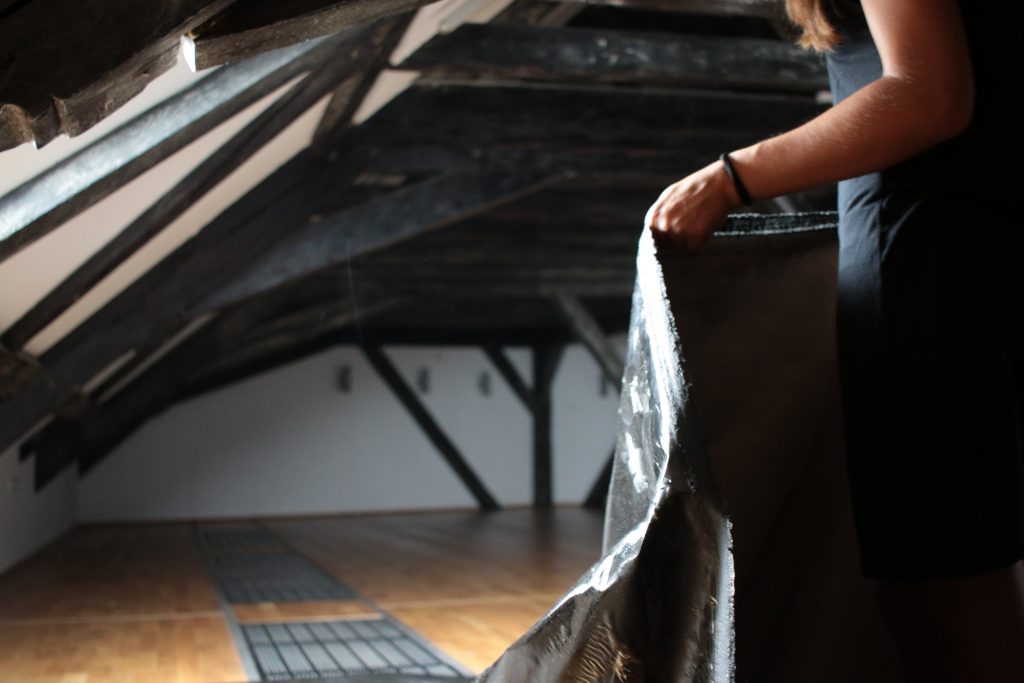
Podkrovie, Martina Mäsiarová, foto: Maroš Greš
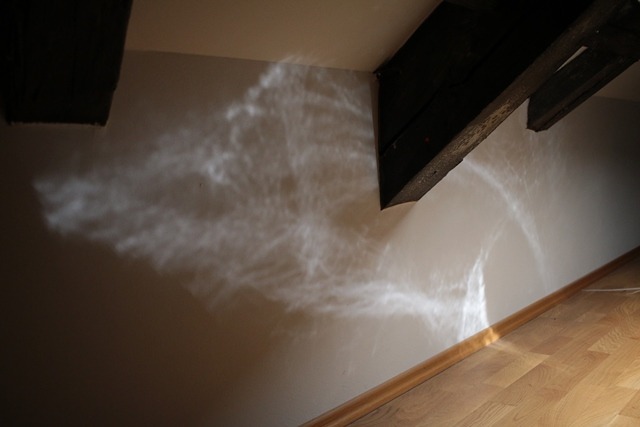
Podkrovie, Martina Mäsiarová, foto: Maroš Greš
V PODKROVÍ nejde o komponovanie tematickej výstavy založenej na podobnostiach alebo odlišnostiach zúčastnených. Výber je viac menej banálny a bezprostredný. Skupina ľudí, ktorí sa na základe rôznych okolností, v priebehu času dostali do svojej blízkosti a zdieľajú spolu čas, prácu, jedlo, večery,…a ochotu spolupracovať.
V PODKROVÍ nejde o ostrú konfrontáciu, podmienenú zámerným výberom zástupcov vyhranených ideologických táborov. Nejde o saturáciu konfliktu a vyvolávanie senzácie. Nejde o performatívny konflikt, ale každodenný stret skupiny ľudí. Agonizmus nie je v tomto prípade vzťahom priateľ / nepriateľ, ale vzťahom priateľov, ktorí sú viac-menej podobní. Cieľom agonistického prístupu je v konečnom dôsledku spolunáležitosť, a nie riešenie konfliktu.
Do PODKROVIA vstupujú jednotlivci s vlastnými agendami, samostatne a postupne. Vstupujú do priestoru jeden po druhom v intervale troch týždňov. Narúša sa autonómia jednotlivých diel – vstupov – zastavení. Takýto typ spolupráce vylučuje kohokoľvek absolútnu a trvalú kontrolu, totalitnosť individuálneho rozhodnutia.
Každý zúčastnený má relatívnu, iba dočasnú kontrolu nad svojim príspevkom (fragmentom). Ani ten nevzniká principiálne na čistom plátne, ale v už nejakej existujúcej, meniacej sa situácii (predošlých vstupov). Výstava je hromadením okamihov v teoreticky nekonečnom reťazci príspevkov.
Každý vstup v jeho materiálnej aj ideovej podobe je efemérnym. Výstava nesleduje dosiahnutie definitívneho obrazu. Ten je koncepčne vylúčený. Finálny obraz nahrádza chvíľkové zastavenie v procese komunikácie. Výstava sa končí len svojim nevyhnutným koncom, keď prenechá miesto pre nasledujúcu výstavu. Nesleduje súlad, harmonický uprataný vzhľad, ani “peknosť”, len vrstvenie a kauzálnosť krokov.
„prvé určuje druhé a zároveň posledné. posledné je aj prvé. posledné nie je. je iba nasledujúce.“
Martina Mäsiarová
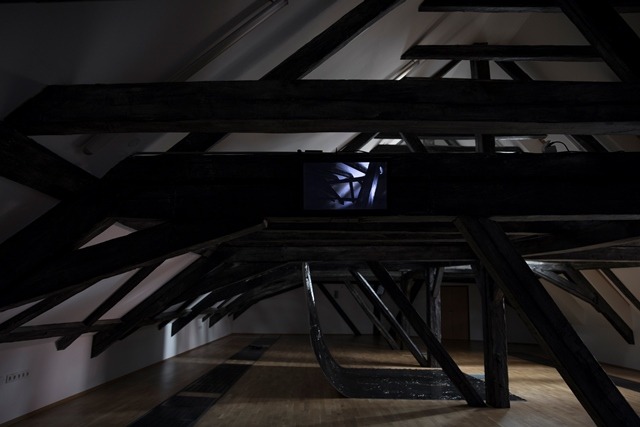
Podkrovie, Martina Mäsiarová, hra, foto: Ján Skaličan
Podkrovie
Úvodná komunikácia mňa ako kurátora so zúčastnenými (vystavujúcimi) sa začala mojim autorským popisom priestoru. Od momentu uvedomenia si konkrétneho miesta pre výstavu mi bolo jasné, že ho nie je možné ignorovať. Napriek počiatočnej averzii sa stal východiskovým bodom.
Podkrovie je autonómny priestor nevzťahujúci sa ku konkrétnym funkciám. Nemá vlastný a jasný koncept. Je dôsledkom, vedľajším produktom (konštrukcie strechy), zadefinovaným dodatočne.
Iný, neurčitý priestor. Reziduum. Medzera.
Práve nejasnosť využitia generuje otvorenosť jeho interpretácie a adaptácie.
Je ambivalentné, podvratné, zvyškové, nezámerné.
Podkrovie je priestor bezpohlavný, ale aj pomerne špecifický. Beztvarý a pritom výrazne fyzicky vymedzený. Postráda samozrejmosť ľahkého prístupu.
Správa z priebehu
Podkrovie spravidla pojíma sekundárne obsahy, jeho určenie je premenlivé, dodatočné, a takým je aj PODKROVIE. Výstava funguje s nulovým rozpočtom, a prebieha v lete. Teplé pomalé dovolenkové obdobie a komplikovaný priestor s často nedýchateľným vzduchom prácu na neustále meniacej sa výstave neuľahčujú.
Práca v podkroví, nevyhnutnosť spolupráce, je ďalším dôvodom spoločného trávenia času. Záujem skupiny orientujúci sa na poskytnutý priestor. Medzi vernisážami, najmä posledné dni pred, sa mení na klubovňu. Stretávame sa tu, vymýšľame, fotíme, jeme.
Postup prípravy každej ďalšej inštalácie je spontánny, nikto z nás vopred nevie ako bude nasledujúca vyzerať. Rozprávame sa, skúšame a niečo z tých pokusov tam v deň vernisáže ostane reprezentovať. Týmto spôsobom sa kladie viac pozornosti a vyžaduje viac citlivosti voči priestoru a predchádzajúcim vstupom. Niečo vzniká, spätne sa to pomenováva, komentuje.
Vznikajú vedľajšie produkty, ktoré nie sú priamou súčasťou inštalácie, mnoho fotografií, videí a písomných rozhovorov na priebežne vyvstávajúce témy.
Komorný proces v podkroví sa možno stáva pre samotný projekt zásadnejším ako samotná prezentácia. Rôznymi (nevinnými) činnosťami a požiadavkami spoznávame vnútorné fungovanie galérie,jej možnosti a hranice.
Na druhej strane, podstatou prezentácie verejnosti sú výhradne vernisáže, usporadúvané v intervale troch týždňov, pre každého vystavujúceho osobitne. Vtedy sa proces na chvíľu zastaví, predstaví sa aktuálny stav, ktorý sa už v priebehu nasledujúcich dní môže začať znova meniť. Stáva sa pomerne často, že inštalácia odprezentovana v rámci vernisáže už v pôvodnom znení ďalšie týždne nefunguje. Niekedy kvôli našej práci, niekedy nedostatočným inštrukciám, niekedy sa svojvoľne pozmieňa z prevádzkových dôvodov.
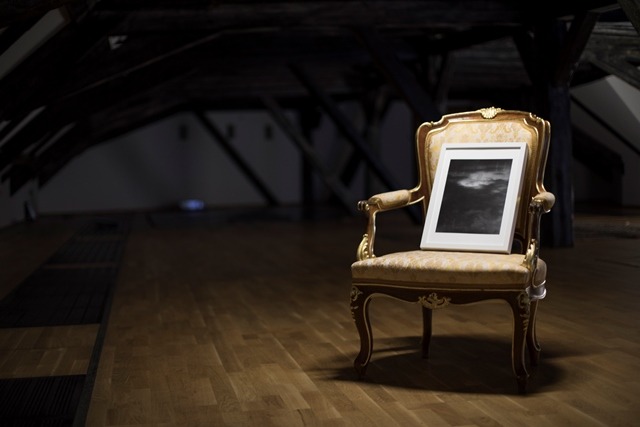
Podkrovie, Ľuboš Kotlár, mraky-hore-baroko-dole, foto: Ján Skaličan
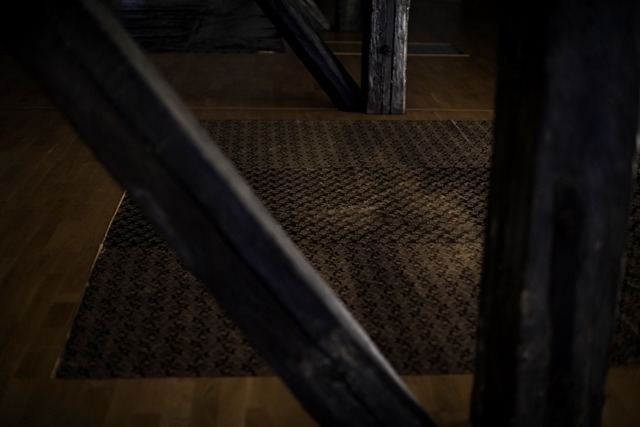
Podkrovie, Ľuboš Kotlár, foto: Ján Skaličan
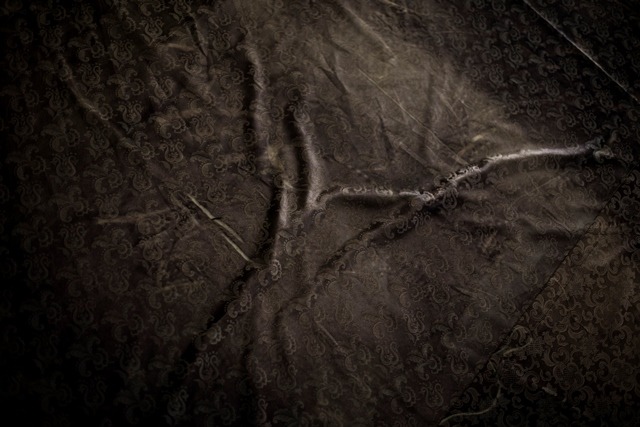
Podkrovie, Ľuboš Kotlár, foto: Ján Skaličan
Podkrovie a nádvorie
Oddelenie práce v podkroví a spoločenského stretnutia sa je zámerné, návšteva priestoru výstavy môže prebehnúť v relatívnej intimite, zatiaľ čo vernisáž prebieha na nádvorí.
Doteraz prebehli tri PODKROVIA, kde sa postupne predstavili Mira Kubáňová, Martina Mäsiarová a naposledy Ľuboš Kotlár. Pozývam Vás ešte na zvyšné dve. Najbližšie, 6. septembra, si budete môcť pozrieť vstup Ivy Durkáčovej. Koncom septembra sa predstaví Ján Skaličan a po ňom sa PODKROVIE nateraz zastaví. Tešíme sa na Vás. Budeme na nádvorí.
PS: Minulé ročníky štipendia (okrem roku 2016, ktorého výstavná koncepcia sa realizovala tiež v podkroví Mirbachovho paláca ) ponúkali kurátorom pre ich výstavnú koncepciu štandardnejšie podlažia Pálffyho paláca. Počnúc aktuálnym 15. ročníkom štipendia sa budú už na stálo používať podkrovné priestory Mirbachu, len nedávno, od apríla 2018, pomenované “Galériou mladých”. Podkrovné priestory zrekonštruovali zhruba pred siedmimi rokmi z kancelárskych na súčasné výstavné (a stále sčasti aj kancelárske priestory).
[:en]
Mira Kubáňová, Touring canvas, photo: Ľuboš Kotlár.
ATTIC is a project rather than an exhibition, called an experiment by the gallery staff.
In ATTIC we are trying out a few things. The possibilities of a group of people collaborating on a joint exhibition. Relating to the place and the participants to each other. ATTIC does not present finished products, but offers an observation of progress. It follows principles such as non-definability – processuality, mutability – ephemerality of the installation.
Agonism
The original starting point for the exhibition concept is Chantal Mouffe’s agonistic theory. She develops the principles of agonism primarily within the framework of political theory applied to public space. The initial thesis is that liberalism, by virtue of its individualistic and rationalist approach, is incapable of accommodating the pluralistic nature of the social world. Another objection to liberalism is its assumption of consensus. Mouffe denies the idea of the public space as the place where universal consensus emerges – a harmonious whole based on reason, with which necessarily comes the moment of decision.
For her, the political implies an ever-present agonism, the existence of a plurality of opinions and approaches, the absence of finality, undecidability. Democracy for her does not mean a compromise reconciliation of different projects (consensus), but the constant possibility of their confrontation.
The exhibition is called ATTIC because it takes place in the attic. It takes place as a confrontation with the exhibition space itself and, at the same time, the participants with each other (with themselves).
Collaboration (Confrontation)
Group exhibitions, curatorial conceptions of thematic exhibitions I consider in most cases to be different degrees of consensus within a collaborative framework, depending on the degree of composition, mutual communication, or definiteness of the image of the exhibition.
Mira Kubáňová, Touring canvas, photo: Ľuboš Kotlár.
In the 1980s, at the Warsaw Academy of Fine Arts, under the direction of Grzegorz Kowalski, there was a workshop called “Common Space, Own Space”. The project was based on mutual non-verbal communication. Students start from their own actions. (Own space), but at the same time the action of each participant provokes a spontaneous reaction of the next one. Gradually, they move to collaborate with each other (in the Common Space). Here communication becomes a value in itself. These exercises took place in an environment of free expression of ideas, in the spaces of the academy.
Artur Zmijewski took the transformation of this “teaching method” further by bringing it into real life. In Them (2007), a film screened at the Documenta in Kassel, he organised a workshop where he invited members of various antagonistically ideologically distinct groups. At the beginning, the different groups created their own representative posters, a symbolic identification (A Space of One’s Own). With these they then entered into a common (Public) space and a mutual non-verbal confrontation.
The importance of this record (regardless of the concrete results of the confrontation) lies in the visualisation of the thesis of the impossibility of a definitive consensus. It was a negative, sceptical work, not formulating any concrete positive (political) opinions. But it speaks about the nature of public space, legitimizing the agonistic principle. Critical art today, in my opinion, does not consist in a necessary radicalism, but in the ability to name, to define, to read, to react.
Martina Mäsiarová, photo: Maroš Greš.
Martina Mäsiarová, photo: Maroš Greš.
ATTIC is not about composing a thematic exhibition based on the similarities or differences of the participants. The choice is more or less banal and immediate. It is a group of people who, by virtue of various circumstances, have come to be close to each other over time and share time, work, food, evenings,…and a willingness to work together.
In the ATTIC it is not a sharp confrontation, conditioned by a deliberate selection of representatives of distinct ideological camps. It is not about saturating the conflict and sensationalising it. It is not a performative conflict, but an everyday clash of a group of people. Agonism in this case is not a friend/enemy relationship, but a relationship of friends who are more or less alike. The goal of the agonistic approach is ultimately to belong together, not to resolve the conflict.
Individuals with their own agendas enter the ATTIC, independently and sequentially. They enter the space one by one at intervals of three weeks. The autonomy of the individual works – entries – stops – is broken. This type of collaboration precludes anyone’s absolute and permanent control, the totality of individual decision.
Each participant has relative, only temporary control over his contribution (fragment). Even this does not arise in principle on a blank canvas, but in an already existing, changing situation (of previous entries). The exhibition is an accumulation of moments in a theoretically infinite chain of contributions.
Each entry in its material and ideological form is ephemeral. The exhibition does not pursue the achievement of a definitive image. The latter is conceptually excluded. The final image is replaced by a momentary pause in the process of communication. The exhibition only comes to its inevitable end when it makes way for the next exhibition. It does not pursue coherence, a harmonious tidy appearance, nor “prettiness”, only layering and causality of steps.
“the first determines the second and the last at the same time. the last is also the first. the last is not. it is only the next.”
Martina Mäsiarová
Martina Mäsiarová, Play, photo: Ján Skaličan.
Attic
The initial communication between me as a curator and the participants (exhibitors) began with my authorial description of the space. From the moment I became aware of the specific location for the exhibition, it was clear to me that it could not be ignored. Despite my initial aversion, it became a starting point.
The attic is an autonomous space not related to specific functions. It does not have its own and clear concept. It is a consequence, a by-product (of the roof construction), defined after the fact.
A different, indeterminate space. Residue. A gap.
It is the ambiguity of use that generates the openness of its interpretation and adaptation.
It is ambivalent, subversive, residual, unintended.
The attic is a genderless space, but it is also quite specific. Formless and yet distinctly physically defined. It lacks the obviousness of easy access.
Report on the process
As a rule, the attic contains secondary contents, its purpose is variable, additional, and so is the ATTIC. The exhibition operates on a zero budget, and runs in the summer. The warm, slow holiday season and the complicated space with often unbreathable air do not make working on an ever-changing exhibition any easier.
Working in the loft, a necessity for collaboration, is another reason to spend time together. The interest of the group oriented to the space provided. Between openings, especially the last days before, it turns into a clubhouse. We meet here, we invent, we take pictures, we eat.
The process of preparing each next installation is spontaneous, none of us knows in advance what the next one will look like. We talk, we rehearse, and something of those rehearsals remains there on the day of the opening to represent. In this way, it puts more attention and requires more sensitivity to the space and the previous inputs. Something is created, it is named back, it is commented on.
By-products are created that are not directly part of the installation, many photographs, videos and written conversations on continuously emerging themes.
The chamber process in the attic perhaps becomes more fundamental to the project than the presentation itself. Through various (innocent) activities and demands we get to know the inner workings of the gallery, its possibilities and limits.
On the other hand, the essence of the presentation to the public is exclusively the openings, held at intervals of three weeks, for each exhibitor separately. Then the process stops for a while, the current situation is presented, which can start to change again in the following days. It happens quite often that the installation presented at the opening does not work in its original form for weeks afterwards. Sometimes because of our work, sometimes because of insufficient instructions, sometimes it is arbitrarily changed for operational reasons.
Ľuboš Kotlár, Clouds up – Baroque down, photo: Ján Skaličan.
Ľuboš Kotlár, Clouds up – Baroque down, photo: Ján Skaličan.
Ľuboš Kotlár, Clouds up – Baroque down, photo: Ján Skaličan.
Attic and Courtyard
The separation of the work in the attic and the social gathering is deliberate; a visit to the exhibition space can take place in relative intimacy, while the opening takes place in the courtyard.
So far there have been three ATTIC exhibitions, featuring Mira Kubáňová, Martina Mäsiarová and most recently Ľuboš Kotlár. I invite you to the remaining two. Next, on September 6, you will be able to see Iva Durkáčová’s entry. At the end of September, Ján Skaličan will present himself and after him ATTIC will stop for the time being. We are looking forward to seeing you. We will be in the courtyard.
PS: Previous editions of the Fellowship (except for 2016, whose exhibition concept was also realized in the attic of the Mirbach Palace ) offered curators more standard floors of the Pálffy Palace for their exhibition concept. Starting with the current 15th edition of the Fellowship, the attic space of the Mirbach, only recently named “Youth Gallery” since April 2018, will be in permanent use. The attic space was renovated about seven years ago from office space to its current exhibition (and still partly office) space.
[:]