UnArchived
Textile curtains by Katarína Šujanová, 1969, Cyprián Majerník Gallery
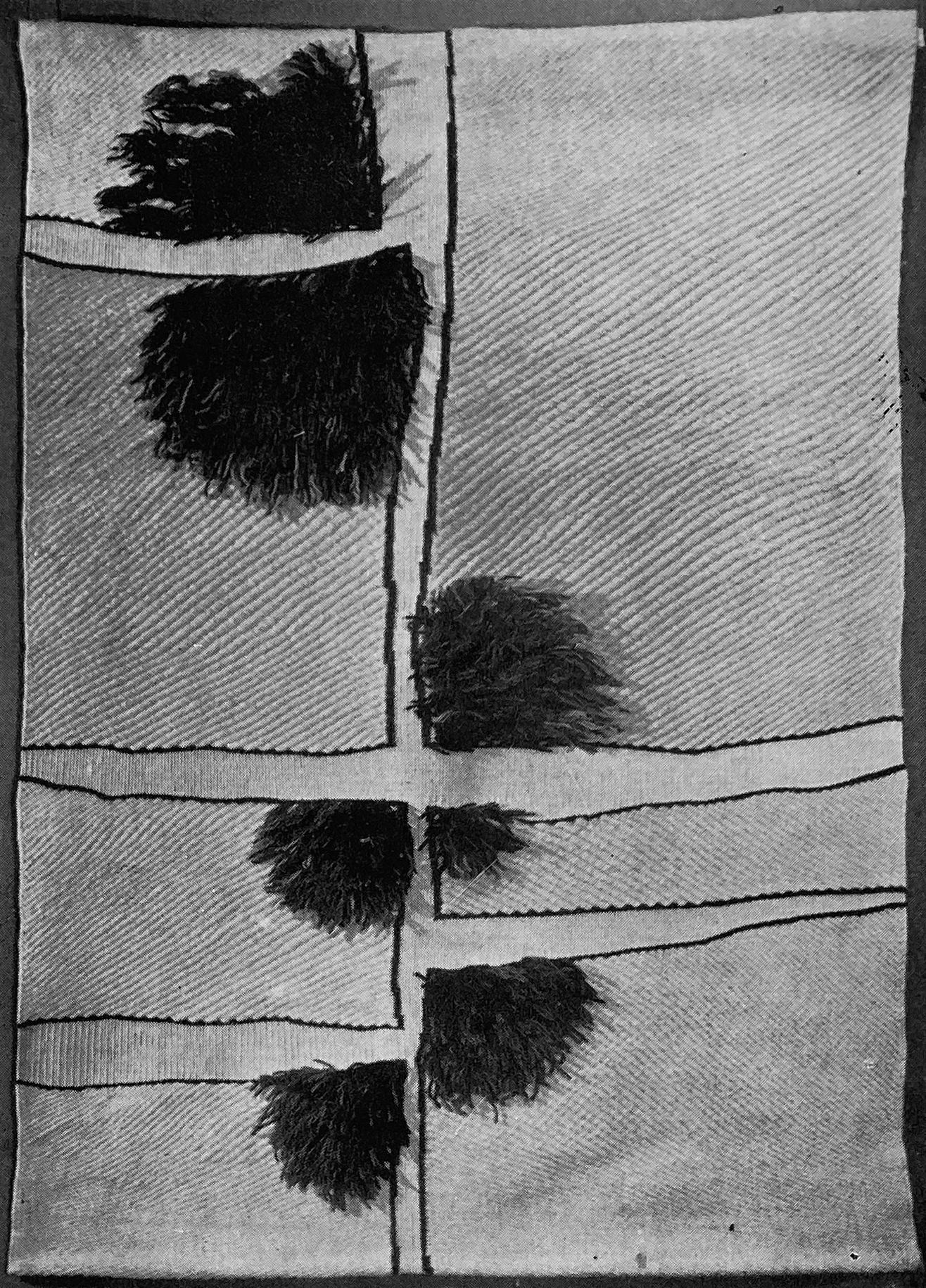
Katarína Šujanová, Pathway, 1968, textile curtain, source: Výtvarný život, 1969.
At an exhibition of Katarína Šujanová’s textile curtains in December 1968 at the Cyprián Majerník Gallery, critics wondered whether what the artist had achieved with her textile curtains was not against the nature of the material – “whether she was not painting with wool”. The initial doubt as to whether this was an imitation of painting techniques was later resolved, and the approach was recognised as “developing material possibilities”.
“The textile curtain, like any two-dimensional artwork, is primarily about the way the surface is composed. Šujanová does not limit herself to the universal and most common method – the articulation by colour, but goes deeper into textile specificity. She also uses a variety of weaving weaves or a combination of fabrics from different materials to compose the surface. In this case, the artist uses the connecting stitches not only as a functional and decorative element, but also puts it at the service of the theme. A typical example in this respect is the Pathway curtain.
Highlighting and using these technological elements, however, does not mean that Šujanová sidelines the colour into the background. On the contrary, she makes it an outright striking factor. Building on white, she brings another variation on the old but always rewarding theme of this colour. By introducing plastic elements and the resulting shadows, he creates a range of shades of white and composes them in an almost dramatic composition.” [1]
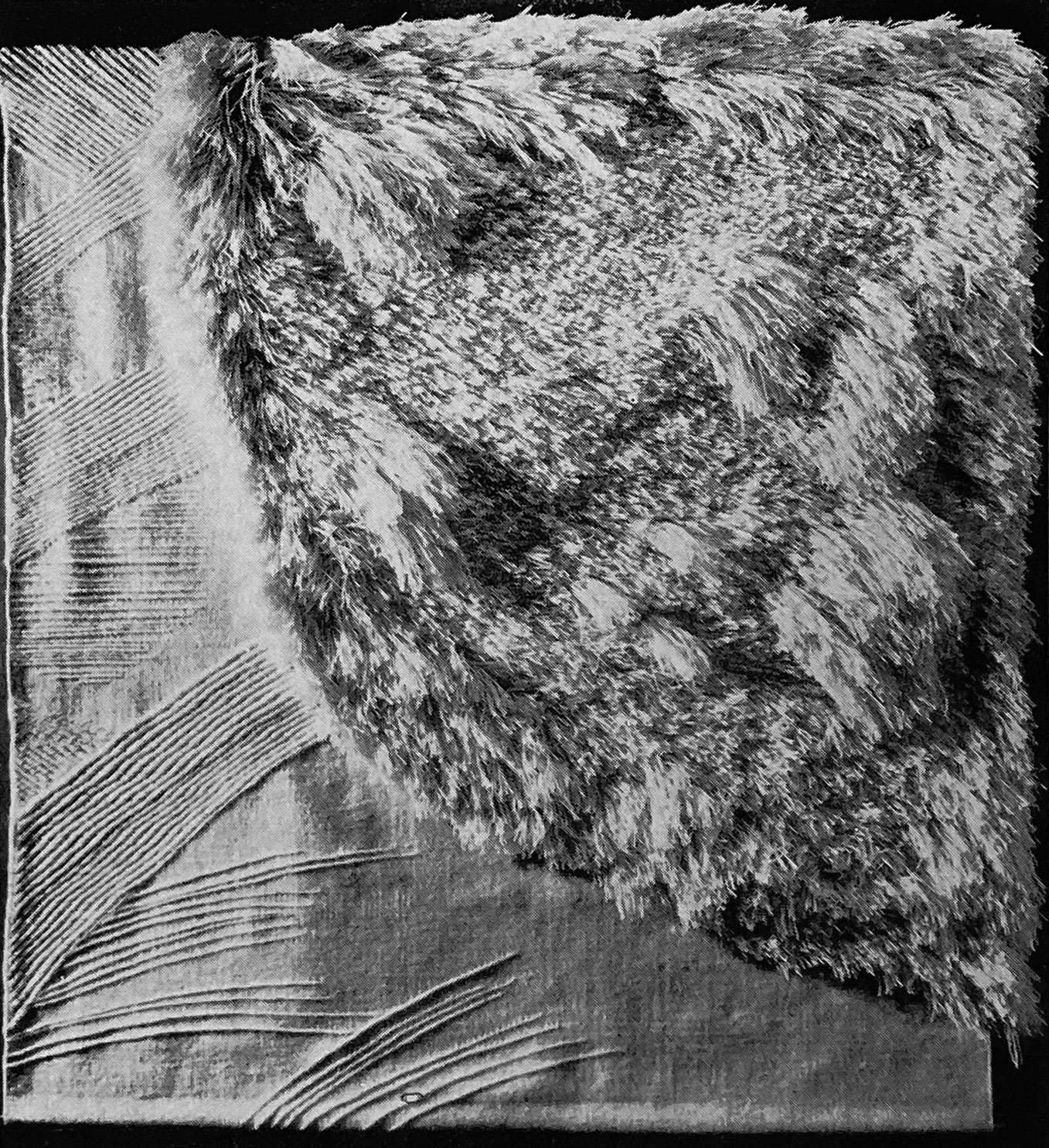
Katarína Šujanová, White on White, 1968, textile curtain, source: Výtvarný život, 1969.