[:sk]TAKEWAY TIME[:en]Takeway Time.[:]
[:sk]Katarína Poliačiková o Romanovi Ondákovi, o čase, o Niecéphorovi Niépceauovi, o pozornosti a akcii Meranie vesmíru, ktorá práve prebieha v kaviarni Sväg to go na Kozej ulici v Bratislave a vo Foundation Louis Vuitton v Paríži.[:en] Katarína Poliačiková about Roman Ondák, about time, about Niecéphor Niépceau, about the attention and about project Measuring the Universe. [:]
[:sk]
-
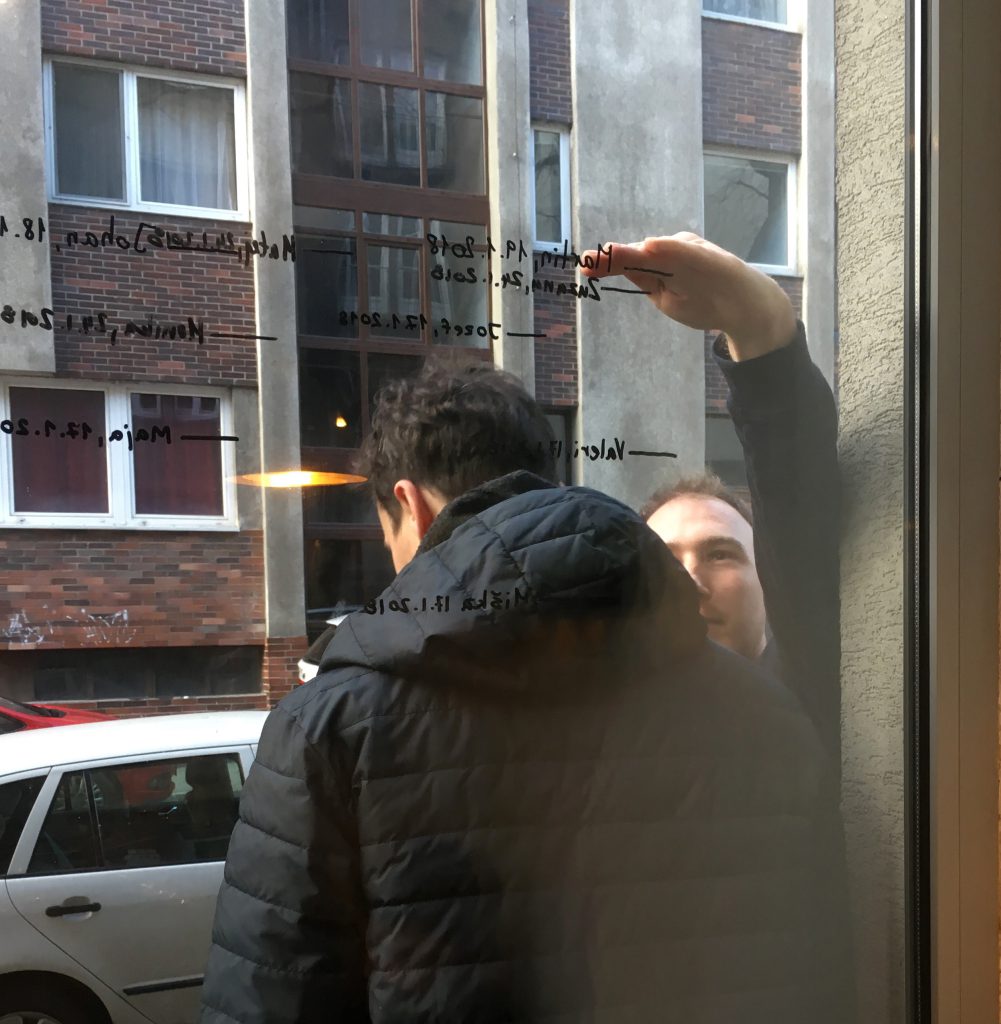
Foto: Roman Ondák
Sväg to go je malá kaviareň, ktorú otvorili v priestore bývalej bagetárne na Kozej ulici. Kedysi som tam prvýkrát v živote jedla sušenú paradajku a pesto, ktoré vtedy mali ešte chuť exotiky. Minulé leto tam vzniklo miesto, aké mi vo štvrti vždy chýbalo: môcť piť (dobrú) kávu a pozorovať pritom život na ulici. Keď som pred pár dňami sedela vo Svägu, pohľad mi padol na značky nakreslené čiernou fixkou na sklenených dverách, ktoré pokračovali na celej presklenej fasáde kaviarne. Pri každej z nich dátum, ako keď niekoho meriate. Dívala som sa na dvere a to, čo som videla, mi bolo tak strašne známe. Vzápätí som si uvedomila, že sa mi to nestalo prvýkrát. A že tá chvíľa, kým sa mi rozjasní, je vždy najlepšia. Je to život, alebo Ondák? Asi najlepšie to vystihol teoretik Igor Zabel: “Byť schopný čítať tieto diela ako umenie je, podľa môjho názoru, rovnako ziskom ako i stratou.”¹
Spomenula som si na to aj teraz, keď som sa dívala na Ondákove Meranie vesmíru v kaviarni. Neskôr som zistila, že sa práve paralelne deje na dvoch rôznych miestach: v mikrosvete Svägu na Kozej ulici a vo Foundation Louis Vuitton v Paríži. Akurát, že v kaviarni vás neodmerajú kustódi, ale Jozef. S tvorbou Romana Ondáka som sa prvýkrát naživo stretla v Tate Modern v roku 2006. Vošla som vtedy do jedného z priestorov, netušiac, že to je ono: ocitla som sa vo vnútri modelu interiéru nejakej architektúry. Bolo to zvláštne – cítila som sa príliš veľká v prostredí, ktoré mi niečo pripomínalo. Doteraz som nezabudla na moment, keď som si uvedomila, že stojím v strede zmenšenej “turbine hall” – v identickej kópii priestoru Tate, v “matrioškovom” modeli reality. A času. Čas je najdôležitejším aspektom tvorby Romana Ondáka. Jeho diela nielen (ako všetky iné) v čase existujú, čas sa u neho mnohokrát stáva jedinou matériou: formou i obsahom. Odkrýva plynutie vecí, ktoré zväčša ostáva nepovšimnuté na pozadí udalostí: čas čakania, nebadanej zmeny, rastu. Čas vnútri a vonku galérie. Ondák často zostruje naše vedomie času sotva viditeľnými zásahmi, ktoré zneisťujú jeho jednosmerný tok. Tento Ondákov čas je pre mňa analógia k latentnému obrazu vo fotografii. Ako film, na ktorom je zatiaľ neviditeľný, avšak plne prítomný obraz reality.Rada si predstavujem fotografiu ako metaforu princípu Ondákovej tvorby a autora ako „fotografa“, ktorý zaostruje našu pozornosť na inak prehliadané fragmenty reality. Pozícia diváka je však zdvojená: sme zároveň tým, kto sa díva, ale aj tým, ktorý stojí pred pomyselným objektívom.
-
Meranie vesmíru v Pinakothek der Moderne v Mníchove, 2007
Časová slučka: Francúzsko, leto roku 1827. Experimenty Josepha Nicéphora Niépcea a jeho fascinácia litografiou a camerou obscurou vedú ku dňu, kedy sa prvýkrát v dejinách podarí zafixovať premietnutý obraz. Je ním výhľad z okna, ktorý je dnes známy ako prvá fotografia v histórii pod názvom „Pohľad z okna v Le Gras“. Niépce do obloku svojho vidieckeho sídla v Le Gras umiestni cameru obscuru s vloženou cínovou doskou, pokrytou zmesou podobnou asfaltu, a otvorí objektív. Na doske vzniká celých osem hodín latentný obraz vonkajšej reality, ktorý Niépce neskôr zviditeľní vymývaním povrchu zmesou levanduľového oleja a bieleho petroleja. Osvietené časti povrchu stvrdnú, zatiaľ čo zmes na neexponovaných plochách vymytím zmizne. Túto metódu nazve heliografiou. Expozícia trvá dlhých osem hodín, keďže svetlocitlivosť materiálu je veľmi nízka: preto na výslednom obraze vidíme domy osvetlené z oboch strán.Takáto je prvá fotografia; dlhý úsek času skomprimovaný do jedného obrazu. Ondákove Meranie vesmíru bolo prvýkrát vystavené v roku 2007 v Pinakothek der Moderne v Mníchove. Aj keď použiť výraz vystavené je v súvislosti s týmto dielom celkom nemiestne. Začalo to ako white cube s preskleným stropom, ktorý osvetľoval prázdny biely priestor. Avšak niečo tam predsa len bolo: latentný obraz budúcej výstavy. V hre bolo jej trvanie v čase a diváci, ktorí galériu navštívia.
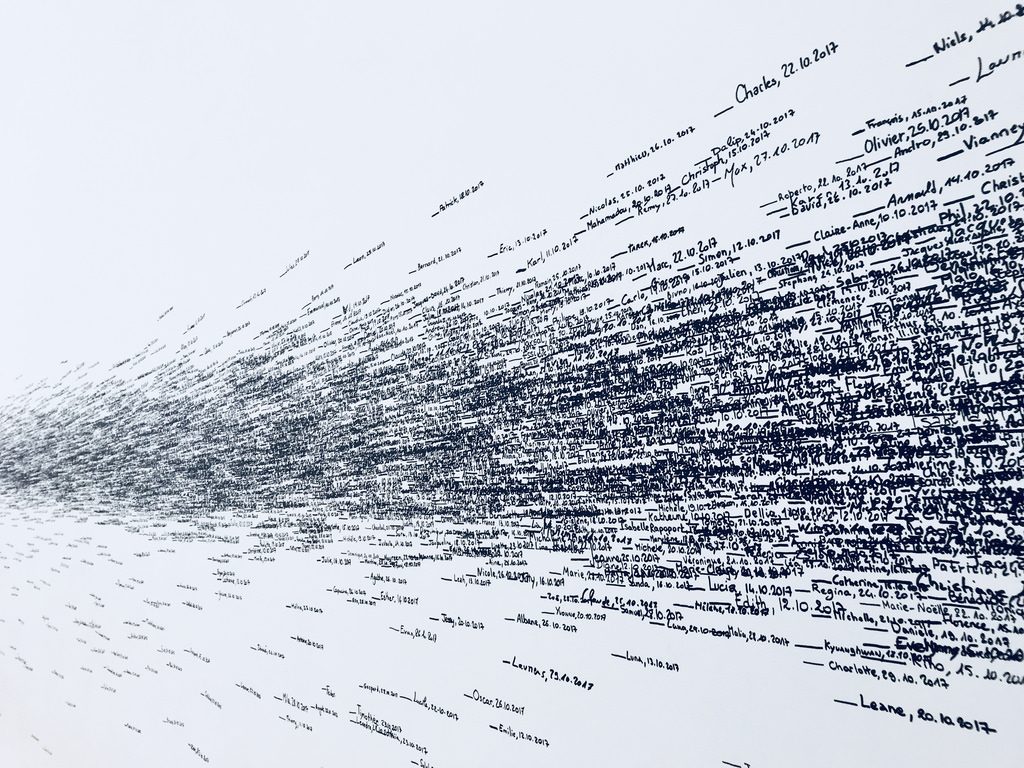
Podobne ako Niépceho výhľad z okna sa Meranie vesmíru na prázdne steny „exponuje“ počas dlhých hodín, dní, týždňov. Do priestoru prichádzajú návštevníci a galerijní strážcovia zaznamenávajú na steny výstavného priestoru ich výšku, meno a dátum merania. Presne tak, ako to robia rodičia detí na veraje dverí. Celý časopriestor výstavy, inak neviditeľný, sa postupne transformuje do výsledného obrazu – objektu. Tento je ovplyvnený počtom návštevníkov a veľkosťou priestoru. Trvanie výstavy a prítomnosť divákov tvoria alchýmiu, cez ktorú sa postupne odkrýva obraz na stenách galérie. Deň po dni sa steny zapĺňajú a v úrovni priemernej ľudskej výšky tmavnú do čierneho pásu. Presne ako miesta na filme, ktoré zachytia najviac svetla. V roku 2009 som na Meranie vesmíru narazila v Museum of Modern Art v New Yorku. Galériu som navštívila ôsmy deň po otvorení výstavy a pás záznamov na stene už vtedy začínal hustnúť. Na Ondákovej tvorbe je fascinujúci jeho spôsob práce s interaktivitou. Jeho diela sú takým plynulým prechodom do posunutej reality, že diváci na nich často participujú bez vedomia, že sú súčasťou sveta umenia. Roman Ondák totiž ponúka neodolateľný zážitok môcť znova objavovať svet ako dieťa. Záujem o zanechanie vlastnej stopy v MoMA bol veľký, zaradila som sa preto do dlhého radu pred stenou. Čakajúc spolu s ostatnými návštevníkmi som si uvedomila čaro nechceného: tento rad bol vlastne dielom v diele. Celkom náhodne sa tu totiž zopakovalo Ondákove dielo Dobré pocity v dobrých časoch – fiktívny rad čakajúcich ľudí, jedna z prvých autorových performance, ktorá bola veľakrát performovaná v rôznych miestach a kontextoch. V Museum of Modern Art sa dielo náhodne a čarovným spôsobom zopakovalo znova v podobe dokonalej významovej a časovej slučky. Ale môže to byť i inak: možno sa na niektoré veci vieme dívať už len cez Ondákovu optiku. Tu sa mi vybavuje americký fotograf Stephen Shore a jeho odpoveď na otázku, čo chce, aby si diváci odniesli z jeho výstav. Hovorí, že jedna z vecí je presne to, čo sa snaží odovzdať svojim študentom na Bard College: “Je to liberal arts college – to znamená, že z týchto ľudí sa neskôr stanú lekári alebo právnici. Preto sa nesnažím urobiť z nich fotografov. To je len jeden z aspektov. Čo im teda môžem ponúknuť? Ide mi o to, aby sa naučili vedomej, sústredenej pozornosti voči každodennej realite. A fotografia môže byť spôsob, ako to dosiahnuť.”
1 Zabel, I. Time and its copy, In: Rhomberg, K. (ed.): Roman Ondák. Kolín: Kölnische Kunstverein, 2005. s.16.
Meranie vesmíru na Kozej inicioval majiteľ kaviarne. Jeho cieľom je každé dva mesiace pozývať umelcov a spraviť z okna kaviarne umelecký display.
[:en]
Photo: Roman Ondák
Sväg to go is a small café opened in place of a former baguette/sandwich place on Kozia street in Bratislava. I remember eating my very first dried tomato and pesto there; then it still had that exotic feel. Last summer, there showed up a place I’d always missed in the district, a place where I could drink (good) coffee, while observing life in the street.
When I was sitting in Sväg a couple of days ago, I lay my eyes on the signs drawn with a black felt-tip pen on the glass door. The signs stretched all over the glass facade of the café. Each of them had a date, as if one measured somebody’s height.
I was looking at the door and it all seemed really familiar. Suddenly I realised that it wasn’t for the first time. And that the moment just before the illumination is always the best.
Is it life or Ondák?
Perhaps theoretician Igor Zabel had the best grasp of it: “Being able to read these artworks as art is, in my opinion, both profit and loss.”
I recalled these words now when I was looking at Ondák’s Measuring the Universe in the café. Later I found out it took place in two different spots at once: in the micro-world of Sväg on Kozia street in Bratislava and in Foundation Louis Vuitton in Paris. With one little difference: it is not the custodians who take your measurement in the café, but Jozef.
I came across the works of Roman Ondák live for the first time in the Tate Modern in 2006. I came into one of the spaces, not knowing that it was it: I found myself inside a model of the interior of some architecture. It was strange – I felt too big in the environment that reminded me of something. I have never forgotten the moment when I realised I was standing in the middle of the miniature of the Turbine Hall – in an identical copy of the Tate space, a “matryoshka doll” model of reality. And time.
Time is the most vital aspect of Roman Ondák’s art. His works do not only (just like others) exist in time, time sometimes becomes the only matter: both a form and a content.
It reveals the flowing of things that usually remain unnoticed in the background of events: waiting time, time of imperceptible change and growth. Time inside and outside the gallery. Ondák often intensifies our awareness of time with barely visible interferences that question its one-way flow.
I see this Ondák’s time as an analogy to the latent image in photography. Like a film with not yet seeable, but a fully present image of reality.
I like to imagine photography as a metaphor for the principle of Ondák’s approach and the author as a “photographer” that focuses our attention on otherwise overseen fragments of reality. The position of a viewer is, however, doubled: we are the ones who look, but also the ones who stand in front of an imaginary lens.
Time loop: France, summer 1827. The experiments of Niecéphor Niépce and his fascination by lithography and camera obscura lead to a day when a reflected image was fixed for the first time in history. It was the view from a window, known today as the first photograph in history under the title View from the Window at Le Gras.
Niépce places camera obscura (with a pewter plate coated with an asphalt-like mix inside) in the window of his countryside estate in Le Gras and opens the lens. In eight hours, a latent image of the outside reality emerges on the plate. Niépce later makes it visible by washing away with a mixture of lavender oil and white petroleum. The lit areas of the surface is hardened, while the mixture on the unexposed surface is removed by washing away. He calls this method heliography. The exposure lasts as long as eight hours due to the low photosensitivity of the material; that’s why we see that the sun lights the houses on both sides in the final image.This is the first photography; a long period of time compressed into one image.
Ondák’s Measuring the Universe was first exhibited in 2007 in Pinakothek der Moderne in Munchen. Although the expression “exhibited” in connection with this work would be a misnomer. It started as a white cube with a glass ceiling that illuminated an empty white space. However, there was something inside: a latent image of the future exhibition. What was at stake was its duration in time and the viewers who would visit the gallery.
Similarly to the Niépce’s view from the window, Measuring the Universe is “exposed” on the empty walls during long hours, days, weeks. The visitors enter the space and the gallery guards mark their height, name and the date of their visit on the wall of the exhibition space. Just like parents do with their kids on the doorframe.
The whole time-space of the exhibition, otherwise invisible, gradually transforms into a final image – an object, which is affected by the number of visitors and the size of the space. The duration of the exhibition together with the viewers’ presence are behind the alchemy that little by little reveals an image on the gallery walls. Day by day, they get filled and darker, taking a form of a black band at the level of an average human height. Just like the spots on a film that catch the most light. In 2009, I ran into Measuring the Universe in Museum of Modern Art in New York. I visited the gallery on the eighth day after the exhibition opening and the band of records on the wall was already getting denser.What is fascinating about Ondák is the way he approaches interactivity. His artworks are such a smooth transition to the shifted reality that the viewers tend to participate in them without even knowing they become a part of the art world. The reason is that Roman Ondák has a knack of offering this irresistible experience of being able to discover the world as a child once again.
There were many people wishing to leave their trace in the MoMa, so I stood in the long queue in along the wall. While waiting with the rest of the visitors, I realised the funny irony: the queue itself was actually an artwork within an artwork. Quite accidentally, it was a repetition of the Ondák’s work Good Feelings in Good Times: an artificial queue of waiting people, one of the first artist’s performances performed many times in different places and contexts.
The artwork accidentally, in a magical way, repeated itself in the Museum of Modern Art in the form of a perfect semantic twist and a temporal loop. Or else: maybe we cannot but look at certain things only through Ondák’s eyes.
Here, American photographer Stephen Shore comes to my mind with his answer to the question what he wants the viewers to take from his exhibitions. He says that one of the things to take is what he tries to pass to his students at Bard College: “It’s a liberal arts college, which means that these people later become doctors or lawyers. That’s why I don’t try to make photographers out of them. It’s only one aspect of it. So what can I offer them? My role is to make them learn how to consciously pay earnest attention to the reality of everyday life. And photography may be one of the ways how to achieve it.”
[:]