New Work / MONUMENTAL – ANETTA MONA CHISA A LUCIA TKÁČOVÁ

[:sk]Fotografie monumentálnej realizácie Lúče na stene kultúrneho centra Banská Stanica v Banskej Štiavnici sa úspešne prehnali sociálnymi sieťami. Žiarivá farebnosť diela svietila po facebookových stenách dosť výrazne. Oveľa intenzívnejšie vás zasiahne naživo. V Banskej Stanici bude nainštalovaná celý rok.
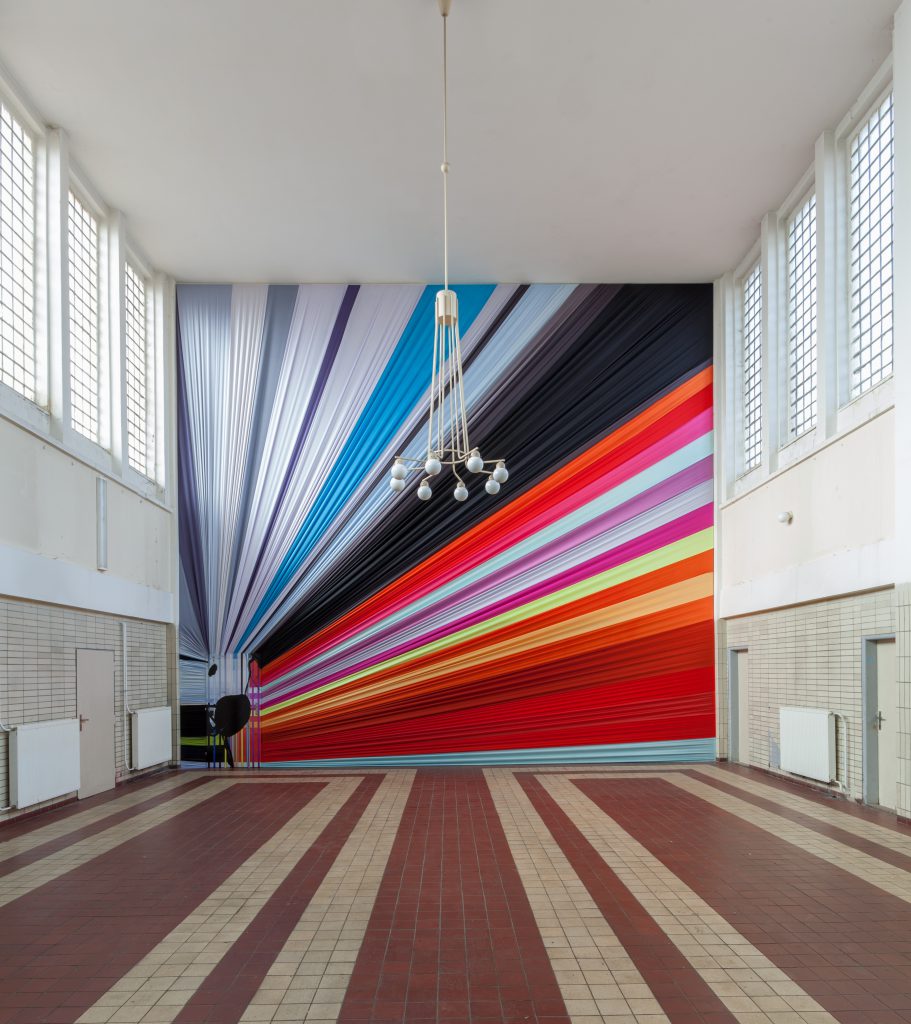
Photo: Lukáš Roharík

To, že na Stanici v Štiavnici zaviedli tradíciu tvorby site-specific  sa ukázalo ako dobrý nápad.  Od roku 2010 tu každoročne počas rezidencie vznikne nové dielo vo formáte 6×9 alebo 8×9 metrov, a to je rozmer, ktorý je dnes, oproti praxi do roku 1989, skôr výnimočný. Aktuálne to skúsili Anetta Mona Chiṣa a Lucia Tkáčová. Aj pre ne bola práca s tak obrovskou plochou nová skúsenosť. Tematicky sa rozhodli nadviazať na sériu diel s motívom rozbitých obrazoviek Prophecy o Things,  ktorá sa u nich začína objavovať v roku 2015. Koncentrujú sa v nej na „život po živote“ digitálnych technológií. Domýšľajú si situáciu digitálnych nástrojov po tom, ako ich človek prestane ovládať, keď ich zahodí. Oslobodené pixely, ako ich nazývajú, majú aj naďalej schopnosť vytvárať obrazy, preskupovať  sa, no nikto už nevie, prečo, ani ako vznikli. Pre umelkyne sú oknom do svetov iných inteligencií, ktoré sme stvorili.  Farebné škvrny, spektrá, rôzne útvary vznikajú náhodne ako dôsledok fyzikálnych procesov bežiacich v pozadí.  Ako keď sa niekto zaoberá tým, čo robia atómy v atómovej hlavici.

To veľké, čo dnes vidíme na Stanici v Štiavnici, začalo ako projekt vo formáte A4. Na nej vytlačený náhodný výjav  zmenil mierku aj materialitu. Autorky sa rozhodli pre kombinovanú techniku, v ktorej spojili textil a digitálny print.  Formát dali na spadávku, aby pokryli úplne celú plochu steny staničnej haly (8,4m x 9,4m). Objem použitej látky bol nezanedbateľný, produkcia ho v primeranej kvalite a cene napokon priviezla až z Budapešti. Výsledok je profesionálny,  detaily zvládnuté. Ilúzia je podmanivá. Pixely sú preč, pripomína ich len digitálny print, ktorý tvorí jadro kompozície, definuje farebnosť lúčov a zároveň zakrýva pohyblivú časť – dvere, ktorých funkčnosť museli autorky zachovať pre technickú obsluhu.  A tak zároveň premenili vstupné obmedzenie na východisko.

Dielo na prvý pohľad formálne odkazuje na monumentálky z minulosti, motív lúčov bol typickou súčasťou socialistickej ikonografie, kde fungoval zvyčajne ako vhodné pozadie. V tomto prípade sú lúče skoro všetko, čo máme/vidíme.  Pôsobí to ako nejaký veľmi zazoomovaný detail a v tejto mierke naberá výjav špecifickú vizuálnu kvalitu. Pohľad na celok je niečo celkom iné ako pohľad zblízka. Z diaľky má výrazné architektonické kvality, nenápadne reaguje na makro aj mikro úrovni vnímania priestoru. Pracuje jednak s celým objemom haly a jej vertikalitou, ktorú rozbíja, a rovnako tiež s nápadným interiérovým detailom (pravidelnou kresbou monotónnej kachličkovej dlažby), s ktorým výrazne kontrastuje. Lúče vďaka farebnosti naozaj akoby svietia a menia aj svetelnosť priestoru. Iný je pohľad zblízka. Čím viac sa k dielu približujete, tým viac sa odpájate od okolitého priestoru. Dielo vás pohlcuje a pôsobí halucinačne. Ilúzia je pomerne  presvedčivá a evokuje tak digitálny svet, z ktorého celý výjav pôvodne vzišiel.

Železnice z priestorov Stanice v Banskej Štiavnici aktuálne vycúvali zrejme už definitívne. Predaj lístkov na vlak v staničnej hale skončil, a preto je priestor verejnosti otvorený len obmedzene.  V tej atmosfére je niečo veľmi  presné. Na konci ciest a koľají, mimo centra, za kopcami, a predsa to môže byť veľké.

 [:en]The photos of the monumental realisation of the artwork The Rays on the Wall of the Banská Stanica cultural centre in the town of Banská Štiavnica have successfully swept through social media. Its bright colours were glowing on Facebook walls quite boldly, although the work will strike you live with much more intensity. It will be installed in the Banská Stanica centre for the whole year.

Photo: Lukáš Roharík

The introduction of the tradition of site-specific art at Stanica in Štiavnica proved to be a good idea. Every year since 2010, a new large-scale piece of art (6 x 9m or 8 x 9m) comes out as a result of the residential programme. Such a format is now, in comparison with the common practice before 1989, rather an exception. The artists who tried it this time were Anetta Mona Chisa and Lucia Tkáčová, yet working with such a huge surface for them was a new experience, too.  They decided that the theme would be a follow-up of their series of works with the motive of broken TV screens titled Prophecy of Things which started to appear in 2015. The central idea of them is „life after life“ of digital technologies. They dwell upon and speculate about the condition of digital devices when thrown away, after humans stop controlling them. Liberated pixels, as they call them, are still capable of making images and reconfiguring, but nobody knows why or how they were born. For artists, they represent a window into the worlds of other intelligences we have created. Coloured blurs, spectrums, various forms come into being as a consequence of physical processes running in the background. Just like when someone is concerned with life of atoms in a nuclear warhead.

The big thing we may see today in Stanica in Štiavnica town started as a project in an A4 format. A random scene printed on it later changed both its scale and materiality. The artists opted for the mixed media technique combining textile and digital print. The image was set up for printing with bleeds to cover the full surface of the wall in the station hall (8.4 x 9.4m). The volume of the used cloth was not negligible either; the production team brought it over in its corresponding quality and price all the way from Budapest. The result is professional and well-finished; the illusion captivating. Pixels are gone and what reminds us of their existence is just the digital print. The digital print, in fact, is the core of the composition that defines the colour and covers the moving part – the door that needed to be kept for staff. The artists thus managed to turn the initial (input) limit into the point of departure.

At first sight, the artwork formally refers to monumental artworks from the past, as the motive of rays was typically an apt background for socialist iconography. In this case, however, rays are everything we have/see. It seems as some kind of a detail zoomed in too much – the scene in this scale takes on a specific visual quality. The view of the whole from far is utterly different from the close-up view. From far, it has distinctive architecture qualities, inconspicuously affecting both macro and micro level of perception of the space. On the one hand, it uses the full volume of hall and its verticality while breaking it and on the other hand, it works with the eye-catching interior detail (with a regular drawing of the monotonous floor tiles) by being in a stark contrast with it. Thanks to their colours, the rays seem to shine and also change the light intensity of the space. The close-up view is completely different. The more you draw near the work, the more you disconnect from the surrounding space. The work engulfs you and has as a hallucinating effect. The illusion is quite convincing; it evokes the digital world that lay at the foundation of the whole scene.

The railways seem to have definitely backed out of from the premises of Stanica in Banská Štiavnica. They stopped selling train tickets, which is why the premises are seldom open for public. There is something accurate in the atmosphere. It is at the end of roads and tracks, off the centre, behind the hills, and still, it can be big.

[:]

17 / 9 / 2017
by Ľubica Hustá
[:en]Share on Facebook[:][:sk]Zdieľaj na Facebook[:]