[:sk]Rozhovor / JERSZY SEYMOUR: Aký druh revolúcie potrebujeme?[:en]Interview / JERSZY SEYMOUR: What kind of revolution do we need?[:]
[:sk]
Rozhovor s Jerszym Seymourom sme viedli cez emaily a trvalo nám to dva mesiace. Otázky dizajnu sme v ňom nahradili vágnym filozofovaním a utopickým politizovaním. Z logického hľadiska je výsledok rozporuplný, ale tá otázka by nás nemala prestať trápiť: Čo to vlastne je – tá demokracia na svete?
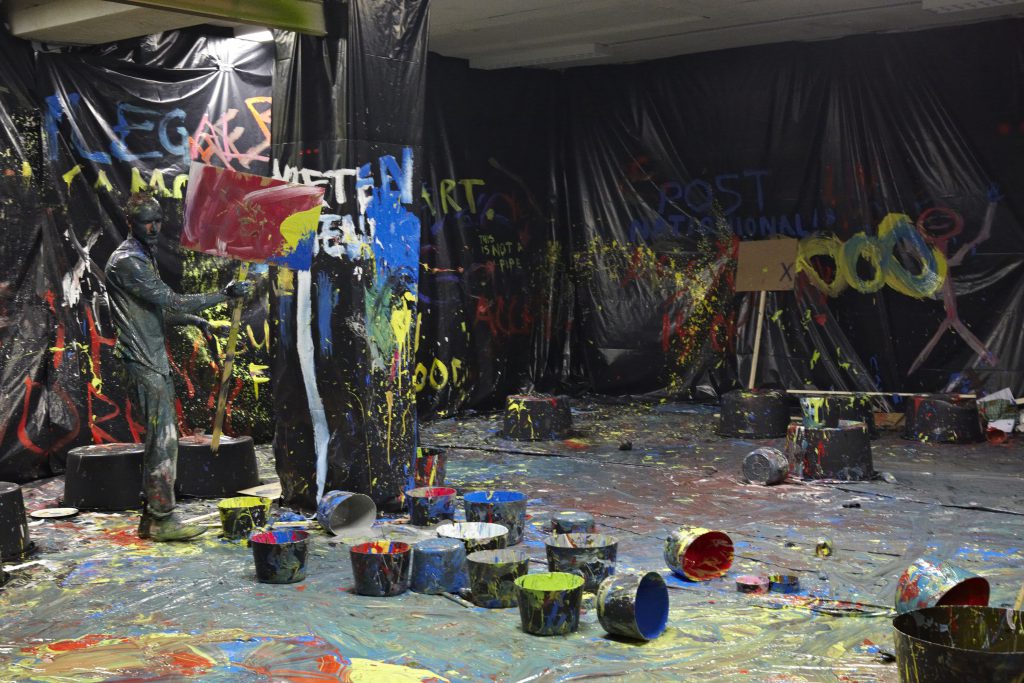
A Dinner For The End Of National Frontiers, And The Attainment Of A Global Equality Of Human Rights And Welfare – The Primordial CookBook
Fedor Blaščák: Nie sú to básnici a umelci, ale práve dizajnéri skončili ako víťazi v podobe neprestajných reformistov, ktorí kážu svojmu publiku zo strednej triedy. Je vôbec možné, aby si dizajnér či dizajnérka neužívali kapitalizmus?
Jerszy Seymour: (R)evolúcia si vyžaduje vytvorenie strednej triedy na základe rovnej (či skôr rovnakej) spoločnosti, ktorá by mala zdržanlivý vzťah k využívaniu zdrojov našej „oikos“ (ekonómie a ekológie obce). Ide o iný typ strednej triedy, ktorý sa nezakladá na „pridanej hodnote” a ašpiráciách k hmotnému bohatstvu. Aby sme sa podieľali na tvorbe takejto spoločnosti, musíme vziať do úvahy existenčné, spoločenské a politické faktory. A dizajn bol odjakživa prinajlepšom spoločenský (prinajhoršom sa pchal do zadku [bezuzdnému voľnotrhovému] kapitalizmu). Ak teda vezmeme do úvahy nerovnosť, nespravodlivosť, násilie, útlak a vojnu, ktoré zapríčinil kapitalizmus, ako je vôbec možné, že dizajnéri neplačú…?
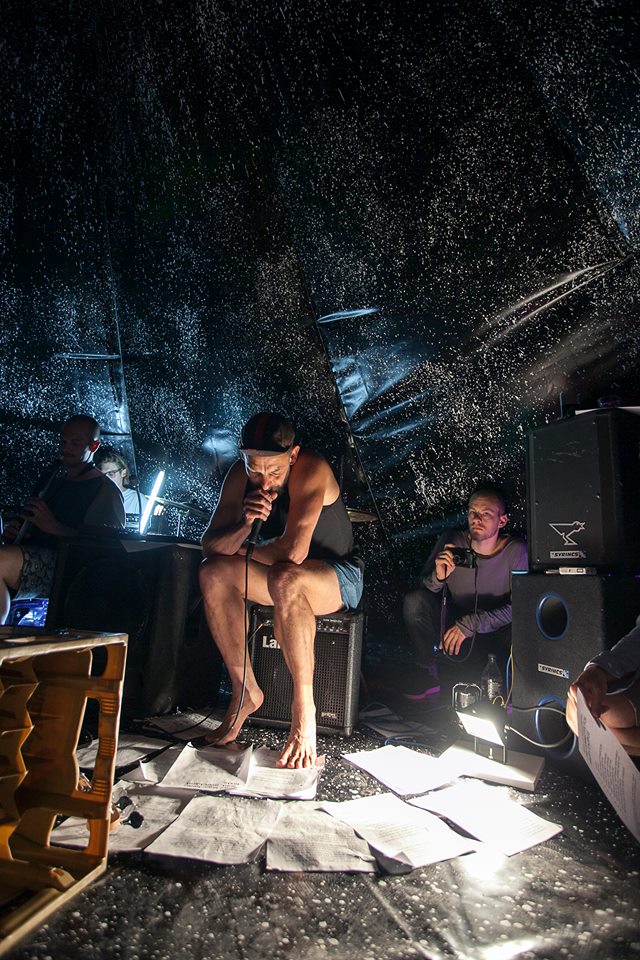
The Committee for happy endings, Bratislava Design Week 2016
FB: Možno vďaka osobnej angažovanosti a pocitu z narušovania modelu zabehnutých koľají.
JS: Základom je, že dizajnérky či dizajnéri rozumejú výrobným a spotrebným mechanizmom. To je veľmi dôležité, asi ako vdychovanie kyslíku a vydychovanie oxidu uhličitého naspäť do spoločnosti. Práve tu sa môžeme aktívne zapojiť s tým, že budeme prihliadať na filozofické dôsledky a neodňateľné práva jednotlivca.
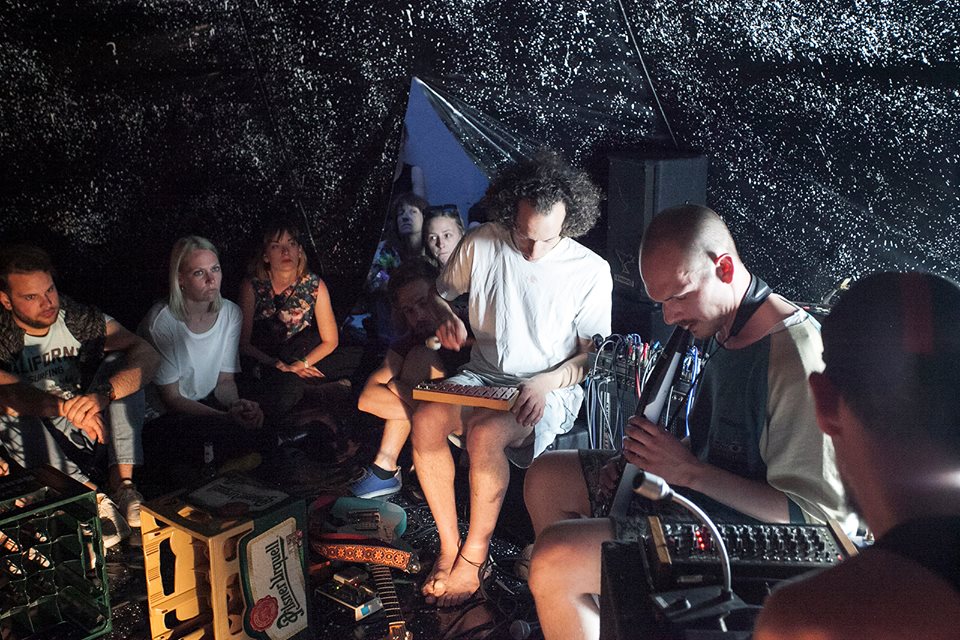
The Committee for happy endings, Bratislava Design Week 2016
FB: Tak dobre. Skúsme sa teda pozrieť na situáciu, v ktorej sa nátlak, permanentný stres a zmenšený svet stávajú priúzkymi pre technologický, vedecký a hospodársky pokrok, kde, podľa slov Paula Virilia „bude masový individualizmus tou najväčšou psycho-politickou otázkou pre budúce ľudstvo”. Ako by v súčasnosti dizajnéri mohli prispieť k vyriešeniu tejto „najväčšej otázky masového individualizmu”?
JS: Táto otázka poukazuje na smerovanie jedného z mojich záujmov, a síce vzdelávania, najmä vzdelávania detí, ktoré bude nasledujúcou témou niektorých mojich prác. Samozrejme, že predstava spoločenskejšieho davu v ére masového individualizmu môže byť veľmi náročná, až reštriktívna, najmä v mysliach generácie, ktorá túto davovú individualitu prežíva. Možno sa s tým tá ďalšia generácia popasuje lepšie.
FB: Aký je váš postoj k vzdelávaniu?
JS: Ak sa pozrieme na dejiny vzdelávania detí, predstupujú pred nami v dvoch podobách. Buď sú to akési veže špecifických vedomostí, vytvorených pre to, aby jednotlivé národné štáty získali čo najviac moci v konkurenčnom boji o globálnu nadvládu, alebo sú to tie pochádzajúce z dielne „liberálov”, akési revolúcie prebúdzajúcej sa tvorivosti: Steiner, Dewey, Morris, Montessori či Joseph Beuys a jeho tvrdenie, že „každý môže byť umelcom”, ktoré pravdepodobne sformovali nás, povojnové generácie dokonalých individuálnych konzumentov či konzumentky. Obe podoby sa teraz dostávajú do celoplošného konfliktu s tým, čo sme nazvali zúžením našej „oikos“. Náš druhý konflikt s budúcnosťou je preto od začiatku večnou otázkou, otázkou smrteľnosti.
FB: Zdá sa, že sme tu narazili na existencializmus.
JS: Existencializmus vyhlásil, že vo vesmíre neexistuje zmysel a že odpoveďou človeka na túto skutočnosť môže byť iba samovražda alebo úplné prijatie toho, že zmysel neexistuje, zatiaľ čo sa ho človek stále pokúša nájsť. A to veru neposkytuje jednoduché východisko pre život, aj keby to tak malo byť. Pravdepodobne i preto sme svedkami vzrastu náboženského fundamentalizmu zo všetkých strán. Po tomto brutálne úprimnom tvrdení musíme nájsť prijateľnú otázku, na ktorej postavíme vzdelávanie ďalšej generácie našich detí. Pre mňa je to stále „work in progress“ – niečo otvorené – a moja reflexia sa odvíja od otázky: Ako sa môžeme naučiť byť spokojní so samými sebou (prostredníctvom nástrojov, ktoré by jedincovi poskytli nezávislosť) a s ľuďmi a svetom okolo nás (prostredníctvom jazyka a vedomostí)? Po zodpovedaní si tejto otázky si všetky druhy vedomostí môžu nájsť svoje miesto a samozrejme, že sa nájde miesto aj pre rebelov!
FB: Tá otázka sa dotýka neistej situácie pedagogiky, keď všetky tie pekné prúdy orientované na dieťa, ktoré ste spomenuli, nekončia národom egoistov, keďže súčasťou učenia je našťastie vždy socializácia. A ako taká by sa mala zaoberať otázkou: Čo to vlastne tá demokracia na svete je?
JS: Demokracia alebo vláda ľudí má zmysel, iba za predpokladu, že by sme mali globálnu rovnostársku demokraciu, ktorá ešte doteraz nikde neexistovala. A ak by aj mohla existovať (parafrázujem článok Borisa Groysa), demokracia si vyžaduje, aby ľudia vedeli rozprávať, čiže to vynecháva dosť veľkú časť spoločnosti, ako napr. deti, duševne chorých, zvieratá, kamene. Sv. František z Assissi predsa kázal zvieratám a vtákom a Freud dokázal, že niektorí ľudia majú psychológiu ako kamene. Čiže prvou otázkou bude, ako nastoliť globálnu rovnostársku demokraciu, a druhou bude, ako vytvoriť dialóg, ktorý bude presahovať racionálne myšlienky jazyka, ktoré by boli schopné zaoberať sa tým, čo nemôže byť vypovedané. Ja sa zatiaľ humorne pohrávam s myšlienkou éterického všelieku s názvom Kozmický gél (ide o objekt Cosmic Jelly) a samozrejme sa venujem hĺbkovému štúdiu Šťastných koncov (ide o sadu stolíkov a stoličiek Happy Endings).
FB: A čo majú tie šťastné konce znamenať? Že už nebude revolúcia?
JS: Revolúcia či evolúcia, to je jedno, dôležité je vedieť, ako s tým žiť, keď k nej dospejeme. A dospieť ku globálnej rovnostárskej demokracii znamená, že sa my, ľudia, budeme musieť aktivizovať a dožadovať sa: konca štátnych hraníc, globálnej minimálnej mzdy, globálneho zrovnoprávnenia ľudských práv a blahobytu, spravodlivého zdanenia podnikov, zrušenia offshorových daňových rajov a bezplatného vzdelania! Pravdaže, Molotovove kokteily sa tu javia ako atraktívne pomôcky, ale ja som pacifista a verím, že násilie po sebe zanecháva mentálne jazvy, ktoré sa hoja omnoho dlhšie než tie telesné. Násilie nemôže byť základom pre vytvorenie nového sveta. Treba ihneď ukončiť vojnu a rozobrať vojnovú mašinériu. Potrebujeme taký druh revolúcie, ktorý by bol návrhom, nie odplatou. Emma Goldman povedala: „Ak nemôžem tancovať, tak to nie je moja revolúcia.“ K tomu by som dodal ešte: „Ak nemôžeme žiť, milovať, pracovať a tancovať spolu (a stále umožňovať rebelské tendencie), tak to nie je naša revolúcia.“ Začať dnes revolúciu znamená vytvoriť alternatívny návrh.
FB: Predkladanie alternatív nás vracia späť k otázke masového individualizmu, ktorá je v podstate varovaním pred atomizáciou spoločnosti. Čo bude so všeobecne zdieľanými, spoločnými názormi? Mali by sme zabudnúť na univerzalistickú predstavu „spoločnej pôdy pre všetkých“?
JS: Alternatívny návrh nie je pre mňa ani výsledkom davového individualizmu v ére post-modernizmu, ani diktátorsky všeobecne zdieľaným názorom moderny. Jeho podstatou je jeho funkcia – ako sa vymaniť z týchto dejín. V minulosti som navrhol myšlienku tzv. ne-gesamt Gesamtkunstwerku (netotálneho všeumeleckého diela), ktorá sa týkala toho, ako pozerať na totalitu (systém, ekonómiu, spoločnosť atď.) bez toho, aby sme sa my sami stali totalitnými. Celkom iste by sme nemali zabudnúť na to spoločné, zdieľané, o to viac, že ako svetové spoločenstvo (po tom, čo nás prejdú rôzne populistické strachy) si iba začíname uvedomovať, čo to môže znamenať. Aby sme si mohli byť istí, že o nejakých pár sto rokov sa svetové spoločenstvo ohliadne späť a bude sa čudovať, prečo nám to zblíženie trvalo tak dlho.
Pozrite si dokumentáciu projektu Jerszyho Seymoura pre Bratislava Design Week 2016 http://www.jerszyseymour.com/projects/bratislava/
[:en]
The interview with Jerszy Seymour was carried out via e-mails for two months. We substituted the issues of design with vague philosophising and utopian politicising. Logically, the outcome is rather inconsistent, yet we should not stop being troubled by the question: what is democracy in the world?
A Dinner For The End Of National Frontiers, And The Attainment Of A Global Equality Of Huma Rights And Welfare – The Primordial CookBook
Fedor Blaščák: Not poets and artists, but the designers ended up among the winners with an image of perpetual reformists preaching to its middle class audience. How can a designer today not enjoy capitalism?
Jerszy Seymour: The (r)evolution requires the creation of a middle class based on an equal (or better equivalent) society in relationship to the careful use of resources in our ‘oikos’ (economy and ecology). That’s another kind of middle class which is not based on the ‘added value’ and aspiration to material wealth. To be a part of the creation of this society, we must consider the existential, social and political. And design at its best base has always been social (at worst it is a lap dog for [unbridled free market] capitalism). Considering the inequality, unjustness, violence, oppression and war caused by capitalism how can a designer not cry…?
FB: …perhaps only through the personal engagement thus distorting the obvious model of business as usual.
JS: At the base, the designer should understand production and consumption mechanisms, something as fundamental as breathing in oxygen and breathing out carbon dioxide to society. This is where we can intervene, always keeping an eye on philosophical consequences and unalienable rights of the individual.
FB: Then, let’s discuss here the situation in which pressure, stress and contraction of the world becomes too narrow for the technological, scientific and economic progress where, as Paul Virilio puts it: “mass individualism remains the major psycho-political question for the humanity in the future.” How could designers nowadays contribute towards resolving this “major question of mass individualism”?
JS: I think the question points to one of my concerns, that of education, and especially of children’s education, which will be the upcoming subject of some of my work. Of course, the conceivability of a more social mass in the era of the individual mass can be very difficult, and even restrictive, in the minds of a generation that lives this mass individuality. Perhaps the next generation will be better at dealing with it.
FB: What is your educational attitude?
JS: If we look at the history of children’s education it reveals itself in two ways. Either the towers of special knowledge that are created to give the nation state the most power to compete in the global competition of supremacy, or that of the ‘liberals’, the revolution of awakening individual creativity: Steiner, Morriss, Montessori and Joseph Beuys’s ‘everybody is an artist’ that has perhaps produced us, the post second world war generations of perfect individual consumers. Both ways come now into full clash with, as you put it, the contraction of our ‘oikos’. In relation to this, our other clash with the future is the eternal question since the beginning, that of mortality.
FB: Are we talking about existentialism?
JS: After existentialism’s brutally honest declaration that there is no meaning in the universe and that human’s answer to this can only be suicide or fully accepting that there is no meaning, whilst still trying to look for meaning, which does not provide an easy base to live with even if that is what it is (which is perhaps why we see the rise in religious fundamentalism on all sides), we must find a valid question on which to base the education of our next generation, our children. For me now this is a work in progress, and the point I begin my reflection from is: How can we learn to be content with ourselves (through the tools that would make the individual become independent) and with the people and world around us (through the tools of language and knowledge)? After this, all forms of knowledge can find their position and of course, rebels are allowed!
FB: Yes, the question tackles the precarious situation of pedagogy where all these nice, child-centred pedagogical currents you have mentioned above do not end up with the nation of egoists, because luckily – learning is always about socialization. And as such, it should always deal with the question what is democracy in the world?
JS: Democracy or the rule by people can only have sense if we have a global egalitarian democracy, which for sure has never existed. And even if it could exist (I paraphrase from an article by Boris Groys), democracy requires that people can speak, so it also leaves out a large part of society, children, crazy people, animals, stones. St Francis de Assisi famously did a sermon to the animals and birds, and Freud proved some people have psychologies like stones. So, the first question will be how to establish a global egalitarian democracy and the second will be how to create a dialogue that goes beyond the rational ideas of language that can deal with what can’t be said? For now, I humorously play with the idea of an ethereal panacea called Cosmic Jelly and of course, the in-depth study of Happy Endings.
FB: What does the concept of Happy Endings mean? Never more to revolution?
JS: Revolution or evolution, the important thing is to know how to live with it once it is achieved. To get to a global egalitarian democracy will take some activism and demands from us, the people: to end national frontiers, global minimum wage, global equality of human rights and welfare, fair corporate taxation, no more offshore hiding holes, and free education! Of course, the Molotov cocktail is very attractive as a demonstration, but I am a pacifist and believe violence leaves mental scars that take a much longer time to heal than physical ones. For me, this cannot be the basis for the creation of the new world. Stop war now and dismantle the war machine. The kind of revolution we need must be a proposition and not a retaliation. Emma Goldman said ‘if I can’t dance, it’s not my revolution’. To this I would add ‘if we can’t live, love, work and dance together (and still allow rebel tendencies), it’s not our revolution’. To start the revolution today means to create the alternative proposition.
FB: Promoting alternatives gets us back to Paul Virilio’s claim that “mass individualism remains the major psycho-political question for the humanity in the future” which in essence is a warning against atomized society. What about the universalist idea of “common ground for everybody”, should we forget about it?
JS: For me the alternative proposition is neither the mass individualism result of postmodernism nor the dictatorial common ground of the modern. Its essence lies in its function: how to get past this history. Previously, I have proposed the idea of the non-gesamt Gesamtkunstwerk (the non-total total artwork) that is about how to look at a total (system, economy, society etc.) without becoming totalitarian. But surely, we shouldn’t forget about the common, much more as a world community (and once we get past populist fears) we are only at the beginning to consider what that can be. To be sure, that in a few hundred years the world community will look back and wonder why it took us so long to get together.
[:]