[:sk]Esej / SPOLOČNÝ PRIESTOR[:en]Essay / COMMON SPACE[:]
[:sk]O verejnom priestore a kritickom umení[:en]On public space and critical art[:]
[:sk]„Certainly, the modernist idea of the avant-garde has to be abandoned, but that does not mean that any fom of critique has become impossible. What is needed to widen the field of artistic intervention, by intervenng directly in a multiplicity of social spaces in order to oppose the porgramme of total social mobilization of capitalism.“ [1]
Základnou tézou, ktorou Mouffe podkladá svoju teóriu politického antagonizmu – agonistického verejného priestoru, je že liberalizmus je na základe svojho individualistického a racionalistického prístupu neschopný pojať pluralistickú povahu sociálneho sveta. Ďalšou výhradou voči liberalizmu je jeho predpoklad konsenzu. Predstava verejného priestoru ako miesta kde vzniká univerzálny konsenzus, harmonický celok založený na rozume, s ktorým nutne prichádza moment rozhodnutia.
Politické pre ňu znamená večne prítomný antagonizmus, absencia definitívnosti, nerozhodnuteľnosť. Každé sociálne usporiadanie sa stáva hegemonickou inštitúciou. V tom je jeho politická dimenzia, a je založené na istej forme exklúzie – čo predpokladá ďalšie formy ktoré sú potlačené a musia byť reaktivované. Permanentný zápas je jadrom živej demokracie. Agonistický verejný priestor je miestom konfrontácie rozličných projektov bez predpokladu konečného uzmierenia, súladu.
Aká je úloha (kritického) umenia vo verejnom priestore? Vizualizovať, udržiavať daný symbolický poriadok, alebo ho napádať, popierať. Stransparentňovať a odhaľovať to čo je potláčané prevládajúcim konsenzom, podnecovať nesúhlas. Ako plynie z úvodného citátu, dnešní umelci nemajú ambíciu / možnosť absolútneho rozbitia stávajúcej štruktúry, tvorby niečoho úplne nového (avantgarda). Podľa Mouffe je dôležité preformulovať to, že politické umenie znamená radikálnu kritiku, a jedine tá predstavuje transgresiu.
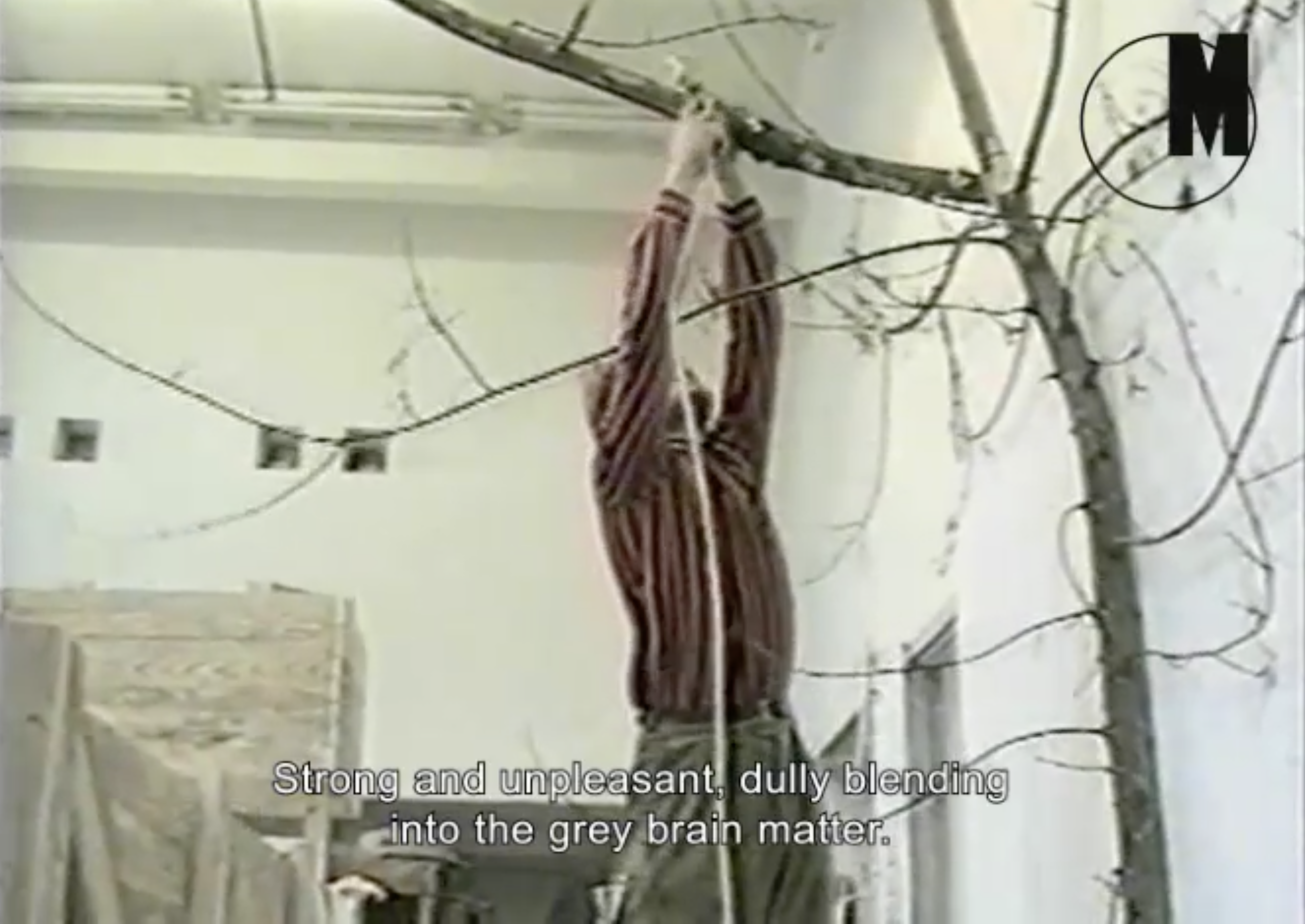
Záber zo záznamu Obszar Wspólny, Obszar Własny, 1992/93, zdroj: artmuseum.pl
Artur Zmijewski, poľský umelec, hovorí o téme straty radikality umenia ako dôsledok emancipácie umenia. Dlho sa snažilo oslobodiť od služby politike, náboženstvu, autoritám, ktorého ho zneužívali pre svoje ciele. Dedičstvom tohto procesu pre umenie je inherentná hanba, ktorá pôsobí ako brzda. Dôsledkom zneužitia je odmietanie. Umenie môže byť politické pokiaľ sa drží ďalej od politiky. Môže byť sociálne, pokiaľ neprodukuje sociálne konzekvencie. Umenie sa zrieklo overiteľného dosahu v realite v prospech fantázií.
Mať (viditeľný) efekt implikuje mať moc, čoho sa umenie obáva. Jeho autonómia zašla príliš ďaleko a stala sa mierou jeho ideologickej čistoty. Zmijewski tvrdí, že cestou von z tejto izolácie je prijatie úlohy „zainteresovaného pozorovateľa“. Tomuto zodpovedá aj médium, ktoré primárne používa, a tým je video. Mocou umenia je pomenovať a definovať, intervenovať, vyvíjať tlak na vládnuce sociálne štruktúry, tým že ich mení na artefakty – umelecké diela.
Obszar Wspólny, Obszar Własny [Spoločný priestor, Vlastný priestor]. Zadanie, s ktorým sa od osemdesiatych rokov pracovalo v ateliéry Grzegora Kowalského na Waršawskej akadémii výtvarných umení. Kowalski spolu so svojimi študentmi a kolegami v priestoroch školského ateliéru pracovali na projekte založenom na vzájomnej neverbálnej komunikácii. V priebehu trvania akcie komunikovali vizuálnymi formami, symbolmi, gestami.
Účastníci začínajú od individuálnych akcií (vlastným priestorom), zároveň však akcia každého jedného participanta môže vyvolať spontánnu reakciu ďalšieho. Postupne prechádzajú k vzájomnej spolupráci, do spoločného priestoru. Projekt komunikačnej schopnosti umenia, hovorí o premenlivom vzťahu účinkujúci / publikum a ich citlivosti, komunikácia sa stáva hodnotou sama o sebe.
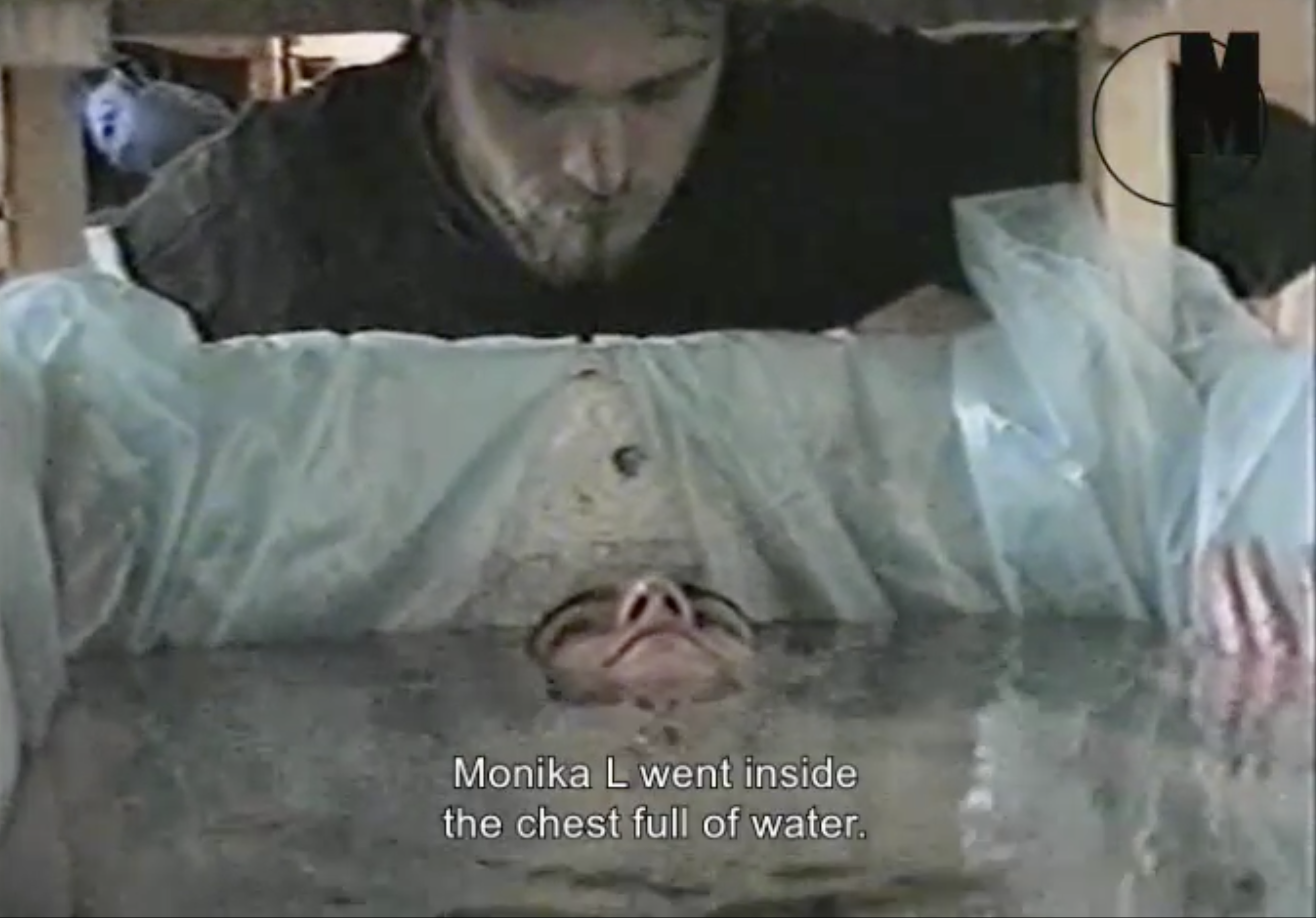
Záber zo záznamu Obszar Wspólny, Obszar Własny, 1992/93, zdroj: artmuseum.pl
OWOW VIII, 1992/93 bola prvá realizácia, ktorá bola zaznamenaná na film. Úvodná situácia pozostávala drevenej debny a nahého tela v nej. Telo bolo v úvode odosobneným, mŕtvym telom, v podriadenom vzťahu k účastníkom akcie. Postupnými intervenciami ( holenie, sadenie žeruchy v lone, pokreslenie, kúpanie,….) telo nadobúdalo vlastnú subjektivitu. Akcia skončila spoločnou večerou na prevrátenej debne. Tieto ateliérové cvičenia však prebiehali exteritoriálne, v prostredí voľného prejavu myšlienok. Zmijewski s modifikáciami tejto „výučnej metódy“ pokračoval ďalej, jej prenesením do reálneho života.
V Them (2007), filme premietanom na Documente v Kasseli Zmijewski zorganizoval niečo ako workshop, kam pozval členov radikalistickej mládežníckej organizácie Mlodiež Wszechpolska, ľudí identifikujúcich sa s Katolíckou cirkvou, mladých Poľských Židov a členov rôznych ľavicových organizácií. V úvode si jednotlivé skupiny vytvorili svoje reprezentatívne plagáty, symbolickú identifikáciu. S nimi potom vstúpili do spoločného/ verejného priestoru a vzájomnej (neverbálnej) názorovej konfrontácie. Akcia prebieha niekoľko dní po sebe, (film) sa končí deštrukciou, horiacim plagátom, vystriekaným hasiacim prístrojom, evakuáciou všetkých zúčastnených z miestnosti.
Kowalského podmienkou pôvodných OWOW cvičení bolo nejednať deštruktívne, čo sa zo Zmijewského variácií vytratilo. Podľa Zmijewskeho sa ukázalo (prenesením projektu do živého skutočného prostredia), že tieto akty deštrukcie neničia, neukončujú akciu ale stávajú sa jej súčasťou.
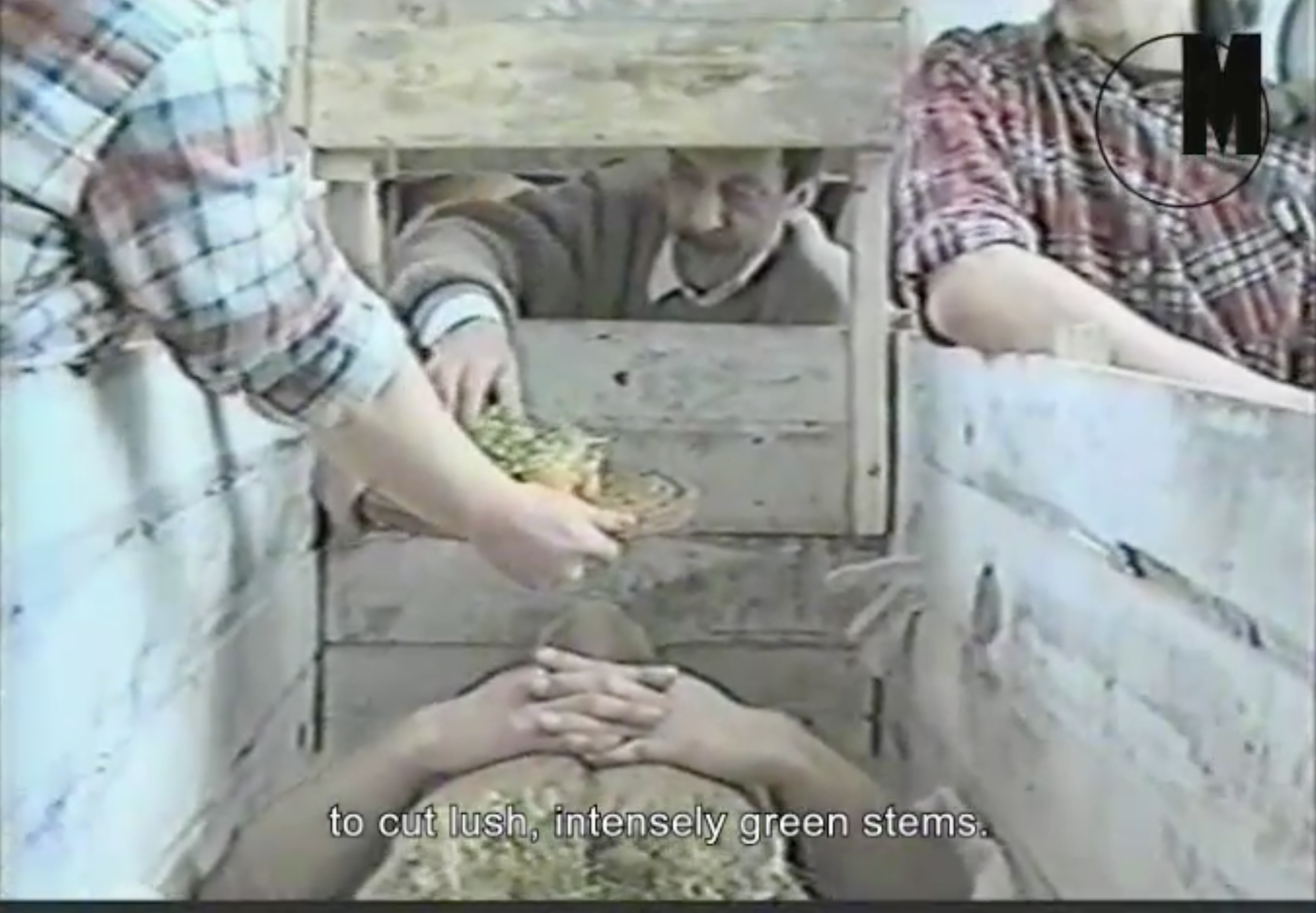
Záber zo záznamu Obszar Wspólny, Obszar Własny, 1992/93, zdroj: artmuseum.pl
V tomto kontexte chápem „koniec“ filmu nie ako ukončenie diskusie spôsobenej fatálnou deštrukciou, ale len ako ukončenie záznamu permanentnej diskusie. Neustálej nekončiacej konfrontácie, kde koniec záznamu v určitom momente môže hovoriť o úlohe umenia ako pozorovateľa. Sociálny efekt neznámy. Z priebehu sa dá predpokladať, že na zúčastnených minimálny. Dôležitosť tohto záznamu /akcie spočíva vo vizualizovaní tézy nemožnosti definitívneho konsenzu. Ide o dielo negatívne, skeptické, neformulujúce žiadne konkrétne pozitívne politické názory. Hovorí ale o povahe verejného priestoru. Legitimizuje agonistický princíp demokratického priestoru.
Ďalším dôležitým momentom je polarita (pôvodného konceptu) vlastného a spoločného priestoru. Projekty nehovoria len o interakcii vo verejnom priestore, ale začínajú sa nastavením situácie, s východiskom vo vlastnom priestore. Tak ako Kowalského študenti najprv intervenovali osobitne (spúšťajúc u ostatných zúčastnených reakcie), aj skupiny participantov vo filme Them začali vo vlastnom priestore (hoci fyzicky totožnom) úvodnou sebadefiníciou. Začali proces identifikácie, ktorý následným vstupom do spoločného priestoru, vo vzájomnej interakcii už všetkých skupín pokračoval. Ich identita sa ďalej formovala, prejavovala, konfrontovala, zahusťovala, …a v tomto konkrétnom prípade pri každej zo skupín utvrdzovala vo svojich vstupných názoroch. Neznámy efekt a nemožnosť konsenzu, resp. ani komunikácie.
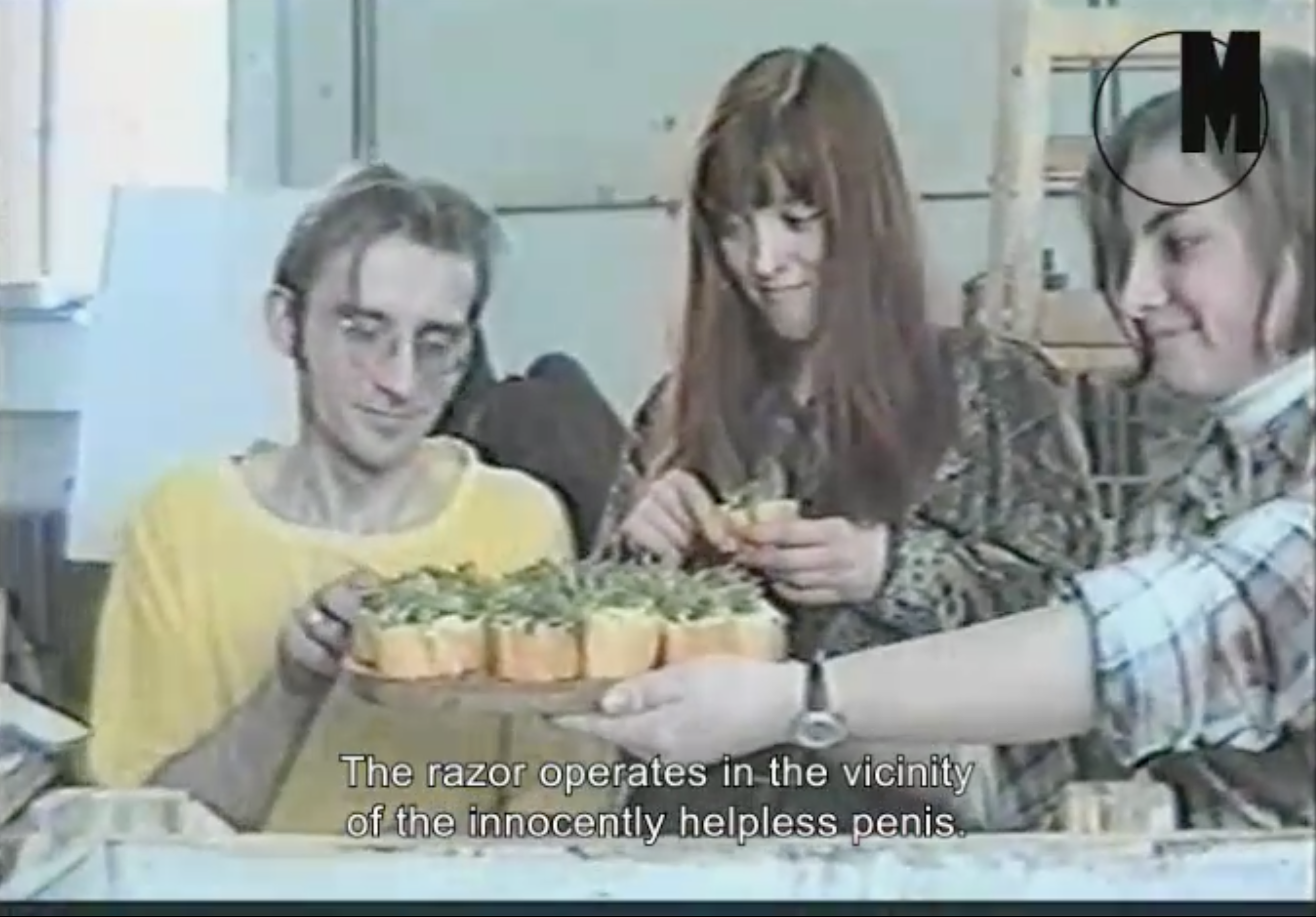
Záber zo záznamu Obszar Wspólny, Obszar Własny, 1992/93, zdroj: artmuseum.pl
1 Chantal Mouffe: Art and Democracy, Art as an Agnostic Intervention in Public Space. In Art as a Public Issue, no. 14, 2008 [online]. Dostupné z: https://readingpublicimage.files.wordpress.com/2012/04/mouffe_open14_p6-151.pdf
[:en]„Certainly, the modernist idea of the avant-garde has to be abandoned, but that does not mean that any fom of critique has become impossible. What is needed to widen the field of artistic intervention, by intervenng directly in a multiplicity of social spaces in order to oppose the porgramme of total social mobilization of capitalism.“ [1]
The basic thesis underlying Mouffe’s theory of political antagonism – agonistic public space – is that liberalism, by virtue of its individualistic and rationalistic approach, is incapable of accommodating the pluralistic nature of the social world. Another objection to liberalism is its assumption of consensus. The idea of public space as a place where a universal consensus emerges, a harmonious whole based on reason, with which necessarily comes the moment of decision.
For her, the political implies an ever-present antagonism, an absence of finality, an undecidability. Every social order becomes a hegemonic institution. Therein lies its political dimension, and it is based on a form of exclusion – which presupposes other forms that are repressed and must be reactivated. Permanent struggle is at the heart of a living democracy. The agonistic public space is a place of confrontation of different projects without the assumption of a final reconciliation, of concord.
What is the role of (critical) art in public space? To visualize, to maintain a given symbolic order, or to challenge it, to deny it. To side-step and expose what is suppressed by the prevailing consensus, to incite dissent. As the opening quote implies, today’s artists do not have the ambition/possibility of absolutely shattering the existing structure, of creating something completely new (avant-garde). According to Mouffe, it is important to rephrase that political art implies radical critique, and only the latter constitutes transgression.
Still from the recording of Obszar Wspólny, Obszar Własny, 1992/93, source: artmuseum.pl
Artur Zmijewski, a Polish artist, discusses the theme of the loss of radicality in art as a consequence of the emancipation of art. For a long time it has been trying to free itself from the service of politics, religion, and authority, which it has been exploiting for its own ends. The legacy of this process for art is an inherent shame that acts as a brake. The consequence of abuse is rejection. Art can be political as long as it stays away from politics. It can be social as long as it does not produce social consequences. Art abandons verifiable impact in reality in favor of fantasies.
To have a (visible) effect implies having power, which is what art fears. Its autonomy has gone too far and become a measure of its ideological purity. Zmijewski argues that the way out of this isolation is to adopt the role of “interested observer”. The medium he primarily uses, which is video, corresponds to this. The power of art is to name and define, to intervene, to put pressure on the ruling social structures by turning them into artefacts – works of art.
Obszar Wspólny, Obszar Własny [Common Space, Own Space]. An assignment that was worked with in Grzegorz Kowalski’s studio at the Warsaw Academy of Fine Arts since the 1980s. Kowalski, together with his students and colleagues in the school’s studio space, worked on a project based on mutual non-verbal communication. During the duration of the event they communicated with visual forms, symbols, gestures.
Participants start from individual actions (in their own space), but at the same time the action of each participant can trigger a spontaneous reaction of another. Gradually, they move towards mutual collaboration, into a common space. The project of the communicative capacity of art, speaks of the changing relationship of performer/audience and their sensitivity, communication becomes a value in itself.
Still from the recording of Obszar Wspólny, Obszar Własny, 1992/93, source: artmuseum.pl
OWOW VIII, 1992/93 was the first realization that was recorded on film. The opening situation consisted of a wooden crate and a naked body in it. The body was initially a disembodied, dead body, in a subordinate relationship to the participants in the action. Through successive interventions ( shaving, planting a cress in the womb, painting, bathing,….) the body took on a subjectivity of its own. The action ended with a communal dinner on an overturned crate. These studio exercises, however, took place exterritorially, in an environment of free expression of ideas. Zmijewski went further with modifications of this “teaching method”, bringing it into real life.
In Them (2007), a film screened at the Documenta in Kassel, Zmijewski organised something like a workshop where he invited members of the radical youth organisation Mlodiež Wszechpolska, people identifying with the Catholic Church, young Polish Jews and members of various left-wing organisations. At the beginning, each group created their representative posters, symbolic identification. With these they then entered into a common/public space and a mutual (non-verbal) confrontation of opinions. The action takes place over several consecutive days, (the film) ending with destruction, a burning poster, a fire extinguisher being sprayed, and the evacuation of all participants from the room.
Kowalski’s condition of the original OWOW exercises was not to act destructively, which has disappeared from Zmijewski’s variations. According to Zmijewski, it became clear (by bringing the project into a live real environment) that these acts of destruction do not destroy, do not end the action but become part of it.
Still from the recording of Obszar Wspólny, Obszar Własny, 1992/93, source: artmuseum.pl
In this context, I understand the “end” of the film not as the end of a discussion caused by a fatal destruction, but only as the end of the record of a permanent discussion. A constant never-ending confrontation, where the end of the record at a certain point can speak of the role of art as an observer. A social effect unknown. From the course it can be assumed minimal on those involved. The importance of this record/action lies in the visualisation of the thesis of the impossibility of a definitive consensus. It is a negative, sceptical work, not formulating any specific positive political views. But it speaks to the nature of public space. It legitimizes the agonistic principle of democratic space.
Another important moment is the polarity of (the original concept of) proper and common space. The projects do not only talk about interaction in public space, but they start with the setting of the situation, with a starting point in one’s own space. Just as Kowalski’s students first intervened separately (triggering reactions in the other participants), the groups of participants in Them began in their own space (albeit physically identical) with an initial self-definition. They began a process of identification which, by subsequently entering a common space, continued in the mutual interaction of all the groups already. Their identities continued to be formed, manifested, confronted, thickened, …and in this particular case, for each of the groups, consolidated in their initial views. The unknown effect and the impossibility of consensus or even communication.
Still from the recording of Obszar Wspólny, Obszar Własny, 1992/93, source: artmuseum.pl
1 Chantal Mouffe: Art and Democracy, Art as an Agnostic Intervention in Public Space. In Art as a Public Issue, no. 14, 2008 [online]. Available from: https://readingpublicimage.files.wordpress.com/2012/04/mouffe_open14_p6-151.pdf
[:]