[:sk]Esej / KATASTROFA[:en]Essay / CATASTROPHE[:]

[:sk]

Na margo útoku z 11. septembra 2001 si nemecký skladateľ Karlheinz Stockhausen poznamenal: „To, čo sa tam stalo – teraz si všetci musia preusporiadať mozgy – je najväčšie umenie v dejinách: keď postavy dokážu v jednom momente priniesť to, o čom my v hudbe nemôžme ani len snívať. Tí ľudia cvičia desať rokov, úplne, fanaticky, len pre ten jeden koncert a potom umierajú. To je najväčšie umenie v celom vesmíre. Ja by som to nedokázal. Oproti tomu sme my, skladatelia, ničím.“  

Rozumná práca s touto úvahou bude zrejme stáť na predpoklade, že teroristom išlo primárne o rozvrátenie nášho symbolického poriadku tými najjednoduchšími prostriedkami, nie o tie nevinné obete na životoch (aj keď s nimi vopred počítali). Tí ľudia mali jednoducho smolu, keď sa ocitli v situácii, ktorá, okrem politických dôsledkov,  mala, podľa Karla Stockhausena, zmeniť aj dejiny umenia.

Avantgarda

Nevieme, čo ho tak nástojčivo pomklo poopraviť si vnímanie umeleckej avantgardy  práve v súvislosti s touto verejnou popravou. Poprava, ako istý druh predstavenia je, koniec – koncov, stará známa vec. Oddávna patrila do repertoáru foriem verejného života aspoň tak, ako doň dnes patrí teroristický útok. Ľudské obete božstvám, ukrižovaný Ježiš a gladiátori v staroveku, stredovekí martýri aj bosorky, protestanti, pogromy. Dejiny vytvorili dlhý zoznam (bezohľadne) potrestaných nevinných. Aby bolo jasné, myslím si, že snaha vypozorovať na pozadí  ich popráv určité umelecké ambície prestáva byť zaujímavá aspoň v dvoch prípadoch: 1. ak máme s umením nejakú skúsenosť a vieme, že v ňom nejde o život; 2. ak do popisu zahrnieme aj konkrétny osud popraveného. Otázka preto znie, či si naozaj treba, práve teraz, „preusporiadať mozog“ a začať zdieľať podobné vnímanie umeleckej avantgardy, v ktorom umenie so životom splynulo aspoň tak, ako symbolické previnenie s (masovou) vraždou. Nastal čas pre novú citlivosť, ktorá nám  reč mŕtvych tiel pretlmočí aj voľajako inak, než ako správu o tragédii, či zločine?

V tejto súvislosti treba pripomenúť Stockhausenov názor vo veci rozlišovania medzi estetikou umenia a estetikou politických činov (vrátane teroristických): „Politické činy smerujú k privlastneniu, v umení sa, naopak, niečoho zo seba vzdávame.“ Ak teraz spojíme interpretáciu teroristického útoku v zmysle snahy o narušenie symbolického poriadku s názorom, že umelecký proces je vecou sebaobetovania, získa citovaná poznámka z úvodu istý zmysel. Azda neexistuje človek, ktorý  by sa samého seba vzdával razantnejšie, než samovražedný atentátnik.  A, spätne vzaté, čo iné mohlo, v hlavách teroristov,  dominovať symbolickému poriadku západnej civilizácie viac, než budova WTO?

Nebudem pokračovať v diskusii o tom, či možno Stockhausenovu interpretáciu významu útoku na túto budovu prijať. Rečiam o morálke s vopred jasným výsledkom sa darí beztak dosť. Chcem sa venovať tomu, prečo môže takto vedená úvaha dávať vôbec nejaký zmysel (ako napríklad ten vyššie uvedený).  Reč preto bude o prepájaní umenia s reálnym svetom, z čoho vyplýva, že nasledujúca úvaha sa bude týkať umeleckej avantgardy a jej hodnotenia.
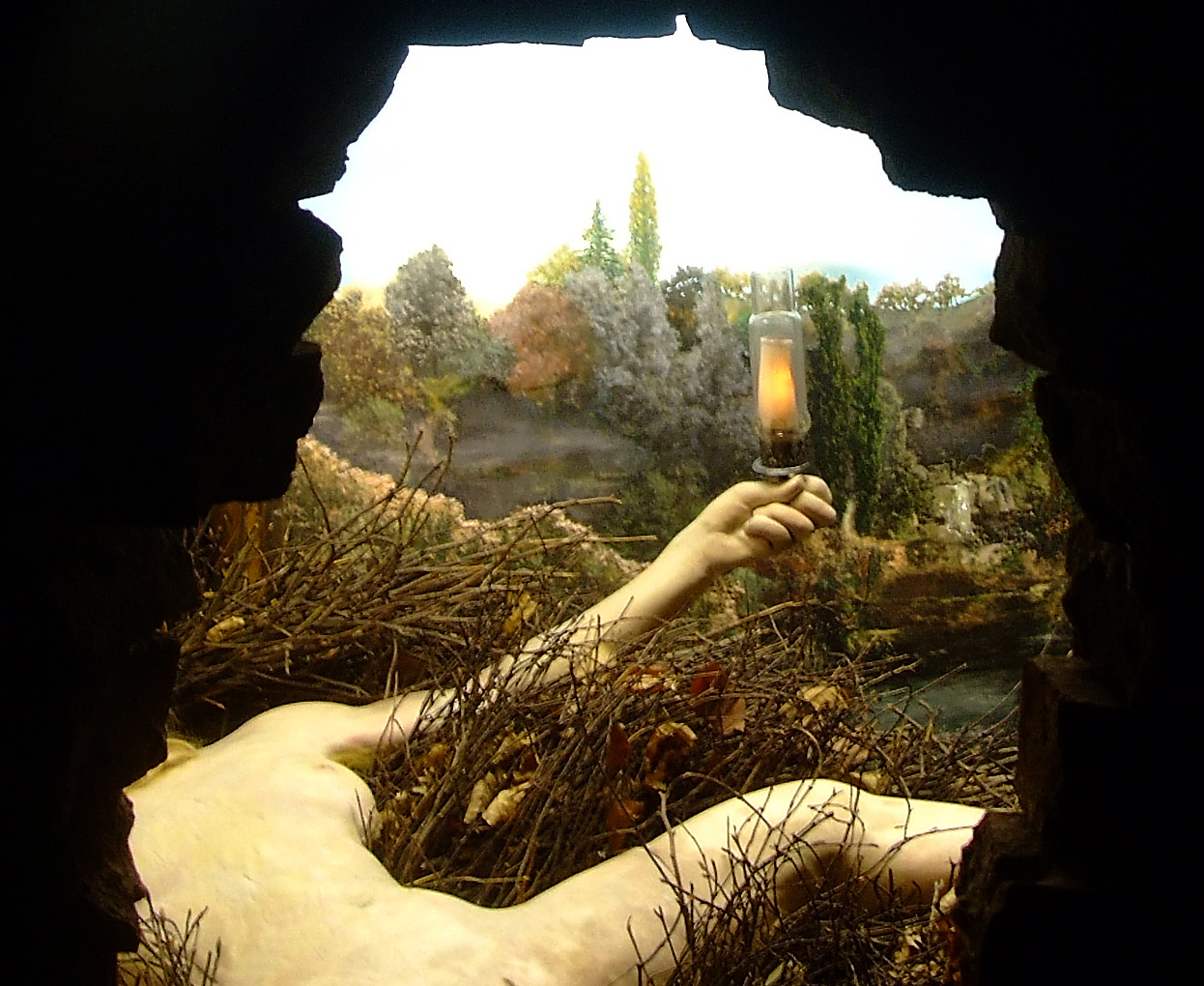
Marcel Duchamp, Étant donnés, 1946 – 1966, Philadephia Museum of Art, zdroj: khanacademy.org

Marcel Duchamp

Estetizácia každodennosti je dnes už klasická (avantgardná) stratégia. Jej výraz prirodzene patrí k umelcovmu prežívaniu. Mimo toho ju ten  môže použiť ako osvedčenú taktiku verejného zvýznamnenia (pôvodne) neumeleckého predmetu, myšlienky alebo udalosti. Napríklad umiestnením do galérie. Duchampov pôvodný ťah týmto smerom bol tvrdo ironický. Ako šach – mat. Ready-made objekty v galériách ultimatívne zaútočili na ustálene predstavy o funkcii a (vyššej) hodnote umenia. Spochybnili celý rad predpokladov ohľadom kreativity, talentu, remeselnej zručnosti a spirituality tvorby.  Obrat ku každodennosti prináša dôraz na určitú časovú situovanosť tvorby. Tá v dôsledku prepája jej produkt s konkrétnym (vedomým) zámerom umelca a do popredia kladie taktiež remeselnú stránku procesu tvorby. Americký hrdina konceptualizmu John Baldessari tento motív neskôr vystihol myšlienkou, že „byť umelcom sa nijako zvlášť nelíši od toho byť elektrikárom či inštalatérom – je to prosto len práca (just work)“. Dodajme, že s tým rozdielom, že umelcovi (na rozdiel od elektrikára) je v jeho práci dovolené čokoľvek.  Duchampovi nešlo o inovácie tradične zdieľaného vizuálneho jazyka – neopravoval pokazené,  ale o úplne nový slovník – priniesol nové. Len tak sa mu mohlo podariť nanovo zadefinovať vzťah medzi umelcom a publikom. Na strane umelca dôrazom na jeho myšlienkové zámery, na strane publika uznaním, že nie je hlúpe, že pod titulom umenie dokáže vstrebať viac, než len vizuálne potešenie. Rozšíril tak pole ich vzájomnej pôsobnosti  a tým tento vzťah uvoľnil.  Zaujímala ho psychológia vzťahu medzi artefaktom (objektom), divákom a prostredím, v ktorom sa tento vzťah odohráva. Dôkazom toho je jeho záujem o dizajn výstav a výsledkom napríklad dielo Étant Donnés, ktorého vznik je datovaný časovým rozpätím 20 rokov (1946-1966). Avantgardné umenie spochybnilo to, že artefakt je hotový produkt, ktorý si, bez ohľadu na umelcove zámery, spôsob prezentácie či prítomnosť publika, zachováva vlastný štatút. Vizuálne umenie odvtedy získalo celé spektrum podôb, jeho nositeľom sa postupne stávali najrozličnejšie média (ready made, inštalácia, environment, happening, antihappening atď.), môže mať charakter návrhov (projekt-art), riešení istých filozofických, technických či iných problémov (manifest, objekt-happening apod.). Treba uznať, že v týchto prípadoch o špecificky estetickú skúsenosť už zvyčajne ani nejde. Divák dotvára umenie svojím záujmom, uvedomovaním si súvislosti (aj neumeleckých). Do hry vstupuje mašinéria poznávacích nárokov. Vzniká konceptuálne umenie. Bez poznávacích nárokov sa už v ňom iba výnimočne dá kompetentne rozlíšiť pokus od omylu. Každodenný život spolu s biografiou umelca sa pohodlne usadili v galérii, a naopak – umenie možno dnes v prípade nejedného umelca vidieť takmer v každom jeho kroku (Gesamtkunstwerk). Ale prečo by sme mali chcieť estetizovať „všetko“? S každou ďalšou „haraburdou“ v galérii sa pôvodná sila Duchampovej irónie potichu vytratila. Aj preto ironizovať dnes už nestačí, navyše keď už pomaly ani nie je čo. Vyzerá to tak, že páni už večerali a teraz by  radi niečo tuhšie (Stockhausen).

Estetizácia každodennosti ako umelecká stratégia už sto rokov spoluvytvára formu umenia, svojou expanzívnou povahou sa podieľa predovšetkým na jej extenzívnej zložke. „Bezbrehosť“ umenia znamená, že, ak na to príde, tak umením sa môže stať aj čistenie si zubov (Kaprow), narážanie do ľudí na ulici (Kovanda), či na bielo natretý filc (Filko). Práca rozumu ochraňuje estetický zážitok pred spochybňovaním. Ak umelec manifestom prehlási na bielo natretý filc za výraz „prekročenia hraníc predmetného sveta smerom k nekonečnému priestoru, v ktorom rozvíja svoje myslenie“ (Filko, Laky, Zavarský – Biely priestor v bielom priestore, 1974), ako na to možno reagovať? Možno s tým nesúhlasiť, ale nijako mu nemožno dokázať, že sa mýli. Lebo za to, čomu ako umelec rozumie, ručí vlastným životom resp. dielom. Ako potom možno umelcovi adresovať poznámku, že tomu, čo vytvára, nerozumie? Veď predsa vytvoriť môže len to, čo nejakým spôsobom dokázal identifikovať – ergo tomu porozumieť. Môže nás akurát iritovať povaha predmetu,  ku ktorému smeruje svoj záujem. Nám sa môžu zdať triviálne krajinky, výšivky, realistické zobrazovanie atď., lebo  pri hodnotení  umenia sa  rozhodujúcim stáva predmet umelcovho záujmu, a to z dôvodu absencie iného kritéria rovnakého kalibru, ktorým možno hodnotiť umelecké dielo.
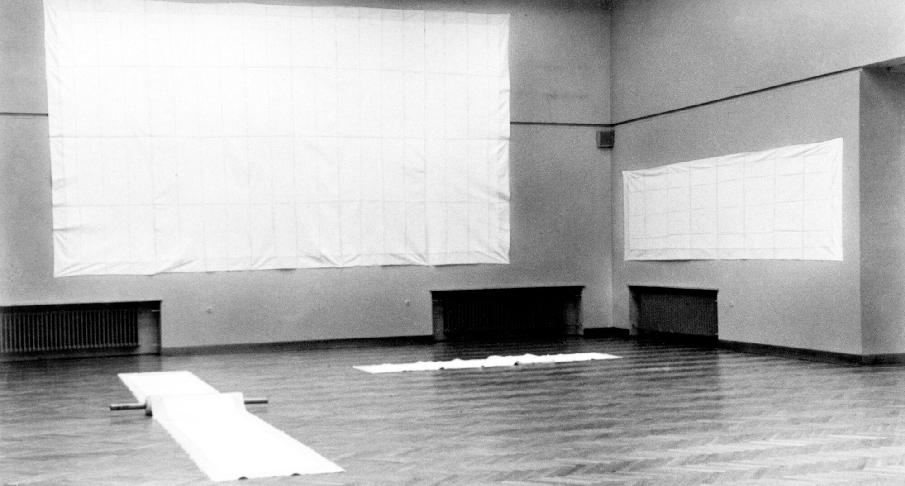
Stano Filko, Miloš Laky, Ján Zavarský, Biely priestor v bielom priestore, 1974, zdroj: kontakt-collection.org

Sloboda

Tvrdím, že kým umelecké stratégie pôsobiace v smere prepájania umenia s reálnym svetom žiadne problematické miesta neobsahujú, ich kritické hodnotenia  zjavne áno. Nemám pri tom na mysli len ten typ problematickosti, pred ktorý nás stavia napríklad uvedená Stockhausenova poznámka. Znamením problematickosti hodnotenia avantgardných umeleckých stratégií je aj skutočnosť pretrvávajúcich sporov ohľadom „správneho“ porozumenia a interpretácie týchto diel.

Všimnime si základné rozlíšenie medzi (umeleckou) tvorbou nového a jeho (kritickou) interpretáciou.  Prijmime pritom predpoklad, že umenie je v prvom rade otázkou rozhodnutia (vôle). Ak si niekto povie „som umelec a som za to zodpovedný“, stáva sa umelcom. Vyzerá to jednoducho, no nie je. Nezabúdajme totiž na to, že zodpovednosť prichádza do hry až s výsledkami. Mať nápady nestačí.  Umelec sa pohybuje v priestore systematickej slobody v zmysle nezávislosti od akéhokoľvek systému (umeleckého programu, média, estetickej teórie, trhu, publika apod.). Môže, takpovediac, všetko. A čokoľvek, čo urobí alebo prehlási ako umenie, ostane ako umenie – z dôvodov o ktorých bola reč vyššie –nespochybniteľné. Táto systematická sloboda však za hranicami umenia (a umelcovej zodpovednosti zaň) končí. Spojenie zodpovednosti s umeleckou tvorbou naznačuje, že „bezbrehosť“ súčasného umenia nemôže znamenať akúsi absolútnu svojvoľnosť. Umelec sa taktiež pohybuje v poli významových útvarov, komunikuje s publikom, preto aj v jeho prípade sa musí jednať o činnosť riadenú istými pravidlami. Jeho špecifikom je však to, že pravidlá, ktorým podlieha, zároveň vyjadruje (ukazuje). Mimochodom, ak sa v súčasnosti čoraz viac (a na prvý pohľad prekvapujúco) spomína umenie v súvislosti s vedou, tak ich podobnosť spočíva práve na tomto základe. Rozdiel spočíva na jednej strane v miere explicitnosti a presnosti vyjadrenia (formulácie) daných pravidiel, na druhej strane v odlišných nárokoch na ich platnosť a s tým súvisiacou „kadenciou“ ich produkcie. Kým vo vede ide v prvom rade o potenciu pravidla generovať nové a zaujímavé výsledky a na základe toho o ich všeobecnú akceptáciu komunitou, v súčasnom umení je akceptácia a nasledovanie tradičných  pravidiel  skôr znamením „neplodnosti“ autora. Azda preto komunita umelcov, na rozdiel od vedcov,  pripomína skôr „spolok solipsistov“ . Úlohou kritiky umenia (vedcov v oblasti dejín umenia a estetiky) je interpretovať výsledky tohto nesúrodého spolku tak, aby sa dali zahrnúť do spoločného, všeobecne akceptovaného,  príbehu dejín umenia.  Kvôli klasifikácii a hodnoteniam si preto vytvárajú isté pravidlá (žánrového či historického zaradenia, hodnotenia estetického pôsobenia farebných plôch apod.), ktorým následne pri ich aplikácií aj podliehajú.  Predmetom je tu interpretácia daného umeleckého substrátu, cieľom je stabilita (všeobecná akceptácia) výkladu. Rozdiel medzi stabilizačným charakterom interpretačných výkonov a dynamizujúcim charakterom odkrývania nových a odlišných možností pohľadu na predmet umelcovho záujmu je pointou tézy, že umelec môže, takpovediac, všetko, kritik však nie. Preto tvrdíme, že  umelecká produkcia žiadne problematické miesta neobsahuje, kým jej hodnotenie zjavne áno. Viac než morálny hazard nás v oblasti kritiky a hodnotenia (epistemicky) ohrozuje rozvoľňovanie základných rozlíšení (pôsobnosti pravidiel) podľa dynamizujúceho vzoru umeleckej produkcie. Napríklad to, ktoré predviedol Stockhausen, keď vyzýval k „preusporiadaniu mozgov“, lebo si poplietol rozdiel medzi symbolickým  previnením (haraburda v galérii) a masovou vraždou (teroristický útok).

To, že lipnutie na tradičných rozlíšeniach, či  odpor voči kolísavosti významu slov sa v oblasti kritiky pomaly stáva „avantgardou“ je poučenie, ktoré nám naservírovala postmoderna.

[:en]

On the marginalia of the attack of 11 September 2001, the German composer Karlheinz Stockhausen remarked: “What happened there is, of course – now all of you must adjust your brains – the biggest work of art there has ever been. The fact that some minds achieve with one act something which we in music could never dream of, that people practice ten years madly, fanatically for a concert. And then die. And that is the greatest work of art that exists for the whole universe…. I couldn’t do that. Compared to that, we are nothing, as composers.”

Intelligent work on this reflection will clearly be based on the assumption that, as far as the terrorists were concerned, they were more concerned with an overthrow of our symbolic order by the simplest of means, and not with the lives of the innocent victims (even if they had counted on them in advance). Those people were simply unlucky to find themselves in a situation which – as well as its political consequences – radically changed the history of art itself, according to Karl Stockhausen.

The Avant-garde

We do not know what urged Stockhausen to improve so pressingly the understanding of the artistic avant-garde in connection with this public execution. Performing an execution as a particular kind of show is, after all, something we’ve known for a long time. It has long been as much a part of the repertoire of the forms of public life as an act of terrorism today. In the distant past there was human sacrifice to the gods, the crucified Christ and the gladiators; in the Middle Ages, the martyrs and the Barefoots, later on the pogroms, the Holocaust. We can put together a long list of historically chastised innocents. To be plain, I think the effort to note certain artistic ambitions as the background of their executions ceases to be interesting at least in two cases: 1. if we have some sort of experience with art and we know it is not a life threatening activity; 2. if we include in the description the actual fate of the executed. The question is therefore, whether it really is necessary at this stage “to adjust our brains” and to begin to share a similar understanding of the artistic avant-garde, in which art merges with life, at least as a symbolic wrongdoing with (mass) murder. Has the time come for a new sensitivity, in which talk of dead bodies can be interpreted in any other way than as news of a tragedy or a crime?

In this connection we should remind ourselves of Stockhausen’s opinion when distinguishing between the aesthetic of art and the aesthetic of political actions (including terrorism): “Political acts tend towards appropriation, but in art it’s the opposite, we surrender ourselves to its authority.” If we now link the interpretation of a terrorist attack (in the sense of an effort to disturb symbolic order) with the opinion that the artistic process is a matter of self-sacrifice, the remark quoted at the beginning of this essay acquires a particular meaning. Perhaps no one could surrender themselves in a more startling way than a suicide bomber. And, taken retrospectively, what else – in the minds of the terrorists – could be more dominant in the symbolic order of Western civilisation than the towers of the World Trade Organisation?

We will not go on discussing whether we should accept Stockhausen’s interpretation of the meaning of the attack on these buildings. Discourses about morality with a clear result in advance are successful enough anyway. We will devote ourselves as to why such a reflection can have any sort of meaning at all (as for example that given above). The debate will thus be about the linking of art with the real world, so the following reflection will concern the artistic avant-garde and its evaluation.

Marcel Duchamp, Étant donnés, 1946 – 1966, Philadephia Museum of Art, source: khanacademy.org

Marcel Duchamp

The aestheticising of the everyday is today a classic (avant-garde) strategy. The way it is expressed naturally belongs to the artist’s experience. Apart from that it is, if necessary, quite easy to use this tried and tested tactic of publicly honouring an (originally) non-artistic object, idea or event. For example, by placing it in a gallery.  Duchamp’s original move in this direction was austerely ironic. As with checkmate. Ready-made objects in galleries ultimately assaulted the established idea of the function and the (higher) value of art. They cast doubts on a whole number of assumptions regarding the creativity, talent, craftsmanship and spirituality of a work. Turning to the everyday emphasises a certain temporal aspect of the work. This in turn links its product with the specific (conscious) intention of the artist and likewise places the craft side of the process of creation to the forefront. The American hero of conceptualism John Baldessari later captured this motif by saying that “to be an artist does not in any special way distinguish one from an electrician or a plumber; it is simply just work”. With the difference that the artist (unlike the electrician) is allowed to do what he likes.  Not even in Duchamp’s case was it about the innovation of a traditionally shared visual language – he did not repair something that was damaged. It was about a completely new vocabulary – he brought something new. This was the only way he could succeed in newly defining the relationship between the artist and the audience. On the side of the artist, by emphasising his cognitive intentions; on the side of the audience, by recognizing it is not dull, so that visual pleasure is not everything that can be possibly absorbed under the heading of art. He thus extended the field of their mutual treatment and so doing he loosened their relationship. The psychology of the relationship between the artefact (the object), the audience and the environment in which this relationship takes place was what interested him. Proof of this is his interest in exhibition design, and for example his work Étant Donnés, which took him twenty years (1946-1966) to create. In this connection, one can ask the question as to whether this unusually long gestation of a work of art really shifts the emphasis to the process of the treatment of an artefact as a craft, or whether it does not rather undervalue the origin of works dated by the birth and death of the artist. In any case, avant-garde art threw doubts on whether the artefact was a finished product which – without regard to the artist’s method of thinking, form of presentation or presence of the public – maintained its own status. Since then art has visually gained a whole spectrum of forms; very varied media gradually became its bearers (readymade, installation, environment, happening, anti-happening etc.). It can have the nature of a proposal (project-art) or of a resolution of certain philosophic, technical or other issues (manifesto, object-happening). It has to be recognised that in these cases art is not even a question of a specific aesthetic experience. The audience completes the work of art by its interest, by its awareness of the contexts (even those that are non-artistic). The machinery of cognitive claims comes into play. Conceptual art originates. Without such claims being recognised an attempt can be hardly distinguished from an error. Everyday life together with the biography of the artist has comfortably settled in the gallery; in the case of some artists, art can perhaps be seen in almost each of their steps (Gesamtkunstwerk). But why do we want to aestheticise “everything”? With every new “contraption” in a gallery, the original strength of Duchamp’s irony is little by little lost. That is why today it is not enough to ironise, especially when there is not much left for doing so. It seems that the lords have already dined and now would like something more solid (Stockhausen).

The aestheticising of everydayness as an artistic strategy has already been co-creating a form of art for a hundred years; thanks to its expansive nature, has primarily contributed to its extension.  The “boundlessness” of art means that (if it comes to it) art can even be cleaning one’s teeth (Kaprow), bumping into people in the street (Kovanda), or on white painted “felt” (Filko). The work of reason protects the aesthetic experience from being doubted. If an artist in a manifesto declares white painted “felt” to be an expression of “crossing the boundaries of the material world in the direction of the infinite space in which our thinking develops” (Filko, Laky, Zavarský – White Space in a White Space, 1974), how could we respond to it? Maybe we do not agree, but there is no way to show it to be mistaken. Because that which artist himself understands, he guarantees by his own life or work. How could we tell him he does not understand what he creates? Anyone can create that which he can identify– ergo, somehow understands it. The nature of the subject towards which he directs his interest may be annoying for us. We may consider some sorts of art trivial – for in evaluating art, the subject of the artist’s interest becomes decisive because of the absence of any other criterion of an equivalent calibre by which the artistic work could be evaluated.

Stano Filko, Miloš Laky, Ján Zavarský, White Space in a White Space, 1974, source: kontakt-collection.org

Freedom

I maintain that while artistic strategies which go in the direction of linking art with the real world do not contain any problematic places, it seems that their critical evaluation does. By that I do not have in mind only that type of problematic quality which, for example, Stockhausen’s remark presents us with. The mark of the problematic quality in evaluating avant-garde artistic strategies is also represented by the obvious fact of lasting controversies with regard to the “correct” understanding and interpretation of these works.

We end therefore with an analysis of the basic distinction between a new (artistic) creation and a (critical) interpretation of the given. We start out from the assumption that avant-garde art is in the first place a question of deciding (the will). When someone says “I am an artist and I am responsible for it”, then he becomes an artist. It looks simple, but it’s not. We should not forget that responsibility comes into play with the results. We are responsible for our actions; to have ideas is not enough, everyone has those. The artist moves in a space of systematic freedom in the sense of independence from any sort of system (artistic programme, media, aesthetic theory, market, public and so on). He can, so to speak, do everything. And whatever he makes or proclaims to be art, indisputably remains art – for the reasons mentioned above. However, this systematic freedom ends beyond the boundaries of art (and the artist’s responsibility for it). The linking of responsibility with a work of art indicates that the “boundlessness” of contemporary art cannot mean that there is some sort of absolute wilfulness. The artist likewise moves in the field of “meaning formations”, and communicates with the public, so in his/her case too it must be a question of activity controlled by certain rules. Its distinctiveness is however that he/she is expressing (showing) the rules to which he/she is at the same time subject. In passing – if at the present time (and at first glance surprisingly) art is ever more remembered in connection with science, so the similarity of the two, with regard to results completely different spheres of human creativity, relies on this basis. The difference counts on the one hand on the measure of explicitness and exactness of expression (formulation) of given rules, and on the other hand on distinctive demands on their validity and the “cadence” of the output connected with it. Whereas in science it concerns first the capacity of the rule to generate new and interesting results, and on this basis their general acceptance by the community, in contemporary art the acceptance and following of traditional rules is rather a mark of the “infertility” of the artist. Perhaps that is why the community of artists, unlike that of scientists, reminds one more of a “society of solipsists”. The task of the critic of art (the scientist in the field of art and aesthetics) is to interpret the results of this incongruous alliance so that they can be included in a common, generally accepted, story of the history of art. It therefore also shapes certain rules (of a genre or historical nature, of an evaluation of the aesthetic appeal of coloured surfaces etc.) with respect to the classification and evaluation to which subsequently they are subjugated in the course of their application. The subject here is the interpretation of a given artistic substratum; the aim is the stability (general acceptance) of the exposition. The point of the thesis that an artist can – so to speak – do everything but the critic cannot, is the difference between the stabilised nature of interpretational feats and the dynamising nature of uncovering of new and distinct points of a view – the subject of artistic interest. That’s why I maintain that artistic production does not contain any problematic places, while its evaluation does. In the field of criticism and evaluation we are (epistemically) threatened not so much by moral hazard, as by the unleashing of basic distinctions according to the dynamising model of artistic production. For example: that which Stockhausen anticipated when he challenged us to adjust our brains, because he confused the difference between symbolic wrongdoing (rubbish in a gallery) and mass murder (a terrorist attack).

The fact that adherence to traditional distinctions and aversion towards the instability of the meaning of concepts in the field of criticism becomes bit by bit “avant-garde” is a lesson being taught us by post-modernity.

[:]

20 / 9 / 2020
by Fedor Blaščák
[:en]Share on Facebook[:][:sk]Zdieľaj na Facebook[:]
şans casino |
vidobet |
vidobet |
vidobet güncel giriş |
vidobet giriş |
casinolevant |
casinolevant |
casinolevant |
vidobet giriş |
şans casino |
casinolevant giriş |
casino şans |
şans casino giriş |
casino levant |
casino şans |
casino şans |
boostaro |
casinolevant giriş |
şans casino giriş |
casinolevant giriş |
şanscasino |
vidobet |
vidobet giriş |
levant casino |
vidobet giriş |
nigeria betting |
sports betting |
gorabet |
gorabet giriş |
gorabet |
gorabet |
gorabet |
gorabet |
deneme bonusu veren siteler