[:sk]Recenzia / MONUMENTÁLKA IS BACK[:en]Review / MONUMENTAL IS BACK[:]
[:sk]V Košiciach vznikla nová monumentálna realizácia od Braňa Laha aka Emila Taschku.[:en]A new monumental realization by Braňo Laho aka Emil Taschka was created in Košice.[:]
[:sk]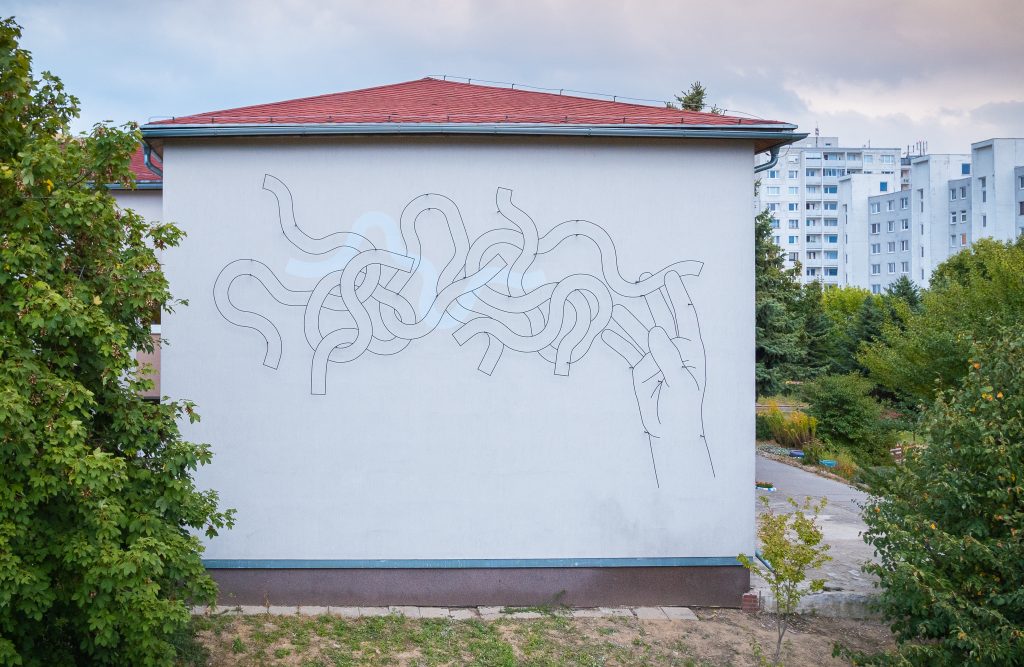
Dorka, Hemerkova 28, Košice, foto: Palko Matia.
Žáner v umení, ktorý zažíval (ako jeden z vizuálnych ideologických nástrojov) svoje zlaté časy v ére budovania socializmu a aj vďaka tomu po nežnej revolúcii zažil radikálnu amputáciu z verejného priestoru (druhý dôvod bol zánik plánovanej socialistickej výstavby a známej Hlavy V [1]). Popri prvoplánovo ideologických a výtvarne dogmatických realizáciách boli ale tzv. monumentálky v architektúre tiež priestorom pre slobodnejší nádych umelcov, medzi nimi aj tých oficiálne zakázaných, a boli zároveň možnosťou ako si zarobiť. Môže to znieť zvláštne, že si na monumentálkach dokázali zarobiť aj zakázaní umelci, no dovoľoval to typicky deravý systém totality u nás. Umelca dokázal pretlačiť architekt, alebo sa robilo pod cudzími menami a boli tiež prípady, keď zakázaní umelci prešli cez schvaľovacie komisie vďaka vlastnej tvrdohlavosti a vytrvalosti – chodili sa na ne obhajovať toľko, až to napokon prešlo (alebo sa medzitým zmenilo zloženie komisie a podarilo sa to vybaviť s novými ľuďmi).
Formálne aj materiálovo boli výstupy veľmi pestré a často okrem poplatnej realistickej figurácie reflektovali súčasné a avantgardné výtvarne formy a postoje (op art, abstraktnú geometriu, organickú plastiku, kinetické umenie, konštruktivizmus atď.).
Prešlo 30 rokov. Po revolúcii boli v prvej dekáde najvýraznejšími monumentálkami azda graffiti a street artové realizácie (čiže neoficiálna scéna,ale vedľajší efekt tegovania pomerne intenzívne zasiahol mnoho nevinných domov) … Iným monumentálnym peklom, ktorý pohltil verejný priestor veľmi dôsledne, boli a sú reklamné plochy. Aj tie sa občas stali médiom umenia (bilboart, ale skôr ako súčasť nejakej neziskovej kampane). Je teda zrejmé, že trh umenie až tak vo verejnom priestore nepotrebuje a rovnako vágne k nemu pristupovali samosprávy aj verejné inštitúcie. Často podporili vznik diel s veľmi nízkou výtvarnou kvalitou, alebo ľúbivé fotopasce na turistov. Potvrdilo sa, že „umelecké“ okrášľovanie vie byť aj veľmi nevkusná aktivita.
Občas vznikli aj ozajstné diela. Spomeniem napríklad veľkoformátovú maľbu od KW (Igor Korpaczewski) v Petržalke z roku 2005, Erwin Wurm House Attack (2008) v Bratislave v Ružinove alebo dočasné monumentálky, ktoré robili v staničnej hale v kultúrnom centre Banská Stanica (2009 – 2018), ale to je trochu iný princíp. Verejne zarezonovala tiež záchrana poslednej monumentálnej maľby na paneláku v bratislavskej Petržalke od akademického maliara Jozefa Porubčina s názvom Mier, ktorú v roku 2016 inicioval aktivista Martin Kliebl.
Až v poslednej dekáde častejšie počuť obhajcov aj tohto žánru (nielen industriálnych pamiatok). Volá sa po zdokumentovaní, konzervovaní a záchrane kvalitných realizácii z minulosti (masaker už prebehol, ale stále sa nájdu skvelé kusy, ktoré zrazu začnú niekomu vadiť…) aj po legislatívnom zakotvení tvorby diel pri architektúre verejných stavieb a pri tvorbe verejného priestoru. Po zlikvidovaní sochy Jozefa Jankoviča, ktorá vyvolala vlnu kritiky dokonca obchodný reťazec Lidl zafinancoval knižné vydanie unikátneho registra sôch v Bratislave, ktorého autorkou je sochárova dcéra, historička umenia Sabína Jankovičová.
Monumentálne realizácie v umení sú však stále veľmi vzácne. K tým novým (2019) patrí práca Braňa Laha aka Emila Taschku v Košiciach. Aj túto iniciovali aktivisti z prostredia street artu. Dizajnér je s touto komunitou dlhodobo prepojený. Svojim návrhom vyhral OPEN CALL na dielo, ktoré by dotvorilo stenu centra pre záchranu rodiny DORKA na Hermekovej ulici (sídlisko KVP) v Košiciach. Dielo sa stalo súčasťou Otvorenej mestskej galérie (OMG – Open Mural Gallery, ktorú inicioval festival Street Art Comunications) a navyše je prvým nemaliarskym dielom v nej. Už v zadaní bol kovový materiál. Organizátori tak chceli pripomenúť tradíciu oceľového umenia v Košiciach (sochy a reliéfy ktoré vznikali práve v 60.- 80.rokoch 20. storočia). Tento typ priestorových intervencií aj materiál svedčí verejnému priestoru možno viac ako veľké nástenné maľby, ktoré sú občas príliš vizuálne dominantné a bez kontextu (a tiež sú často zneužívané reklamou).
Dielo pre DORKU je prvé veľkoformátové dielo v tvorbe Braňa Laha (ak nepočítam sochu bilboardu pre BADW 2015). Dielo nazval jednoducho Dorka, podľa názvu inštitúcie. Pracuje tu s pevným kovovým drôtom, teda pre seba typickým materiálom. Pomocou neho, už dlhšie jeho ohýbaním „kreslí“ rôzne objekty, portréty, výjavy. Typickou pre neho je redukovaná skratkovitá línia. O realizácii v Košiciach hovorí „Dorka je grafika a zároveň plastika, nástenný reliéf.“ Lineárne zobrazuje spleť vlákien, ktoré autor vníma ako metaforu rôznych životných ciest a osudov – rôznych možností – podobne ako sú rôznorodé príbehy klientov inštitúcie. Abstraktný motív spojil s rukou, ktorá ich môže uchopiť, rozpliesť, ale aj nezachytiť. „Mali by všeobecne reprezentovať diverzitu a skutočnosť mnohých možností, podobne ako sú o tom osudy ľudí, ktorým v Dorke pomáhajú.“ Dielo realizoval na mieste počas rezidencie. Jednoduchý „rozbehnutý“ motív je svižne kompozične uchopený. Je plošný a plastický zároveň. Vizuálna striedmosť, transparentnosť aj kovová materialita kresby (ilustrácie) architektúre sedí.
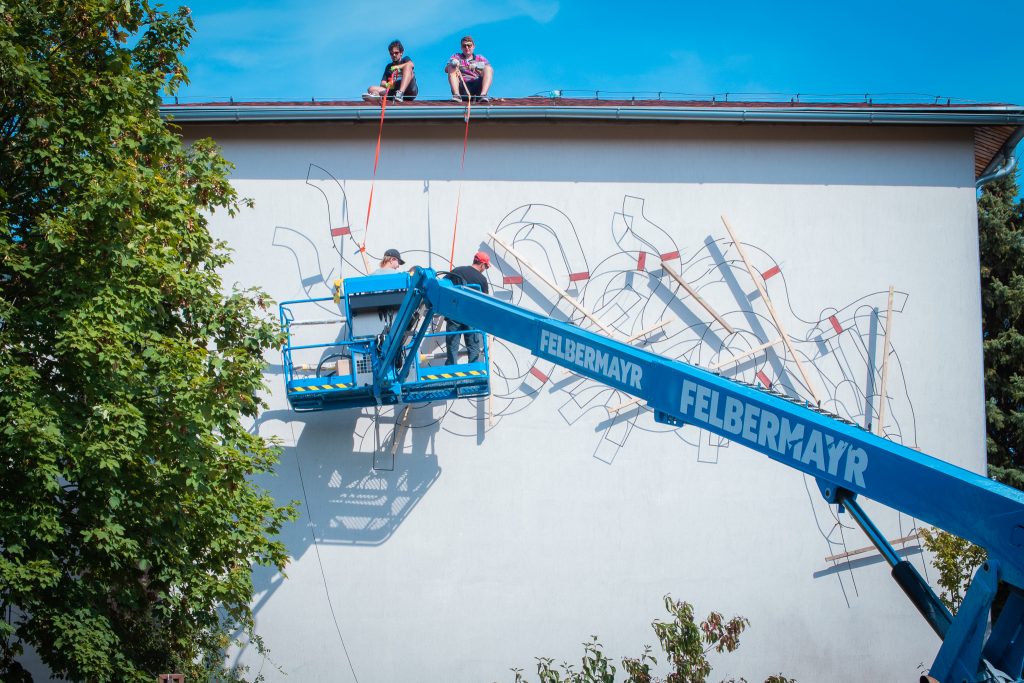
Foto: Palko Matia.
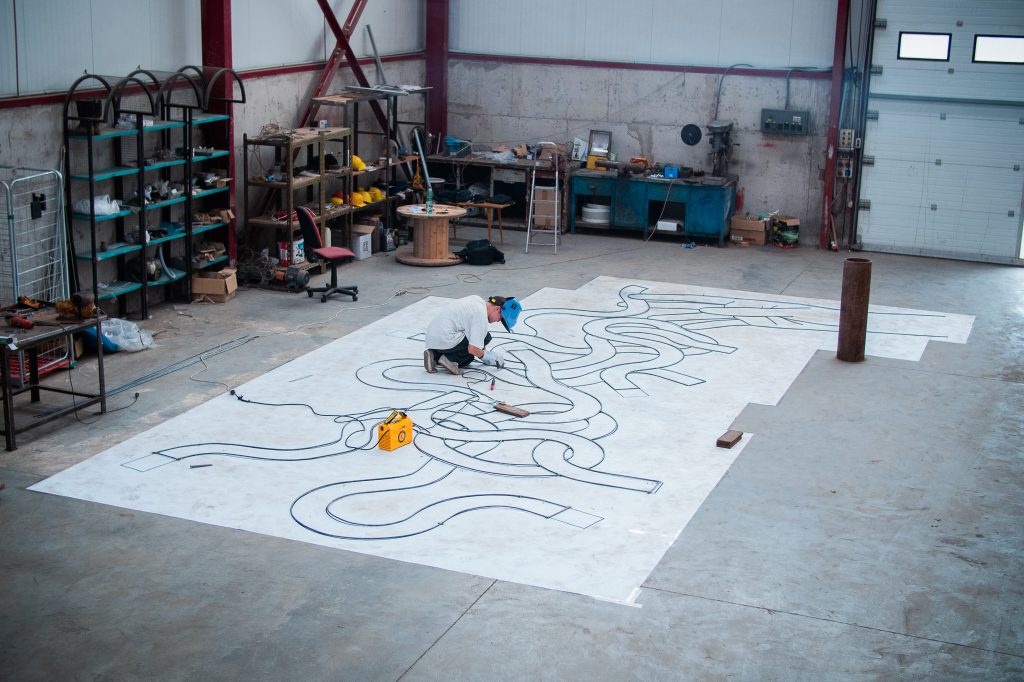
Foto: Palko Matia.
1 Uznesenie, nazývané Hlava V, definovalo obstarávanie umeleckých diel vo verejnej stavbe cez určené percento z investovanej čiastky (boli to jedno až štyri percentá, v závislosti od spoločenskej dôležitosti a druhu stavby).
[:en]
Dorka, Hemerkova street 28, Košice, photo: Palko Matia.
A genre in art that experienced (as one of the visual ideological tools) its golden times in the era of socialist establishment, and thanks to this, after the Velvet Revolution, experienced a radical amputation from the public space (the second reason was the demise of the planned socialist development and the well-known Hlava V [1]). However, alongside the primarily ideological and artistically dogmatic realisations, the so-called monuments in architecture were also a space for a freer touch of artists, among them those officially banned, and they were also a way to make money. It may sound strange that even banned artists were able to make money from monumentals, but the typically leaky system of totalitarianism in our country allowed it. Artists were able to be pushed through by an architect, or they were made under other people’s names, and there were also cases where banned artists made it through the approval commissions through their own stubbornness and persistence – they went to defend them so much that it finally passed (or in the meantime the composition of the commission changed and they managed to handle it with new people).
Formally and materially, the outputs were very varied and often reflected contemporary and avant-garde art forms and attitudes (op art, abstract geometry, organic sculpture, kinetic art, constructivism, etc.) in addition to fee realistic figuration.
30 years have passed. After the revolution, in the first decade, the most significant monuments were perhaps graffiti and street art realizations (i.e. the unofficial scene, but the side effect of tagging quite intensely affected many innocent houses) … Another monumental inferno that has engulfed public space very consistently has been and is advertising space. Even these have occasionally become a medium for art (billboard art, but more as part of some non-profit campaign). It is clear, then, that the market does not need art so much in public space, and municipalities and public institutions have been equally vague in their approach to it. Often they have encouraged the creation of works of very low artistic quality, or fawning photo-booths for tourists. It has been confirmed that “artistic” beautification can also be a very tasteless activity.
Occasionally, real works of art were created. I will mention, for example, the large-scale painting by KW (Igor Korpaczewski) in Petržalka in 2005, Erwin Wurm House Attack (2008) in Bratislava’s Ružinov district, or the temporary monuments they made in the station hall in the Banská Stanica cultural centre (2009-2018), but that’s a slightly different principle. The rescue of the last monumental painting on a block of flats in Bratislava’s Petržalka by the academic painter Jozef Porubchin, entitled Peace, which was initiated in 2016 by the activist Martin Kliebl, also resonated publicly.
It is only in the last decade that we have heard more often advocates of this genre (not only of industrial monuments). There is a call for documenting, preserving and saving quality realizations from the past (the massacre has already taken place, but there are still great pieces that suddenly start to bother someone…) and for the legislative anchoring of the creation of works in the architecture of public buildings and in the creation of public space. After the destruction of the sculpture of Jozef Jankovič, which caused a wave of criticism, even the Lidl chain financed the publication of a book of a unique register of sculptures in Bratislava, authored by the sculptor’s daughter, the art historian Sabína Jankovičová.
However, monumental realisations in art are still very rare. Among the new ones (2019) is the work of Braňo Laho aka Emil Taschka in Košice. This one was also initiated by activists from the street art milieu. The designer has long been connected to this community. With his design he won the OPEN CALL for a work that would complete the wall of the DORKA family rescue centre on Hermekova Street (KVP housing estate) in Košice. The work became a part of the Open Mural Gallery (OMG – Open Mural Gallery, initiated by the Street Art Comunications festival) and moreover it is the first non-painterly work in it. The commission already included metal material. The organizers wanted to recall the tradition of steel art in Košice (sculptures and reliefs that were created in the 1960s-1980s). This type of spatial interventions and material is perhaps more conducive to public space than large murals, which are sometimes too visually dominant and without context (and are also often abused by advertising).
The work for DORKA is the first large-format work in the oeuvre of Braňo Laho (not counting the sculpture of the billboard for BADW 2015). He called the work simply Dorka, after the name of the institution. Here he works with solid metal wire, a material typical of himself. Using it, he has been “drawing” various objects, portraits, scenes by bending it for a long time. Typical for him is a reduced, abbreviated line. About the realization in Košice he says “Dorka is a graphic and at the same time a sculpture, a wall relief.” It linearly depicts a tangle of threads, which the author perceives as a metaphor for different life paths and destinies – different possibilities – just as the stories of the institution’s clients are diverse. He has combined an abstract motif with a hand that can grasp them, untangle them, or not grasp them. “They should generally represent the diversity and reality of many possibilities, just as the fates of the people they help at Dorka are about that.” The work was realised on site during the residency. The simple “run-on” motif is deftly grasped compositionally. It is flat and plastic at the same time. The visual austerity, transparency and metallic materiality of the drawing (illustration) suits the architecture.
Photo: Palko Matia.
Photo: Palko Matia.
1 The resolution, called Hlava V, defined the procurement of works of art in public construction through a specified percentage of the amount invested (it was one to four percent, depending on the social importance and type of construction).
[:]