[:sk]Recenzia / BEH PROTI PRÚDU[:en]Review / RUN AGAINST THE FLOW[:]
[:sk]Daniel Grúň o výstave Mateja Gavulu: Abrazívna spoločnosť pre tranzit.sk[:en]Daniel Grúň about the exhibition of Matej Gavula: Abrasive Society for tranzit.sk[:]
[:sk]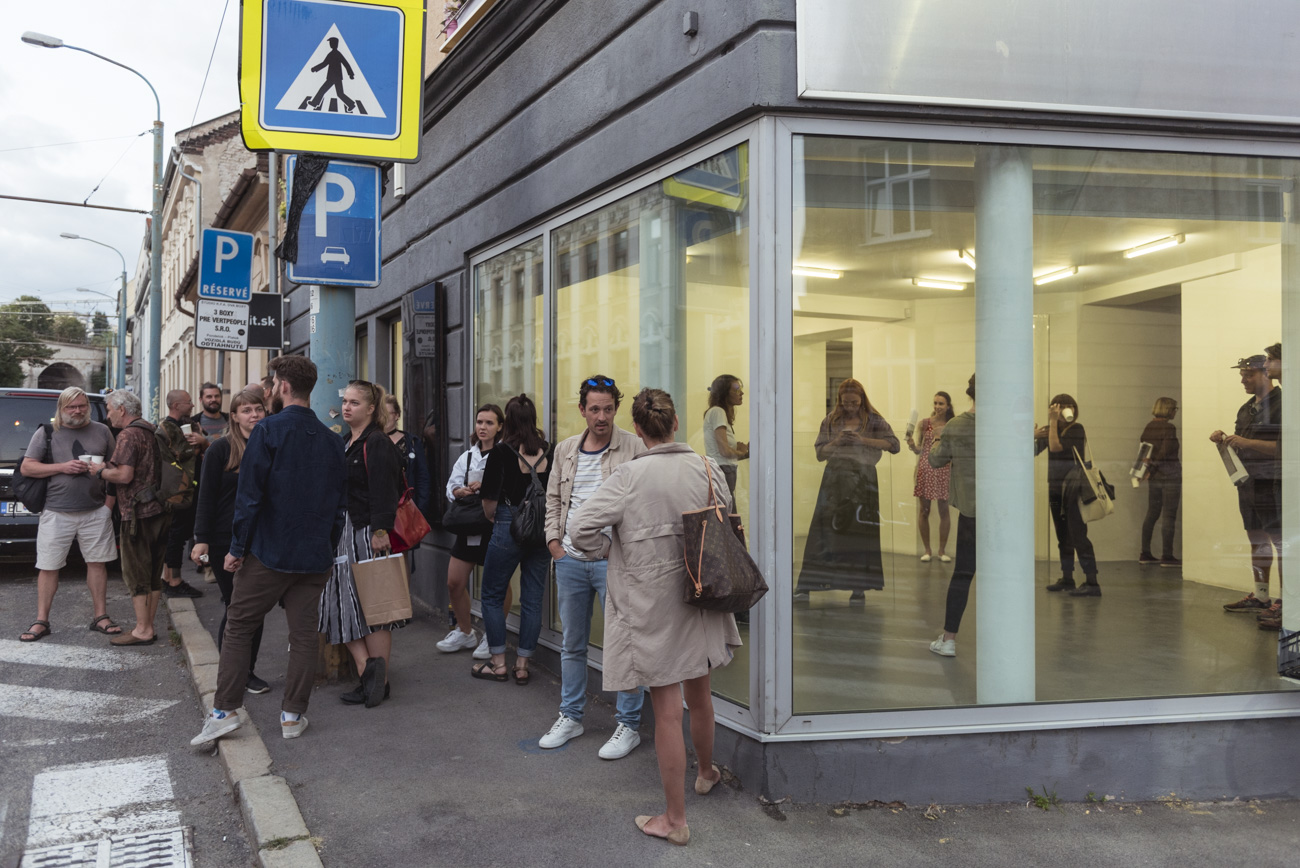
Foto: Adam Šakový.
Česanie proti srsti, ako nazýval Walter Benjamin svoj prístup k dejinám, dokáže určitý dejinný smer rastu a vývoja faktov narušiť pohybom nášho myslenia a ukázať v ňom prekryté alebo na povrchu neviditeľné procesy. Ak sa niekto vyberie proti prúdu, proti smeru rastu, musí očakávať, že ho to vyvrhne na okraj, že v prúde diania jednoducho zanikne, stratí sa, že prúd napokon aj tých najvytrvalejších strhne a odvlečie neúprosnou silou zákona. Výstava Mateja Gavulu v priestoroch tranzit.sk je meditáciou o architektonickom priestore. Zároveň ale sleduje paralely medzi prírodným a spoločenským zákonom prežitia, ako a čím sú navzájom podmienené. Ukazuje archaický a pomalý svet sochárstva ako archetypálnu, zdanlivo statickú, a preto málo viditeľnú súčasť prítomnosti, vníma a číta ho za javovou stránkou skutočnosti ako vnútorný tichý prúd, a zároveň ho kriticky prehodnocuje.
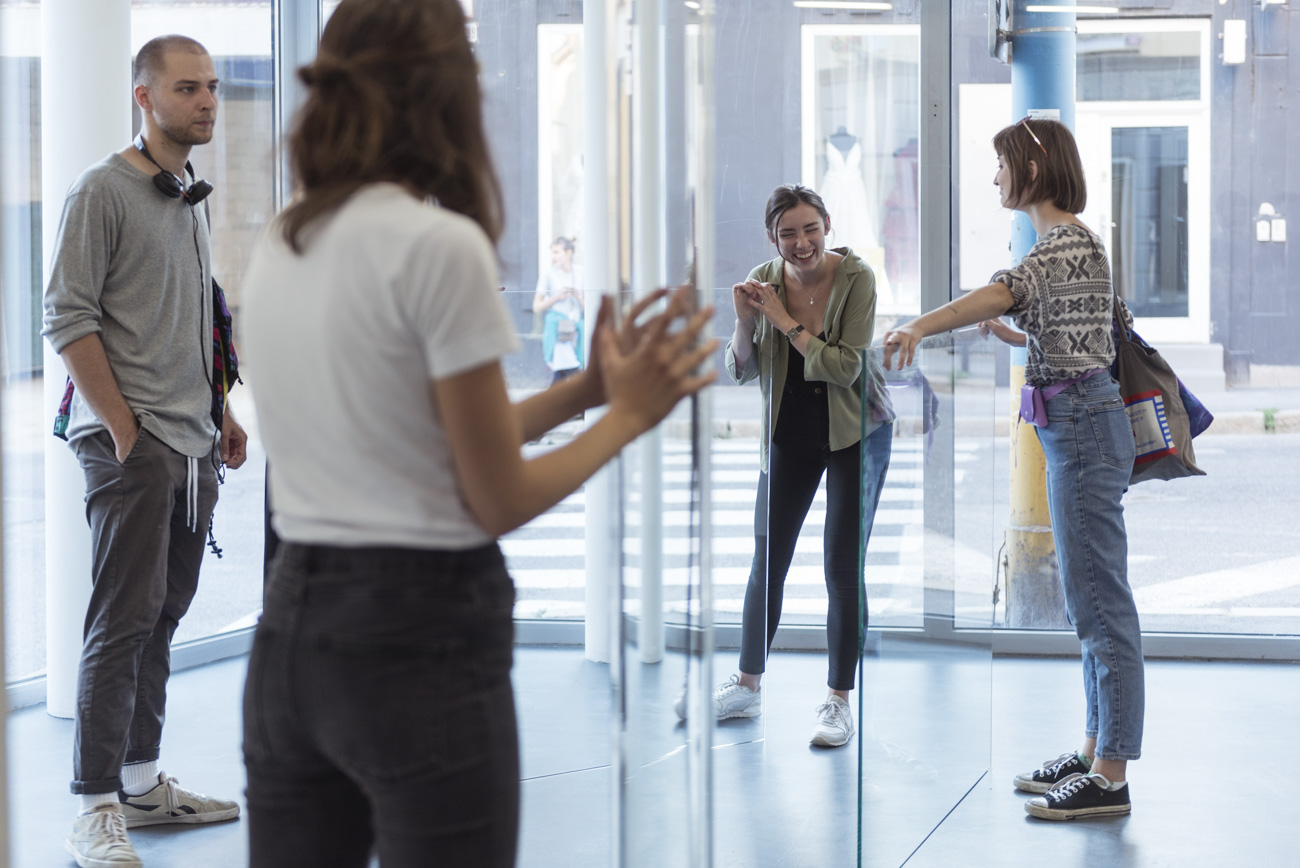
Foto: Adam Šakový.
Výstava je zostavená zo štyroch navzájom prepojených častí – prvou je atlas – pilier podopierajúci stropný preklad a doplnený niekoľkými menšími sochami, druhou je súbor sklených objektov zapojených do performancie, treťou časťou je projekcia krátkeho filmu a poslednú časť tvorí tlačovina s fotografickou esejou, doplnená o kurátorský text od Judit Angel a netradičný rozhovor umelca s mladou umelkyňou Danou Tomečkovou, doplnený jej kresbami. Judit Angel píše: „Zatiaľ čo v skutočnosti nekompletná štruktúra mozaiky odkazuje k procesu rozpadu, v priestoroch výstavy sa stopy mozaiky stávajú šúčasťou stálej kompozície, vybudovanej z pevného materiálu.” Gavula pri svojich prechádzkach okolo komplexu budov Prírodovedeckej fakulty zbieral odpadnuté kusy sklenenej mozaiky a doma v ateliéri preniesol ich formu do sadry a umelého kameňa. Z prasknutého plášťa modernistickej stavby vytvoril dynamický modul nie nepodobný modernistickej mriežke, v ktorej sa opakuje algoritmus jednotiek a núl, gén plnosti a prázdnoty. Stĺp postavený zo sadrových modulov je vložený do miestnosti tak, akoby podopieral strop. Haptický povrch stĺpa je negatívom modernistického plášťa. V tejto metamorfóze nielen vyzýva k dotyku, ale svojim vyhladeným povrchom, prevedením plnosti toho, čo inde chýba, spôsobuje taktilný zážitok. Sexus a falus sú odrazu dané do služby atlasa.
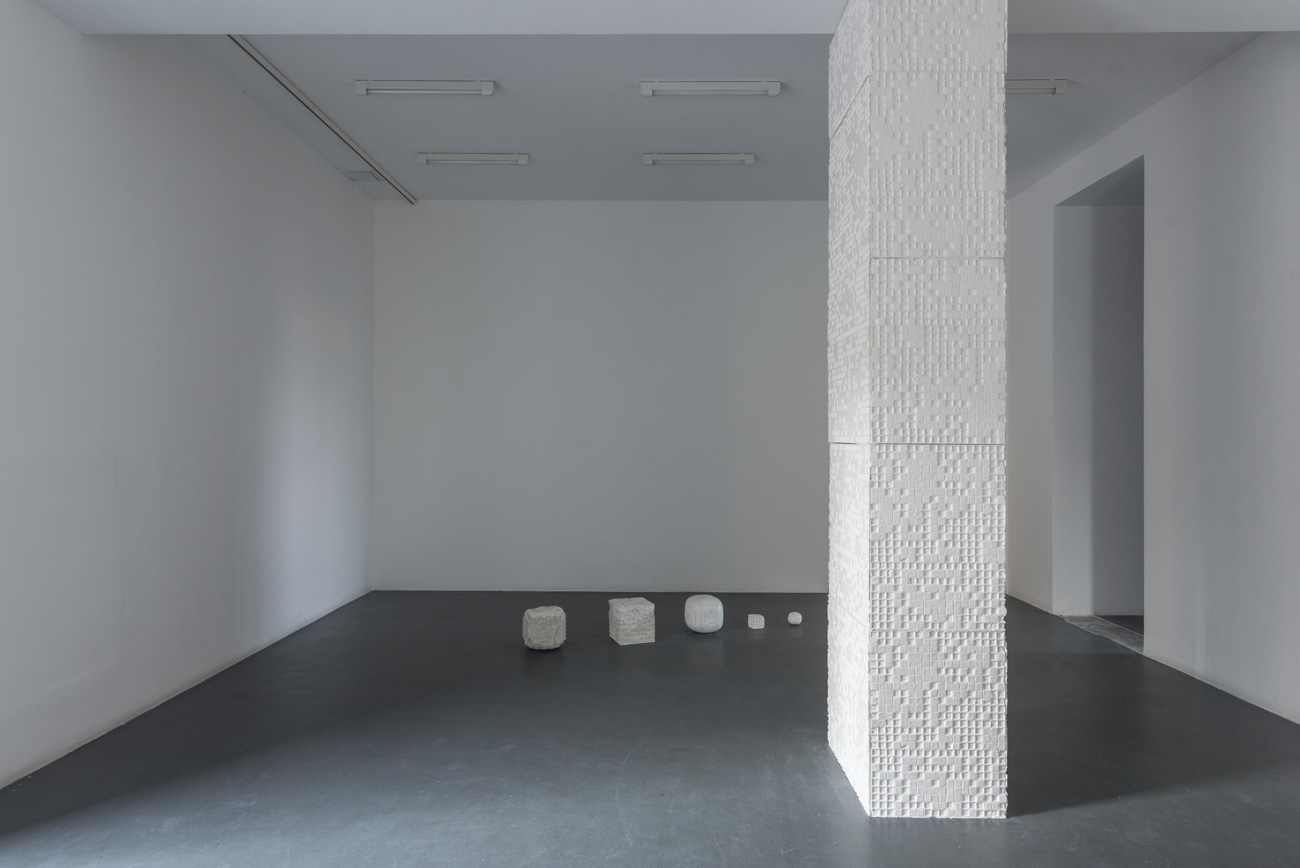
Foto: Adam Šakový.
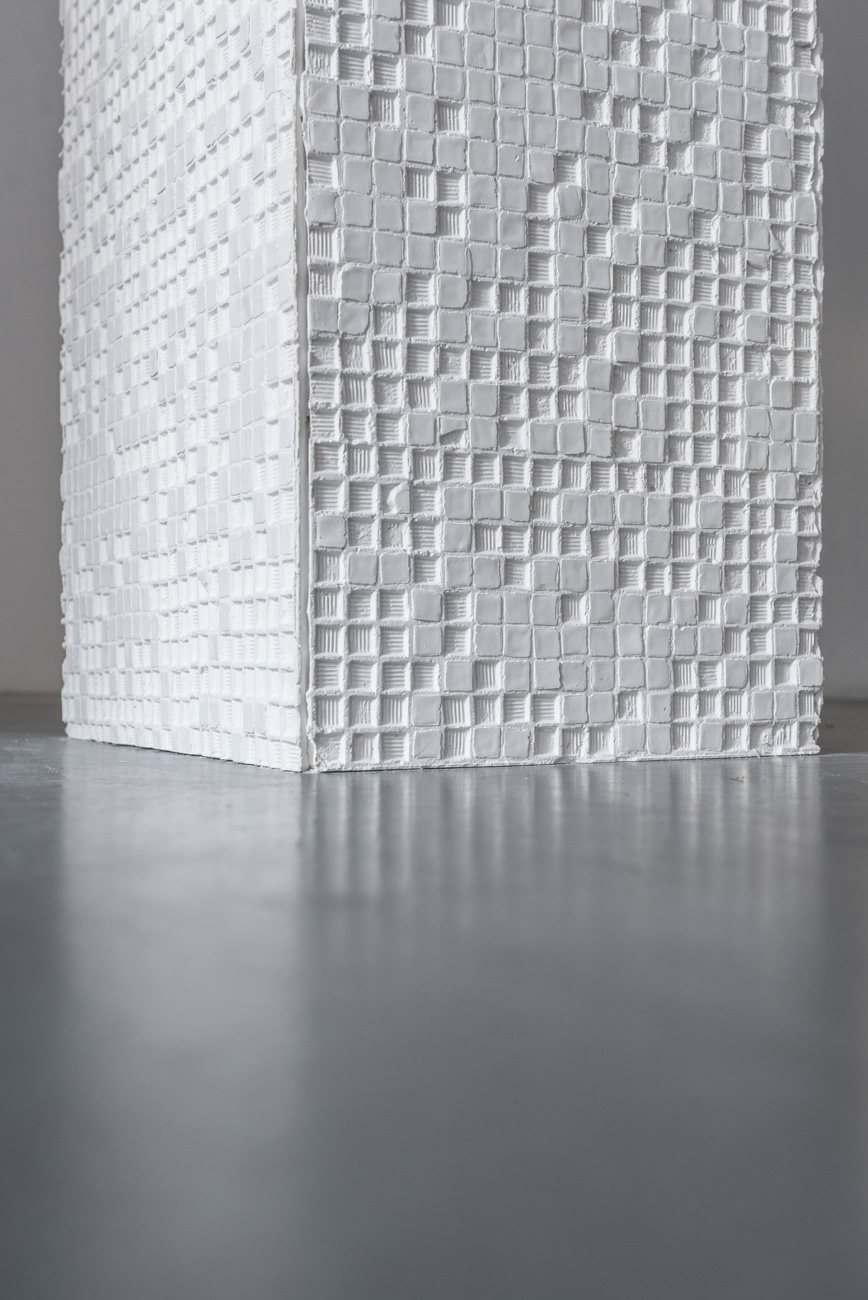
Foto: Adam Šakový.
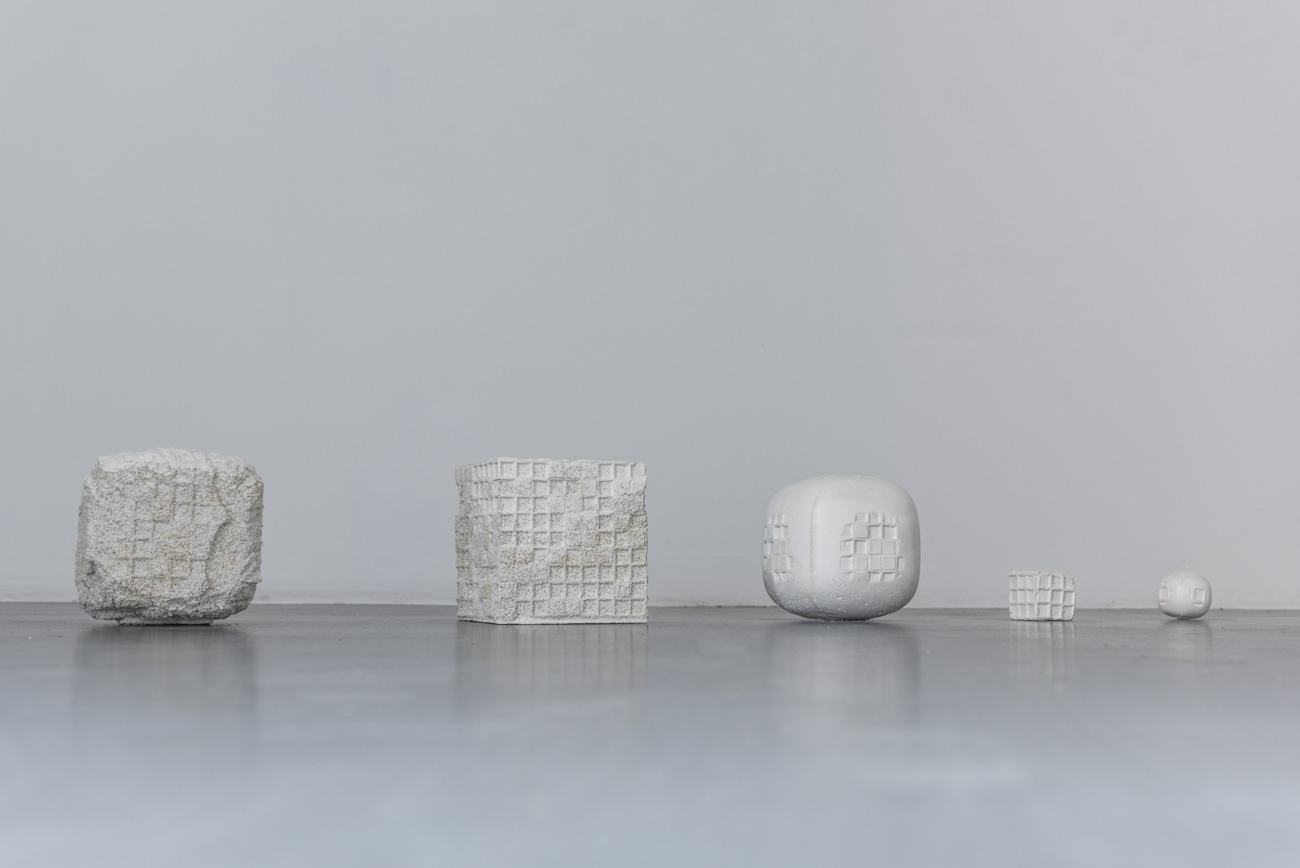
Foto: Adam Šakový.
Gavula v odpovediach na otázky Dany Tomečkovej prirovnáva nájdené kusy opadanej mozaiky k hornine. Fotografická esej dopovedáva túto asociáciu zábermi z interiérov Prírodovedeckej fakulty, oddelenia geológie a mineralógie. Architektúru, ktorá sa stala východiskom motívu, máme možnosť vnímať zvonku i zvnútra. Degradácia a zánik kultúrnych foriem je súčasťou kozmického kolobehu, ale zároveň je vždy nejako dejinne podmienená, ako je to v prípade modernistickej architektúry reálneho socializmu, z ktorej sa stávajú ruiny. Vonkajšia erózia univerzitného areálu súvisí s tým, že Vladimír Dedeček tvoril pre štát a mnohé jeho budovy sú sídlami verejných inštitúcií. Prechodný stav chátrania je spôsobený úpadkom školstva a presunom kapitálu i spoločenského záujmu do rýchlo rastúcich výnosných odvetví napojených na privátnu sféru reprodukujúcu diktát ekonomického rastu. Abrazívna spoločnosť je spoločnosťou trpiacou symptómami erózie (nielen) architektonických krás, ktoré sa vymykajú aktuálnym spoločenským trendom. Gavula na to upozorňuje bez toho, aby sa staval do role kritika. Všíma si a skúma toto zvláštne prepojenie prírody a kultúry. Sprevádza nás reťazcom asociácií prírodných a sochárskych procesov, ako sú vysekávanie, obrusovanie, odoberanie materiálu, pričom práve to, čo z kameňa odchádza v procese generovania tvaru je tým, v čom hľadá silu výpovede.
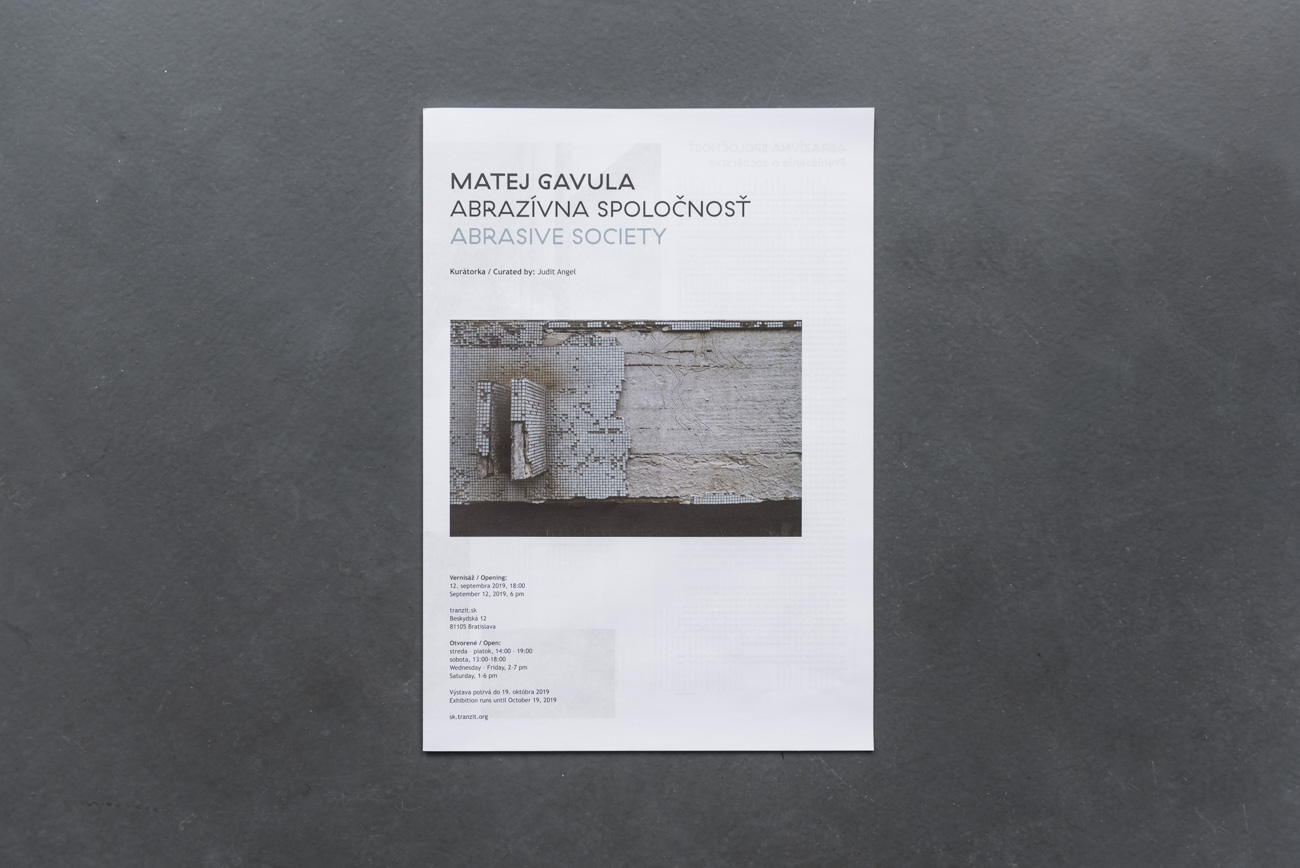
Foto: Adam Šakový.
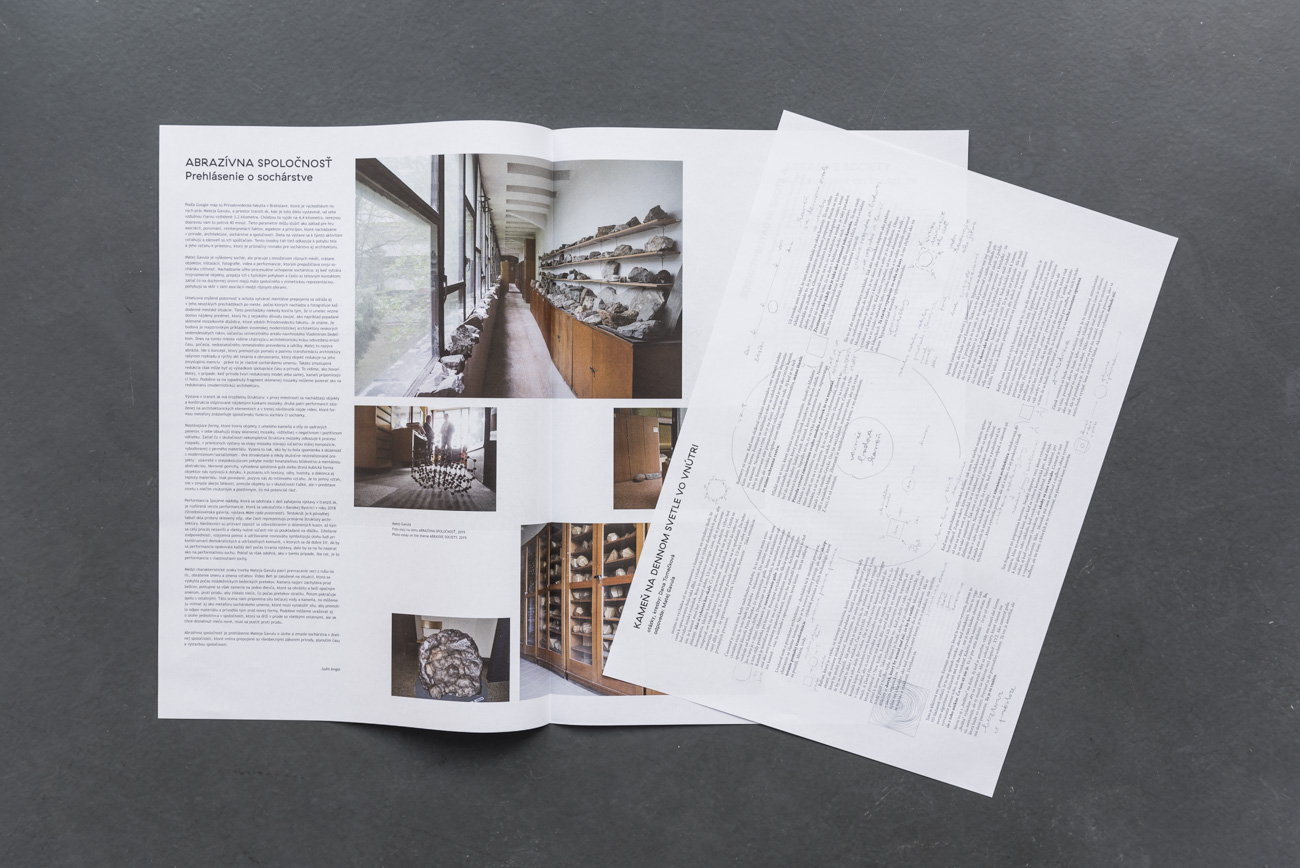
Foto: Adam Šakový.
Výstava Mateja Gavulu pôsobí na prvý pohľad redukovane. V každej miestnosti je len jedno dielo, čo autorovi umožnilo sústrediť sa na ich vzťahy v rámci celku. Tieto vzťahy môžeme vnímať v rovine motívu – mozaika, sklo, architektúra, verejný priestor, ako aj v rovine vizuálnej artikulácie – pilier, performancia a filmová slučka. V projekcii krátkeho videofilmu Beh je kľúčovým momentom spomalenie scény, kedy sa postava bežkyne so zopnutými dlaňami pred sebou vydá proti smeru bežiaceho davu. Pohyb vpred a vzad filmovej slučky, transparentnosť sklených objektov a pozitív-negatív piliera z transformovanej mozaiky nás uvádzajú do komplexnej hry vzájomných vzťahov. Výstava vedie dialóg s daným miestom. Jemná a precízna práca s výstavným priestorom, minimalistická plnosť prázdnoty spúšťa senzitívne vnímanie každého použitého elementu. Doterajšie výstavné projekty, do ktorých bol ako spoluautor zapojený dokazujú, že Gavula je skutočným umelcom spolupráce. V prípade jeho samostatnej výstavy to platí dvojnásobne, pretože nanovo vynachádza a rozvíja funkčné spolupráce nielen medzi umelcami, ale aj medzi autorom a divákmi.
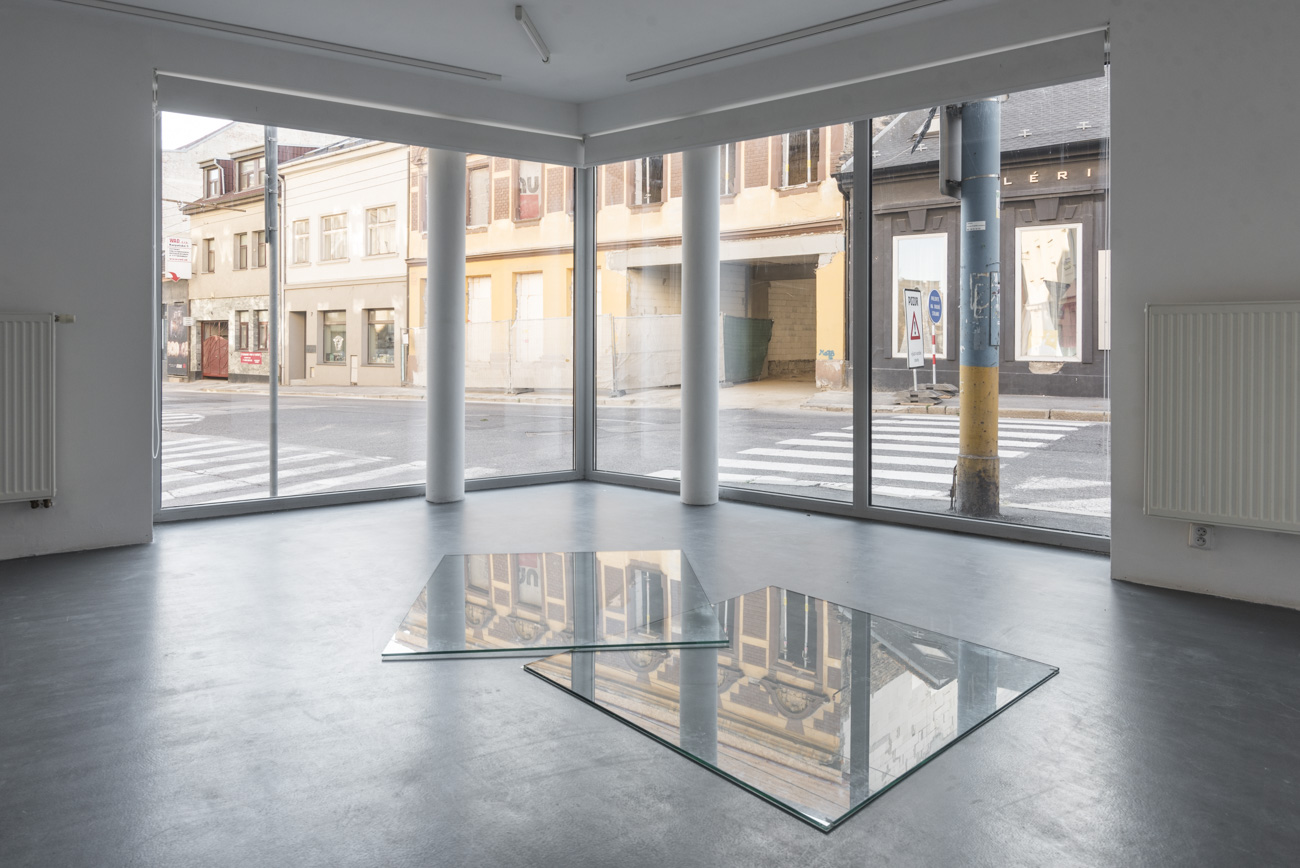
Foto: Adam Šakový.
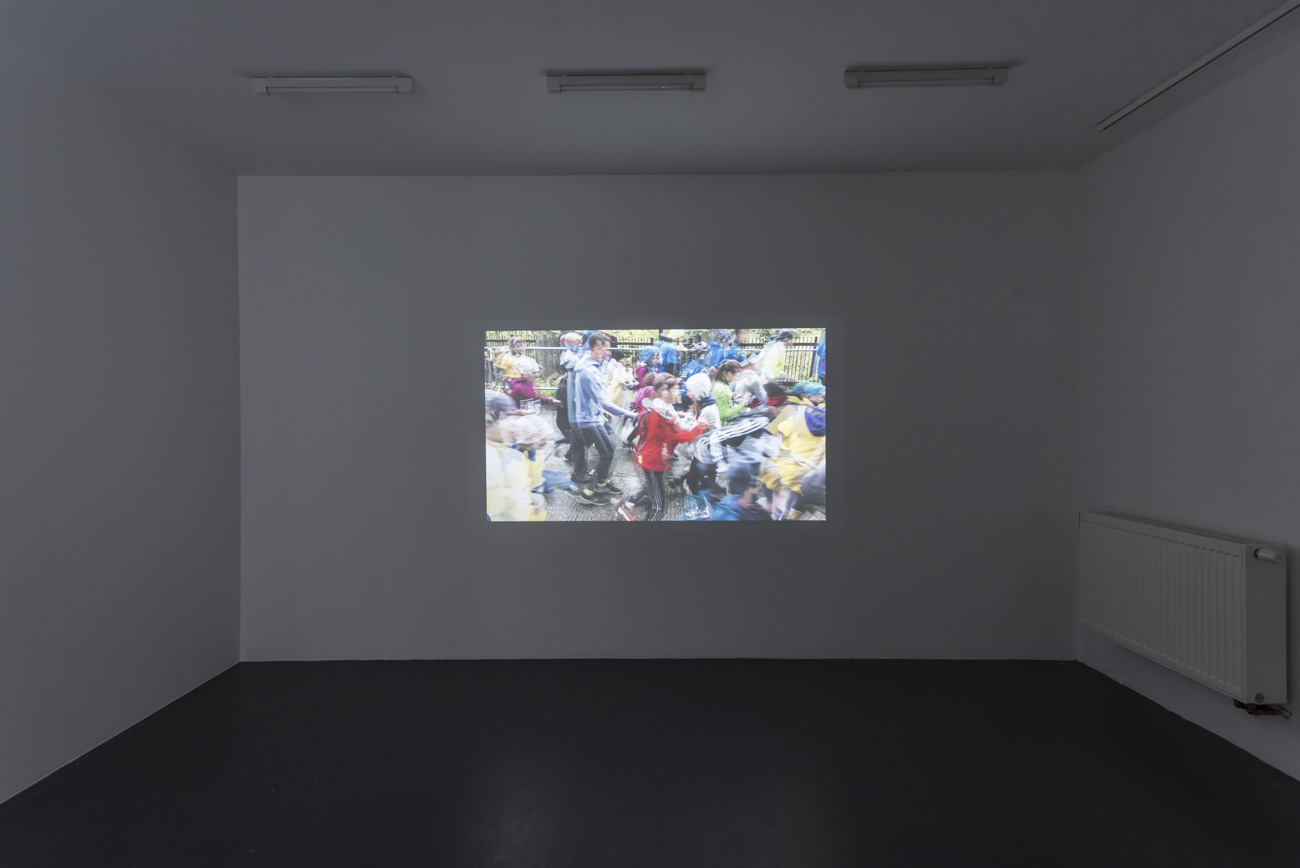
Foto: Adam Šakový.
[:en]
Photo: Adam Šakový.
Combing against the grain, as Walter Benjamin called his approach to history, can disrupt a certain historical direction of growth and development of facts by moving our thinking and showing the overlaid or superficially invisible processes therein. If one sets out against the flow, against the direction of growth, one must expect to be thrown to the margins, to simply disappear in the current of events, to lose oneself, to be swept away by the flow, to be swept away by the inexorable force of the law, even by the most persistent ones. Matej Gavula’s exhibition at tranzit.sk is a meditation on architectural space. At the same time, it traces the parallels between the natural and social law of survival, how and what they are conditioned by each other. It shows the archaic and slow world of sculpture as an archetypal, seemingly static and therefore little visible part of the present, perceiving and reading it behind the phenomenal side of reality as an internal silent stream, while critically re-evaluating it.
Photo: Adam Šakový.
The exhibition is composed of four interconnected parts – the first is an atlas – a pillar supporting the ceiling lintel and complemented by several smaller sculptures, the second is a set of glass objects involved in a performance, the third part is a projection of a short film and the last part consists of a print with a photographic essay, complemented by a curatorial text by Judit Angel and an unconventional interview of the artist with the young artist Dana Tomečková, supplemented by her drawings. Judit Angel writes: “While in reality the incomplete structure of the mosaic refers to a process of disintegration, in the exhibition space the traces of the mosaic become part of a permanent composition, built out of solid material.” In his walks around the Faculty of Natural Science building complex, Gavula collected the fallen pieces of glass mosaic and transferred their form into plaster and artificial stone in his studio at home. From the cracked shell of a modernist building he created a dynamic module not unlike a modernist grid, in which an algorithm of ones and zeros, a gene of fullness and emptiness, repeats itself. A column constructed of plaster modules is inserted into the room as if it were supporting the ceiling. The haptic surface of the column is the negative of the modernist shell. In this metamorphosis, it not only invites touch, but with its smoothed surface, performing a fullness of what is missing elsewhere, it causes a tactile experience. Sexus and phallus are suddenly put at the service of the atlas.
Photo: Adam Šakový.
Photo: Adam Šakový.
Photo: Adam Šakový.
In his answers to Dana Tomečková’s questions, Gavula compares the found pieces of fallen mosaic to rock. The photographic essay complements this association with images from the interiors of the Faculty of Natural Sciences, Department of Geology and Mineralogy. We are able to perceive the architecture, which became the starting point of the motif, from the outside as well as from the inside. The degradation and extinction of cultural forms is part of the cosmic cycle, but at the same time it is always somehow historically conditioned, as in the case of the modernist architecture of real socialism, which becomes ruins. The external erosion of the university campus is related to the fact that Vladimír Dedeček worked for the state and many of his buildings are the seats of public institutions. The transitional state of decay is due to the decline of education and the transfer of capital and social interest to fast-growing profitable industries linked to the private sphere reproducing the dictates of economic growth. The abrasive society is a society suffering from the symptoms of the erosion of (not only) architectural beauties that are out of step with current social trends. Gavula draws attention to this without putting himself in the role of a critic. He notices and explores this strange connection between nature and culture. He guides us through a chain of associations of natural and sculptural processes such as cutting, polishing, and removal of material, while it is what leaves the stone in the process of generating the form that he seeks the power of the statement.
Photo: Adam Šakový.
Photo: Adam Šakový.
At first glance, Matej Gavula’s exhibition looks reductive. There is only one work in each room, which allowed the artist to focus on their relationships within the whole. These relationships can be perceived in the plane of motif – mosaic, glass, architecture, public space, as well as in the plane of visual articulation – pillar, performance and film loop. In the projection of the short video film Run, the key moment is the slowing down of the scene, when the figure of a female runner, with her palms clasped in front of her, goes against the direction of the running crowd. The forward and backward movement of the film loop, the transparency of the glass objects and the positive-negative pillars of the transformed mosaic introduce us to a complex play of interrelations. The exhibition conducts a dialogue with the site. The delicate and precise work with the exhibition space, the minimalist fullness of the void triggers a sensitive perception of each element used. Previous exhibition projects in which he has been involved as co-author prove that Gavula is a true collaborative artist. In the case of his solo exhibition, this is doubly true, as he reinvents and develops functional collaborations not only between the artists, but also between the artist and the audience.
Photo: Adam Šakový.
Photo: Adam Šakový.
[:]