[:sk]Rozhovor / NASTASSIA ALEINIKAVA / Je dôležité navzájom sa pochopiť[:en]Interview / NASTASSIA ALEINIKAVA / It is vital to understand each other[:]
[:sk]Rozhovor s dizajnérkou šperkov a okuliarov Nastassiou Aleinkava. O živote v Prahe, o stratenej identite v Bielorusku, či o spolupráci s IOKO. [:]
[:sk]V portfóliu optiky IOKO, ktorá sa doteraz profilovala ako concept store pre výnimočný dizajn okuliarov pribudla v poslednej dobe sebavedomá limitovaná kolekcia IOKO & NA eyewear. Autormi sú v Čechách pôsobiaca dizajnérka Nastassia Aleinikava, jej manžel Pavel Kahotski a Dana Prekopová (IOKO). Nastassia Aleinikava je aj na vrstevnatej českej dizajnérskej scéne výrazný zjav. Venuje sa najmä šperku a dizajnu okuliarov. Minulý rok získala ocenenie Dizajnérka roka na Czech Grand Design, čo je v Čechách najvyššie ocenenie.
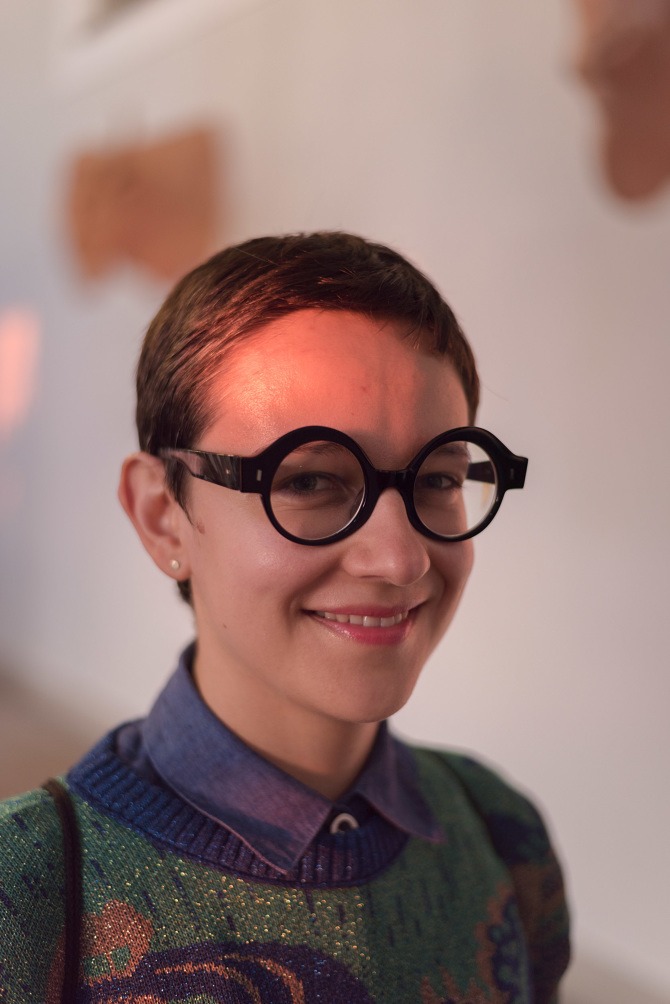
Nastassia Aleinikava, foto: Vojtěch Veškrna.
Ty nie si pôvodom Češka. Aká bola tvoja cesta do Prahy?
Áno, som z Bieloruska. Tam som vyštudovala strednú umeleckú školu a následne som hľadala vysokú školu, ktorá by stála zato. Tá v Bielorusku mi neprišla ideálna, napríklad aj kvôli korupcii na nej, ale aj kvôli kvalite vzdelania. Tak som sa pokúsila ísť na školu v Petrohrade, pretože tam sú najjednoduchšie podmienky pre štúdium uchádzačov z bývalých sovietskych krajín. Ale zistila som, že to mesto nie je pre mňa.
Prečo? V čom ti to pripadalo náročné?
Severské, tmavé a príliš veľkomesto. Komplikované na transport. Z internátu do školy to bolo hodinu a pol, troma spojmi.
Ako si prišla na Prahu?
Pre Prahu som sa rozhodla, lebo mi pripadala najprijateľnejšia. Napríklad vzdelanie je zadarmo. Mne rodina nemohla platiť školu niekde v Nemecku. A zároveň čeština je slovanský jazyk, takže je jednoduchšie si ho osvojiť. A od momentu kedy som sa rozhodla, som mala pocit, že to začalo fungovať. Našla som v Minsku prípravné kurzy češtiny a potom som ešte dala ročný kurz na Karlovej univerzite. To mi dovolilo byť v Prahe a adaptovať sa.
Vždy si chcela študovať šperk?
Nie, pôvodne som chcela ísť na textil. V podstate na prvých prijímačkách som išla na textil, ale nevzali ma. Pochopila som, že mi to asi nesedí. Išla som na konzultácie za Karolom Vratislavom Novákom a tie boli super. Pomohol mi rozhodnúť sa. A tak som išla na šperk. Mala som s ním menšie skúsenosti už zo strednej. S jednou spolužiačkou sme robili niečo pre Volvo Moskva Fashion Week. Ale nebola som si vtedy istá. Asi aj preto, že v Bielorusku sa to nedá veľmi študovať. Otvára sa raz za 5 rokov a je to skôr kováčstvo.
Ty si potom študovala v Ateliéri u Evy Eisler. Ako na to spomínaš?
Bola pre mňa veľmi dôležitá. Prijal ma ešte Novák, ale už pred začiatkom školy prevzala ateliér ona. Vlastne som bola jej prvá „šesťročná“ študentka. Teda celých šesť rokov s ňou. Aj ona bola úplne nabitá energiou a s chuťou ten ateliér viedla od začiatku. Vtedy sa čerstvo prisťahovala z NYC a predávala svoje skúsenosti veľmi veľkoryso. A aj spolupráce, ktoré dohodla počas štúdia, boli pre nás skvelá skúsenosť. Bola tam podpora aj pochopenie. Bolo to super.
Ako by si porovnala kultúrne prostredie v Bielorusku a v Prahe. Ako si vnímala tie rozdiely? Predsa len Bielorusko vnímame ako nie veľmi demokratickú krajinu, s diktátorskými črtami a s Lukašenkom na čele.
Myslím, že média trochu preháňajú. Mám pocit, že robia z Bieloruska odstrašujúci príklad, aby skôr zakryli tunajšie problémy. Nie je to až také hrozné, ale áno, demokracia to nie je. Z môjho pohľadu má ale Bielorusko jeden veľký problém a to je, že ľudia stratili svoju identitu. Možno ju ani nikdy nemali. Nikto z Bielorusov poriadne nevie kto je, kam patrí. Ta minulosť ako súčasť ZSSR je silná. Prirodzene sú nám blízky Rusi, ale aj Kazaši. Aj mladšie ročníky ako ja, vnímame Sovietsky zväz ako krajinu, kde sme patrili. Teda samozrejme nesmútime za socialistickým zriadením, ale za tých 20. rokov slobody, bohužiaľ pod diktátom Lukašenka, sa tam vôbec nevytvorilo prostredie pre hľadanie novej identity. Aj preto ma na Čechoch na začiatku strašne bavilo, že som stretávala slovo český na neobvyklých miestach. Napríklad český chlieb, české vianoce. Mne to prišlo ako totálny nezmysel, že čo to je český chlieb. Veď aj Nemec má chlieb. Až neskôr som si uvedomila, že keby sme aj my v Bielorusku viac pomenovávali naše veci napríklad takto, že by nás to možno posilnilo ako národ. U nás je to skôr ako nadávka. Čiže stratenú identitu, ktorú štát nepomáha nájsť, vnímam ako najväčší problém. Je to zamrazené, dejiny sa prekrúcajú a nerieši sa to. Tu je to také pozitívne, napríklad ta oslava 100 rokov od vzniku ČSR. Aj keď aj tu je trochu cynizmus, ale dejiny sa naozaj skúmajú, pripomínajú, je o nich záujem a neprekrucujú sa.
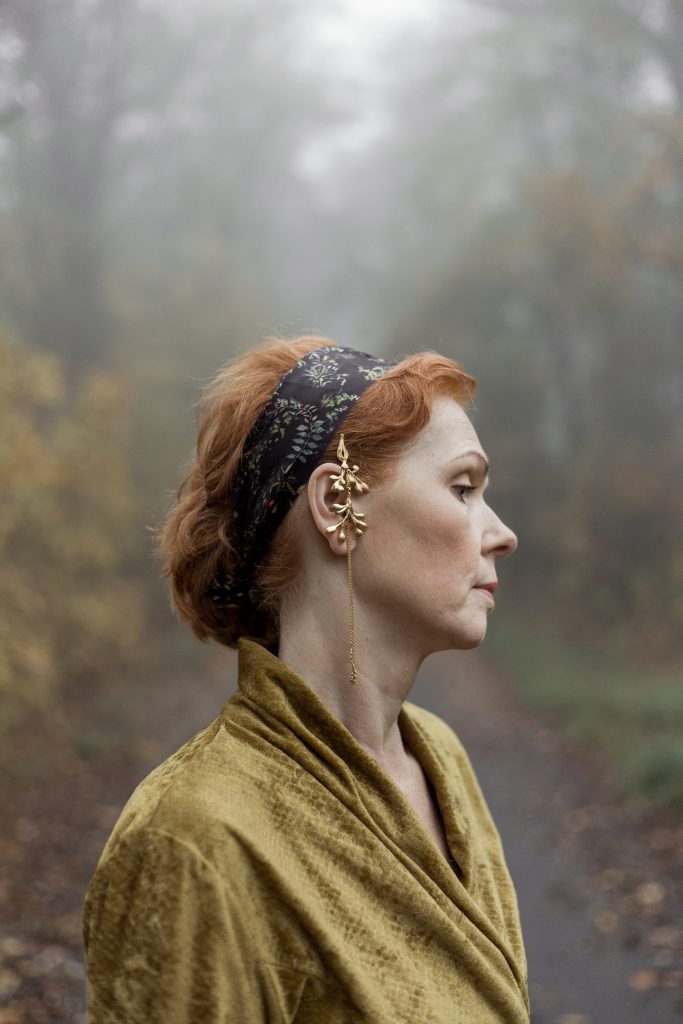
Kolekcia Voynich rukopis, foto: Tereza Ondrušková.
A čo mladšia generácia v Bielorusku? Čo tamojšia dizajnérska a architektonická scéna? Ako ju vnímaš?
Za to obdobie čo som tu, sa to veľmi zmenilo. Kto má nejaké peniaze na cestovanie, tak cestuje. To je veľmi pozitívne, lebo potom sa vracajú domov a menia to tam. Minsk je normálne európske mesto, samozrejme s nádychom sovietskej minulosti, ale je tam celkom intenzívny nočný život. Inšpirácia ide z Berlína. Aj dizajn sa nejako vyvíja, ale chcela by som aby Bielorusi čerpali viac zo svojej autentickosti, strašne veľa vecí sú také kopírky. Nevidím tam veľa pôvodných myšlienok. S architektúrou je to dosť biedne. Je to taký turecký, neoriginálny štýl. Možno niekde medzi súkromnými stavbami sú aj zaujímavejšie realizácie. Ak by som mala niekoho spomenúť napadá mi značka kožených doplnkov Kill today. To je slečna, ktorá vyrába celkom zaujímavo riešené kabelky.
Aká bola tvoja adaptácia po škole do profesionálnej reality. Zaskočilo ťa niečo?
Ten prechod bol úplne plynulý, lebo už od tretieho ročníka som sa snažila presadzovať. Vystavovali sme a zúčastňovali sme sa rôznych dizajnérskych supermarketov ako ateliér aj individuálne a postupne sme už získavali nejakých zákazníkov. Mala som svoj ateliér, odpadla škola a bolo viac času na propagáciu. Veľký zlom bola moja diplomovka. Kde som riešila okuliare. Zrazu to bolo niečo úplne iné. Musela som sa veľa vecí naučiť, pretože si to vyžadovalo iné technológie, materiály. Trochu som sa roztrieštila na šperk a na okuliare.
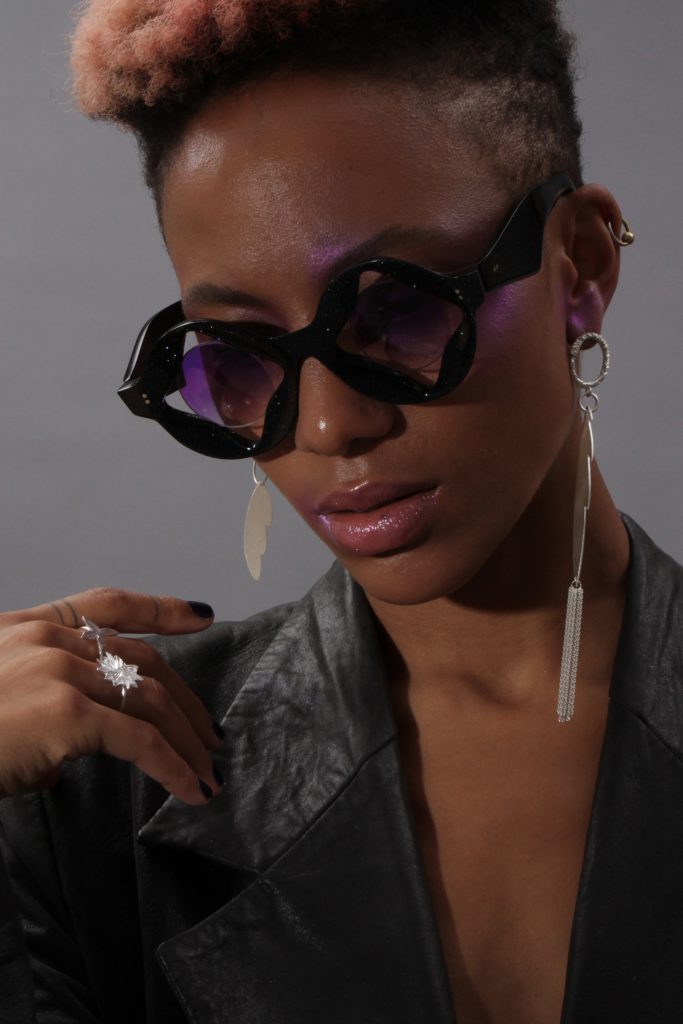
Kolekcia Comets, foto: Taja Spasskova.
Máš to stále tak?
Aktuálne sa okuliarom venujem minimálne. Viac to prevzal môj manžel (Pavel Kahotski) a zákazkovú výrobu vedie on. Ide hlavne o okuliare na mieru. Vôbec som to neplánovala, ale po niekoľkých Designblokoch, kde sme ich ukazovali, nám naozaj narástli zákazky. A ľudia chceli práve okuliare na mieru. Chýbala nám pevná výrobná technológia a bolo tam veľa technických problémov. Bolo toho nejak veľa. Musela som to začať regulovať. Pavel bol so mnou pri tom od začiatku a síce študoval filmovú a televíznu grafiku, ale ukázalo sa že sa to dosť hodí. Napríklad zistila som aká dôležitá je pre navrhovanie práca s počítačovými programami, ale aj grafický dizajn.
S akým materiálom pracujete pri okuliaroch?
Pracujeme iba s acetátom celulózy značky Mazzucchelli. Je to materiál z Talianska, ktorý sa vyrába v jednej rodinnej firme už 150 rokov. Sú skoro posledný v Európe. Pracujeme s ním dosť sochársky. Síce na začiatku je cnc fréza a 2D výrez, ale potom ho dotvárame a formujeme ručne. Čiže každý kus je originál.
Čo je najťažšie pri navrhovaní okuliarov?
Ja si myslím, že najnáročnejšia je dobrá komunikácia s klientom. Aby sme sa navzájom pochopili. Čo naozaj chce. Niektorí ľudia sú ako slepé mačiatka. Vidia dosku materiálu a nevedia si to predstaviť. Takže ja im to celé musím vysvetliť.
Ako vnímaš rozdiel medzi prácou nad šperkami a okuliarmi? A spolupracuješ s módnymi návrhármi?
Je to veľmi podobné napríklad čo sa týka nástrojov. Potom prirodzene prenášam veľa štruktúr a povrchov, ktoré mám na šperkoch, aj do okuliarov. Každý materiál chce ale inú modeláciu. Ono sa to vytvára priebežne. Naposledy sme s okuliarmi napríklad spolupracovali s Preciosou components pri novej kampani. S módou je to pre mňa náročnejšie. Je veľmi rýchla a šperk, aby bol funkčný, potrebuje čas. Aby som vychytala nositeľnosť. Mne sa občas stalo v spolupráci s módnymi dizajnérmi, že vo chvíli kedy oni už dorábali kolekciu, ja som bola na začiatku. Boli sme totálne nezosynchronizovaní. Musím mať čas. Chcem aby moja kolekcia vedela žiť svojím životom. Nechcem aby to končilo jednou sezónou. Mám pocit, že sú to potom len doplnky. Bižutéria.
Minulý rok si získala hlavné ocenenie na Czech Grand Design. Aj za šperk (kolekcia Utópia) aj za okuliare. Čo si zažívala potom?
Hlavne silnú medializáciu a to aj z médií, ktoré by si ma asi predtým nevšimli. A písali o mne aj v Bielorusku). Asi tam bol aj záujem nových klientov, ale s mnohými som pracovala už aj predtým, čiže bolo to aj pre nich zadosťučinenie, že si vybrali dobre).
To bol aj prípad spolupráce s Danou Prekopovou a značkou IOKO. Ako ju hodnotíš?
My sme sa navzájom sledovali už dlho. Keď som robila svoju diplomovku, bol pre mňa napríklad už aj fcb IOKO veľmi zaujímavý zdroj dobrých a kvalitných značiek. Dana Prekopová si ma tiež všimla a viacerí ľudia ju na nás odkazovali. Čiže keď sme sa stretli, tak sme sa rozprávali štyri hodiny bez prestávky o okuliaroch. Ona má veľa skúseností z veľtrhov a vidí veci z iného uhla. A tak na konci schôdzky Pavol povedal: „tak poďme niečo spolu robiť“. A Dana P. sa tomu potešila, lebo už dlhšie chcela niečo také iniciovať. Mať vlastnú kolekciu.
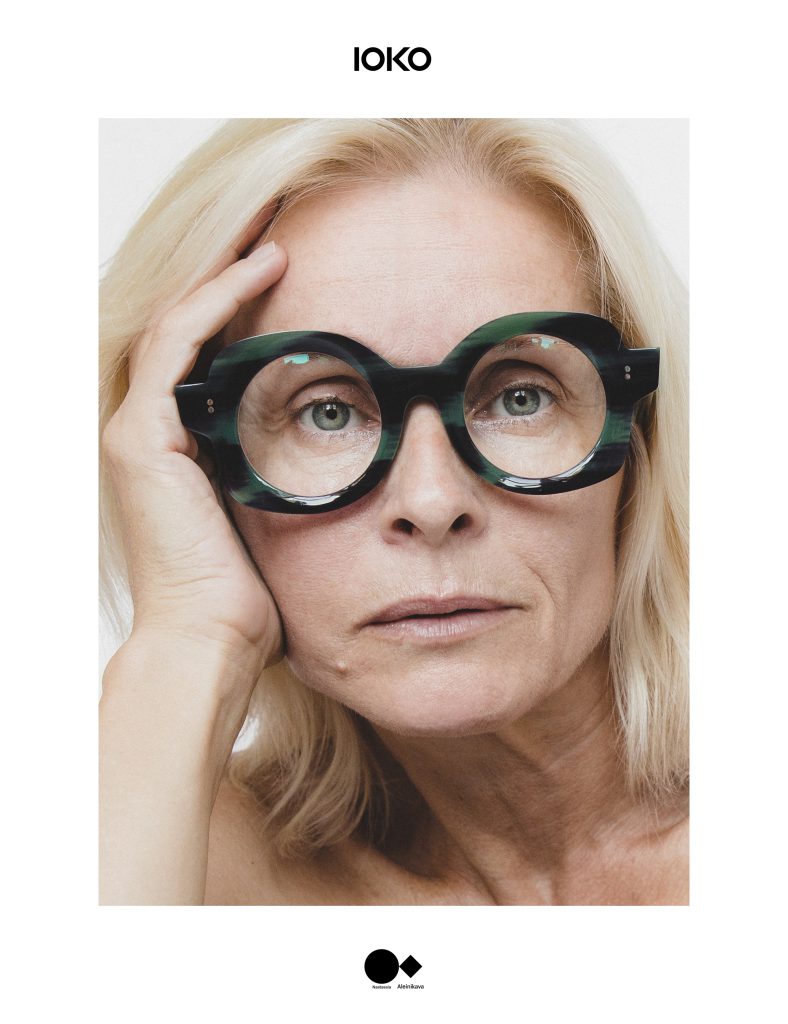
IOKO x Nastassia Aleinikava Eyewear Lookbook 2018, photo: Patricia Kvasnovska, styling: Nina Ford, muse: Ingrid Timková.
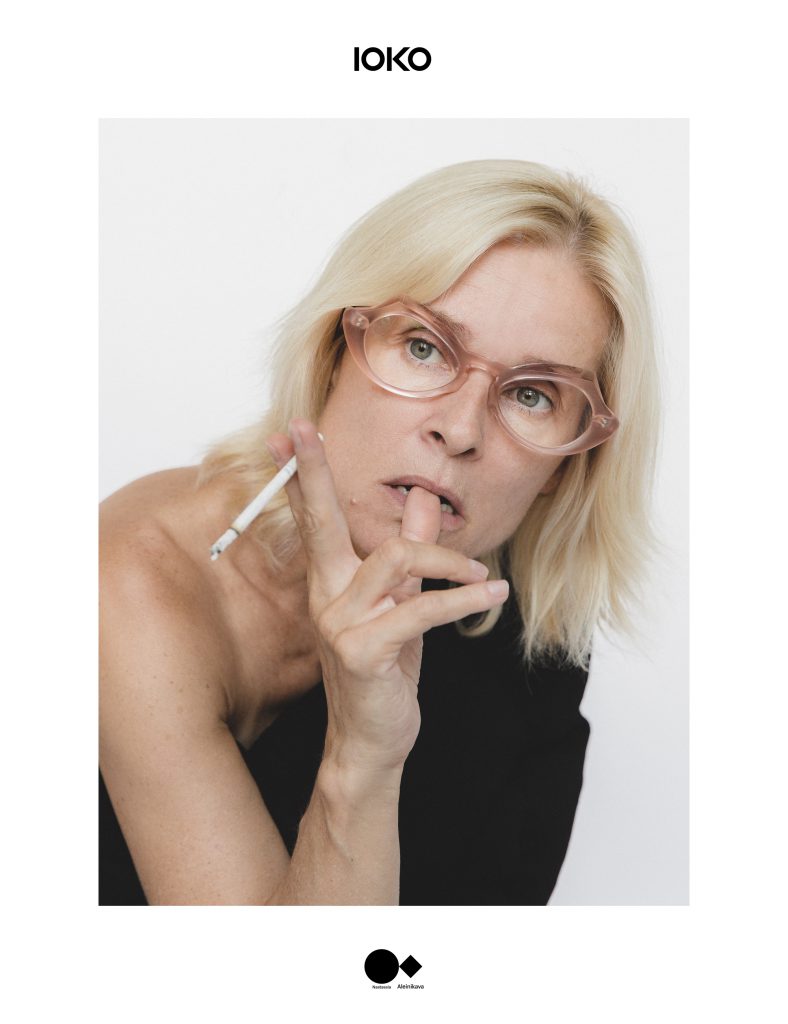
IOKO x Nastassia Aleinikava Eyewear Lookbook 2018, photo: Patricia Kvasnovska, styling: Nina Ford, muse: Ingrid Timková
Naučila si sa niečo nové počas tejto spolupráce?
Áno to bolo asi najrapídnejší vzhľad do nových technológií a naučili sme sa veľa takých neviditeľných vecí. Nepísané pravidlá, ktoré Dana Prekopová pozná zo svojich skúseností. Iná bola aj voľba materiálov. Ona vybrala také, ktoré by nás na začiatku nenapadli. Ale vo výsledku sme videli, že je to dobré a že má dobrú predstavivosť. Myslím, že táto spolupráca nie je na konci. Stretli sme sa osobne aj profesionálne. Je to super.
Koho rešpektuješ na scéne tvorby okuliarov vo svete?
Veľmi som obdivovala Rigards, to je takový chalan z Ázie, ktorý si založil značku v Kalifornii a pracoval veľa s rohovinou. Páči sa mi ako sochársky pracuje, ale zároveň je tam veľa ázijských vplyvov. Jeho okuliare sú úplne iné ako ostatných dizajnérov. Teraz urobil niekoľko kolekcií z hliníku, ale tie sa mi až tak nepáčia. S Pavlom máme ešte obľúbeného NY majstra Wesley Nighta, ktorý pracuje tiež s rohovinou a vytvára okuliare ručne. Sú to také úplne klasické, nenápadné okuliare. Má malú dielničku a natáča videa ako ich vyrába a tie sa nám páčia. Sledovali sme jeho postupy a pozerali čo má v dielni. Fandíme mu. A robí podobne ako my, aj custom made okuliare. A samozrejme nám sa páči napr. polovica toho čo má IOKO v ponuke. Sú to okuliare z malých, často rodinných firiem, ktoré ani nemáte šancu inde uvidieť.
A na záver ty odkedy nosíš okuliare?
Od 11. rokov a mám taký zlý zrak, že nemôžem nosiť šošovky. Pre mňa sú okuliare moja súčasť. Čiže nedávam ich dole.
A koľko ich máš?
Ja mám jedny. Nie je to lacné. Mám drahé sklá.
Kolekcia Utopia, foto: Vojtěch Veškrna.
[:en]The IOKO optic store that has been profiled as a concept store for exceptional design of glasses has lately added a self-conscious limited collection IOKO & NA eyewear. Their authors are Czech-based designer Nastassia Aleinikava, her husband Pavel Kahotski and Dana Prekopová (IOKO). Nastassia Aleinikava is a bold appearance even on the multi-layered Czech designer scene. Her fields are mainly jewellery and eyewear design. Last year she won the highest Grand Designer of the Year award at the Czech Grand Design.
Nastassia Aleinikava, photo: Vojtěch Veškrna.
Your origins are not Czech. How did you find your way to Prague?
Yes, I’m from Belarus. I finished high art school there and then I was looking for some university worth going to. The one in Belarus was far from ideal not only because of the corruption, but also because of the quality of education. Then I tried to go to St. Petersburg, as candidates from the ex-Soviet countries have easier conditions. But I found out that the city was not for me.
Why? Where was it demanding?
It was northern, dark and too big. Complicated transport. It took me one hour and a half to get from the dorm to the uni and I had to change three kinds of transport.
How did you come up with Prague?
I decided for Prague, because I thought it was the most acceptable solution. For example, education is free. My family could not afford to pay a school somewhere in Germany. At the same time, Czech language is a Slavic language, so I decided to master it. From the moment of my decision, I had a feeling that it worked. I found some preparation courses of Czech language in Minsk and then I went through this one-year course at the Charles University. That allowed me to be in Prague and adapt there.
Have you always wanted to study jewellery?
No, originally, I wanted to do textile design. Actually, my first entrance exams were at the textile design department, but they didn’t take me. Then I understood that maybe it just didn’t suit me. After that I started visiting Karol Vratislav Novák for consultations and they were great. He helped me take a decision. So I went to study jewellery. I had had some experience with it already at the high school. We, with my classmate, were doing something Volvo Moskva Fashion Week. But I wasn’t sure back then. Maybe because you can’t really study it in Belarus. It is opened once in five years and it’s rather blacksmithing.
Then you studied at the Eva Eisler’s studio. How do you recall it?
She was really important for me. I’d been accepted by Novák, but then before the start of the school year, she took the studio over. I was actually her first „six-year“ student, i.e. I spent the whole six years with her. And she was super charged with energy and led the studio with gusto from the very beginning. She had just moved from NYC and she passed her experience very generously. The collaborations she struck up during our studies were a great experience for us, too. There was both support and understanding. It was amazing.
How would you compare the cultural environment in Belarus and Prague? How did you reflect the differences? After all, we perceive Belarus as not the most democratic country, with dictatorship features and Lukashenko in charge.
I think media exaggerate a little. I guess they paint Belarus as a bogeyman to cover up for problems here. It’s not so horrible, but yes, it’s not democracy. From my point of view, Belarus had one big problem – the people have lost their identity. Maybe they have even never had it. Belarussians truly do not know who they are, where they belong. The past of being part of the USSR is strong. Naturally, Russians are close to us, but so are Kazachs. We, even younger people than me, perceive the USSR as a country we belonged to. I mean we naturally don’t grieve for the socialist regime, but during these 20 years of freedom, unfortunately under the Lukashenko’s dictate, no environment has risen for seeking a new identity. So that’s what I enjoyed about Czechs at the beginning that I was encountering the word „Czech“ in many unusual places. For example, Czech bread, Czech Christmas. I found it nonsensical – what is Czech bread? Germans have bread, too. Only later did I realise that if we in Belarus named our things in this way, maybe it would empower us as a nation. In our context, it seems more like a swearword. So in my eyes, the biggest problem is the lost identity that the state does not help us find. It’s frozen, history is falsified and it’s not tackled. Here it’s somehow positive, for example, this celebration of 100 years from the birth of the Czechoslovak Republic. Even though we might see a bit cynical approach, the history is really researched, commemorated, people are interested in it and it’s not fudged.
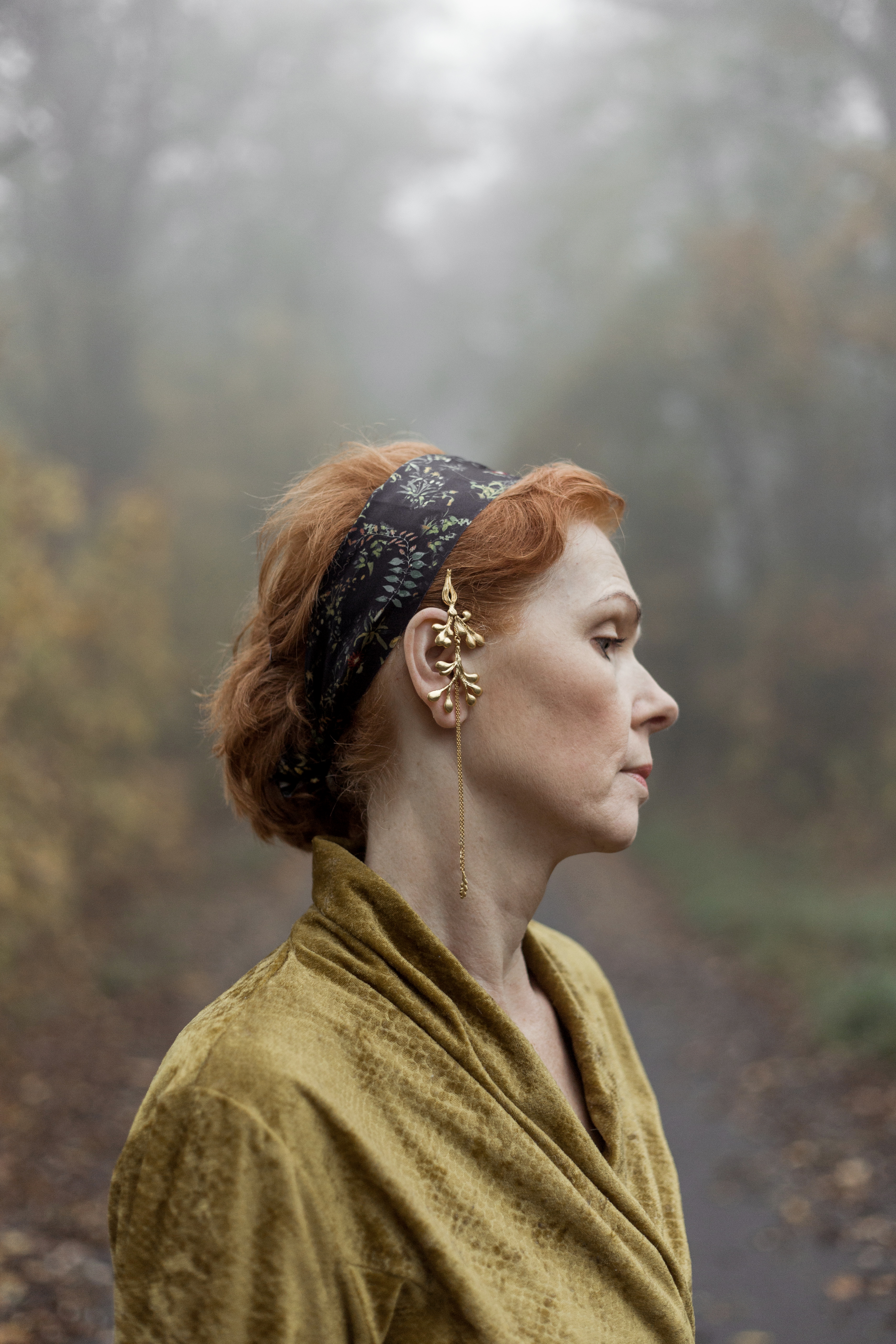
Collection Voynich, photo: Tereza Ondrušková.
And how about a younger generation in Belarus? What about the design and architectural scene there? How do you see it?
It has changed a lot during my time here. Who has some money, travels. It’s very positive, as then they come back and change it there. Minsk is a standard European city, of course with a tinge of Soviet past, but there is a rather intense night life. Inspiration comes from Berlin. Design is also developing in some way, but I’d like that Belarusians drew more from their authenticity; a great number of things are just plain copies. I don’t see too many original thoughts in there. It’s also miserable in terms of architecture. Mostly we see some kind of Turkish, non-original style. Though one can find more interesting realisations somewhere among private buildings. If I had to mention somebody, it would be the brand of leather accessories Kill today. It’s a lady that makes quite intriguing handbags.
How did you adapt to the professional reality after the university? Did anything catch you by surprise?
The transition was really smooth, as I tried to be visible since my third grade. We were exhibiting, taking part in different designer supermarkets both as a studio or individually, step by step getting some customers. I had my studio minus school, so there was more time for self-promotion. A major breakthrough was my thesis that covered glasses. All of a sudden it was something completely different. I had to learn a lot of things, because it required different technologies, materials. I split my work into jewellery and eyewear a little.
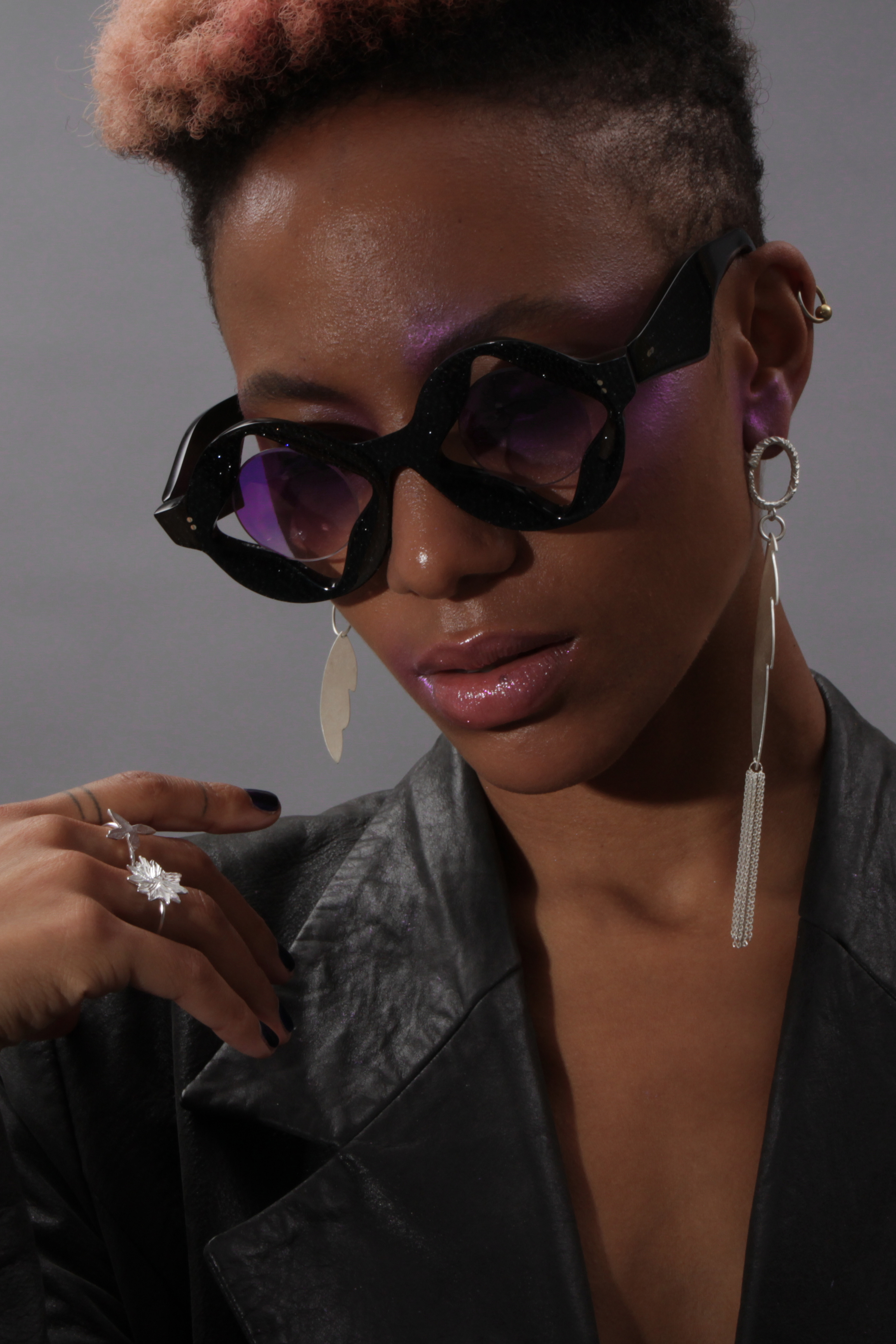
Collection Comets, photo: Taja Spasskova.
Is it still like that?
At the moment, I deal with glasses only minimally. My husband (Pavel Kahotski) is more in charge, he also leads the custom-made production, mainly made-to-measure glasses. I wasn’t planning it at all, but after several Designbloks (Prague’s design exhibition) where we were showing them, the number of orders significantly rose. People wanted bespoke glasses. We were lacking a firm production technology, there were many technical problems. It was all too much, so I had to start regulating it. Pavel was standing by me from the start and even though he studied film and TV graphic, it turned out it was suitable. For example, I found out how computer programs together with graphic design are important for designing.
What materials do your use with your eyewear?
We only work with cellulose acetate by Mazzucchelli. It’s a type of material from Italy that has been made in one family company for 150 years. They are nearly the last of their kind in Europe. We work with it in quite a sculptural manner. First there is CNC lathe and 2D cut, that’s true, but then we finish it and form manually. So, each piece is an original.
What’s the hardest about designing eyewear?
I guess the most demanding part is a good communication with a client. To understand each other well. What he/she really wants. Some people are like blind kittens. They see a plate of material, but they can’t imagine it. So, I have to explain them everything from scratch.
How do you view the difference between working with jewellery and eyewear? Do you collaborate with fashion designers?
It’s very similar, for instance, with regards to tools. Naturally, I transfer many structures and surfaces I have on my jewellery into glasses. Each material requires different modelling. Usually it’s created on the go. For example, last time our glasses were part of the new campaign of Preciosa components. I find fashion more demanding. It’s very quick and jewellery needs time to be functional. To get to grips with wearability. It happened in collaboration with fashion designers that at the moment when they were finishing their collection, I was only at the start. We were totally out of sync. I have to have time. I want my collection to be able to live its own life. I don’t want it to finish with one season only. Then I have a feeling it’s merely an accessory. Junk jewellery.
Last year you received the main award at the Czech Grand Design. Both for jewellery (the Utopia collection) and eyewear design. What followed?
Mostly intense medialisation, also from the media that wouldn’t take notice of me before. And they were also writing about me in Belarus. Maybe there also was an interest of new clients, but I had worked with many of them even before, so for them it was also a kind of satisfaction that their choice was right.
That was also the case of collaboration with Dana Prekopová and IOKO brand. What do you think of her?
We had been checking each other for long. When I was doing my thesis, a FB account of IOKO was an interesting source of good and high-quality brands. Dana Prekopová noticed me too and many people referred her to us. So when we finally met, we were talking about glasses for four hours. She has many experiences from fairs and looks at things from a different angle. At the end of the meeting, Pavel said: „Let’s do something together. And Dana P. was happy because she had been wanting to initiate something like that for a longer time. To have an own collection.
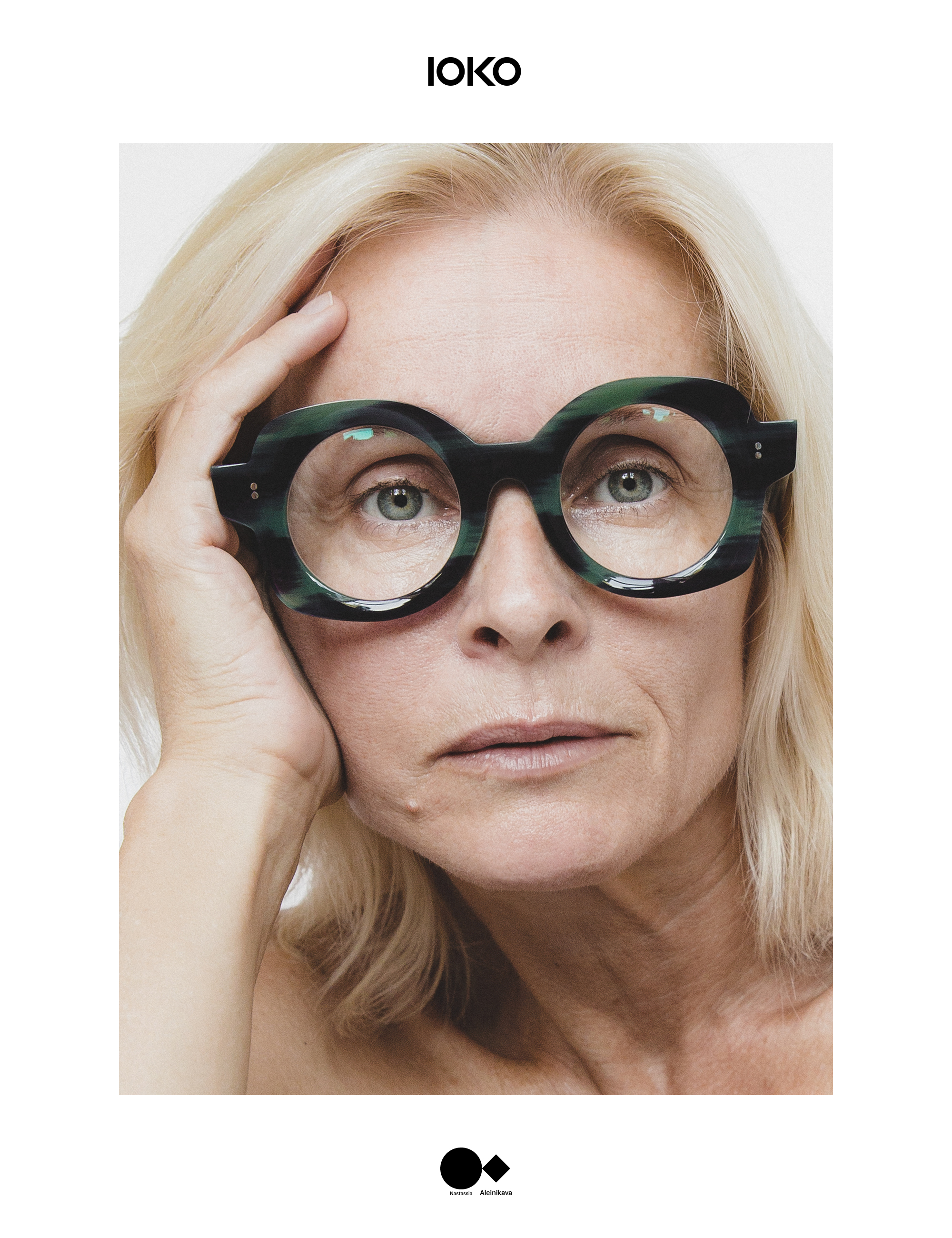
IOKO x Nastassia Aleinikava Eyewear Lookbook 2018, photo: Patricia Kvasnovska, styling: Nina Ford, muse: Ingrid Timková.
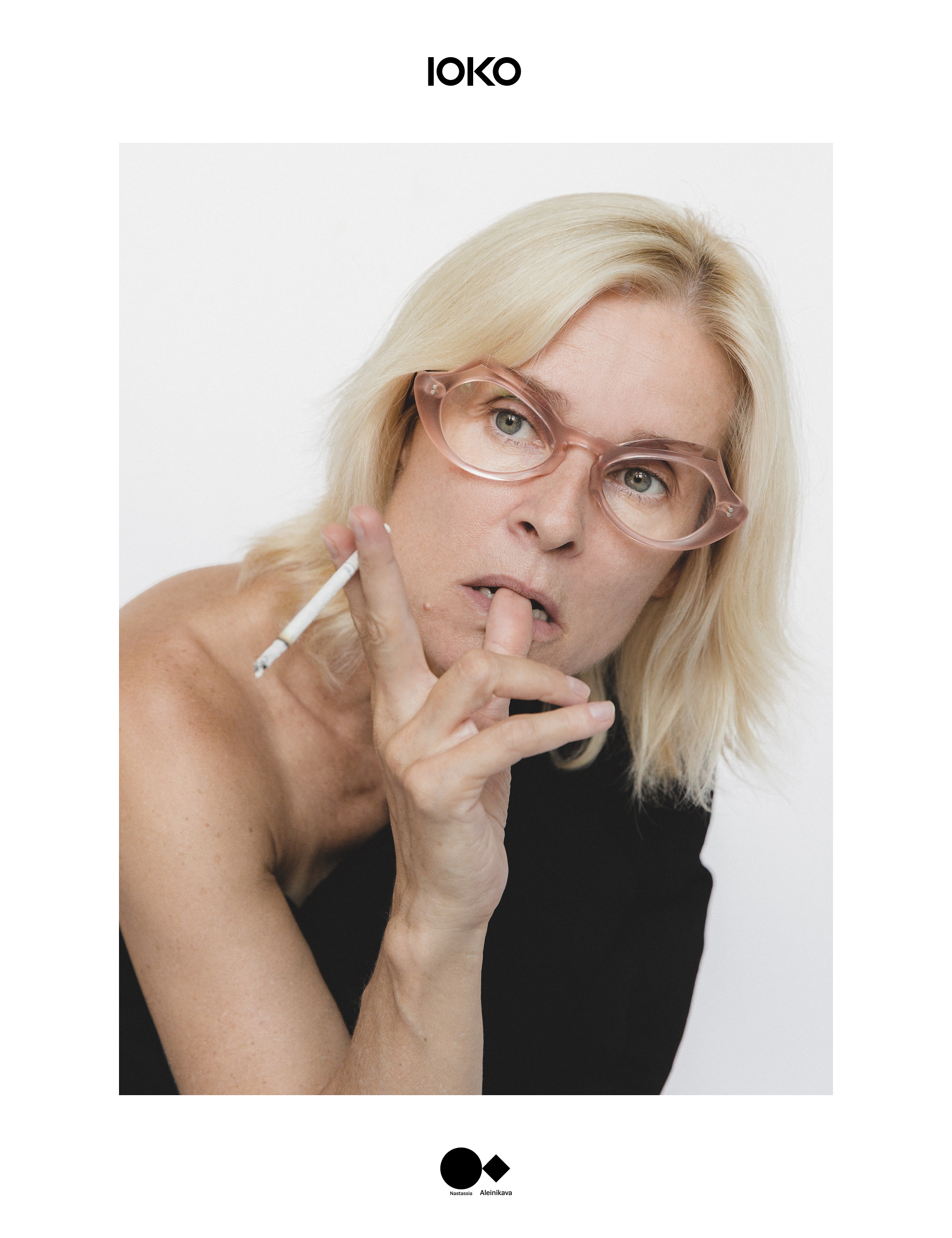
IOKO x Nastassia Aleinikava Eyewear Lookbook 2018, photo: Patricia Kvasnovska, styling: Nina Ford, muse: Ingrid Timková.
Did you learn something new from this collaboration?
Yes, it was probably the most rapid insight into new technologies. We also learned many invisible things. Unwritten rules that Dana Prekopová knows from practice. The choice of materials was also different. We wouldn’t have come up with the material she chose at the start. But at the end of the day we saw it was good and that she had a great imagination. I guess this collaboration hasn’t ended yet. We’ve met both personally and professionally. Great!
Who do you respect on the scene of glasses production in the world?
I admired Rigards a lot, he is a guy from Asia who founded a brand in California and worked a lot with horn. I like how he works in a sculptural manner and there is a lot of Asian influences too. His glasses are completely different from other designers. Now he made a couple of aluminium collections, but I don’t like them too much. Pavel and I have a favourite NY master Wesley Night who handmakes glasses. He also works with horn and his glasses are these classic, discreet pieces. He has a small workshop and makes videos about the creation, which we enjoy. We observed his procedure and looked at what he had in his workshop. We are his fans. And he makes them in a similar way, including the custom-made glasses. And of course, we like a half of the IOKO’s offer. They are glasses from small, often family companies that you barely have a chance to see elsewhere.
And at the end, how long have you worn glasses?
Since I was 11 and my vision is so bad that I can’t wear lenses. Glasses are a part of me and I don’t put them down.
And how many do you have?
Just one pair. It’s not cheap. The lenses were expensive.
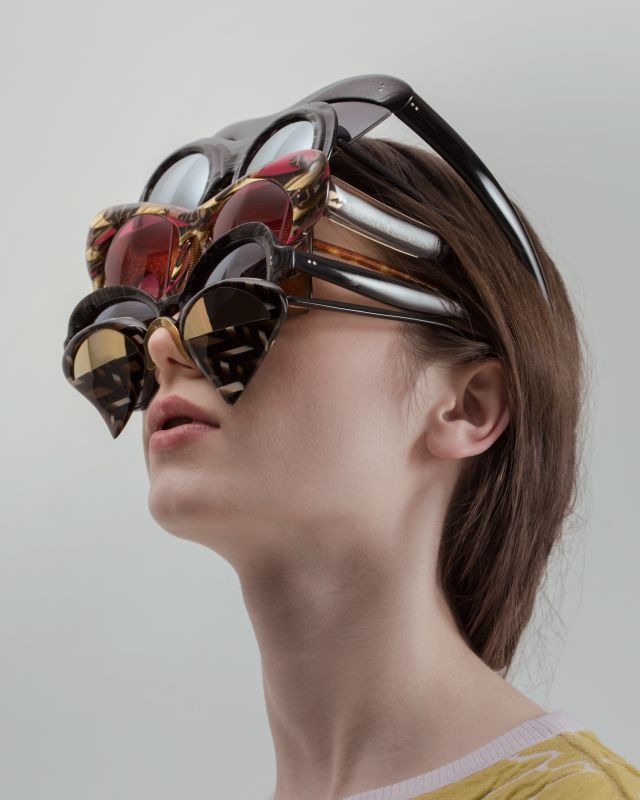
Collection Utopia, photo: Vojtěch Veškrna.
[:]