[:sk]Výstava / (MIKRO)KOZMOS KAROLA WEISSLECHNERA[:en]Exhibition / KAROL WEISSLECHNERS (MICRO)COZMOS [:]
[:sk]Výstava Kozmos, šperky, objekty a iné súvislosti priblížila tvorbu Karola Weisslechnera. A to vo všetkých médiách, v ktorých pracuje – od šperkov cez objekty, kresby až po architektúru. Ako celok sa dá táto výstava vnímať aj ako špecifický „gesamkunstwerk“, v ktorom sa jednotlivé prvky dopĺňajú a vzájomne komunikujú, zároveň však existujú aj samy o sebe.
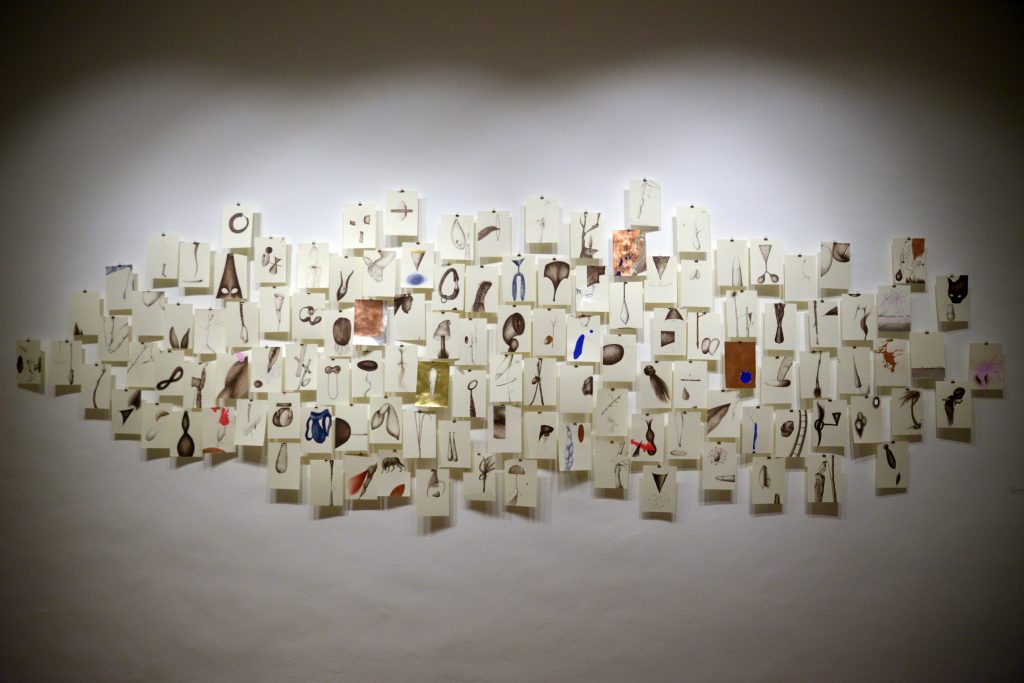
Photo: Jakub Julény
Výstava, ako sme si pri projektoch Karola Weisslechnera už zvykli, kladie dôraz na do detailu premyslenú a precízne realizovanú inštaláciu. Prostredníctvom použitého mobiliáru a ostatných inštalačných a dizajnérskych prvkov tu autor vytvoril sofistikovaný výstavný koncept, ktorému to vo vynovenom priestore galérie Medium zvlášť pristane. Spôsob inštalácie smeruje k divácky atraktívnej vizualizácii, schopnej osloviť zainteresovaného aj laického diváka. Šperky a objekty, ktoré tvoria asi najdominantnejšiu časť vystaveného materiálu, sú malými plastikami inšpirovanými architektúrou, ale aj kozmickými telesami a rôznymi aspektmi súčasnej vizuálnej kultúry. Neočakávané kombinácie materiálov a tvarov, často s využitím kontrastov prírodného a umelého, „vysokého” a „nízkeho”, jednoduchého a zložitého, duchovného a materiálneho, patria k základným charakteristikám celej autorovej tvorby.
Kým časť prezentovaných objektov sa vyznačuje „fantastickými až surrealistickými kompozíciami“ (A. Křížová), niektoré novšie práce akoby poukazovali skôr na návrat ku „konštruktivistickému“ odkazu Antona Cepku. (Do výstavy autor zaradil aj staršiu realizáciu Medziprsteň venovanú práve A. Cepkovi, pričom už spôsob inštalácie tohto objektu naznačuje, že Cepkov odkaz má v priestore jeho „kozmu“ dôležité postavenie.)
Jednu z ťažiskových tém Weisslechnerovej výstavy (i tvorby) predstavujú kresby. Kompozícia stodvadsiatich kresieb, inštalovaná na stene jednej z miestností je iba fragmentom tohto materiálu. Ďalšia časť kresieb naskladaných na sebe vo vitríne, poukazuje nielen na to, že autor má naozaj „rozkreslenú ruku“, ale hovorí aj o tom, že kreslenie sa preňho stalo každodenným rituálom, akousi vnútornou potrebou, možno aj formou denníkového záznamu. Kresby sú odrazom autorovho zmyslu pre experiment, ale aj intelektuálnou prácu na jednotlivých motívoch, ktoré dokáže veľmi dobre uplatniť aj v trojrozmernom priestore. Medzi vystavené 3D realizácie zaradil, okrem objektov a šperkov, aj niekoľko architektonických návrhov ako napríklad model pontónového bazéna na Dunaji − akýsi odkaz na legendárne Lido, ale aj lodné kúpaliská. Vystaveným realizovaným návrhom je prestavba rodinného domu v Dunajskej Lužnej, kde mal ako architekt na starosti dizajn celého navrhovaného objektu − od dispozície, cez vnútorné vybavenie až po šperk panej domu.
K pozoruhodným momentom tvorby Karola Weisslechnera patrí práca s nájdenými objektmi. Potreba zbierať a odchytávať všetko, čo ho zaujme a inšpiruje, je na výstave sprítomnená v pestrej vzorke „surového materiálu“ – ukážke rôznych objektov (artefaktov i prírodnín), ktoré zatiaľ akoby len čakali na svoje ďalšie spracovanie. Tieto, neraz pomerne obskúrne, tajomné drobnosti (rôzne minerály, vetvičky, semená rastlín, fragmenty textílií a čipiek, ženské vlasy, a pod.) autorovi poskytujú bohatý zdroj inšpirácie, dráždia predstavivosť a spúšťajú asociačné reťazce. Zaujatie formálnou i obsahovou stránkou týchto predmetov sa vo Weisslechnerovej tvorbe spája s metaforickým myslením, ale aj s interpretačnou invenčnosťou a zmyslom pre humor a iróniu. S tým úzko súvisí aj jeho inklinácia k symbolickej obraznosti, epickému poňatiu, vrátane historických a archetypálnych tém. Reflexia týchto autorových umeleckých prístupov zároveň akoby upozorňovala na „vzkriesenie“ niektorých historických foriem vnímania a interpretovania sveta objektov. Nevdojak sa tu vynára alúzia na historické kabinety kuriozít, chápané ako mikrokozmos − svet premietnutý v mikrosvete naznačujúci vzťahy medzi všetkými existujúcimi vecami. Toto pripodobnenie sa netýka iba povahy a vnímania vystavených objektov, ale vzťahuje sa aj na spôsob ich prezentácie, ktorá zámerne vzdoruje zaužívanému (chronologickému/retrospektívnemu) radeniu. Hoci impulzom k realizovaniu výstavy bolo autorove jubileum, nie je koncipovaná ako retrospektíva. Je skôr „vypointovaním“ hlavných médií a tém, ktoré podľa autorových vlastných slov „tvoria osobný kozmos jeho kreatívneho sveta“. Výsledkom je akási voľná asociatívna skladba, ktorej časti sa navzájom podporujú a spolu sa podieľajú na atmosfére celku. Do popredia tu vystupuje predovšetkým slobodná imaginácia a radosť z tvorby, ktorá je už svojou podstatou nepredvídateľná a v prípade Karola Weisslechnera aj dobrodružná a objavná.
Karol Weisslechner (1957) študoval v rokoch 1980–1988 na Vysokej škole výtvarných umení v Bratislave u prof. Vojtecha Vilhana. Na výtvarnú scénu vstúpil v druhej polovici 80. rokov spolu so skupinou výtvarníkov a architektov etablujúcich sa v prvej vlne postmoderného umenia na Slovensku. Ako vyštudovaný architekt sa od tvorby interiérov dostal k tvorbe „interiérového šperku“ a neskôr k voľnej tvorbe a k umeleckému šperku. V roku 1995 prevzal po Antonovi Cepkovi Ateliér kov a šperk na bratislavskej Vysokej škole výtvarných umení, kde dodnes pedagogicky pôsobí. Rozšírený názov ateliéru − S+M+L+XL, ktorý Karol Weisslwechner zaviedol, vyjadruje zameranie výučby siahajúce od drobných šperkárskych realizácií až po projekty určené do konkrétnych architektúr. V posledných rokoch sa autor intenzívne angažuje v oblasti prevádzky výtvarného umenia, venuje sa študentom a v rámci ateliéru sa podieľa na organizovaní konferencií, šperkstretov, sympózií a výstav, ktorými sa mu tento ateliér úspešne darí zviditeľňovať nielen na Slovensku.
Výstava: KAROL WEISSLECHNER: Kozmos, šperky, objekty a iné súvislosti sa konala v Galérii Medium od 7. do 29. septembra 2017
http://www.vsvu.sk/galeria-medium/o-galerii/
[:en]The exhibition Cosmos, Jewellery, Objects and Other Associated Things gave an insight into the Karol Weisslechner’s art encompassing all the media he works with – from jewellery through objects and drawings to architecture. Globally, this exhibition may be perceived as a specific „Gesamkunstwerk“ with individual elements that supplement each other, intercommunicate and at the same time, exist independently of any other part.
Photo: Jakub Julény
The exhibition, as we are used to the Karol Weisslechner’s projects, puts an emphasis on the minutely thought-out and precisely executed installation. Through the used furniture and other elements of installation and design, the author achieved an ingenious exhibition concept which suits the renovated premises of the Medium Gallery even better. The way of installation leads to a viewer-friendly visualisation capable of speaking to both committed and lay public. Jewellery and objects that dominate the exhibition are small sculptures inspired by architecture, cosmic bodies and different aspects of the contemporary visual culture. Unexpected combinations of materials and shapes, often making use of the natural and the artificial, “the high” and “the low”, the simple and the complex, the spiritual and the material, belong to the fundamental characteristics of the whole author’s work.
Whereas part of the presented objects is characterised as “fantastic even surrealist compositions” (A. Křížová), some of the newer works seemed to turn towards the “constructivist” legacy of Anton Cepka. (For instance, the artist included his older realisation Medziprsteň [Interring] dedicated to A. Cepka, while the way of installation of this object points to the fact that Cepka’s legacy has an important place in his cosmos.)
One of the central themes of the Weisslechner’s exhibition (and his work, too) are drawings. The composition of one hundred drawings installed on one of the walls is merely a fragment of such material. The rest of drawings are put one upon each other in a showcase, which indicates that the artist has indeed an experienced “well-drawn hand”, but also that drawing became his everyday ritual, a sort of inner need, or maybe even a form of diary. The artist’s drawings are a reflection of his strong sense of experiment as well as his intellectual work on individual motives that he can successfully apply in a 3D space. Besides objects and jewellery, among his 3D realisations are several architectonic design projects such as a model of a pontoon swimming pool on the Danube River, referring to Lido (a legendary natural swimming pool on the Danube bank) or pools on ships. The exhibited realised design project is a reconstruction of a family house in Dunajská Lužná village where he was in charge of the whole designed object – ranging from the layout through the interior furnishing to the jewellery of the lady of the house.
The way Weisslechner treats found objects is truly remarkable. The need to collect and grab everything that intrigues or inspires him is embodied in the colourful sample of “raw material” – a display of various objects (artefacts and products of nature) which appear to be waiting for their further processing. These, sometimes rather obscure, mysterious petty things (different minerals, little branches, plant seeds, fragments of textiles and lace, women’s hair etc.) offer the artist a rich source of inspiration, provoking imagination and triggering chains of associations. Weisslechner’s preoccupation with both the form and content of these objects has to do not only with metaphorical thinking, but also with interpretative invention together with the sense of humour and irony. This is closely related to his tendency towards symbolic imagery, epic understanding including historical and archetypal themes.
At the same time, exploring the author’s artistic approaches somehow draws attention to “the resurrection” of some historical forms of perception and interpretation of the world of objects. An allusion to historical curio cabinets involuntarily come to one’s mind. Here, they are understood as a micro cosmos – the world translated into the micro world implying relationships among all the existing things. Such a comparison concerns not only the character and perception of the exhibits, but also the way of their presentation that intentionally defies the customary (chronological/retrospective) classification. The impetus for staging the exhibition was the artist’s birthday, but rather than approaching it in a retrospective manner, it is “pointing up” the key media and themes that, according to the artist, “form a personal cosmos of his creative world”. The outcome is a sort of a free-association composition, the parts of which support each other and take part in the ambiance of the whole. In the foreground is mostly free imagination and joy from creation, unpredictable in its substance, yet adventurous and revealing in case of Karol Weisslechner.
Karol Weisslechner (1957) studied at the Academy of Fine Arts in Bratislava at the Vojtech Vilhan’s studio from 1980 – 1988. He entered the art scene in the second half of the 1980s together with the group of artists and architects establishing the first wave of postmodern art in Slovakia. As a graduate architect, he moved from interior design to “interior jewellery” and later towards independent art and art jewellery. In 1995, he took over the Anton Cepka’s studio Metal and Jewellery at the Bratislava’s Academy of Fine Arts where he teaches up to now. He introduced the studio’s extended name – S+M+L_XL – setting the focus of teaching ranging from fine jewellery and design to projects designed for particular architectures. Over the past years, the artist has been actively involved in the operation of visual arts, devoting his time to students and organising conferences within his studio such as Šperk Stret (the International Conference of Contemporary Jewellery), or other symposiums and exhibitions. These successfully bring his studio into the spotlight not only in Slovakia.
Exhibition: KAROL WEISSLECHNER: Cosmos, Jewellery and Other Associated Things took place in the Medium Gallery from 7th to 29th September 2017
http://www.vsvu.sk/galeria-medium/o-galerii/
Karol Weisslechner’s (Micro)cosmos
[:]